
Patent CN205380635U
Updated October 28, 2026Multifunctional Geological Hammer with Detachable Handles and Built-In Tools
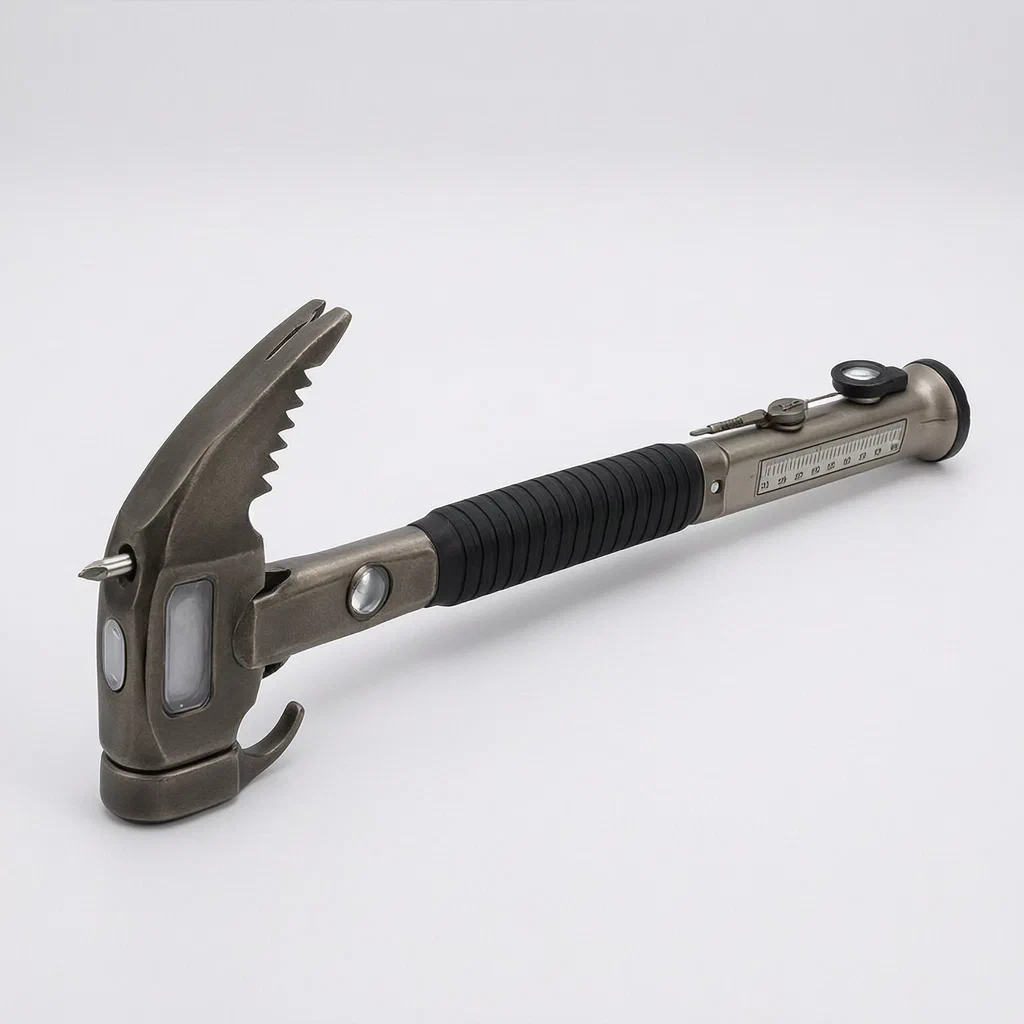
Field geologists often carry separate hammers, saws, screwdrivers, lights, and measuring tools, adding weight and bulk to their packs. This multifunctional geological hammer combines those tasks into one modular system. The central hammer body accepts a short grip handle or a longer extension handle—or both—using threaded joints, allowing users to configure the tool length for the job. The body itself integrates a sawtooth edge, a removable hardmetal screwdriver, a striking face, and a curved crowbar hook. A rubber-sleeved grip handle houses a spring-loaded marking pin and an LED light sits directly in the head. By threading the parts apart for transport and assembling them as needed in the field, survey teams reduce the number of individual tools they must pack.
- China utility model - lapsed
- No filings outside China
- Geological survey tools
- Stainless steel handles, hardmetal screwdriver, rubber sleeve
Splat! What let you down?
🔧
Modular threaded assembly
The extension handle and grip handle thread onto the hammer body individually or together, and disassemble for compact transport.
💡
Built-in LED illumination
An LED lamp area is embedded directly in the hammer body to provide light during fieldwork.
📏
Integrated navigation aids
The extension handle can hold a compass, horizon rule, magnifier, or miniature compass, with rulers on its faces.
🗜️
Internal pin storage
The grip handle contains a volumetric bin with a hinged cover, holding a spring-loaded pin for carving characters.
Bring this product to market
- ✓ Patent vetted China-only family and legal status checked
- 2 Product brief · now How it works, uses and options written up
- 3 Prototype First samples for buyers to review
- 4 Pilot run Small first batch for launch customers
- 5 Volume production Repeat orders at scale
Buyer interest
– of 100 buyers needed to start prototyping
One click, no sign-up. Each vote is one real visitor, and products with the most interest go to prototyping first.
Build team: no members yet. Need a partner, co-funding or skills to build this? Join and we introduce the team once it forms.
The problem
Geological survey work requires breaking rock, prying samples, measuring orientations, marking locations, and sometimes working in low light. Carrying a standard rock hammer alongside separate saws, screwdrivers, flashlights, compasses, and marking pins adds significant weight to a field kit. When multiple single-function tools are packed together, items can be lost or take time to locate during active sampling. Furthermore, repeated striking against hard rock transmits vibration through a rigid handle, causing hand discomfort over long periods of use. A tool that consolidates these functions while remaining easy to carry addresses the practical limits of field equipment.
The solution
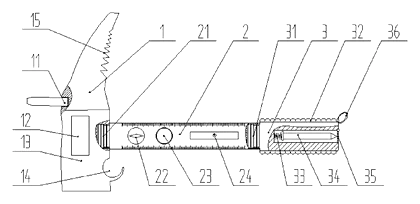
This design centers on a hammer body (1) that serves as the main hub. An extension handle (2) and a grip handle (3) attach to it using threaded joints—a first threaded joint (21) and a second threaded joint (31). Users can assemble just the grip handle for close work, add the extension handle for reach, or carry the parts separately.
The hammer body incorporates several fixed tools: a sawtooth (15) along the top edge, a vertically mounted detachable screwdriver (11) in the middle, a striking face (tup, 13) at the bottom, and a curved hook-shaped crowbar (14) on the inner side of the striking face. An LED (12) is embedded in the body for illumination.
The grip handle features a vibration-absorbing rubber sleeve (32) on the outside. Inside, a volumetric bin holds a pin for carving characters (34), which is pushed by a spring (33) and secured behind a hinged bonnet (35). A lanyard (36) attaches to the end. The extension handle can be fitted with a compass (22), a magnifier (23), a horizon rule (24), or a miniature compass, and its upper and lower faces carry engraved or printed rulers.
Who it is for
- Geological equipment brands looking to expand their field-tool catalog with a multi-function hammer that reduces the number of separate items a surveyor must buy.
- Mining exploration companies equipping field crews who need durable striking, prying, and measuring tools in a single portable package.
- University earth science departments outfitting students for field camps where minimizing pack weight while retaining essential functions is a priority.
- Outdoor and survey tool distributors supplying professionals who require modular hand tools that adapt to different site conditions.
How it works
The main parts
| No. | Part | What it does |
|---|---|---|
| 1 | Hammer body | Central hub holding the sawtooth (15), screwdriver (11), tup (13), crowbar (14), and LED (12). |
| 2 | Connection handle | Extension handle with threaded joint (21); carries compass (22), magnifier (23), horizon rule (24), and rulers. |
| 3 | Hammer handle | Grip handle with threaded joint (31), rubber sleeve (32), spring (33), pin (34), bonnet (35), and lanyard (36). |
| 11 | Detachable screwdriver | Threads into the hammer body; can be a cross screwdriver, word screwdriver, or stiletto. |
| 12 | LED | Embedded in the hammer body to illuminate the work area. |
| 14 | Crowbar | Curved hook shape inside the tup for prying rock or ground. |
| 15 | Sawtooth | Top edge of the hammer body for cutting stone or wood. |
| 32 | Rubber sleeve | Covers the outer surface of the hammer handle to absorb vibration. |
| 34 | Pin for carving | Stored in the volumetric bin for marking characters on rock. |
Operating steps
- Transport configuration: Unscrew the connection handle and hammer handle from the hammer body. Pack the three pieces separately to save space.
- Assembly: Thread the first threaded joint (21) of the connection handle into the hammer body. Thread the second threaded joint (31) of the hammer handle into either the connection handle or directly into the hammer body, depending on the required length.
- Marking: Open the hinged bonnet (35) on the hammer handle. The spring (33) pushes the pin for carving characters (34) outward. Use the pin to mark the target position on the rock, then press it back into the bin and close the bonnet.
- Striking and prying: Hold the hammer handle by the vibration-absorbing rubber sleeve (32). Turn on the embedded LED (12) if light is needed. Strike the rock with the tup (13) or use the curved hook-shaped crowbar (14) to lever up material.
- Cutting and turning screws: Use the sawtooth (15) on the top of the hammer body to cut stone or wood. Unscrew the detachable screwdriver (11) from the middle of the body to turn screws on field equipment.
Applications
Mineral exploration camps
Exploration geologists move across rough terrain daily, carrying sample bags, maps, and instruments. Consolidating the hammer, pry bar, saw, and marking pin into one modular unit reduces the number of loose items in a field vest or pack.
University field mapping courses
Students learning structural geology need to measure strike and dip while collecting hand samples. The connection handle’s integrated compass, horizon rule, and engraved rulers allow orientation measurements without switching to a separate pocket transit for basic checks.
Quarry and construction site inspection
Engineers inspecting rock faces or concrete structures often need to chip away surface material and check fasteners. The hardmetal detachable screwdriver and the striking face serve both purposes without requiring a return to a toolbox.
Nighttime or underground surveys
Working in tunnels, caves, or after sunset limits visibility when positioning strikes. The embedded LED provides directed light exactly where the hammer body contacts the surface, keeping one hand free to hold the tool rather than a flashlight.
Environmental soil sampling
Technicians collecting shallow core samples or clearing surface debris use the curved hook-shaped crowbar to pry up compacted earth. The vibration-absorbing rubber sleeve reduces fatigue when repeatedly driving the tool into hard ground.
Where it is less suitable
- Heavy demolition work - the modular threaded joints and built-in compartments are designed for geological sampling, not continuous high-impact structural demolition.
- Precision machining environments - while the screwdriver handles field adjustments, dedicated insulated or precision tool sets remain necessary for sensitive laboratory equipment.
- Deep underwater surveys - the patent does not describe waterproof sealing for the volumetric bin or LED compartment, so submersion applications would require further engineering.
Frequently asked questions
How do the handles attach to the hammer?
The connection handle and hammer handle use threaded joints. The connection handle screws directly into the hammer body, and the hammer handle screws into either the connection handle or the hammer body itself. This allows users to assemble the tool in different lengths or take it apart completely for transport.
What tools are built into the hammer body?
The hammer body features a sawtooth along the top edge, a striking face (tup) at the bottom, and a curved hook-shaped crowbar on the inner side of the striking face. A detachable screwdriver threads vertically into the middle of the body, and an LED lamp is embedded for illumination.
What is stored inside the hammer handle?
The hammer handle contains a volumetric bin accessed by a hinged bonnet. Inside, a spring-loaded pin for carving characters is stored. When the bonnet is opened, the spring pushes the pin out for use in marking rocks.
What materials are used for the handles and screwdriver?
According to the patent, the connection handle and hammer handle are made of stainless steel material. The detachable screwdriver is made of hardmetal materials. The outer grip is a vibration-absorbing rubber sleeve.
Can the connection handle hold measuring instruments?
Yes. The patent describes adding a compass, horizon rule, magnifier, or miniature compass to the connection handle. Additionally, rulers can be carved or printed on its upper and lower faces. Lengths of the handles are noted as about 8 to 25 cm, though exact dimensions are to be confirmed in design.
How is the LED powered?
The patent states that an LED area for illumination is embedded in the hammer body, but it does not specify the battery type, voltage, or switch mechanism. Power source details and runtime are to be set in design and confirmed on prototypes.
Does the rubber sleeve really reduce vibration?
The patent describes that the vibration-absorbing rubber sleeve effectively reduces the vibration transmitted to the hand when knocking rock, reducing discomfort. Material durometer and thickness are to be confirmed in design.
Can this design be made and sold in the US?
The patent was filed only in China and is lapsed (terminated for non-payment of annual fees, recorded 2019-01-22), so it does not restrict the design in the US or in China. Multi-tools and geological hammers may be covered by other US patents - see Patent & Production - so we recommend a freedom-to-operate check before volume production.
Are you affiliated with the patent owner?
No. IP2M is an independent design and manufacturing service working from the public patent document.
Request a quote
Click Request a Quote below to see our email address - copy it, or open your email app with a ready-made message. Please mention patent CN205380635U in the subject.
Helpful details to include:
- Your company and channel (geological equipment brand, mining supplier, university procurement, outdoor distributor)
- Required functions (which navigation inserts, screwdriver types, LED needs)
- Handle lengths and overall weight targets
- Material preferences for the body, handles, and rubber sleeve
- Estimated quantity and target price
- Timeline - when you would like samples and the first shipment
You can also reach us at (332) 203-9997.
Explore this product
Interested in building this?
Tell us your target market, quantity and timeline. We reply with options for prototyping, small-batch runs or volume production.
Send your inquiry to
Please put CN205380635U in the subject line and tell us your company, country, estimated quantity and timeline.
Prefer to talk? Call (332) 203-9997.
More product-ready patents
All Tools & Workshop patents →
Tools & Workshop
Rolling Tool Box with Telescoping Step Ladder
Telescoping A-frame ladder with an attached rolling tool box that slides to your working height.
Patent CN206290197U
Tools & Workshop
Folding 3-Handle Wrench Multi-Tool
Folding three-handle wrench multi-tool with magnetic screwdriver bits, saw, file and bottle opener.
Patent CN205290875U
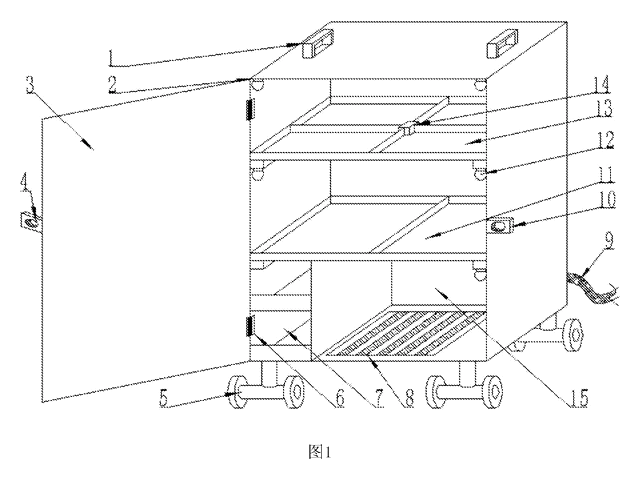
Tools & Workshop
Rolling Auto-Repair Tool Cabinet with Built-In Lights
Lockable rolling tool cabinet for car repair with interior lights, a lubricant tray, parts drawers and a tool bay.
Patent CN205989314U
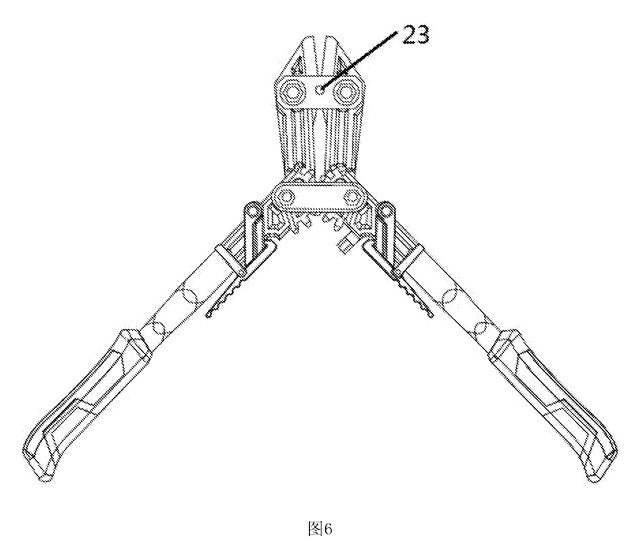
Tools & Workshop
Wide-Opening Folding Bolt Cutter
Bolt cutter with linked, gear-meshing handles that open up to 190° and fold in half for storage.
Patent CN207206226U
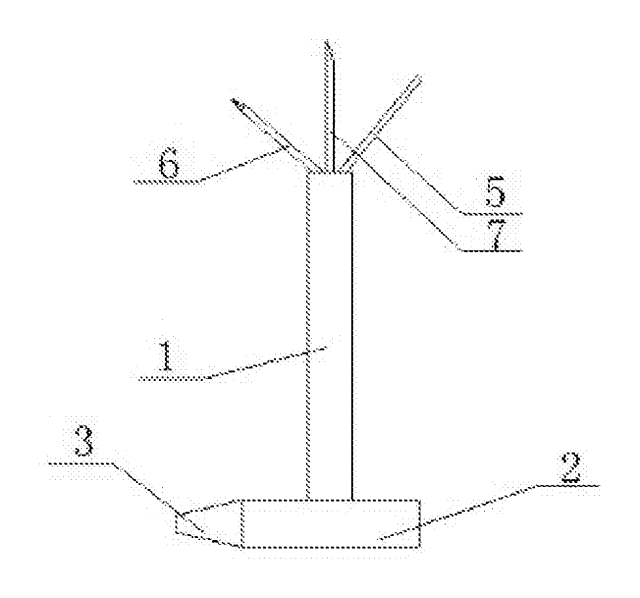
Tools & Workshop
Nail-Holding Hammer with Fold-Out Drivers
Hammer with a nail-holding T-slot in the head and fold-out drivers stored in the handle.
Patent CN205254927U
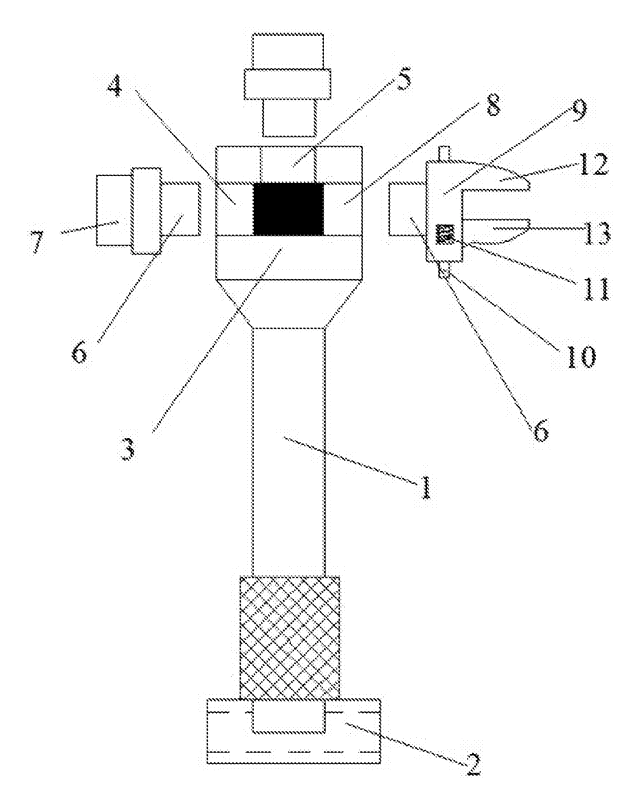
Tools & Workshop
Modular Wrench with Screw-On Heads
Wrench handle with a three-way threaded hub for screw-on adjustable and hex heads, plus a pipe sleeve.
Patent CN206216564U
Browse by category
- Apparel & Accessories (22)
- Baby & Kids (16)
- Bags & Luggage (9)
- Bath & Personal Care (16)
- Car Accessories (10)
- Furniture, Bedding & Storage (12)
- Garden & Outdoor (18)
- Health & Wellness (8)
- Home, Kitchen & Cleaning (24)
- Lighting (12)
- Packaging & Containers (6)
- Pet Products (6)
- Phone & Camera Accessories (4)
- Retail Display (13)
- School, Office & Art (19)
- Sports & Recreation (25)
- Tools & Workshop (27)
- Toys & Games (12)
This page is based on the public patent document CN205380635U, assigned to Yunnan Jingcheng Geological Exploration Co Ltd. IP2M is an independent manufacturing service and is not affiliated with, endorsed by or licensed by the patent owner. Images marked as concept renderings are illustrations, not photos of an existing product. Patent status information is provided for reference only and is not legal advice; confirm freedom to operate for your market before production. Full disclaimer.