
Patent CN205466077U
Updated November 5, 2026Carpenter's Tool Box with Dedicated Compartments for Layout and Hand Tools
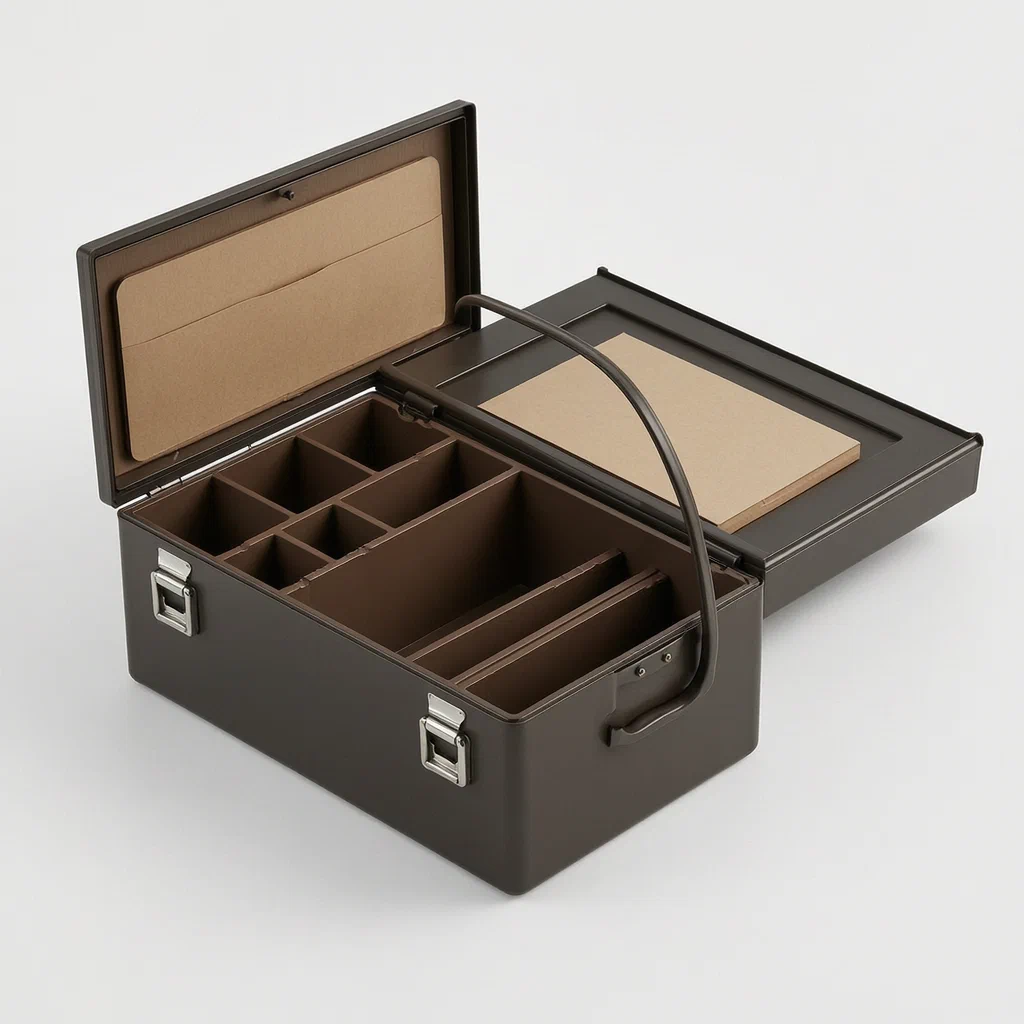
General-purpose tool boxes often leave layout instruments loose, causing scratches on precision edges and making it hard to find small items like nails or markers during a job. This design solves that with a fixed internal partition system that assigns a specific home to every essential carpentry tool. From the plane and set square to separate bins for large and small nails, each item stays in place. The lid includes a dedicated pocket for blueprints or sketches, keeping reference materials dry and accessible. Built with an aluminum body for light weight and durability, it serves as a mobile workstation for finish carpenters and layout specialists.
- China utility model - lapsed
- No filings outside China
- Hand tool organization
- Aluminum alloy body, hinged lid
Splat! What let you down?
📏
Layout-focused storage
Dedicated slots for horizon rules, set squares, and tape measures keep precision tools safe.
🔨
Tool-specific compartments
Separate homes for planes, hammers, and vertical tools prevent collision and damage.
📎
Dual nail organizers
Two distinct nail stores allow quick access to different sizes without mixing them up.
📄
Integrated drawing holder
A figure carton on the lid secures blueprints or sketches for immediate reference.
Bring this product to market
- ✓ Patent review Patent family and legal status reviewed in the relevant jurisdictions.
- 2 Product brief · now How it works, uses and options written up
- 3 Prototype First samples for buyers to review
- 4 Pilot run Small first batch for launch customers
- 5 Volume production Repeat orders at scale
Buyer interest
– of 100 buyers needed to start prototyping
One click, no sign-up. Each vote is one real visitor, and products with the most interest go to prototyping first.
Build team: no members yet. Need a partner, co-funding or skills to build this? Join and we introduce the team once it forms.
Patent Rights & Team Participation
Before joining a development team, participants should ensure they have the necessary rights or authorization to participate in the project.
Participation is generally appropriate where:
- You own the relevant patent rights or have obtained permission or a license from the rights holder.
- The relevant patent rights have expired or have been legally invalidated in the jurisdictions where the planned activities will take place.
- The planned development, manufacturing, and commercialization activities have been independently assessed and do not infringe applicable patent rights in the relevant jurisdictions.
Important: Being located outside a country where a patent is protected does not automatically exempt you from patent infringement risks. Patent rights may apply based on where development, manufacturing, use, sale, or import activities take place.
IP2M does not grant any patent license or authorization through team participation. Joining a project does not provide permission to use, manufacture, or commercialize patented technology.
The problem
Standard tool boxes are typically empty cavities where tools shift freely. For carpenters who rely on precise layout instruments—such as steel rules, set squares, and marking gauges—this movement causes two major issues. First, sharp edges and flat surfaces get scratched or dented when they knock against heavier items like hammers or chisels, degrading accuracy over time. Second, small critical items like nails, pins, or layout pencils get lost among larger tools, forcing workers to dig through clutter mid-job. There is no standard solution for organizing these specific carpentry tasks, leading to inefficiency and potential damage to expensive measuring tools.
The solution
This design introduces a structured interior within a portable aluminum case.
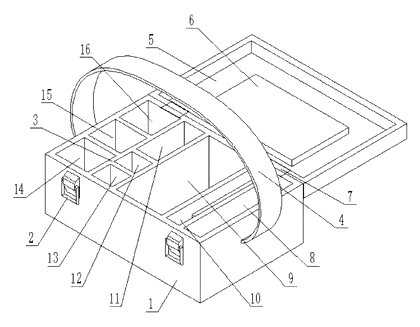
- Lower Box Structure: The base consists of a lower box (1) with an internal partition (3). This partition divides the space into nine specific zones: a horizon rule store (8), planing tool store (9), set square store (10), line box store (11), nail store I (12), nail store II (13), vertical store (14), tape measure store (15), and hammer store (16).
- Strategic Placement: The planing tool store (9) is centered. To its right are the set square store (10) and horizon rule store (8). To its left are the smaller compartments for lines, nails, verticals, tape measures, and hammers.
- Upper Cover Integration: The upper cover (5) features a figure carton (6) positioned centrally on its inner face. This allows drawings, templates, or notes to be clipped securely under the lid.
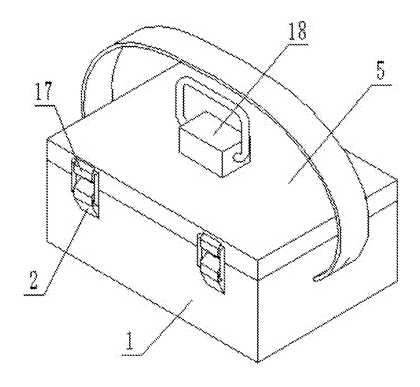
- Closure and Portability: Two hinges (7) connect the lid to the box. Matching lower buckles (2) and upper buckles (17) secure the box shut. A central handle (18) sits on top, while braces (4) run along the sides for added structural support and grip points.
Who it is for
- Finish Carpenters: Professionals who need to protect the edge quality of their layout tools and quickly grab specific nail sizes.
- Construction Site Supervisors: Managers who require a kit that keeps plans (in the lid carton) and measuring tools organized and visible during inspections.
- Woodworking Hobbyists: DIY enthusiasts looking for a dedicated kit for bench work rather than a general hardware box.
- Trade Schools: Educational institutions teaching traditional joinery and layout techniques, where students need standardized tool organization.
How it works
The main parts
| No. | Part | What it does |
|---|---|---|
| 1 | Lower Box | Main container body, made of aluminum alloy. |
| 2, 17 | Buckles | Lower and upper locking mechanisms to keep the box closed. |
| 3 | Internal Partition | Fixed dividers creating specific tool slots. |
| 4 | Braces | Side supports reinforcing the box structure. |
| 5 | Upper Cover | Lid containing the drawing storage area. |
| 6 | Figure Carton | Clip-on holder for papers/drawings on the lid. |
| 7 | Hinge | Connects lid to base (two used for stability). |
| 8, 9, 10 | Rule/Plane/Square Stores | Slots for long straight tools and planing tools. |
| 11-16 | Misc Stores | Slots for line box, nails (x2), verticals, tape, hammer. |
| 18 | Handle | Top carry grip. |
Opening and closing
- Unlock: Release the two upper buckles (17) from the lower buckles (2).
- Open: Lift the upper cover (5) using the handle (18); it pivots on the two hinges (7).
- Access: Pick tools from their designated slots. The figure carton (6) remains visible if the lid is propped open or held upright.
- Close: Lower the lid so the buckles align and latch. The internal partitions ensure tools do not shift violently during transport.
Applications
Precision Layout Work
When marking out cuts, the carpenter can instantly retrieve the set square and horizon rule from their dedicated slots. This prevents the tools from getting buried under a hammer or chisel, saving time and ensuring the measuring edges remain unscratched.
Nail and Fastener Management
Having separate nail store I (12) and nail store II (13) allows the user to pre-sort finishing nails from larger framing nails. During installation, the worker grabs the correct size without searching, reducing interruptions and preventing accidental use of the wrong fastener.
Plan Reading On-Site
The figure carton (6) on the lid lets the carpenter clip a sketch or blueprint directly to the box. This keeps the reference material off the dirty floor and within eye line while working at the bench, facilitating constant comparison between the plan and the physical piece.
Mobile Job Site Kit
For professionals moving between rooms or sites, the aluminum alloy construction keeps the weight low, while the braces (4) and handle (18) provide sturdy carrying options. The compartmentalized interior ensures that even if the box is dropped or bumped, the delicate layout tools stay isolated from heavy impact sources.
Where it is less suitable
- Heavy Power Tool Storage: The compartments are sized for hand tools; it cannot accommodate drills, saws, or sanders.
- Large Scale Construction: Not designed for bulk fasteners or large framing lumber accessories; suited for finish and detail work.
- Waterproof Requirements: While the buckles close the box, the hinge and buckle gaps may not provide a sealed IP-rated enclosure for wet environments.
Patent & Production
At a glance
| Patent number | CN205466077U (application CN201620006265) |
| Type | China utility model (实用新型) - protects product shape and structure |
| Original title | Carpenter’s Special Tool Box (一种木工专用工具箱) |
| Patent owner | Individual |
| Inventors | Li Chenguang |
| Filing date | 2016-01-04 |
| Grant date | 2016-08-17 |
| Status (China) | Lapsed - terminated for non-payment of annual fees (recorded 2018-02-27) |
| Patent family | Public record shows Chinese filings only - no US, European, Japanese, PCT or other filings listed |
| Cited by | 1 later document |
| Source | Google Patents (search for CN205466077U) |
What the claims cover, in plain language
Claim 1 - a carpenter’s tool box comprising a lower box (1), lower buckles (2), internal partition (3), braces (4), upper cover (5), figure carton (6), hinges (7), and various stores (8-16) for specific tools including horizon rules, planes, set squares, line boxes, nails (two types), verticals, tape measures, and hammers. The partition divides the lower box into these specific zones. The upper cover has a central figure carton and is hinged to the box. Buckles secure the front. A handle is on top.
Claim 2 - specifies there are two hinges. Claim 3 - specifies the material of the lower box and upper cover is aluminum alloy. Claim 4 - specifies the width and length of the lower box equal those of the upper cover.
This is a simplified reading for orientation only. The legal scope is defined by the exact claim wording in the official Chinese document.
What this means for US production
This patent was filed in China and has lapsed, meaning the rights were terminated due to non-payment of fees. The public record shows no US or other foreign counterpart.
Two points to settle early:
- Other patents may exist. Tool boxes with internal organizers are a common field. While this specific arrangement is unique, generic modular organizer patents or competitor designs might overlap. A freedom-to-operate (FTO) review is recommended before mass production to ensure no active US patents cover similar partition layouts.
- Material Certification. Aluminum alloys used in consumer goods must meet specific safety standards regarding lead content and surface treatments, especially if sold in states with strict chemical regulations.
Customization and manufacturing
What can be customized
| Area | Options |
|---|---|
| Partition Layout | Adjust slot widths for different plane sizes or add/remove nail bins. |
| Material | Switch from aluminum to ABS plastic for cost reduction, or steel for ruggedness. |
| Locking Mechanism | Replace simple buckles with keyed locks or magnetic closures. |
| Lid Interior | Change figure carton to a clear vinyl pocket or magnetic sheet. |
| Finish | Anodized colors (black, red, blue) or powder-coated textures. |
| Dimensions | Scale the overall box size up or down while maintaining aspect ratios. |
Things to plan for (US market)
- CPSC Regulations: Ensure any coatings or plastics comply with federal limits on hazardous substances (e.g., lead, phthalates).
- California Prop 65: If using certain finishes or adhesives, warning labels may be required depending on chemical composition.
- ANSI/BHSI Standards: While not mandatory for all tool boxes, meeting voluntary standards for latch strength and drop tests adds market credibility.
How a project runs
- Inquiry - Define target dimensions, material preference, and specific tool list to fit.
- Design - CAD modeling of partitions and casing; adjust for mold flow if using plastic or die casting if using aluminum.
- Prototype - Machined aluminum sample or 3D printed plastic mockup to test ergonomics and fit.
- Pilot Run - Small batch production to verify assembly tolerances and latch function.
- Production - Die casting or stamping for metal; injection molding for plastic; final assembly and packaging.
Quantities & timeline
Metal boxes require die-casting molds or progressive stamping dies, which have high initial costs but low per-unit costs at volume. Plastic versions require injection molds. Assembly involves riveting hinges, installing buckles, and inserting partitions. Send us your target quantity, material choice, and custom partition needs and we will reply with options.
Production notes
Tooling and process
Likely requires die-cast aluminum molds for the shell and partitions, or stamped steel dies if a hybrid approach is chosen. Injection molding is typical for plastic variants. Heat treatment may apply to aluminum components for hardness.
Cost drivers
Material and heat treatment costs typically dominate for aluminum models. The number of stamping dies or mold cavities impacts initial tooling expense. Surface finish requirements (anodizing vs. painting) also drive unit cost.
Prototyping path
Start with a 3D-printed handle and lid assembly to check ergonomics. Machined or off-the-shelf blade stock is typically used for initial partition testing. Create functional samples to verify tool fit before committing to tooling.
What we would change before tooling
We would likely verify wall thickness and joint design to prevent warping during cooling. Ensure pivot pin wear resistance by selecting appropriate bushings. Confirm that handle creep under load does not deform the attachment points.
Common failure points
Edge hardness below spec can cause scratching of tools. Pivot pin wear leads to loose lids. Coating wear exposes metal to corrosion. Spring-back or kickback in stamped parts affects dimensional accuracy.
Patent drawings
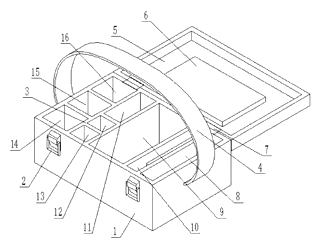
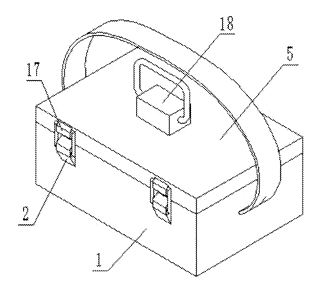
Drawings reproduced from the public patent document for reference.
Frequently asked questions
Why are the compartments fixed?
The internal partition (3) is designed to hold specific tools like the horizon rule (8) and set square (10) in place. This prevents them from sliding around and getting damaged by heavier items like the hammer (16).
Can I customize the tool slots?
Yes. The partition layout can be adjusted to fit different sizes of planes or to add more nail bins. We can modify the design based on your specific tool inventory.
Is the box waterproof?
No. While the buckles (2, 17) keep the lid closed, the design does not include a gasket seal. It is splash-resistant but should not be submerged or exposed to heavy rain for extended periods.
What material is the box made of?
The patent specifies aluminum alloy for both the lower box and upper cover. This offers a balance of light weight and high hardness, protecting the contents better than thin plastic.
How many hinges are used?
The design uses two hinges (7) to connect the lid to the base. This provides a stable opening mechanism and prevents the lid from twisting or sagging over time.
Does it come with tools?
No. This is a storage solution only. The patent describes the box structure, not the contents. You supply the carpentry tools, layout instruments, and fasteners.
Can this design be made and sold in the US?
The patent was filed in China and has lapsed due to non-payment of fees. The public record shows no US counterpart, so it does not restrict the design in the US. However, always conduct a freedom-to-operate check to ensure no other active US patents cover similar organizer configurations.
Are you affiliated with the patent owner?
No. IP2M is an independent design and manufacturing service working from the public patent document.
Request a quote
Click Request a Quote below to see our email address - copy it, or open your email app with a ready-made message. Please mention patent CN205466077U in the subject.
Helpful details to include:
- Your company and channel (tool brand, hardware distributor, woodworking supplier)
- Target dimensions and material preference (aluminum, steel, or plastic)
- Custom partition needs (list of tools to be stored)
- Locking mechanism preference (standard buckles, keyed, etc.)
- Estimated quantity and target price
- Timeline - when you would like samples and the first shipment
You can also reach us at (332) 203-9997.
Page editor: Daniel Chen, Product Research Editor · IP2M
Last updated November 5, 2026. If something on this page looks wrong, email [email protected] and we will check it against the patent.
Interested in building this?
Tell us your target market, quantity and timeline. We reply with options for prototyping, small-batch runs or volume production.
Send your inquiry to
Please put CN205466077U in the subject line and tell us your company, country, estimated quantity and timeline.
Prefer to talk? Call (332) 203-9997.
More product-ready patents
All Tools & Workshop patents →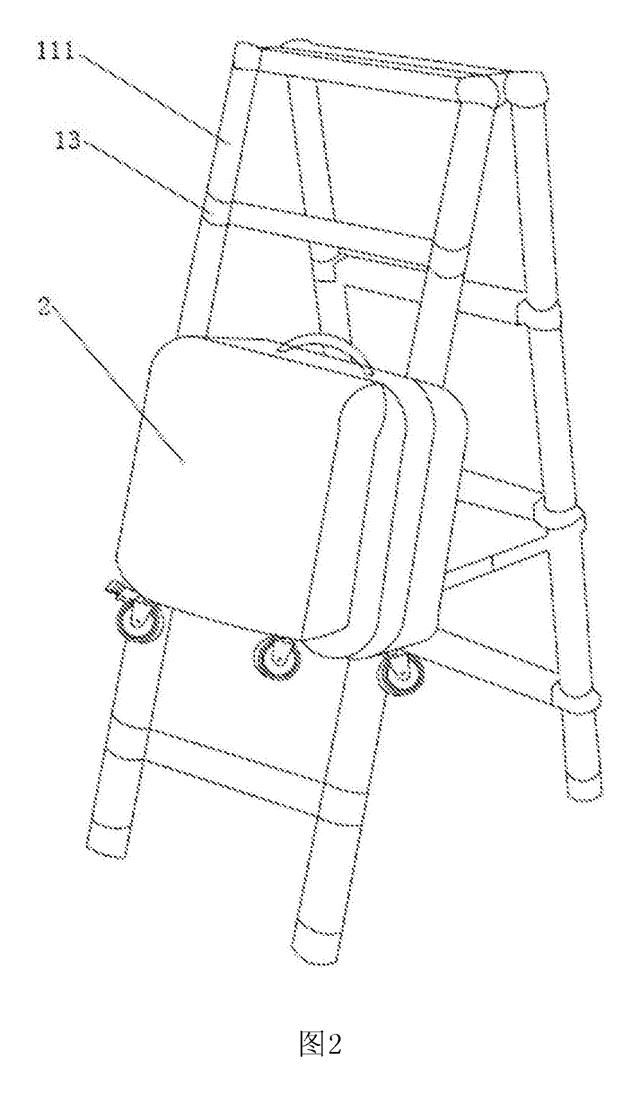
Tools & Workshop
Rolling Tool Box with Telescoping Step Ladder
Telescoping A-frame ladder with an attached rolling tool box that slides to your working height.
Patent CN206290197U
Tools & Workshop
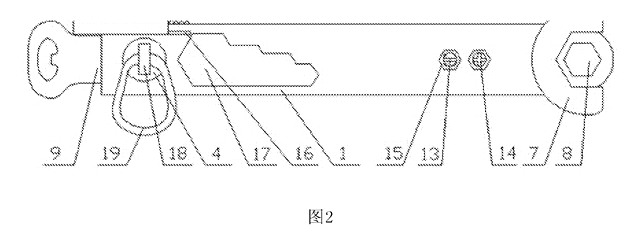
Folding 3-Handle Wrench Multi-Tool
Folding three-handle wrench multi-tool with magnetic screwdriver bits, saw, file and bottle opener.
Patent CN205290875U
Tools & Workshop
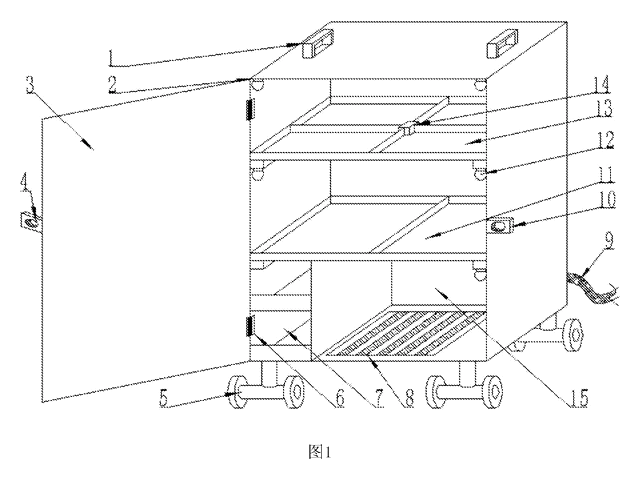
Rolling Auto-Repair Tool Cabinet with Built-In Lights
Lockable rolling tool cabinet for car repair with interior lights, a lubricant tray, parts drawers and a tool bay.
Patent CN205989314U
Tools & Workshop
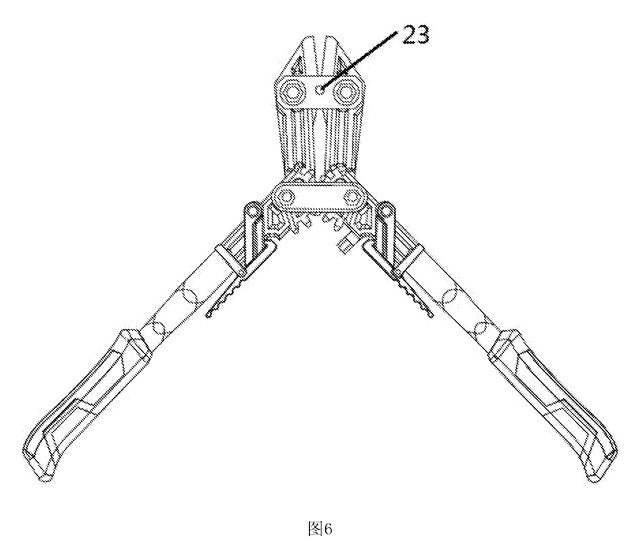
Wide-Opening Folding Bolt Cutter
Bolt cutter with linked, gear-meshing handles that open up to 190° and fold in half for storage.
Patent CN207206226U
Tools & Workshop
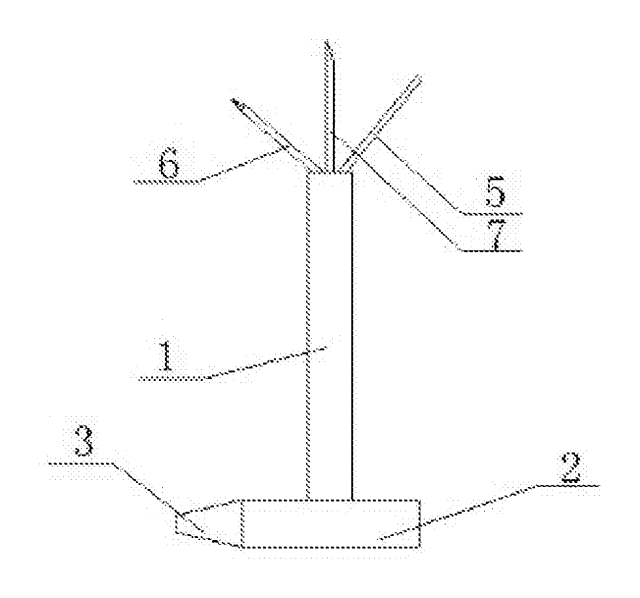
Nail-Holding Hammer with Fold-Out Drivers
Hammer with a nail-holding T-slot in the head and fold-out drivers stored in the handle.
Patent CN205254927U
Tools & Workshop
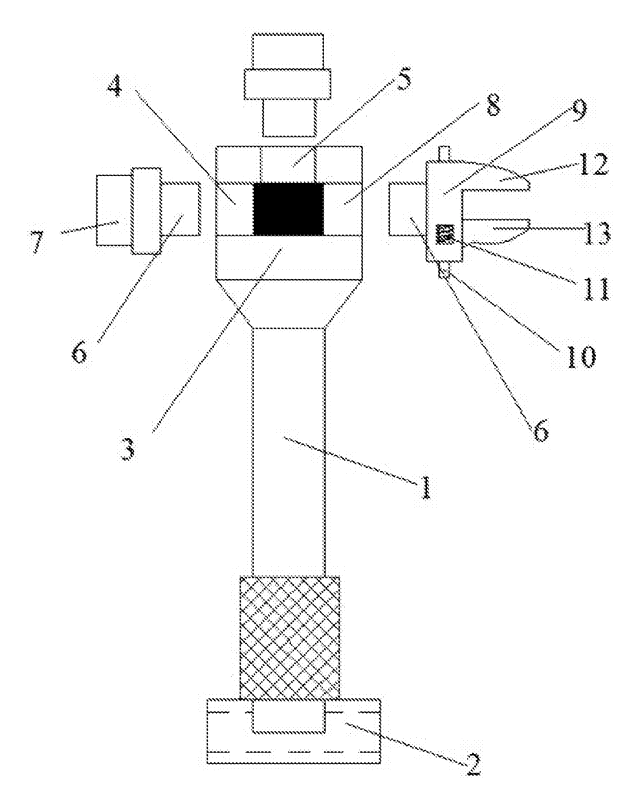
Modular Wrench with Screw-On Heads
Wrench handle with a three-way threaded hub for screw-on adjustable and hex heads, plus a pipe sleeve.
Patent CN206216564U
Browse by category
- Apparel & Accessories (41)
- Baby & Kids (27)
- Bags & Luggage (15)
- Bath & Personal Care (28)
- Car Accessories (23)
- Furniture, Bedding & Storage (21)
- Garden & Outdoor (29)
- Health & Wellness (13)
- Home, Kitchen & Cleaning (44)
- Lighting (22)
- Packaging & Containers (11)
- Pet Products (10)
- Phone & Camera Accessories (8)
- Retail Display (23)
- School, Office & Art (32)
- Sports & Recreation (41)
- Tools & Workshop (50)
- Toys & Games (21)
This page is based on the public patent document CN205466077U, assigned to Individual. IP2M is an independent manufacturing service and is not affiliated with, endorsed by or licensed by the patent owner. Images marked as concept renderings are illustrations, not photos of an existing product. Patent status information is provided for reference only and is not legal advice; confirm freedom to operate for your market before production. Full disclaimer.