At a glance
| Patent number | CN205492908U (application CN201620251289) |
| Type | China utility model (实用新型) - protects product shape and structure |
| Original title | Modified curler (一种改进的卷发器) |
| Patent owner | Shenzhen Fenda Technology Co Ltd |
| Inventors | Xiao Yong, Wei Mianjia |
| Filing date | 2016-03-29 |
| Grant date | 2016-08-24 |
| Status (China) | Expired - the 10-year term ended on 2026-03-29 |
| Patent family | Chinese filings only - no US, European, Japanese, PCT or other filings listed |
| Cited by | 14 later documents |
| Source | Google Patents (search for CN205492908U) |
What the claims cover, in plain language
Claim 1 - an improved hair curler comprising a hand-held handle and a curling assembly mounted on it. The assembly includes a heating rod, a toggle piece, and a housing that surrounds the heating rod with an opening at the top. The toggle piece fits between the housing and the rod with clearance and rotates around the rod’s central axis. The housing has a first notch and a second notch on opposite sides, extending downward from the top edge. A cover on top of the heating rod has a sloped chute that declines from the first notch side toward the second notch side. The highest point of the chute is lower than the lowest point of the first notch, and the lowest point of the chute is higher than the lowest point of the second notch. The toggle piece has a clicking section to catch hair, and a driving device rotates the toggle piece.
Claim 2 - the height of the clicking section is lower than the highest point of the sloped chute but higher than the lowest point of the second notch. Claim 3 - the top of the chute’s sidewall has an internal protuberance extending into the chute. Claim 4 - the driving device includes a motor fixed in the handle, a mounting shaft, a pivot joint bearing connecting the toggle piece to the shaft, and gears coupling the motor’s rotary shaft to the toggle piece synchronously. The heating rod is mounted on the upper end of the installation shaft. Claim 5 - the toggle piece includes an outer ring set on the bearing, a suit portion fixed to the outer ring, and plectrums distributed on the outer peripheral edge. The curling chamber sits between the inner surface of the plectrum and the outer surface of the heating rod. Claim 6 - the clicking section is formed by a projection on the plectrum sidewall, and the inner wall of the plectrum has a positioning elastic part.
This is a simplified reading for orientation only. The legal scope is defined by the exact claim wording in the official Chinese document.
What this means for US production
This patent was filed only in China and has expired, so it no longer restricts anyone in China either. It has no US or other foreign counterpart.
Two points to settle early:
- Other patents may exist. Automatic hair curlers are a patented field. Later documents citing this utility model include filings by Shenzhen Yangwo Electronics Co., Ltd. (WO2018129790A1), Masood Habibi (US20200138160A1), and Fan Lifeng (WO2020093756A1). These entities hold later US or foreign patents in this field, so a freedom-to-operate (FTO) review of the sloped chute, toggle mechanism, and drive train is needed before tooling.
- Thermal and electrical safety. Heating elements combined with DC motors in a handheld device require strict thermal isolation and electrical insulation planning to meet US retail standards.
Customization and manufacturing
What can be customized
| Area | Options |
|---|---|
| Heating rod diameter | Sized to accommodate different hair volumes; dimensions to be confirmed in design |
| Chute slope angle | Adjusted to control the feed rate of the hair into the curling chamber |
| Motor speed and torque | Geared for different hair thicknesses and winding speeds |
| Housing materials | Heat-resistant plastics for the outer shell and internal toggle components |
| Handle ergonomics | Shape, grip texture, and button placement for consumer comfort |
| Temperature settings | Electronic controls added to the circuit board to regulate the heating rod |
Things to plan for (US market)
- UL 859 - Standard for Household Electric Personal Grooming Appliances, covering heating elements, motor safety, and enclosure flammability.
- FCC Part 15 - Required because the device contains a motor and electronic control circuits that emit radio frequency energy.
- California Proposition 65 - Plastics, coatings, and cord materials must be screened for listed chemicals.
- FDA 21 CFR - Generally not applicable unless the device makes specific medical or therapeutic claims, which it does not.
How a project runs
- Inquiry - target audience, desired temperature range, motor specifications, and quantity.
- Design - CAD modeling of the housing, chute geometry, toggle piece, gear ratios, and PCB layout.
- Prototype - 3D printed housings and machined rods to test the winding action, chute guidance, and clicking section engagement.
- Pilot run - injection molding of plastic parts, assembly of the drive train, and thermal testing under continuous operation.
- Production - mass molding, motor assembly, wiring, final quality checks, and packaging.
Quantities & timeline
The housing and toggle components require precision injection molds, the heating rod needs specialized winding and ceramic coating processes, and the drive train relies on small custom gears. Certification tests such as UL 859 and FCC Part 15 take several weeks once pilot samples are ready. Send us your target specifications, desired features, estimated quantities, and timeline and we will reply with options.
Patent drawings
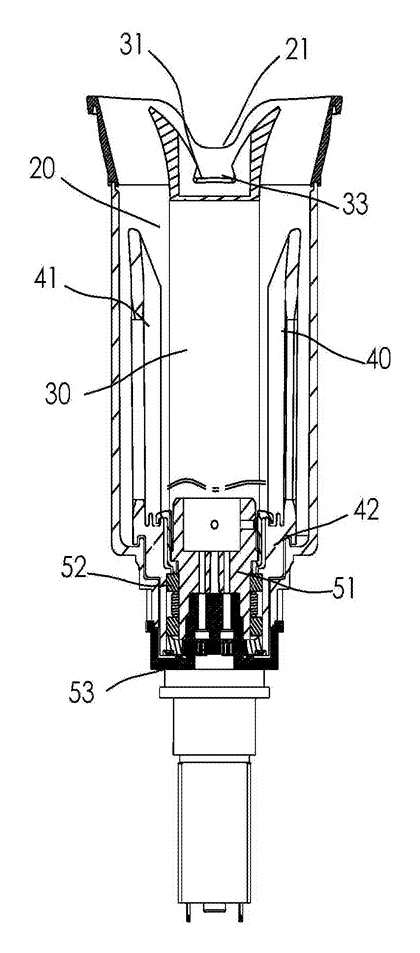
Drawings reproduced from the public patent document for reference.