
Patent CN205572377U
Updated October 26, 2026RFID-Enabled Smart Toolbox with Wireless Tool Tracking
Losing track of tools on a busy job site costs time and money. This design places a passive RFID tag on every instrument and builds an RFID reader directly into the storage box. When the lid closes or the user checks via a phone app, the reader scans every slot, identifies which tools are present and which are missing, and sends the list wirelessly to a mobile terminal. A processor can also estimate how far each tag is from the antenna, trigger colored indicator lights or a voice alarm if a tool has been removed, and report the box's own GPS or Beidou coordinates. Remote locking and unlocking instructions travel back from the phone to the box over the same wireless link.
- China utility model - lapsed
- No filings outside China
- Workshop & job-site storage
- RFID, wireless transceiver, optional GPS/Beidou
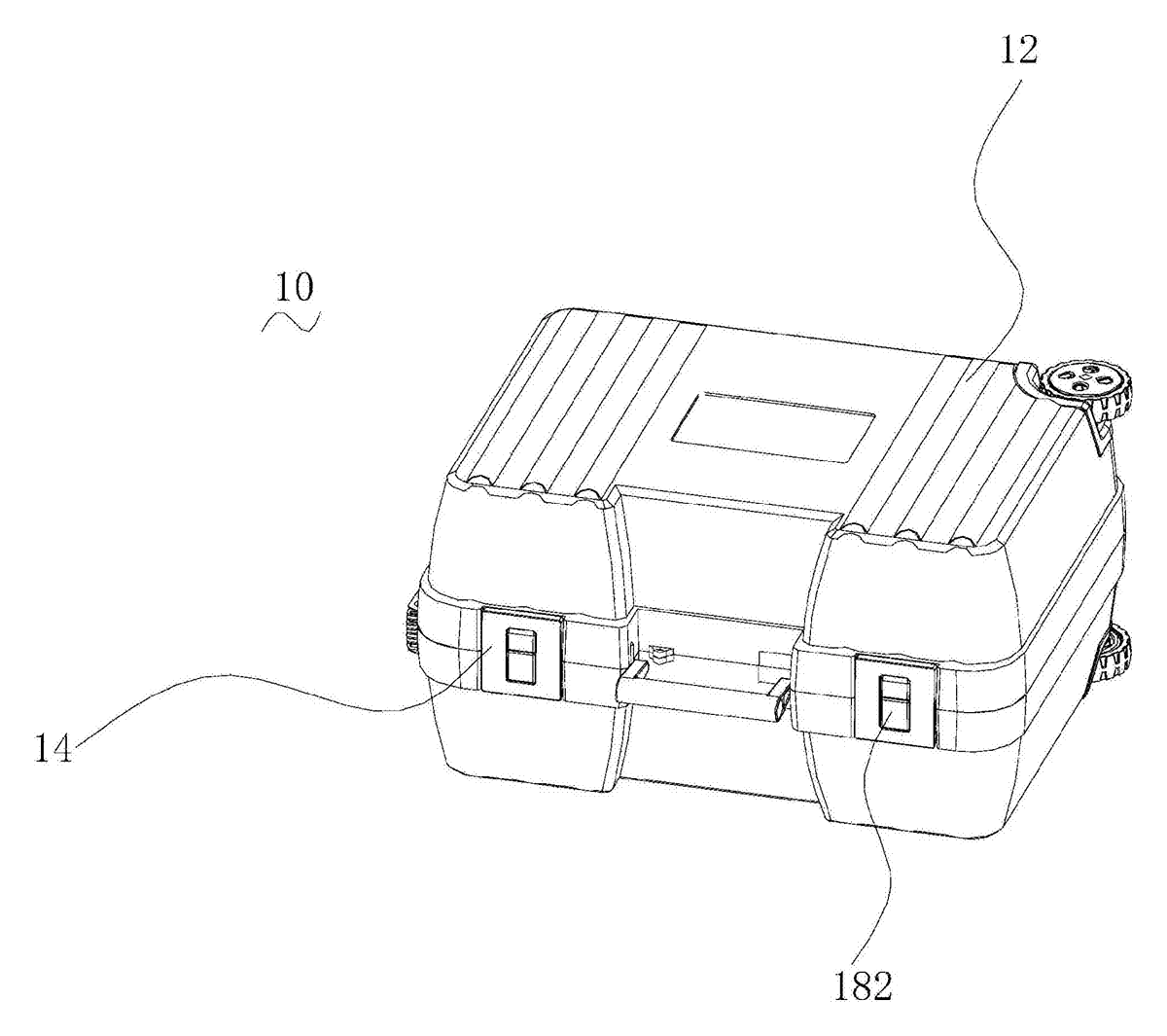
Splat! What let you down?
📡
Built-in RFID scanning
An internal antenna module activates passive tags on every tool and collects return signals without manual scanning.
📱
Mobile terminal sync
A wireless transceiver sends the tool-presence list to a smartphone or tablet so users check inventory remotely.
🚨
Distance-based alarms
The processor estimates tag distance; indicator lights or a voice alarm signal exactly which tool is missing.
🔒
Remote lock and location
The phone can send lock or unlock commands, and an optional positioning unit reports the box's GPS or Beidou coordinates.
Bring this product to market
- ✓ Patent vetted China-only family and legal status checked
- 2 Product brief · now How it works, uses and options written up
- 3 Prototype First samples for buyers to review
- 4 Pilot run Small first batch for launch customers
- 5 Volume production Repeat orders at scale
Buyer interest
– of 100 buyers needed to start prototyping
One click, no sign-up. Each vote is one real visitor, and products with the most interest go to prototyping first.
Build team: no members yet. Need a partner, co-funding or skills to build this? Join and we introduce the team once it forms.
The problem
On construction sites, in maintenance departments, and inside service vehicles, workers carry dozens of specialized instruments. At the end of a shift, someone must visually inspect every slot to confirm nothing was left behind. Manual counts are slow, prone to error, and become impossible when the lighting is poor or the crew is large. If a calibrated torque wrench or a diagnostic probe goes missing, the team may not discover it until the next job, leading to downtime or replacement costs. According to the patent, the objective is to let a user verify tool presence conveniently through a mobile terminal such as a cell phone, removing the need for visual inspection of every slot.
The solution
- The casing (1) contains multiple storage positions (2), each shaped to hold a specific instrument.
- Every instrument carries a passive RFID tag (3) programmed with unique identification information.
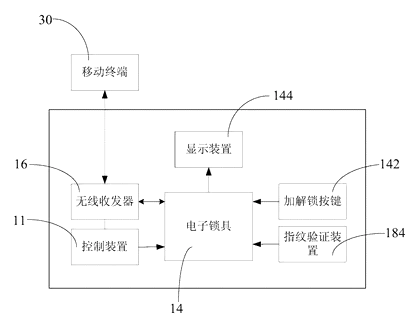
- An RFID reader (4) is mounted inside the casing. It includes an antenna module (41) that broadcasts radio-frequency waves to energize the tags and collect their return signals, and a reading module (42) that extracts the identification data.
- A processor (5) connected to the reader calculates the elapsed time between the transmitted wave and the received signal to estimate the distance to each tag.
- An alarm device (6) — either multiple warning indicator lights (61) mapped to individual storage positions or a voice alarm (62) — activates when the processor determines a tag is absent or beyond a set distance.
- A wireless transceiver (7) relays the identification list to a mobile terminal (8). The transceiver also receives lock or unlock instructions containing verification information from the mobile terminal.
- An optional position information monitoring device (9), comprising a Beidou or GPS navigation unit, feeds the box’s current coordinates through the transceiver to the phone.
Who it is for
- Commercial contractors and construction firms managing fleets of service vans where losing a single calibrated instrument delays an entire crew.
- Aviation and rail maintenance depots that operate under strict tool-control regulations requiring documented accountability after every shift.
- Equipment rental companies needing to verify that returned kits contain every item before issuing the next rental contract.
- Manufacturing plants running lean production lines where shadow boards are replaced by automated digital inventory at each workstation.
How it works
The main parts
| No. | Part | What it does |
|---|---|---|
| 1 | Casing | Outer shell housing all electronics and storage positions. |
| 2 | Storage positions | Individual molded or divided slots for each instrument. |
| 3 | RFID tags | Passive labels attached to tools, each holding unique ID data. |
| 4 | RFID reader | Scans the interior; includes antenna module (41) and reading module (42). |
| 5 | Processor | Computes signal timing to estimate tag distance and controls alarms. |
| 6 | Alarm device | Warning indicator lights (61) and/or voice alarm (62) for missing tools. |
| 7 | Wireless transceiver | Bridges the reader and processor to the mobile terminal; handles lock commands. |
| 8 | Mobile terminal | Smartphone or tablet displaying the tool inventory list. |
| 9 | Position monitoring device | Optional Beidou/GPS unit reporting the box’s geographic coordinates. |
Operating sequence
- Power on — the RFID reader’s antenna module emits radio-frequency waves throughout the interior of the casing.
- Tag activation — each passive RFID tag on a stored tool absorbs energy from the waves and responds with its unique identification signal.
- Signal collection — the antenna gathers the return signals; the reading module decodes the identification information.
- Distance calculation — the processor records the transmission time and the return time for each tag, deriving an estimated distance between the antenna and the tool.
- Status relay — the wireless transceiver packages the list of detected IDs and sends it to the paired mobile terminal.
- Alarm trigger — if a tag fails to respond or its calculated distance exceeds the expected range for its slot, the processor turns on the corresponding warning indicator light or sounds the voice alarm.
- Remote command — the user can tap the mobile app to send an unlock or lock instruction, verified by terminal credentials, back through the transceiver to the box.
- Location update — if equipped, the positioning unit streams GPS or Beidou coordinates to the phone so the box can be located on a map.
Applications
Construction and field service
Crews load the box into a van each morning. Before driving away, the foreman opens the app to confirm every drill bit and meter is seated. If a tool was left on the scaffold, the corresponding indicator light stays lit and the phone lists the missing item by name, preventing a return trip later in the day.
Aviation maintenance hangars
Regulators require positive tool control to avoid foreign-object damage inside aircraft. Mechanics scan the box after each task; the RFID reader verifies every wrench and gauge automatically. The log is timestamped on the mobile terminal, creating a digital record without paper checklists.
Equipment rental depots
Rental staff place returned kits on the counter and power the box. Within seconds the reader confirms all accessories are present. If a customer forgot to return a specialty adapter, the voice alarm flags it immediately, allowing the depot to charge accurately before the next renter takes the kit.
Manufacturing assembly lines
Operators keep critical gauges in the smart box at their station. During shift changes, the incoming worker glances at the indicator lights rather than counting items manually. The processor ensures no calibration tool walks off the line, supporting lean manufacturing audits.
Emergency response vehicles
Fire and rescue trucks carry specialized extraction instruments. After a call, the crew chief triggers a scan from the cab tablet. The wireless transceiver reports any missing cutter or spreader instantly, so the vehicle is confirmed ready for the next dispatch without a physical walk-around.
Where it is less suitable
- Environments with heavy metal shielding — dense steel enclosures or stacked metallic objects can attenuate RFID signals, reducing read reliability unless antenna placement is carefully engineered.
- Low-cost consumer toolboxes — the added electronics increase the bill of materials significantly compared to a basic plastic case, making it impractical for casual DIY buyers.
- Tools submerged in conductive liquids — passive RFID tags struggle to communicate when fully immersed in water or oil, limiting use in certain wet-process industries.
Frequently asked questions
How does the toolbox know which tools are inside?
Each tool carries a passive RFID tag programmed with a unique identifier. The built-in antenna module broadcasts radio-frequency waves that energize these tags. When a tag responds, the reading module decodes its ID, confirming the tool is in its designated storage position.
Does it just count tools, or does it tell me which one is missing?
It identifies specific tools. The processor compares the scanned IDs against the expected inventory list. If a particular tag does not respond, the system knows exactly which instrument is absent and flags it by name on the mobile terminal.
What happens when a tool is taken out?
The processor estimates the distance between the antenna and each tag based on signal timing. If a tag disappears or moves beyond the expected range for its slot, the alarm device activates. Depending on the configuration, either a specific warning indicator light illuminates next to the empty slot, or a voice alarm announces the missing item.
How does the box talk to my phone?
A wireless transceiver inside the casing bridges the RFID reader to the mobile terminal. The patent describes sending the identification data over this link, and receiving lock or unlock instructions back from the phone. The exact radio protocol is set during product development.
Can I lock the toolbox from my phone?
Yes. The patent specifies that the wireless transceiver receives unlocking or locking instructions from the mobile terminal. These commands include verification information to ensure only authorized users can secure or open the casing.
Does it have GPS tracking?
The design supports an optional position information monitoring device. According to the patent, this unit can comprise a Beidou positioning and navigation module, a GPS module, or both. It feeds the current coordinates through the wireless transceiver so the box appears on a map in the mobile app.
What powers the electronics?
The patent document does not specify the power source. In practice, a rechargeable battery pack sized to the casing is used, with capacity and charging method to be confirmed in design based on how often the reader polls the tags and which wireless protocol is chosen.
Can this design be made and sold in the US?
The patent was filed only in China and is lapsed (terminated for non-payment of annual fees, recorded 2025-03-07), so it does not restrict the design in the US or in China. RFID tool tracking systems may be covered by other US patents - see Patent & Production - so we recommend a freedom-to-operate check before volume production.
Are you affiliated with the patent owner?
No. IP2M is an independent design and manufacturing service working from the public patent document.
Request a quote
Click Request a Quote below to see our email address - copy it, or open your email app with a ready-made message. Please mention patent CN205572377U in the subject.
Helpful details to include:
- Your company and channel (contractor fleet, maintenance depot, rental house, industrial brand)
- Number and types of tools to be tracked, plus approximate casing dimensions
- Preferred RFID frequency (LF, HF, or UHF) and wireless protocol (Bluetooth, Wi-Fi, etc.)
- Alarm preference (indicator lights, voice, or both) and whether GPS tracking is required
- Estimated quantity and target price
- Timeline - when you would like samples and the first shipment
You can also reach us at (332) 203-9997.
Explore this product
Interested in building this?
Tell us your target market, quantity and timeline. We reply with options for prototyping, small-batch runs or volume production.
Send your inquiry to
Please put CN205572377U in the subject line and tell us your company, country, estimated quantity and timeline.
Prefer to talk? Call (332) 203-9997.
More product-ready patents
All Tools & Workshop patents →
Tools & Workshop
Rolling Tool Box with Telescoping Step Ladder
Telescoping A-frame ladder with an attached rolling tool box that slides to your working height.
Patent CN206290197U
Tools & Workshop
Folding 3-Handle Wrench Multi-Tool
Folding three-handle wrench multi-tool with magnetic screwdriver bits, saw, file and bottle opener.
Patent CN205290875U
Tools & Workshop
Rolling Auto-Repair Tool Cabinet with Built-In Lights
Lockable rolling tool cabinet for car repair with interior lights, a lubricant tray, parts drawers and a tool bay.
Patent CN205989314U
Tools & Workshop
Wide-Opening Folding Bolt Cutter
Bolt cutter with linked, gear-meshing handles that open up to 190° and fold in half for storage.
Patent CN207206226U
Tools & Workshop
Nail-Holding Hammer with Fold-Out Drivers
Hammer with a nail-holding T-slot in the head and fold-out drivers stored in the handle.
Patent CN205254927U
Tools & Workshop
Modular Wrench with Screw-On Heads
Wrench handle with a three-way threaded hub for screw-on adjustable and hex heads, plus a pipe sleeve.
Patent CN206216564U
Browse by category
- Apparel & Accessories (22)
- Baby & Kids (16)
- Bags & Luggage (9)
- Bath & Personal Care (16)
- Car Accessories (10)
- Furniture, Bedding & Storage (12)
- Garden & Outdoor (18)
- Health & Wellness (8)
- Home, Kitchen & Cleaning (24)
- Lighting (12)
- Packaging & Containers (6)
- Pet Products (6)
- Phone & Camera Accessories (4)
- Retail Display (13)
- School, Office & Art (19)
- Sports & Recreation (25)
- Tools & Workshop (27)
- Toys & Games (12)
This page is based on the public patent document CN205572377U, assigned to Positec Power Tools Suzhou Co Ltd. IP2M is an independent manufacturing service and is not affiliated with, endorsed by or licensed by the patent owner. Images marked as concept renderings are illustrations, not photos of an existing product. Patent status information is provided for reference only and is not legal advice; confirm freedom to operate for your market before production. Full disclaimer.