At a glance
| Patent number | CN205572377U (application CN201620183704) |
| Type | China utility model (实用新型) - protects product shape and structure |
| Original title | Intelligent toolbox (智能工具箱) |
| Patent owner | Positec Power Tools Suzhou Co Ltd |
| Inventors | Zheng Yue |
| Filing date | 2016-03-10 |
| Grant date | 2016-09-14 |
| Status (China) | Lapsed - terminated for non-payment of annual fees (recorded 2025-03-07) |
| Patent family | Chinese filings only - no US, European, Japanese, PCT or other filings listed |
| Cited by | 18 later documents |
| Source | Google Patents (search for CN205572377U) |
What the claims cover, in plain language
Claim 1 — a toolbox with a casing having at least one storage position for tools. Each tool carries an RFID tag with unique identification information. A built-in RFID reader activates the tags, collects their signals, reads the identification data, and sends it to a mobile terminal.
Claim 2 — the RFID reader comprises an antenna module that transmits radio-frequency waves to activate and collect tag signals, and a reading module that extracts the identification information. Claim 3 — a processor connected to the antenna module calculates distance information based on the transmission time of the radio wave and the return time of the RFID signal. Claim 4 — an alarm device connected to the processor issues an alarm message according to the estimated distance between the reader and the tagged tool. Claim 5 — the alarm device includes multiple warning indicator lights, each corresponding to the distance information of a specific tool’s RFID tag. Claim 6 — the alarm device includes a voice alarm that sounds according to the distance between the reader and the tag. Claim 7 — a wireless transceiver connects the RFID reader to the mobile terminal to transmit the identification data. Claim 8 — the wireless transceiver receives unlocking or locking instructions from the mobile terminal, which include verification information. Claim 9 — the wireless transceiver connects to a position information monitoring device to send the box’s current location to the mobile terminal. Claim 10 — the position monitoring device comprises a Beidou positioning and navigation unit and/or a GPS positioning and guidance unit.
This is a simplified reading for orientation only. The legal scope is defined by the exact claim wording in the official Chinese document.
What this means for US production
This patent was filed only in China and is lapsed (terminated for non-payment of annual fees, recorded 2025-03-07), so it no longer restricts anyone in China either. It has no US or other foreign counterpart.
Two points to settle early:
- Other patents may exist. RFID-based tool tracking systems and smart storage cabinets are actively patented by major industrial suppliers and technology companies in the US, covering antenna configurations, software methods, and enclosure designs, so a freedom-to-operate (FTO) review of the specific RFID polling method and enclosure integration is needed before tooling.
- Electronic certification. Because the product contains active radio transmitters and a rechargeable power source, it falls under mandatory electronic safety and emissions rules in every target market.
Customization and manufacturing
What can be customized
| Area | Options |
|---|---|
| Casing material | Injection-molded ABS, polypropylene, or reinforced nylon for impact resistance |
| Interior layout | Custom foam inserts, vacuum-formed trays, or modular dividers sized to the buyer’s tool set |
| RFID frequency | LF (125 kHz), HF (13.56 MHz), or UHF (860-960 MHz) depending on read-range and regulatory needs |
| Connectivity | Bluetooth Low Energy, Wi-Fi, or proprietary sub-GHz radio for the wireless transceiver |
| Alarms | LED indicators per slot, piezo buzzer, or synthesized voice prompts |
| Positioning | GPS, GLONASS, or Beidou module; cellular-assisted location for indoor/outdoor switching |
| Power | Rechargeable lithium-ion pack capacity, external DC input, or replaceable battery tray |
| Locking | Electronic solenoid latch, motorized deadbolt, or manual override keyed cylinder |
Things to plan for (US market)
- FCC Part 15 — any intentional radiator (the RFID reader and wireless transceiver) must be tested and certified or verified for electromagnetic emissions before sale in the United States.
- UL 62368-1 — audio/video, information and communication technology equipment safety standard applicable to the internal electronics and power supply.
- UN 38.3 — required transport testing for lithium-ion batteries shipped inside or with the toolbox.
- California Prop 65 — plastics, flame retardants, and battery chemistries must be screened for listed substances.
How a project runs
- Inquiry — define the tool set, casing dimensions, preferred RFID frequency, connectivity protocol, and target environment.
- Design — engineer the casing mold, lay out the antenna geometry for reliable reads across all slots, select the processor and transceiver modules, and draft the firmware logic.
- Prototype — produce machined or 3D-printed enclosures with assembled PCBs to validate read rates, alarm triggers, and wireless range.
- Pilot run — manufacture a small batch using soft tooling or initial hard molds, run FCC pre-compliance scans, and perform drop and environmental tests.
- Production — injection molding, SMT assembly, firmware flashing, functional testing of every unit, and final packaging.
Quantities & timeline
The project requires injection molds for the outer casing and interior trays, printed circuit board fabrication and surface-mount assembly lines, custom firmware development, and third-party laboratory testing for FCC and UL certifications. Battery sourcing and UN 38.3 transport certification add lead time. Send us your tool dimensions, desired RFID frequency, connectivity preference, quantity and target price and we will reply with options.
Patent drawings
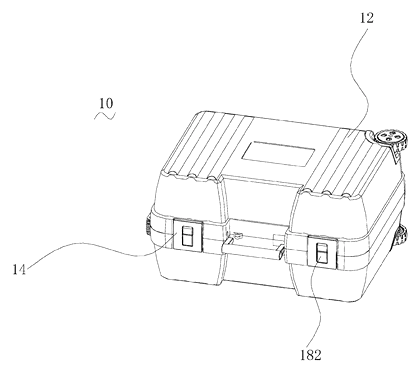
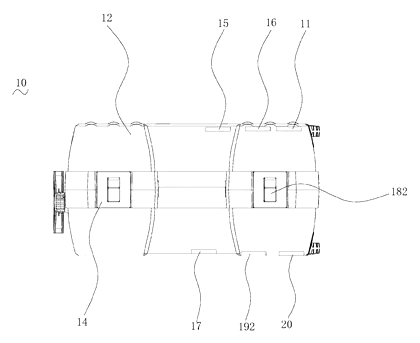
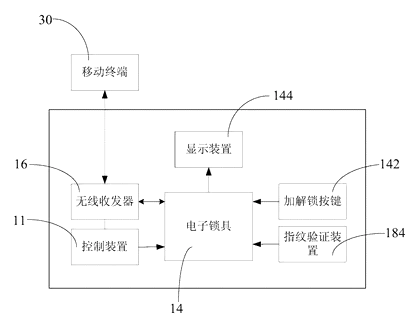
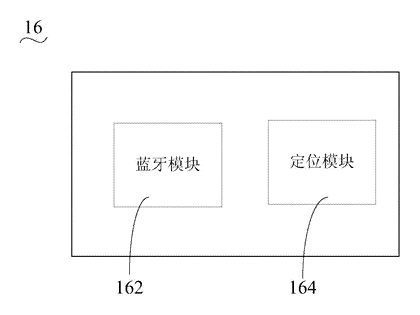
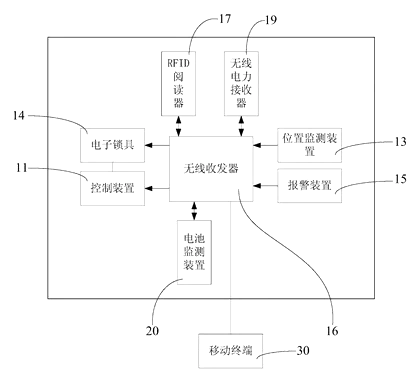
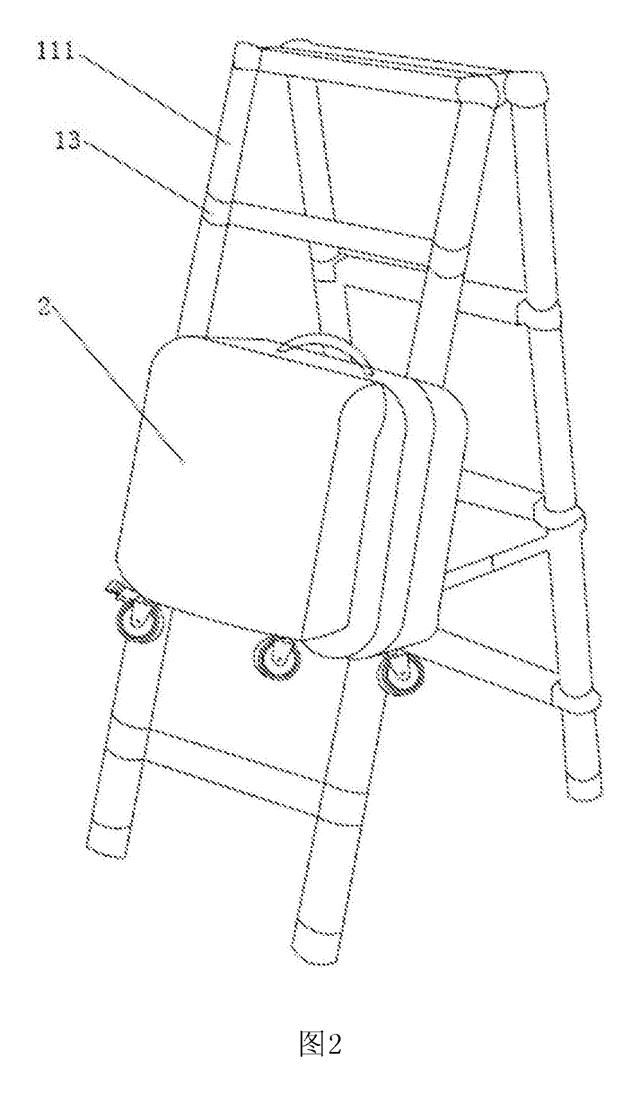
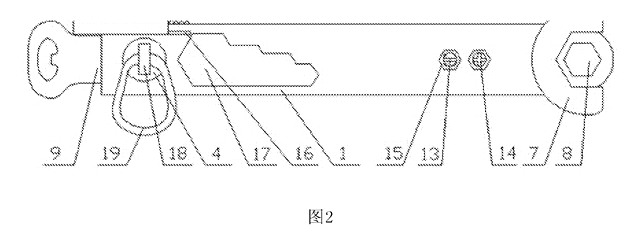
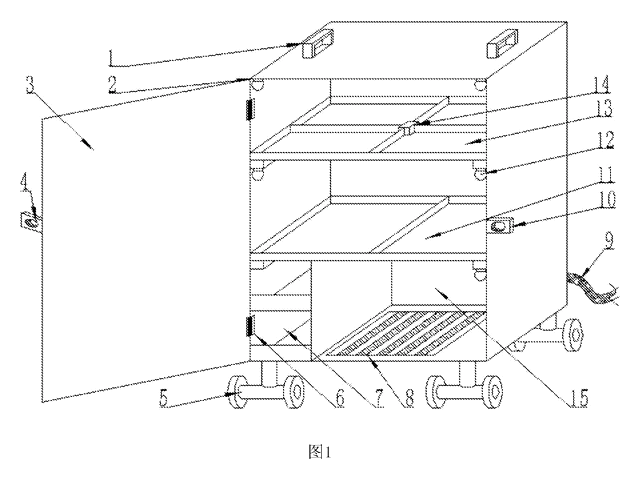
Drawings reproduced from the public patent document for reference.