
Patent CN205795062U
Updated October 23, 2026Stacked Zipper with Teeth That Mesh Top-to-Bottom
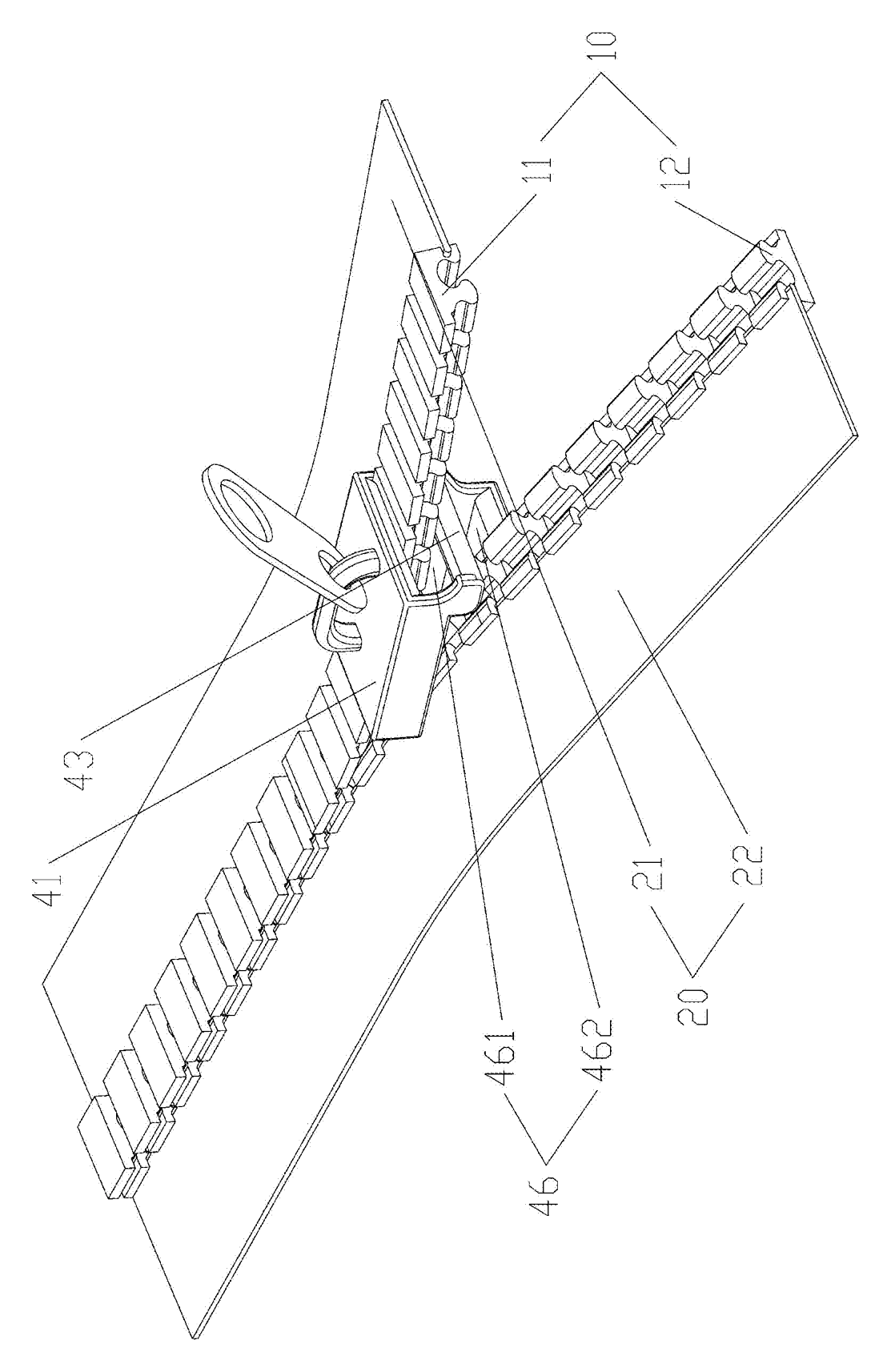
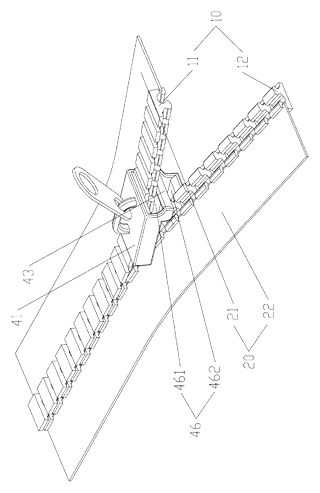
Ordinary zippers interlock their teeth side by side, and every zipper on the market looks much the same. In this design the two rows close on top of each other. The lower row is simply the upper row turned over, and each tooth has a raised cusp and a hollow socket; the cusps of one row drop into the sockets of the other. The slider is simpler than usual: a top and bottom plate joined by a diagonal divider, with sloped inner faces that squeeze the rows together as it moves.
- China utility model - expired
- No filings outside China
- Zippers & trims
- Molded or metal teeth, die-cast slider
Splat! What let you down?
🔁
One tooth part for both rows
The lower row is the upper row turned over 180 degrees - one tooth design, one mold.
🧩
Cusp-and-socket teeth
Each tooth has a raised cusp and a hollow socket that lock into the opposite row.
🛷
Simpler slider
Two plates joined by a diagonal divider, with sloped faces that press the rows together.
✨
A new look
A closed zipper that looks different from standard side-by-side teeth.
Bring this product to market
- ✓ Patent vetted China-only family and legal status checked
- 2 Product brief · now How it works, uses and options written up
- 3 Prototype First samples for buyers to review
- 4 Pilot run Small first batch for launch customers
- 5 Volume production Repeat orders at scale
Buyer interest
– of 100 buyers needed to start prototyping
One click, no sign-up. Each vote is one real visitor, and products with the most interest go to prototyping first.
Build team: no members yet. Need a partner, co-funding or skills to build this? Join and we introduce the team once it forms.
The problem
Almost every zipper in the world interlocks its teeth side by side. The patent argues that this sameness leaves designers and consumers with little variety, and that complicated sliders limit how strongly the teeth hold together. For apparel and bag brands, the zipper is one of the few trims that is visible on almost every product - a different closing style is a design detail customers notice.
The solution
The patent stacks the tooth rows instead of placing them side by side:
- Teeth (10) are fixed on tapes (20) to form rows (30) - an upper row (31) and a lower row (32).
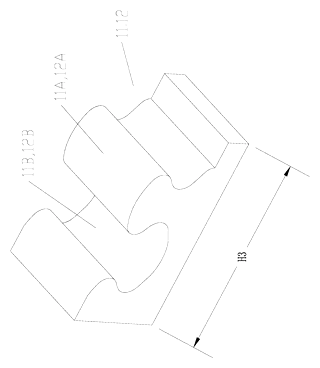
- The lower row is the upper row turned over 180 degrees, so both rows use the same tooth.
- Each tooth has a raised cusp (11A, 12A) and a hollow socket (11B, 12B). When closed, the cusps of each row sit in the sockets of the other, one row on top of the other.
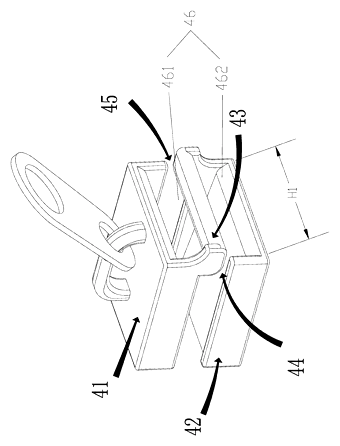
- The slider (40) has an upper plate and a lower plate joined by a diagonal divider that separates the rows, with an entry for each row above and below it.
- The inner faces of the plates slope, narrowing from the entries to the closing end, so the slider presses the rows into full engagement; the cavity width matches the tooth width for precise meshing.
Who it is for
- Zipper and trims manufacturers looking for a distinctive product line.
- Apparel, outerwear and bag brands that want a signature closure detail.
- Footwear and accessory designers - boots, pouches and cases with a new zipper look.
How it works
The main parts
| No. | Part | What it does |
|---|---|---|
| 10, 11, 12 | Teeth | Upper teeth (11) and lower teeth (12) - the same part, flipped. |
| 11A, 12A | Cusps | Raised parts that enter the opposite row’s sockets. |
| 11B, 12B | Sockets | Hollows that receive the opposite cusps. |
| 20-22 | Tapes | Fabric tapes carrying the rows. |
| 31, 32 | Upper and lower rows | Stack on top of each other when closed. |
| 40 | Slider | Upper and lower plates, diagonal divider, sloped inner faces. |
Closing
- Insert the pin and start the slider as usual.
- The upper row enters above the divider, the lower row below it.
- The sloped plates squeeze the rows together as the slider moves.
- The cusps drop into the sockets - the zipper is closed with one row stacked on the other.
Opening
Pulling the slider back separates the rows at the divider: one row leaves above it, the other below.
Applications
Outerwear and sportswear
A visible signature zipper on jackets, fleeces and pockets.
Bags and luggage
A distinctive closure on totes, backpacks and pouches.
Footwear
Boot and sneaker zippers with a different look.
Home textiles and cases
Cushion covers, pencil cases and cosmetic bags.
Where it is less suitable
- Very high-load closures - tents, heavy luggage and protective gear need proven strength data; tests would be required first.
- Price-driven basic garments - a standard coil zipper will usually be cheaper.
Frequently asked questions
How is it different from a normal zipper?
In a normal zipper the teeth interlock side by side. According to the patent, here the two rows close one on top of the other, with the cusps of each row seated in the sockets of the other.
Why are both rows the same part?
The lower row is the upper row turned over 180 degrees. One tooth design serves both rows, which simplifies tooling.
How does the slider work?
It has a top and a bottom plate joined by a diagonal divider. One row enters above the divider and one below; the sloped inner faces of the plates press them together.
Is it as strong as a standard zipper?
The patent says the design improves the bite strength between teeth but gives no figures. We test strength (for example to ASTM D2061) on samples before any claim is made.
Can it be made in metal and plastic?
Yes - the tooth shape suits molded plastic or metal teeth; the choice depends on the look and strength you need.
Can you supply chain by the meter?
Yes - as continuous chain with sliders, or as finished zippers cut to length.
Can this design be made and sold in the US?
The patent was filed only in China and has expired, so it does not restrict the design in the US or in China. Zipper designs are actively patented by large zipper makers - see Patent & Production - so we recommend a freedom-to-operate check before volume production.
Are you affiliated with the patent owner?
No. IP2M is an independent design and manufacturing service working from the public patent document.
Request a quote
Click Request a Quote below to see our email address - copy it, or open your email app with a ready-made message. Please mention patent CN205795062U in the subject.
Helpful details to include:
- Your company and product (apparel, bags, footwear, trims distribution)
- Zipper type and size (closed-end, separating, two-way)
- Materials, colors and finishes
- Slider and pull design
- Estimated quantity and target price
- Timeline - when you would like samples and the first shipment
You can also reach us at (332) 203-9997.
Explore this product
Interested in building this?
Tell us your target market, quantity and timeline. We reply with options for prototyping, small-batch runs or volume production.
Send your inquiry to
Please put CN205795062U in the subject line and tell us your company, country, estimated quantity and timeline.
Prefer to talk? Call (332) 203-9997.
More product-ready patents
All Apparel & Accessories patents →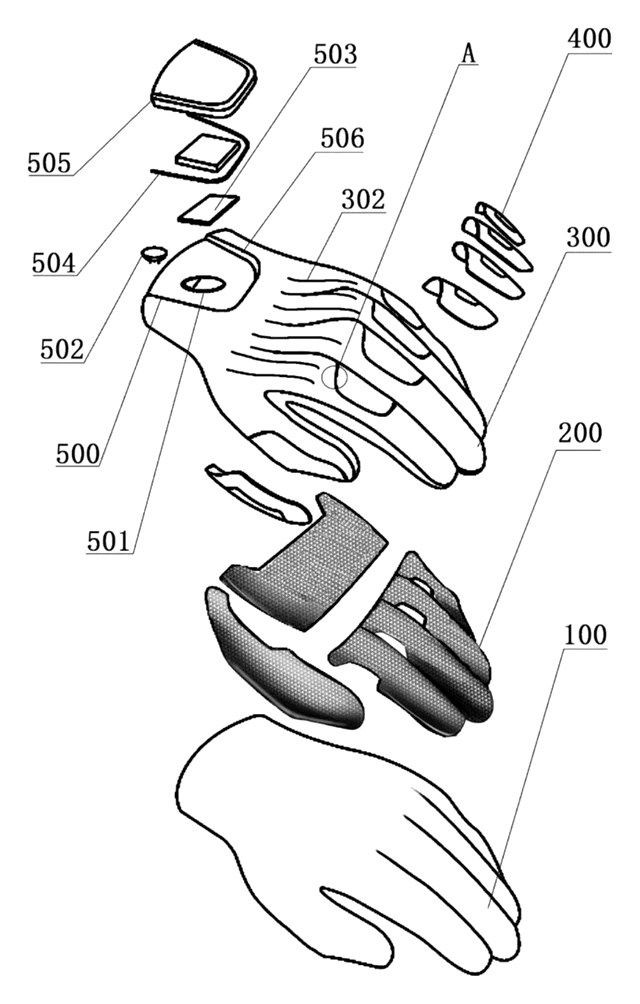
Apparel & Accessories
Impact-Resistant Glove with a 3D-Printed Lattice Layer
Work glove with a 3D-printed lattice impact layer, TPU knuckle guards and a light mounting area.
Patent CN213785583U
Apparel & Accessories
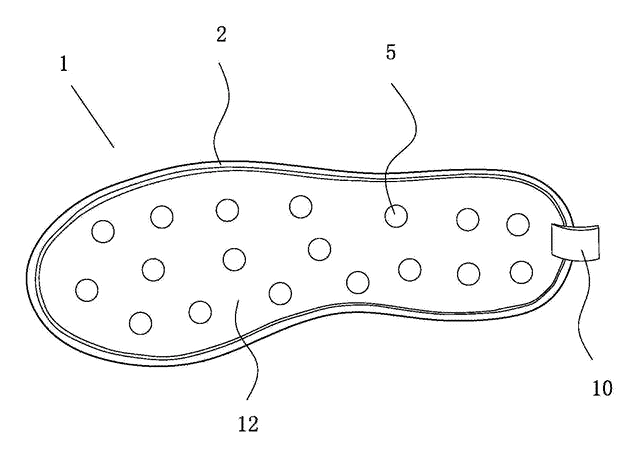
Massage Insole with Spring-Back Silicone Nubs and a Removable Top Layer
Layered insole: silicone nubs rise through a removable perforated top sheet and sink under each step.
Patent CN208286505U
Apparel & Accessories
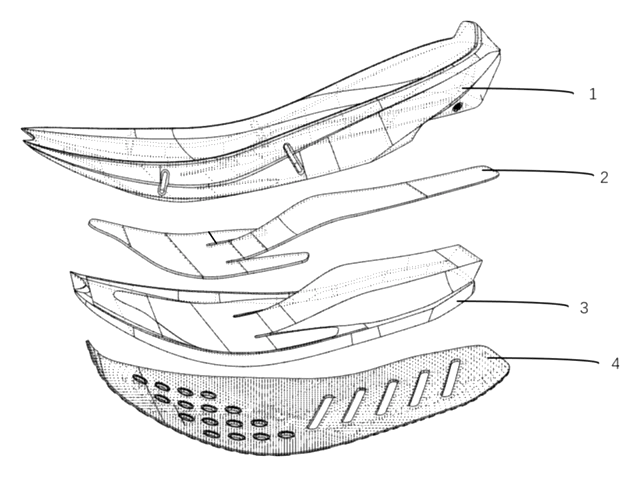
Heel-Less Carbon Plate Running Shoe Sole for Forefoot Strikers
Running sole for forefoot strikers: no ground-touching heel, winged carbon plate between two midsoles.
Patent CN216723354U
Apparel & Accessories
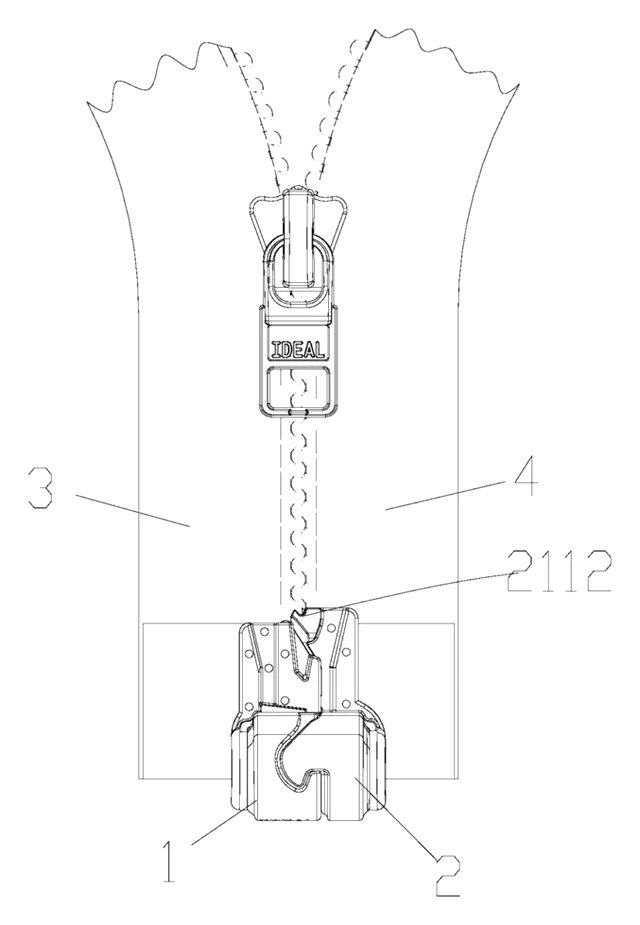
Waterproof Magnetic Zipper Stop That Snaps the Two Halves Together
Separating-zipper stop with sealed magnets: pin and box snap together one-handed, safe in rain and wash.
Patent CN215075936U
Apparel & Accessories
Left-Right Specific Soccer Socks: Grip for the Plant Foot, Touch Pads for the Kicking Foot
Soccer socks knitted as a left-right pair: grip zones for the plant foot, pads for the kicking foot.
Patent CN212728807U
Apparel & Accessories
Self-Sheathing Telescopic Umbrella That Opens and Retracts into Its Own Tube
Umbrella stored in its own sleeve: pull and push the handle to open, reverse to draw the wet canopy in.
Patent CN206729396U
Browse by category
- Apparel & Accessories (22)
- Baby & Kids (16)
- Bags & Luggage (9)
- Bath & Personal Care (16)
- Car Accessories (10)
- Furniture, Bedding & Storage (12)
- Garden & Outdoor (18)
- Health & Wellness (8)
- Home, Kitchen & Cleaning (24)
- Lighting (12)
- Packaging & Containers (6)
- Pet Products (6)
- Phone & Camera Accessories (4)
- Retail Display (13)
- School, Office & Art (19)
- Sports & Recreation (25)
- Tools & Workshop (27)
- Toys & Games (12)
This page is based on the public patent document CN205795062U, assigned to Fujian SBS Zipper Science and Technology Co., Ltd.. IP2M is an independent manufacturing service and is not affiliated with, endorsed by or licensed by the patent owner. Images marked as concept renderings are illustrations, not photos of an existing product. Patent status information is provided for reference only and is not legal advice; confirm freedom to operate for your market before production. Full disclaimer.