
Patent CN206026282U
Updated October 25, 2026Electromagnetic Slide-Open Detergent Dispenser for Dishwashers
This design uses a pull-in electromagnet linked to a crank mechanism to release the detergent compartment. The user loads detergent by pressing a manual button that trips a spring-loaded lock; a torsion spring then slides the cover out of the way. When detergent needs to flow out, the electromagnet is energized, the armature moves the crank, and the automatic lock releases the sliding cover. The patent describes release by a pull-in electromagnet.
- China utility model - lapsed
- No filings outside China
- Dishwasher components
- Electromagnetic release, torsion-spring slide cover
Splat! What let you down?
🧲
Electromagnetic release
A pull-in electromagnet drives a crank to trip the automatic lock, opening the cover instead of relying on a wax motor.
👆
Manual push-button loading
Pressing the button separates the manual lock from the sliding cover, letting the torsion spring slide it open for filling.
🌀
Torsion-spring return
One end of the spring acts on the cover's upper wall plate and the other on the cavity floor, providing a sliding force.
🛡️
Guided slide rod
A guide protrusion on the driving part runs inside a guide groove, keeping the cover aligned as it opens and closes.
Bring this product to market
- ✓ Patent vetted China-only family and legal status checked
- 2 Product brief · now How it works, uses and options written up
- 3 Prototype First samples for buyers to review
- 4 Pilot run Small first batch for launch customers
- 5 Volume production Repeat orders at scale
Buyer interest
– of 100 buyers needed to start prototyping
One click, no sign-up. Each vote is one real visitor, and products with the most interest go to prototyping first.
Build team: no members yet. Need a partner, co-funding or skills to build this? Join and we introduce the team once it forms.
The problem
Built-in dishwashers need a compartment to hold detergent until the moment in the wash cycle when it should dissolve. Traditional dispensers often rely on wax motors or bi-metallic strips that expand under heat to pop a lid open. Over time, these thermal actuators lose their stroke, stick due to dried detergent residue, or respond slowly, causing the detergent to dump early or not at all.
The solution
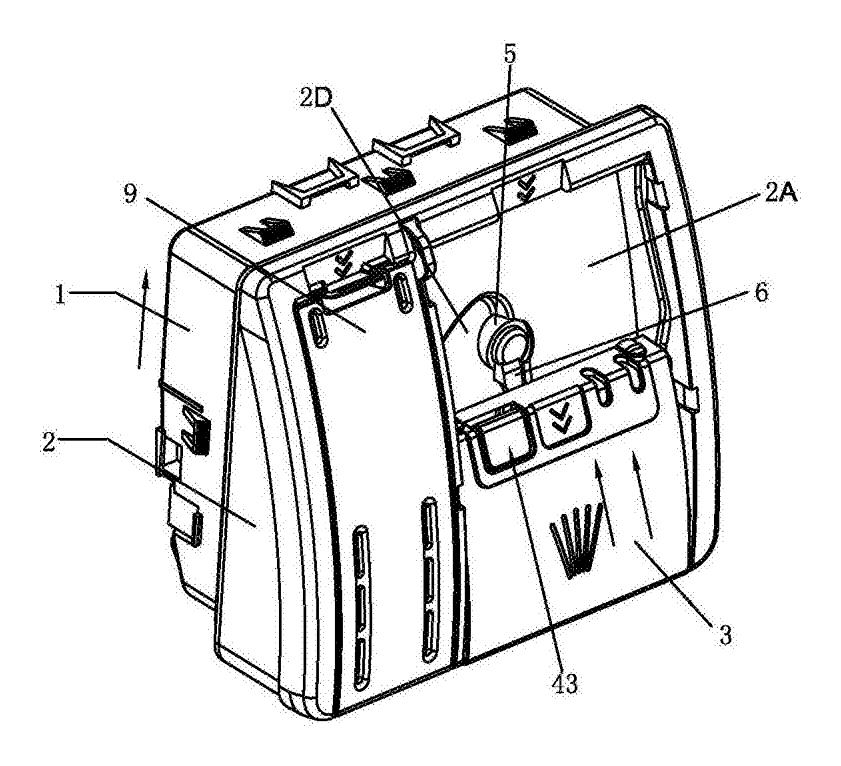
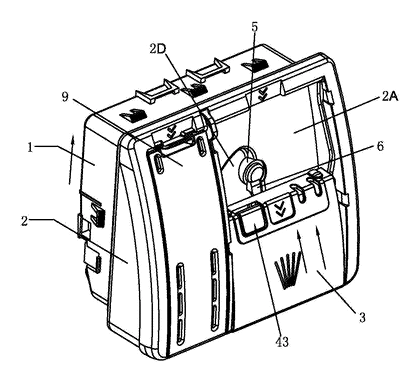
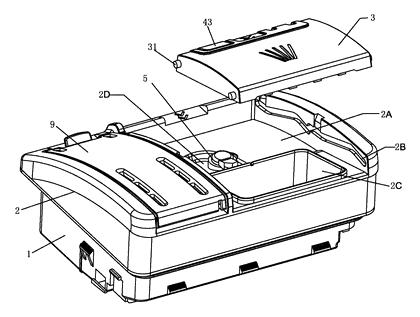
The patent describes a dispenser built from a bottom shell and a front cover that snap together. Inside, a sliding cover rides over the washing-liquid cavity. Loading is handled manually: pressing a button moves a locking part against a pressure spring, separating it from the cover so a torsion spring (mounted in its own cavity between the cover’s upper wall plate and the cavity floor) slides the cover open. Once filled, the user pushes the cover closed and the lock re-engages.
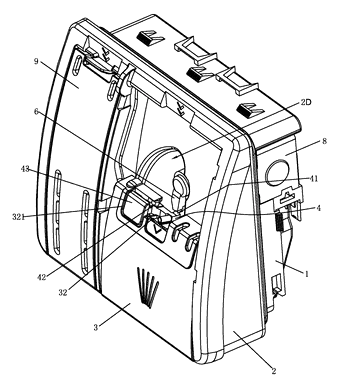
For automatic release during the cycle, a pull-in electromagnet is provided. Its armature connects to a crank via a rotating shaft passing through pivot joint holes in the front cover and bottom shell. When the electromagnet is energized, the armature moves the crank, which pushes a driving part. This driving part carries a guide protrusion that slides along a guide groove, forcing the automatic locking component away from the sliding cover. Freed from the lock, the torsion spring drives the cover open, exposing the detergent to the wash water. A return spring (one end on the crank, the other anchored to the bottom shell) resets the crank when power is cut.
Who it is for
- Dishwasher OEMs and ODMs seeking an electromagnetically released detergent mechanism to replace wax-motor designs in new product lines.
- Appliance component suppliers that manufacture door-mounted modules and want to offer an electromagnetic alternative to thermal actuators.
- Commercial dishwasher builders looking for a release mechanism that does not depend on thermal expansion.
- Aftermarket repair brands looking for replacement dispensers that use solenoid-driven operation.
How it works
The main parts
| No. | Part | What it does |
|---|---|---|
| 1 | Bottom shell | Forms the rear housing and anchors the return spring. |
| 2 | Front cover | Snaps onto the bottom shell; holds pivot joint holes. |
| 3 | Sliding cover | Slides over the cavity to cover or expose the detergent. |
| 4 | Torsion spring | Sits in a dedicated cavity; pushes the sliding cover open. |
| 5 | Manual locking assembly | Includes the locking part, pressure spring and button. |
| 6 | Button | Protrudes through a hole in the front cover for manual release. |
| 7 | Pressure spring | Biases the locking part into the locked position. |
| 8 | Pull-in electromagnet | Generates linear force when energized. |
| 9 | Armature | Moves inside the electromagnet to drive the crank. |
| 10 | Crank | Pivots on the rotating shaft to transfer motion. |
| 11 | Rotating shaft | Passes through pivot holes in the covers. |
| 12 | Driving part | Pushed by the crank; has a guide protrusion. |
| 13 | Guide protrusion / groove | Keeps the driving part aligned during travel. |
| 14 | Return spring | Pulls the crank back when the electromagnet is off. |
Operating steps
- Loading detergent - The user presses the button (6). This compresses the pressure spring (7) and pivots the locking part out of engagement with the sliding cover (3).
- Cover opens - Released from the manual lock, the torsion spring (4) unwinds. One end pushes against the cover’s upper wall plate while the other pushes against the cavity floor, sliding the cover open along its track.
- Filling and closing - Detergent is poured into the exposed cavity. The user pushes the sliding cover closed against the spring force until the locking part clicks back into place under pressure-spring tension.
- Automatic release - During the wash cycle, current is supplied to the pull-in electromagnet (8). The armature (9) is drawn inward, pivoting the crank (10) around the rotating shaft (11).
- Lock separation - The crank pushes the driving part (12). Its guide protrusion travels inside the guide groove, forcing the automatic locking component away from the sliding cover.
- Dispensing - With the automatic lock cleared, the torsion spring slides the cover open, releasing the detergent into the tub.
- Reset - Power to the electromagnet is cut. The return spring (14), stretched between the crank and the bottom shell, pulls the crank back to its resting position, ready for the next cycle.
Applications
Residential built-in dishwashers
Home appliances can use the electromagnet to release the detergent compartment. The solenoid operates without relying on thermal expansion.
Commercial under-counter machines
Restaurants run short, frequent cycles. An electromagnetic release avoids heat-soak issues associated with thermal actuators.
Drawer-style dishwashers
Compact drawer units have limited space behind the door panel. The profile of the sliding cover combined with the pull-in electromagnet fits into tighter cavities compared to bulky wax-motor housings.
Multi-compartment dispensers
Machines that separate pre-wash and main-wash detergent can use two independent electromagnetic modules on a single base shell. Each cavity opens on its own signal.
Retrofit and upgrade kits
Service technicians replacing failed wax-motor dispensers in older models can install this unit if the control board supports the required output. The mechanical footprint remains similar, but the release mechanism changes.
Where it is less suitable
- Portable countertop dishwashers that lack a dedicated driver circuit for an electromagnet may find the electrical integration more complex than a passive thermal latch.
- Extremely low-cost entry-level machines where the added expense of a coil, armature and crank mechanism outweighs the benefit.
Frequently asked questions
How does the cover open automatically?
When power is supplied to the pull-in electromagnet, its armature moves inward. This pivots a crank attached to a rotating shaft, which pushes a driving part along a guide groove. The driving part forces the automatic locking component away from the sliding cover, and the stored energy in the torsion spring slides the cover open to release the detergent.
Can I load detergent manually without power?
Yes. Pressing the button on the front cover compresses a pressure spring and pivots the manual locking part out of the way. The torsion spring then slides the cover open so you can fill the cavity. Pushing the cover closed re-engages the lock mechanically.
Is the electromagnet exposed to water inside the dishwasher?
The patent shows the electromagnet, armature, and crank in the dispenser assembly. The sliding cover covers the washing-liquid cavity, and the mechanical linkage passes through pivot joint holes. Proper gasketing around these holes during manufacturing keeps the electrical components isolated from the wash chamber’s steam and spray.
What types of detergent work with this cavity?
The cavity volume is determined by the shell mold. It can be sized during design to hold standard powder, liquid gel, or single-dose pods. The sliding cover’s travel path can accommodate different detergent formats if leakage is prevented before release.
Does the crank mechanism wear out over many cycles?
The driving part uses a guide protrusion running inside a guide groove to keep lateral forces low. Material selection for the crank pivot and the guide surfaces (such as glass-filled PBT or POM) determines long-term wear. Cycle-life validation under heat and humidity is part of the pilot-run testing phase.
Can this replace a wax-motor dispenser in an existing dishwasher?
Mechanically, the shell dimensions can be designed to match standard door cutouts. Electrically, a wax motor typically runs on line voltage through a simple timer or relay, whereas this pull-in electromagnet may require a specific DC or rectified pulse. The control board firmware might need adjustment to provide the correct signal duration for the solenoid stroke.
Can this design be made and sold in the US?
The patent was filed only in China and is lapsed (terminated for non-payment of annual fees, recorded 2025-06-27), so it does not restrict the design in the US or in China. Dishwasher dispenser mechanisms may be covered by other US patents - see Patent & Production - so we recommend a freedom-to-operate check before volume production.
Are you affiliated with the patent owner?
No. IP2M is an independent design and manufacturing service working from the public patent document.
Request a quote
Click Request a Quote below to see our email address - copy it, or open your email app with a ready-made message. Please mention patent CN206026282U in the subject.
Helpful details to include:
- Your company and channel (appliance OEM, component supplier, aftermarket brand)
- Target dishwasher type (residential built-in, drawer, commercial under-counter)
- Detergent format (powder, liquid, pod) and required cavity volume
- Electrical supply available for the electromagnet (voltage, AC/DC, pulse duration)
- Mounting dimensions or door-panel cutout specifications
- Estimated quantity and target price
- Timeline - when you would like samples and the first shipment
You can also reach us at (332) 203-9997.
Explore this product
Interested in building this?
Tell us your target market, quantity and timeline. We reply with options for prototyping, small-batch runs or volume production.
Send your inquiry to
Please put CN206026282U in the subject line and tell us your company, country, estimated quantity and timeline.
Prefer to talk? Call (332) 203-9997.
More product-ready patents
All Home, Kitchen & Cleaning patents →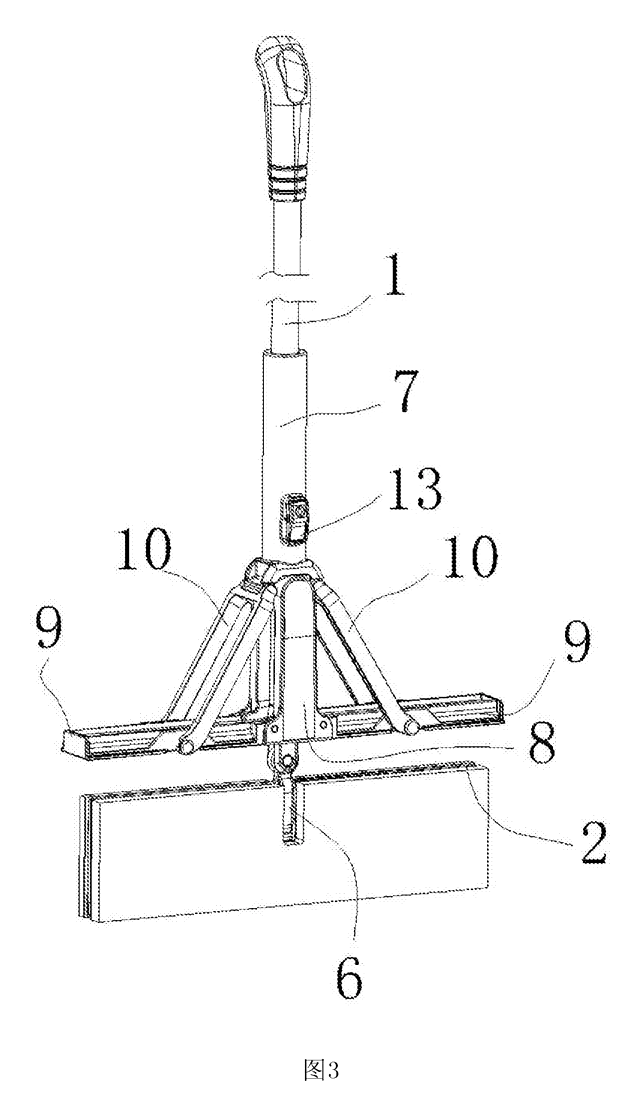
Home, Kitchen & Cleaning
Self-Wringing Flat Mop with Fold-Away Wringer
Flat mop with a built-in wringer that opens only when you wring and folds flat against the pole when you mop.
Patent CN207734114U
Home, Kitchen & Cleaning
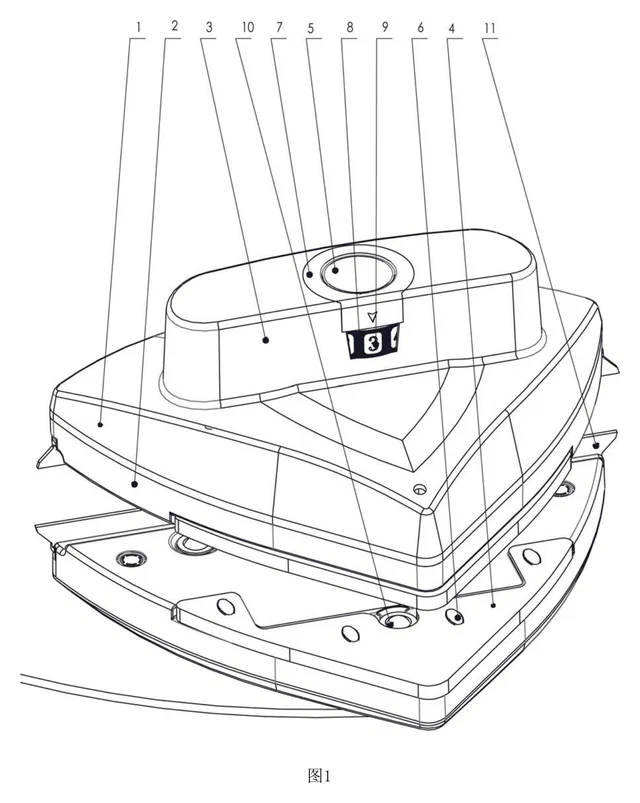
Magnetic Double-Sided Window Cleaner with Dial-Set Magnet Strength
Magnetic window cleaner with a sealed, sliding magnet, dial-set strength for different glass thicknesses and a spring-held idle position.
Patent CN209360543U
Home, Kitchen & Cleaning
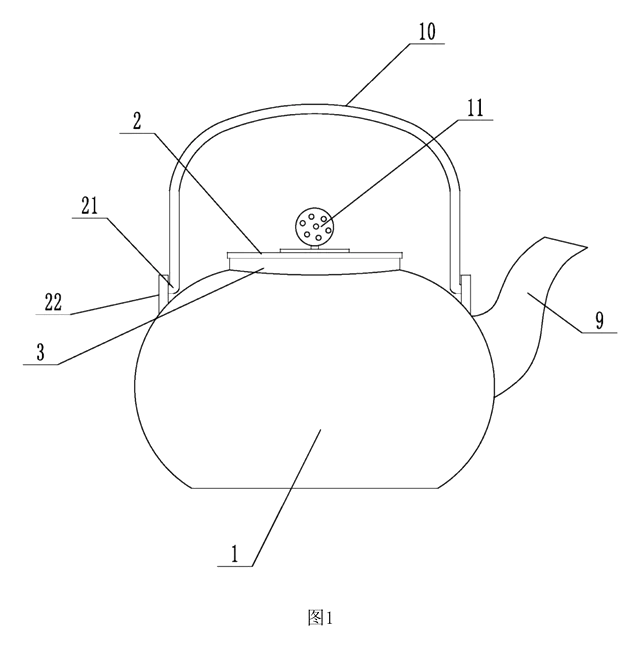
Metal Kettle with Magnetic Lid That Stays On When Pouring
Metal teapot/kettle with a magnet-held lid that does not fall off when pouring, and an insulated, vented lid knob.
Patent CN210540477U
Home, Kitchen & Cleaning
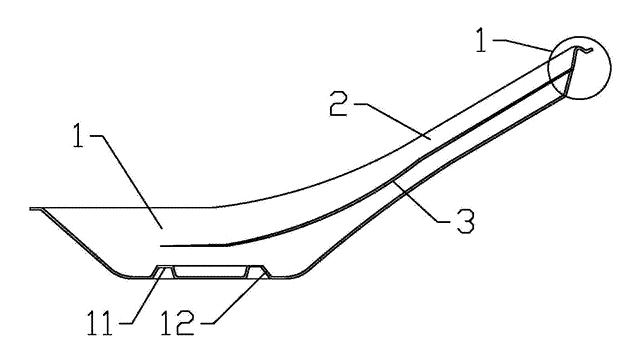
Reinforced Disposable Soup Spoon
Disposable soup spoon with a handle-to-bowl rib, stiffened edges and a ring foot to resist breaking.
Patent CN206964482U
Home, Kitchen & Cleaning
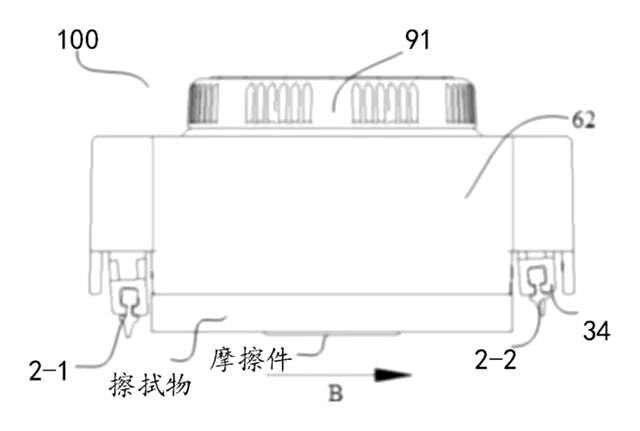
Self-Switching Double-Squeegee Window Cleaner
Cleaning head with two squeegee blades that switch automatically with the direction of movement.
Patent CN212630655U
Home, Kitchen & Cleaning
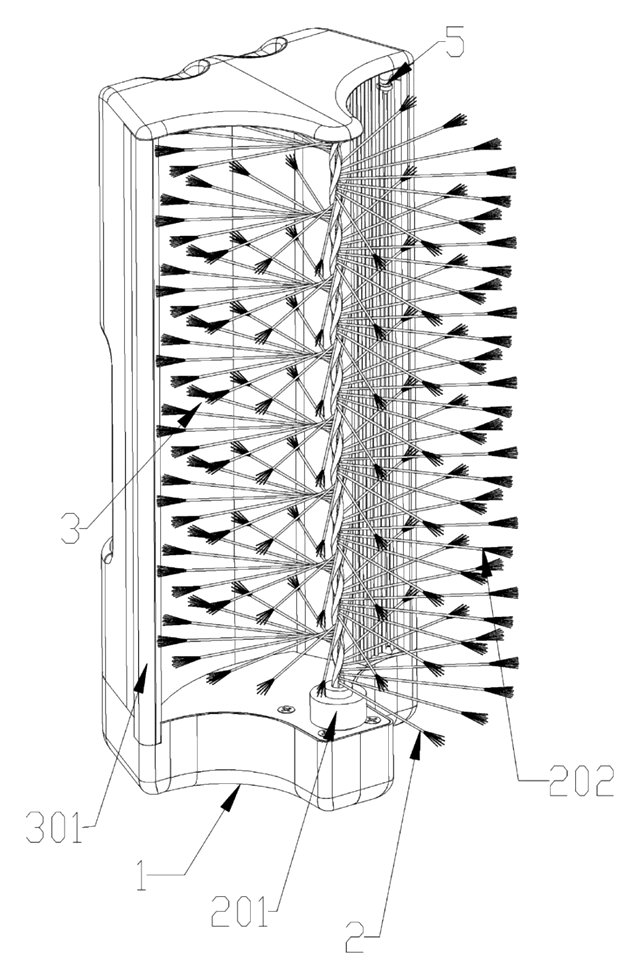
Self-Rinsing Roller Scrub Brush with Dirty-Water Tank
Powered roller brush that rinses and spins its bristles clean inside the body and stores the dirty water.
Patent CN210076909U
Browse by category
- Apparel & Accessories (22)
- Baby & Kids (16)
- Bags & Luggage (9)
- Bath & Personal Care (16)
- Car Accessories (10)
- Furniture, Bedding & Storage (12)
- Garden & Outdoor (18)
- Health & Wellness (8)
- Home, Kitchen & Cleaning (24)
- Lighting (12)
- Packaging & Containers (6)
- Pet Products (6)
- Phone & Camera Accessories (4)
- Retail Display (13)
- School, Office & Art (19)
- Sports & Recreation (25)
- Tools & Workshop (27)
- Toys & Games (12)
This page is based on the public patent document CN206026282U, assigned to Individual. IP2M is an independent manufacturing service and is not affiliated with, endorsed by or licensed by the patent owner. Images marked as concept renderings are illustrations, not photos of an existing product. Patent status information is provided for reference only and is not legal advice; confirm freedom to operate for your market before production. Full disclaimer.