
Patent CN206101908U
Updated October 28, 2026Detachable Luggage Wheel Assembly with Card and Pivot Lock
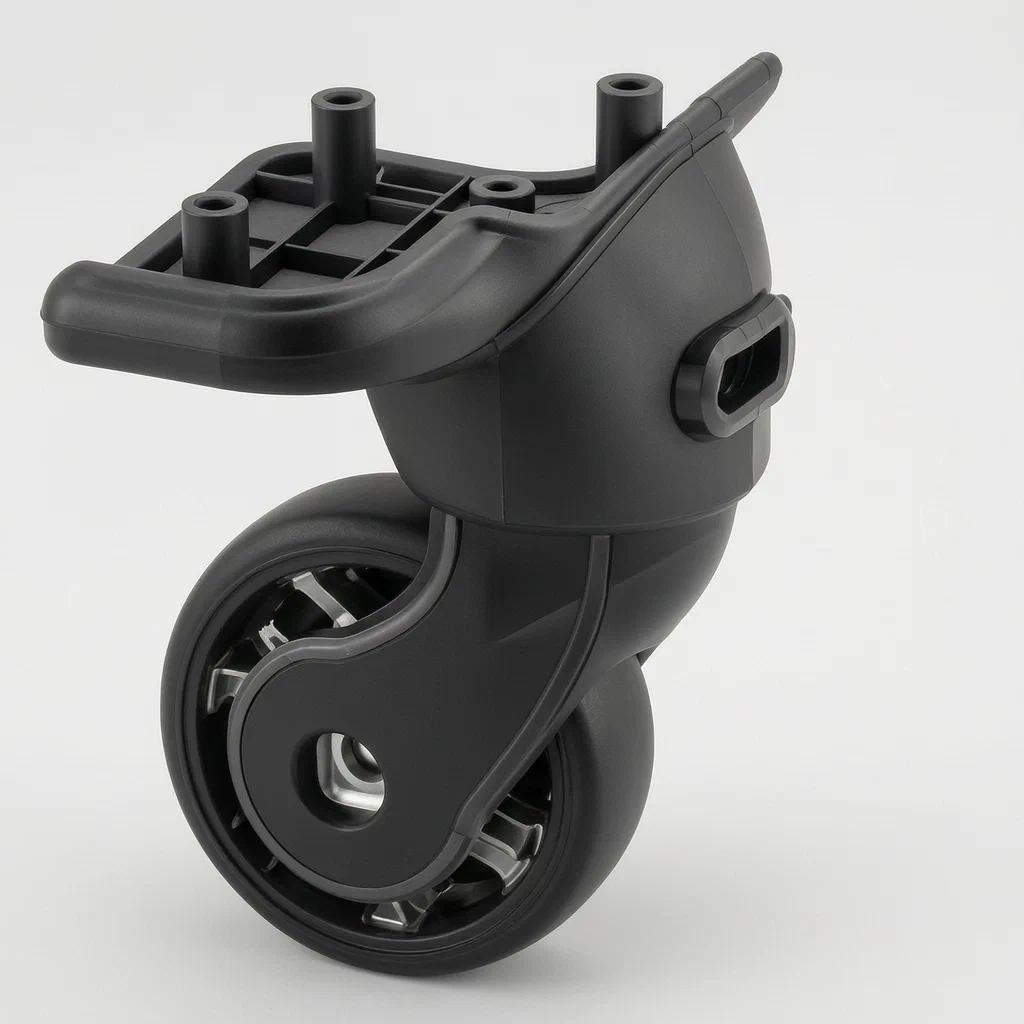
Fixed luggage wheels take up space when bags are stacked for shipping or storage, and exposed wheels scuff against the fabric of neighboring cases. This design solves both issues by letting the wheel carrier detach completely from the bag's connecting seat. Instead of screws or tools, the mechanism uses a sliding card and a pivot. Push the card along its slot, and the pivot releases from the connecting seat so the wheel carrier comes off. Slide it back, and the upper and lower gear junctions on the card catch the pivot's slot space, locking the wheel firmly in place. An elastic restoring force returns the card to the locked position, while a protective cover screwed over the seat houses a slider that runs inside a limit chute on the card, keeping everything aligned during travel.
- China utility model - lapsed
- No filings outside China
- Bags & luggage hardware
- Card and pivot locking mechanism
Splat! What let you down?
🔓
Tool-free detachment
The wheel carrier separates from the connecting seat by sliding the card, requiring no tools or screws.
📦
Compact storage
Removing the wheels reduces the overall volume of the luggage, allowing more units per shipping container.
⚙️
Dual-junction lock
Upper and lower gear junctions on the card coincide with the pivot's slot surfaces to block displacement.
🛡️
Guided protection
A protective cover with a slider engages a limit chute on the card to keep the mechanism aligned.
Bring this product to market
- ✓ Patent vetted China-only family and legal status checked
- 2 Product brief · now How it works, uses and options written up
- 3 Prototype First samples for buyers to review
- 4 Pilot run Small first batch for launch customers
- 5 Volume production Repeat orders at scale
Buyer interest
– of 100 buyers needed to start prototyping
One click, no sign-up. Each vote is one real visitor, and products with the most interest go to prototyping first.
Build team: no members yet. Need a partner, co-funding or skills to build this? Join and we introduce the team once it forms.
The problem
Standard luggage wheels are permanently attached to the bottom of the bag. When suitcases are packed into cartons for wholesale shipping or placed on retail shelves, the protruding wheels consume extra volume. That added bulk increases freight costs because fewer units fit into a standard container or pallet. During transit and warehouse handling, the hard plastic or rubber wheels press against the fabric or shell of adjacent bags, causing scuffs, friction marks, and surface damage. For consumers, replacing a broken wheel on a traditional suitcase often means taking the entire bag to a repair shop or discarding it, since the mounting hardware is riveted or bolted through the shell.
The solution
This utility model describes a wheel assembly designed to separate cleanly from the bag body.
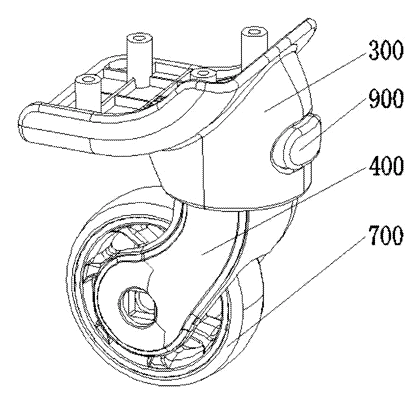
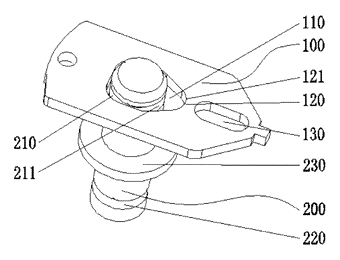
- The core mechanism relies on a card (100) and a pivot (200). The card slides in a straight line inside a slot (320) on the case and bag connecting seat (300), while the pivot moves linearly through a through hole (310) in the same seat.
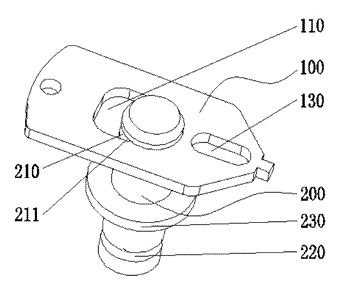
- The card features an irregularly shaped hole clipping (110). One end allows the pivot to insert, while the other end restricts the pivot’s movement once engaged.
- The pivot contains a card slot space (210). A receiving part (120) extending from the card inserts directly into this space.
- To secure the lock, an upper gear junction (121) on the receiving part coincides with the lower perspective plane of the card slot space. Simultaneously, the lower perspective plane of the receiving part coincides with the upper surface (211) of the card slot space. These mating surfaces prevent the pivot from shifting out of position.
- An elastic restoring force acts between the card and the connecting seat, holding the assembly in the locked state during normal use.
- A protective cover (500) is fastened to the connecting seat by screws. Underneath, a slider (510) on the cover inserts into a limit chute (130) on the card, guiding its travel path.
- At the base, the pivot connects to the wheel carrier (400) using a pin (600) secured by screws, with an annular groove (220) at the pivot’s lower end accommodating the joint. An axle sleeve mold insert with an annular groove sits inside the through hole to support rotation.
Who it is for
- Luggage brands and manufacturers looking to offer flat-pack suitcases that reduce outbound freight volume and shipping costs.
- Amazon sellers and e-commerce wholesalers who ship large quantities of bags and need to maximize the number of units per carton or container.
- Retail buyers for department stores seeking luggage lines that take up less shelf and stockroom space before assembly.
- Replacement parts distributors who want to supply standalone wheel carriers that consumers can snap onto compatible connecting seats without tools.
How it works
The main parts
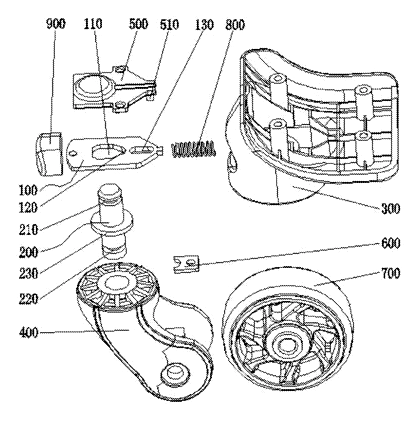
| No. | Part | What it does |
|---|---|---|
| 100 | Card | Slides in the slot; its receiving part locks into the pivot. |
| 110 | Hole clipping | Irregular hole in the card that admits and captures the pivot. |
| 120 | Receiving part | Protrusion on the card that inserts into the pivot’s slot space. |
| 121 | Upper gear junction | Surface on the receiving part that mates with the pivot to block movement. |
| 130 | Limit chute | Track on the card that guides the protective cover’s slider. |
| 200 | Pivot | Moves through the connecting seat’s hole; links the card to the wheel carrier. |
| 210 | Card slot space | Cavity in the pivot that receives the card’s receiving part. |
| 211 | Upper surface | Top face of the card slot space that mates with the receiving part’s lower plane. |
| 220 | Annular groove | Groove at the bottom of the pivot for pin attachment. |
| 300 | Case and bag connecting seat | Base mounted to the luggage shell; holds the slot and through hole. |
| 310 | Through hole | Axis hole in the seat for the pivot. |
| 320 | Slot | Groove in the seat guiding the card’s straight-line movement. |
| 400 | Wheel carrier | Holds the roller (700); attaches to the pivot via a pin. |
| 500 | Protective cover | Screwed over the seat; houses the slider. |
| 510 | Slider | Extends from the cover into the limit chute to guide the card. |
| 600 | Pin | Fastens the pivot to the wheel carrier. |
Operating steps
- To detach the wheel: Apply force to slide the card along its slot against the elastic restoring force. As the card moves, the receiving part withdraws from the pivot’s card slot space, shifting the mechanism from the locked state, through the relative displacement state, into the disassembly state. The pivot is now free to move, allowing the wheel carrier to be pulled away from the connecting seat.
- To attach the wheel: Insert the pivot into the through hole and align the wheel carrier. Release the card so the elastic restoring force pushes it back. The receiving part enters the card slot space until the upper gear junction and lower perspective plane coincide with the pivot’s surfaces, returning the assembly to the locked state.
Applications
Flat-pack e-commerce shipping
Online luggage sellers ship high volumes daily. Detaching the wheels allows each suitcase to pack flat, fitting more units into a single master carton and lowering dimensional weight charges from carriers.
Warehouse and retail storage
Stockrooms in department stores have limited floor space. Bags stored with detached wheels stack neatly on shelves without the wheels crushing the fabric of the cases below them.
Consumer wheel replacement
Travelers frequently break wheels on rough airport tarmac. With this design, a user can slide the card, remove the damaged wheel carrier, and snap on a new one without visiting a repair shop or using tools.
Multi-wheel configurations
Some heavy-duty bags use four or six wheels. Detachable assemblies let manufacturers ship the bag body and wheel sets in separate compartments, preventing the wheels from scratching the outer shell during ocean freight.
Where it is less suitable
- Ultra-lightweight softside bags - the connecting seat, card, and pivot add localized structure and weight that thin nylon shells may not support well.
- Integrated spinner chassis - bags molded as a single unibody shell with recessed wheels do not use a separate connecting seat.
- Heavy industrial transport cases - flight cases and road trunks rely on bolted casters rated for extreme loads rather than sliding card mechanisms.
Frequently asked questions
How does the wheel attach and detach?
The assembly uses a sliding card and a pivot. To remove the wheel, the card is pushed along its slot, withdrawing a receiving part from a slot space inside the pivot. This shifts the mechanism into a disassembly state, allowing the wheel carrier to pull away. Releasing the card lets an elastic restoring force push it back, re-engaging the lock.
Do I need tools to change the wheel?
No. The patent describes a manual sliding action between the card and the pivot to switch between the locked and disassembly states. The protective cover is fastened with screws during manufacturing, but the end user operates the release mechanism by hand.
What keeps the wheel from falling off during travel?
When locked, an upper gear junction on the card’s receiving part coincides with the lower perspective plane of the pivot’s slot space, and the lower perspective plane of the receiving part coincides with the upper surface of the slot space. This dual-surface mating blocks the pivot from moving. An elastic restoring force also holds the card in the locked position.
What materials are used?
The patent text does not specify materials. Plastics for the card, pivot, seat, and carrier, along with rubber or polyurethane for the roller, are to be confirmed in design based on the required load and durability.
How much weight can one wheel carry?
The patent provides no load ratings. Wall thicknesses, material choices, and the dimensions of the pin and pivot are set in design and confirmed on prototypes through drop and rolling tests.
Is the mechanism protected from dirt?
A protective cover is fixed over the connecting seat by screws. Underneath the cover, a slider inserts into a limit chute on the card, which helps guide the movement and shields the internal track from direct exposure.
Can this fit any suitcase?
The connecting seat must be integrated into or mounted onto the luggage shell. The hole pattern and seat profile are customized to match the specific bag mold during the design phase.
Can this design be made and sold in the US?
The patent was filed only in China and is lapsed, so it does not restrict the design in the US or in China. Detachable luggage wheels may be covered by other US or international patents - see Patent & Production - so we recommend a freedom-to-operate check before volume production.
Are you affiliated with the patent owner?
No. IP2M is an independent design and manufacturing service working from the public patent document.
Request a quote
Click Request a Quote below to see our email address - copy it, or open your email app with a ready-made message. Please mention patent CN206101908U in the subject.
Helpful details to include:
- Your company and channel (luggage brand, Amazon seller, wholesaler, replacement parts distributor)
- Bag type and dimensions the wheel assembly will mount to
- Target load capacity per wheel or per bag
- Roller diameter and tread material preferences
- Estimated quantity and target price
- Timeline - when you would like prototypes and the first shipment
You can also reach us at (332) 203-9997.
Explore this product
Interested in building this?
Tell us your target market, quantity and timeline. We reply with options for prototyping, small-batch runs or volume production.
Send your inquiry to
Please put CN206101908U in the subject line and tell us your company, country, estimated quantity and timeline.
Prefer to talk? Call (332) 203-9997.
More product-ready patents
All Bags & Luggage patents →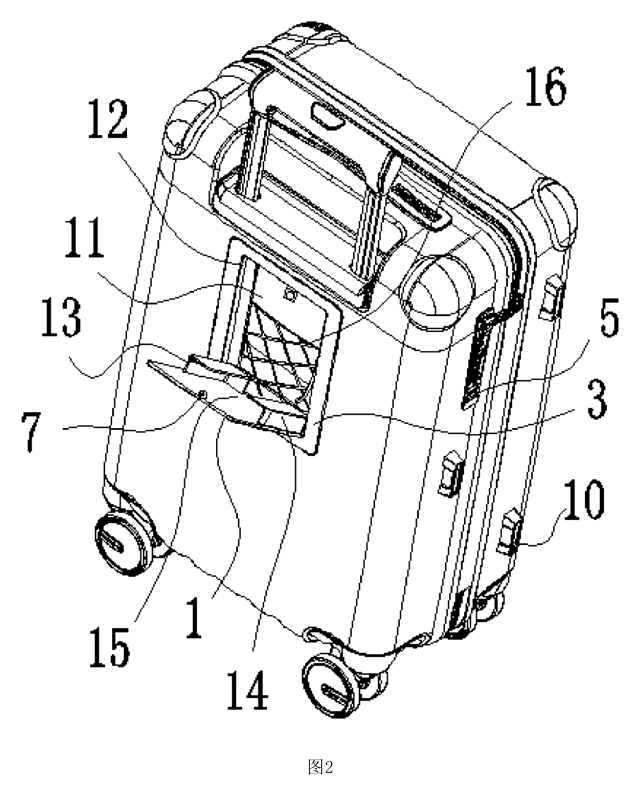
Bags & Luggage
Quick-Access Luggage with Fold-Down Back Compartment
Hard-shell suitcase with a fold-down compartment in the back panel for phone, passport and power bank - no need to open the case.
Patent CN210076793U
Bags & Luggage
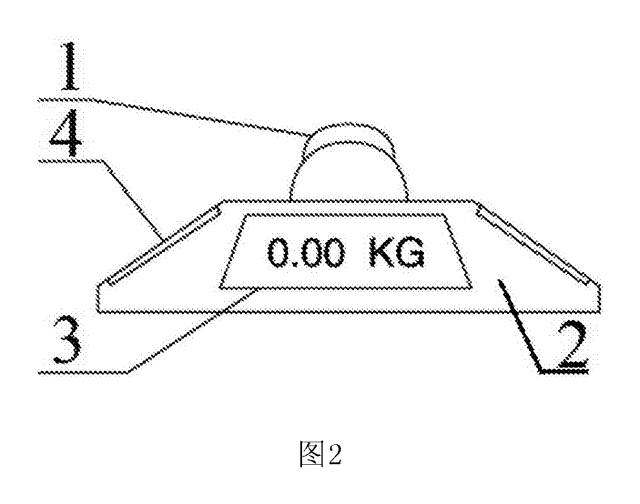
Luggage Handle with Built-In Scale
Suitcase carry handle with a built-in weighing sensor and display - lift the bag and read its weight.
Patent CN206670777U
Bags & Luggage
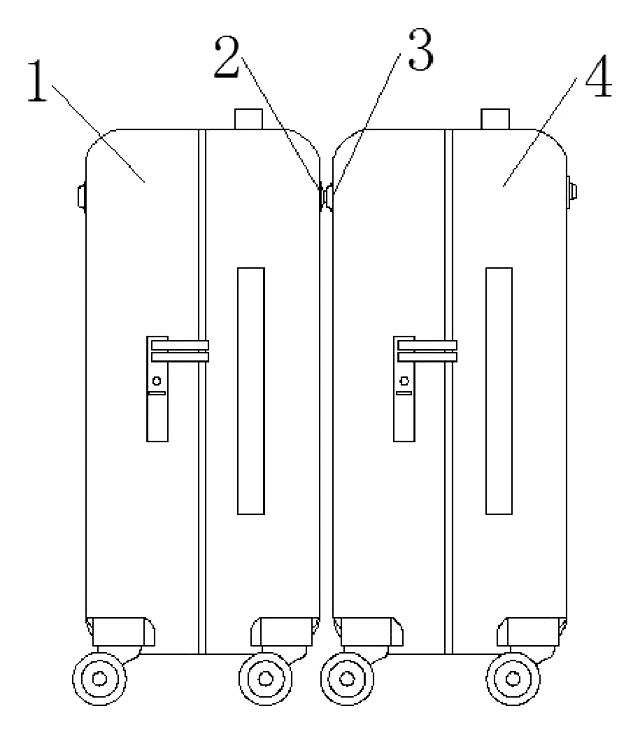
Snap-Together Luggage Connector
Stud-and-socket snap built into suitcases so two cases lock together and roll with one hand.
Patent CN209862619U
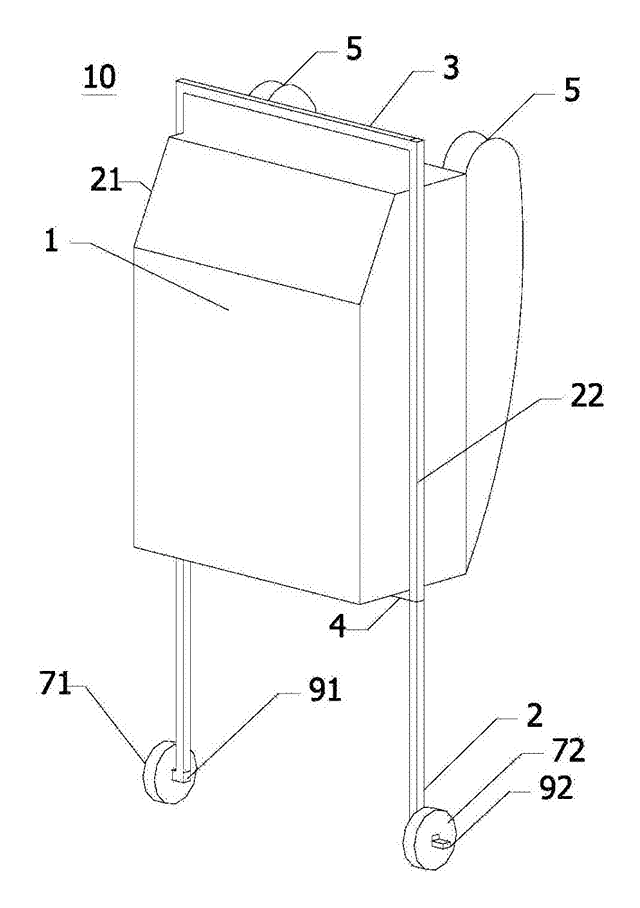
Bags & Luggage
Side-Rail Rolling Backpack with Raised Wheels
Rolling backpack with pull rails on the sides, not the back, and rails that lower the wheels.
Patent CN207733803U
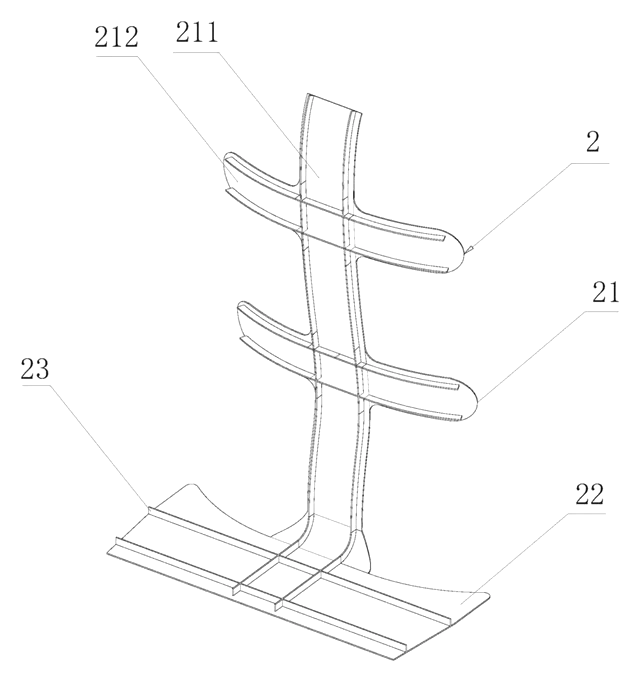
Bags & Luggage
Backpack with Removable Body-Shaped Inner Frame
Backpack with a lift-out inner frame shaped to the back that spreads the load to the back and hips.
Patent CN216534262U
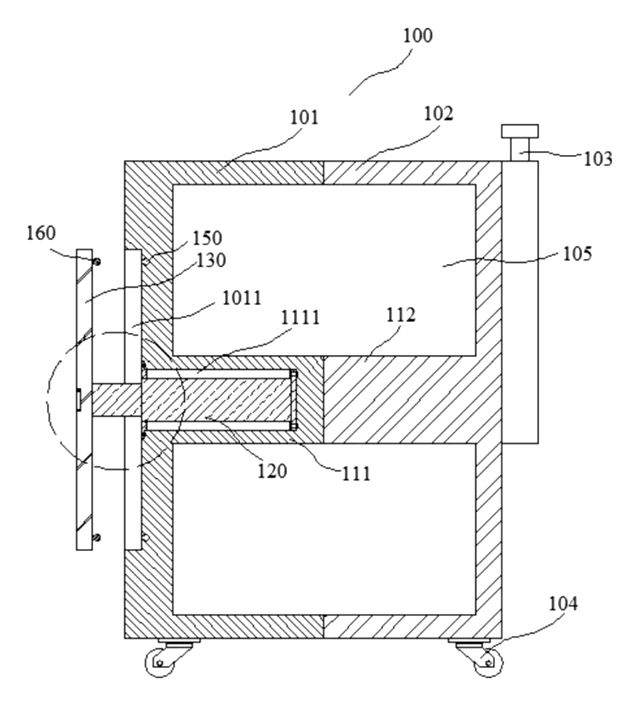
Bags & Luggage
Hard-Shell Luggage Case with a Built-In Lift Table
Hard-shell luggage with a telescopic rod and desktop that rises from the lid.
Patent CN107485137B
Browse by category
- Apparel & Accessories (22)
- Baby & Kids (16)
- Bags & Luggage (9)
- Bath & Personal Care (16)
- Car Accessories (10)
- Furniture, Bedding & Storage (12)
- Garden & Outdoor (18)
- Health & Wellness (8)
- Home, Kitchen & Cleaning (24)
- Lighting (12)
- Packaging & Containers (6)
- Pet Products (6)
- Phone & Camera Accessories (4)
- Retail Display (13)
- School, Office & Art (19)
- Sports & Recreation (25)
- Tools & Workshop (27)
- Toys & Games (12)
This page is based on the public patent document CN206101908U, assigned to Individual. IP2M is an independent manufacturing service and is not affiliated with, endorsed by or licensed by the patent owner. Images marked as concept renderings are illustrations, not photos of an existing product. Patent status information is provided for reference only and is not legal advice; confirm freedom to operate for your market before production. Full disclaimer.