
Patent CN206137462U
Updated October 23, 2026Angled-Plate Hair Straightener
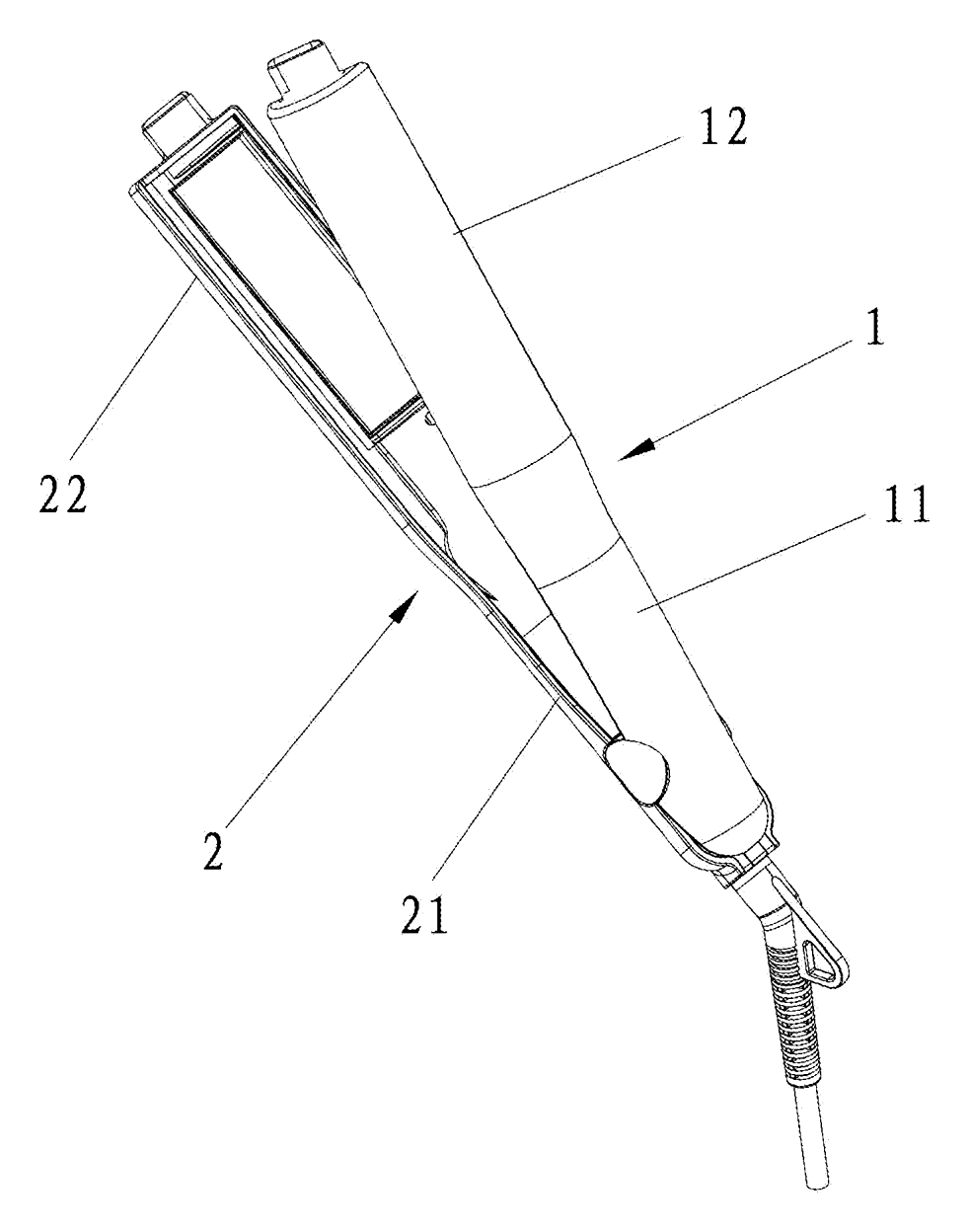
With a normal flat iron, the plates line up with the handle, so reaching the back of the head or turning the iron for curls means bending the wrist. On this straightener the heated jaws are twisted 45-75° relative to the grip. The lower plate has a groove for curling, and the tips carry rubber caps so the other hand can press the plates together when one hand gets tired.
- China utility model - in force in China until Nov 2026 at most
- No filings outside China
- Hair styling appliances
- Heated plates, PCB control
Splat! What let you down?
📐
Plates twisted 45-75°
The heated jaws are set at an angle to the handle, so the iron meets the hair without bending the wrist.
🌀
Curling groove
A groove in the lower jaw helps the iron double as a curling tool.
🤲
Two-hand press tips
Rubber-capped tips let the other hand squeeze the plates when the gripping hand tires.
🔥
Heater on both jaws
Each jaw has its own heater and aluminum plate, controlled by a PCB with buttons on the handle.
Bring this product to market
- ✓ Patent vetted China-only family and legal status checked
- 2 Product brief · now How it works, uses and options written up
- 3 Prototype First samples for buyers to review
- 4 Pilot run Small first batch for launch customers
- 5 Volume production Repeat orders at scale
Buyer interest
– of 100 buyers needed to start prototyping
One click, no sign-up. Each vote is one real visitor, and products with the most interest go to prototyping first.
Build team: no members yet. Need a partner, co-funding or skills to build this? Join and we introduce the team once it forms.
The problem
A flat iron is held for many minutes at a time, often at awkward angles to reach the back and sides of the head. Because the plates run straight out from the handle, the user has to twist or bend the wrist to set the plates at the right angle to the hair. The patent also notes that the hand that clamps the iron gets tired after a while.
The solution
The patent changes the geometry of the iron:
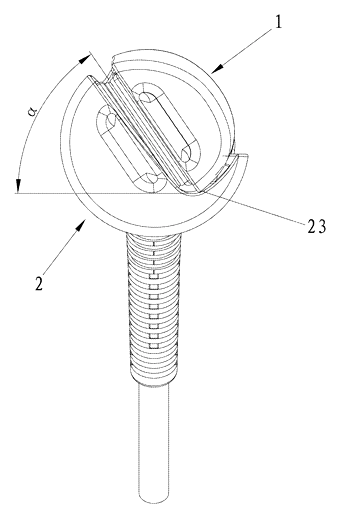
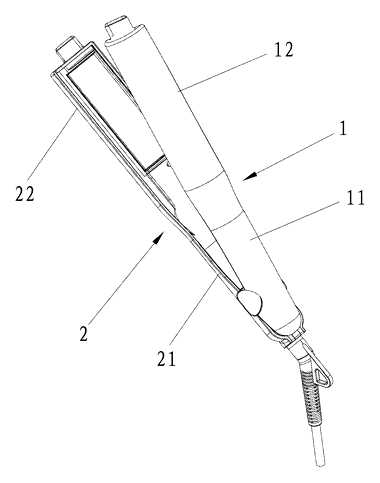
- The upper arm (1) has a handle part (11) and a heated jaw (12). The jaw is twisted at an angle α relative to the handle - 45-75° in the claims.
- The lower arm (2) is hinged to the upper one and has a matching handle part (21) and jaw (22).
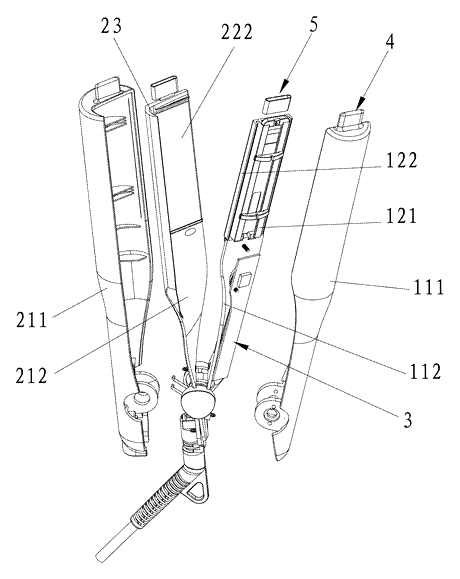
- Each jaw has its own heater (121, 221) and aluminum plate (122, 222) that touches the hair; a PCB (3) controls the heaters, with buttons (113) on the handle.
- The lower jaw has a curling groove (23).
- The ends of both jaws carry a press tip (4) with a rubber cap (5), so the other hand can squeeze the jaws together.
Who it is for
- Hair-tool and beauty-appliance brands looking for an ergonomic flat iron.
- Salon supply distributors - stylists use irons for hours a day.
- Online and retail beauty sellers who need a visible, easy-to-explain feature.
How it works
The main parts
| No. | Part | What it does |
|---|---|---|
| 1 | Upper arm | Handle part (11) plus twisted jaw (12). |
| 11 | Upper handle part | First housing (111) and cover (112) with buttons (113). |
| 12 | Upper jaw | Heater (121) and aluminum plate (122). |
| 2 | Lower arm | Hinged to the upper arm; handle part (21) and jaw (22). |
| 21 | Lower handle part | Second housing (211) and cover (212). |
| 22 | Lower jaw | Heater (221) and aluminum plate (222). |
| 23 | Curling groove | In the lower jaw. |
| 3 | PCB | Controls the heaters. |
| 4, 5 | Press tip and rubber cap | At the jaw ends, for pressing with the other hand. |
Using it
- Switch on with the buttons (113) and let both plates heat.
- Hold the handle naturally - the twisted jaws meet the hair at an angle without bending the wrist.
- Clamp a section of hair and glide down to straighten.
- To curl, wrap the hair section around the jaws using the curling groove (23) and turn as you glide.
- If the clamping hand tires, press the rubber-capped tips (4, 5) with the other hand.
Applications
Home hair styling
An iron that is easier to handle for the back and sides of the head.
Professional salons
Stylists using irons for many hours a day.
2-in-1 straightener and curler
The angle and the groove suit brands that sell one tool for both.
Travel styling tools
A compact angled iron in a mini size.
Men’s grooming and beard straighteners
The angled geometry can be adapted to smaller tools.
Where it is less suitable
- Very wide plates - the twist works best on narrow and medium plates.
- Cordless tools - the patent shows a corded iron; battery versions need a new heater and power design.
Frequently asked questions
What is different about this straightener?
The heated jaws are twisted 45-75° relative to the handle, so the plates meet the hair at an angle while the wrist stays straight.
Can it curl hair too?
The lower jaw has a curling groove, so the iron can be used to make curls as well as to straighten.
What are the rubber tips for?
They let the other hand press the plates together when the hand holding the iron gets tired.
Which plate materials are possible?
The patent shows aluminum plates. Ceramic-coated or titanium plates and different widths are possible.
Is it available for 120 V?
Yes - we build for 120 V US mains, or dual voltage for travel versions.
What certification does it need?
Electrical safety certification (for example UL 859 / ETL) for US retail, plus FCC compliance for digital controls where applicable.
Can this design be made and sold in the US?
The patent was filed only in China, so it does not restrict the design in the US. It is in force in China until November 2026 at most, and making or selling it there needs the owner’s permission until then. Other styling-tool designs may be patented - see Patent & Production - so we recommend a freedom-to-operate check before volume production.
Are you affiliated with the patent owner?
No. IP2M is an independent design and manufacturing service working from the public patent document.
Request a quote
Click Request a Quote below to see our email address - copy it, or open your email app with a ready-made message. Please mention patent CN206137462U in the subject.
Helpful details to include:
- Your company and sales channel (beauty brand, salon supply, Amazon…)
- Plate type and width, temperature range
- Voltage and safety features
- Colors, branding and packaging
- Estimated quantity and target price
- Timeline - when you would like samples and the first shipment
You can also reach us at (332) 203-9997.
Explore this product
Interested in building this?
Tell us your target market, quantity and timeline. We reply with options for prototyping, small-batch runs or volume production.
Send your inquiry to
Please put CN206137462U in the subject line and tell us your company, country, estimated quantity and timeline.
Prefer to talk? Call (332) 203-9997.
More product-ready patents
All Bath & Personal Care patents →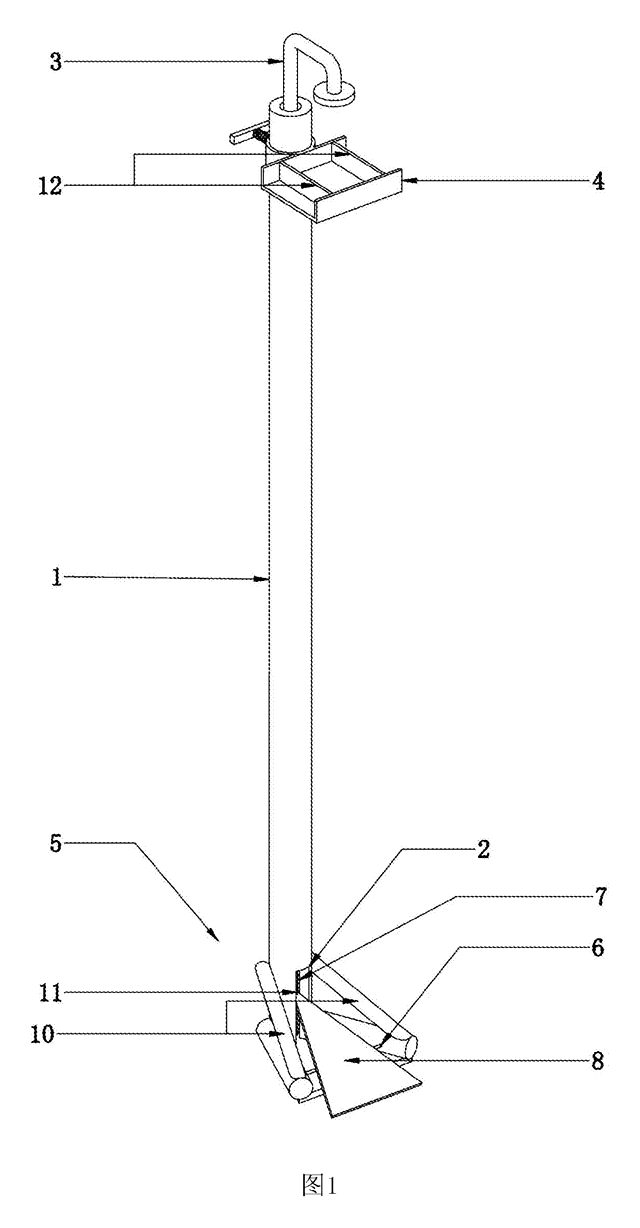
Bath & Personal Care
Foot-Pedal Soap & Sanitizer Dispenser Stand
Hands-free, battery-free dispenser stand - step on a pedal to press the pump of any soap or sanitizer bottle.
Patent CN207461995U
Bath & Personal Care
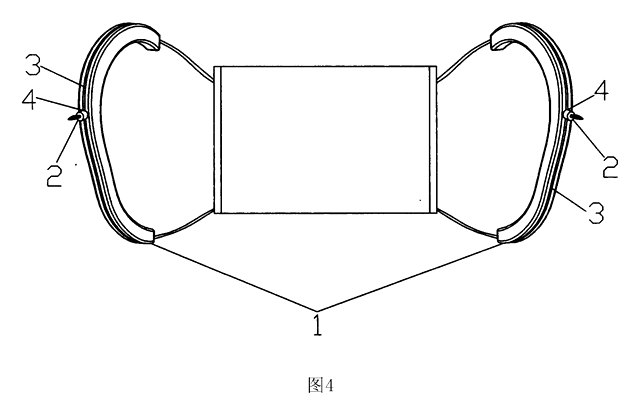
Ear-Shaped Mask Strap Guard with Tension Adjuster
Ear-shaped silicone guard and strap-length adjuster that make ear-loop masks comfortable to wear for long hours.
Patent CN205456233U
Bath & Personal Care
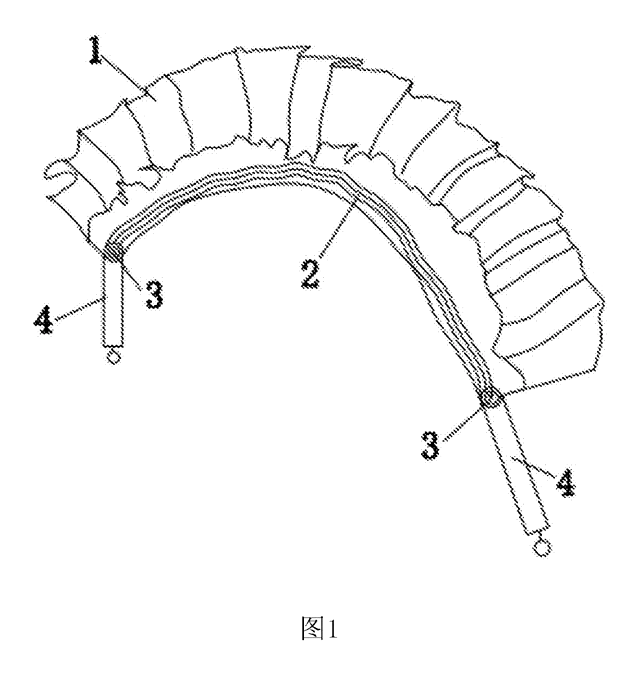
Adjustable-Length Back Scrubber Strap with Push-Button Handles
Back-scrubber strap with push-button handles that set its length and a spring that keeps it taut.
Patent CN207041452U
Bath & Personal Care
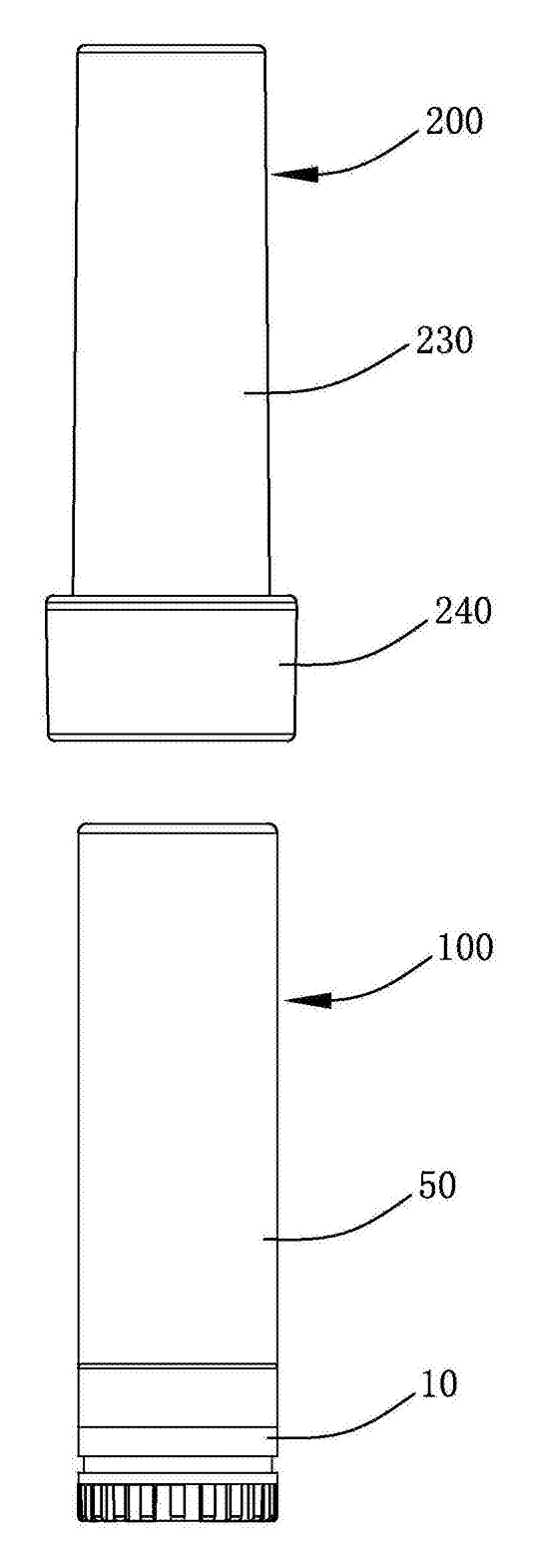
Refillable Lipstick Case with Sealed Snap-In Refill Pods
Reusable twist-up lipstick case; sealed refill pods unlock at the top of the stroke for shade swaps.
Patent CN206909979U
Bath & Personal Care
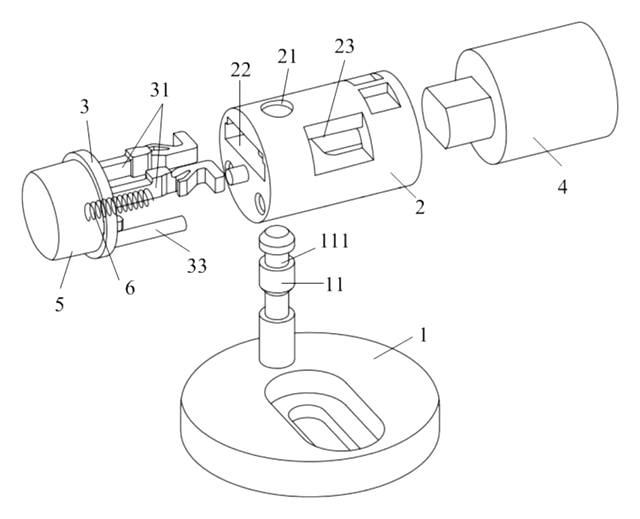
Quick-Release Toilet Seat Hinge with a Push-Button Two-Strip Latch
Toilet seat hinge: drop the shaft onto a grooved post to lock; one push parks the latch open to lift it off.
Patent CN210370292U
Bath & Personal Care
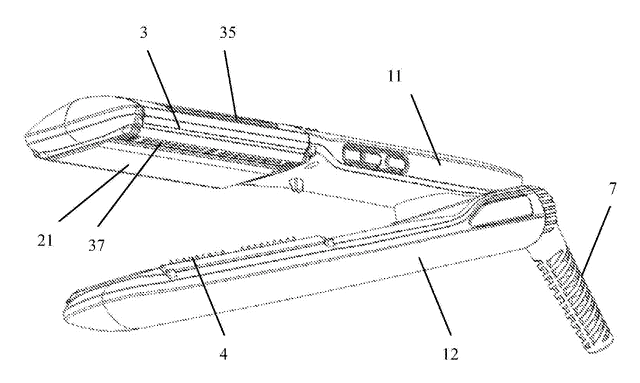
Essential Oil Dispensing Hair Straightener with Auto-Feed Cartridge
Flat iron with a built-in cartridge that releases essential oil onto hair as you style.
Patent CN207023588U
Browse by category
- Apparel & Accessories (22)
- Baby & Kids (16)
- Bags & Luggage (9)
- Bath & Personal Care (16)
- Car Accessories (10)
- Furniture, Bedding & Storage (12)
- Garden & Outdoor (18)
- Health & Wellness (8)
- Home, Kitchen & Cleaning (24)
- Lighting (12)
- Packaging & Containers (6)
- Pet Products (6)
- Phone & Camera Accessories (4)
- Retail Display (13)
- School, Office & Art (19)
- Sports & Recreation (25)
- Tools & Workshop (27)
- Toys & Games (12)
This page is based on the public patent document CN206137462U, assigned to Dongguan Mestar Electric Appliances Co., Ltd.. IP2M is an independent manufacturing service and is not affiliated with, endorsed by or licensed by the patent owner. Images marked as concept renderings are illustrations, not photos of an existing product. Patent status information is provided for reference only and is not legal advice; confirm freedom to operate for your market before production. Full disclaimer.