
Patent CN206314843U
Updated October 25, 2026Rack-and-Pinion Synchronized Drawer Slide with a Folded-In Fixed Rail
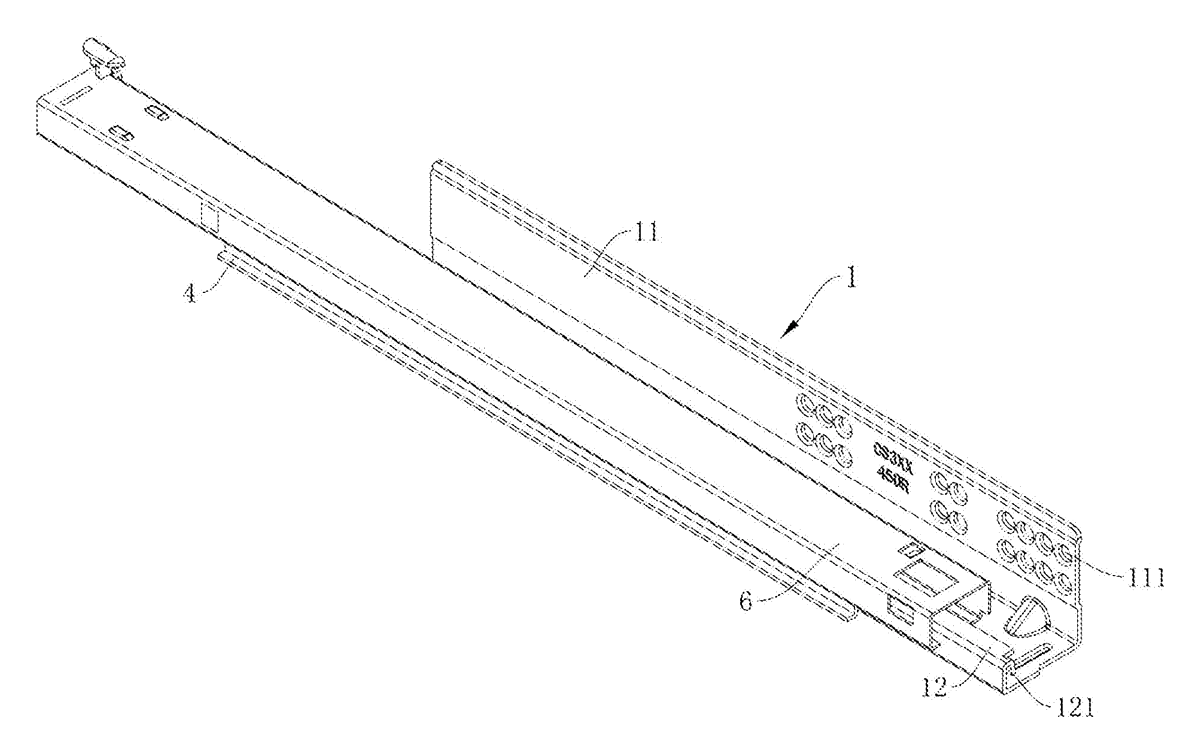
Cheap drawer slides let the sections move in any order: the inner rail shoots out first, the middle one catches up with a clunk, and wide or heavy drawers rack and bind. Synchronized slides fix this by tying the rails together. In this design the middle rail carries a small gear in a clip-in seat. Underneath, the gear meshes with a rack on a slider that runs on the fixed rail; above, it meshes with a rack on a second slider that carries the moving drawer rail. Because both racks turn the same gear, the sections always move together in a fixed ratio. The fixed rail is made from one steel strip: one edge is a flat mounting plate with screw holes, and the other edge is bent up and folded back toward it to form the running track.
- China utility model - expired
- No filings outside China
- Cabinet & furniture hardware
- Cold-rolled steel rails, POM sliders, nylon gear and rollers
Splat! What let you down?
⚙️
Gear-synchronized
A pinion on the middle rail meshes with racks above and below, so the sections move in step.
📐
Folded-in fixed rail
One steel strip forms both the mounting plate and the running track, bent back toward it.
🛞
Roller-guided sliders
Rollers on the sliders run on the track and under the drawer rail for a smooth pull.
🛑
Stops at every stage
End stops, limit plates and claws keep each section from pulling out of the next.
Bring this product to market
- ✓ Patent vetted China-only family and legal status checked
- 2 Product brief · now How it works, uses and options written up
- 3 Prototype First samples for buyers to review
- 4 Pilot run Small first batch for launch customers
- 5 Volume production Repeat orders at scale
Buyer interest
– of 100 buyers needed to start prototyping
One click, no sign-up. Each vote is one real visitor, and products with the most interest go to prototyping first.
Build team: no members yet. Need a partner, co-funding or skills to build this? Join and we introduce the team once it forms.
The problem
In a multi-section drawer slide, the rails often extend out of order: the drawer rail runs to its end before the middle rail starts, causing a jolt and uneven wear, and wide drawers twist when one side runs ahead of the other. Each stage also needs stops so the drawer cannot be pulled right off. According to the patent, the goal is a slide with a simple, reasonable structure, good stability and efficient assembly.
The solution
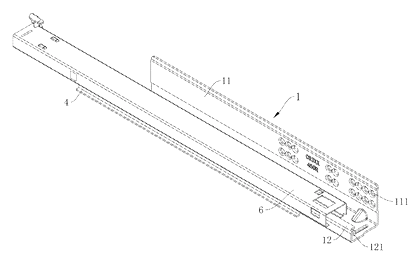
- The fixed rail (1) is bent from one metal strip: one edge forms a mounting plate (11) with screw holes (111); the other edge rises as a riser (13) and is folded back toward the mounting plate to form the track (12), with stops (121) at both ends.
- A lower slider (2) with a groove (22) underneath rides on the track, guided by rollers (7) on its side and top. A lower rack (21) runs along its top.
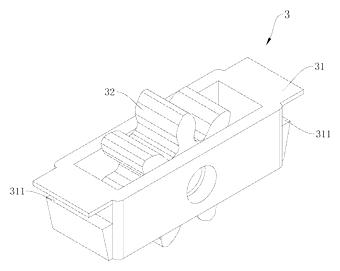
- A gear assembly (3) - a gear (32) on a shaft in a gear seat (31) - is clipped into a hole (41) in the middle rail (4) by catches (311) on the seat. The gear’s lower teeth mesh with the lower rack.
- The middle rail fits over the lower slider by a slide groove (42) with limit plates (43) at both ends.
- An upper slider (5) with an upper rack (51) underneath sits on the middle rail; its limit claws (52) clip into recesses (44), one with a detent (441). The gear’s upper teeth mesh with the upper rack.
- The moving rail (6), which carries the drawer, runs on the upper slider by a channel (61) with end stops (62), on rollers on the slider’s top.
Who it is for
- Furniture hardware brands adding a synchronized slide to their drawer-runner range.
- Kitchen and bath cabinet makers that want smoother, steadier drawers in wide units.
- Office and tool storage manufacturers whose drawers are pulled many times a day.
- RTA furniture brands looking for an easy-to-install upgrade over basic roller runners.
How it works
The main parts
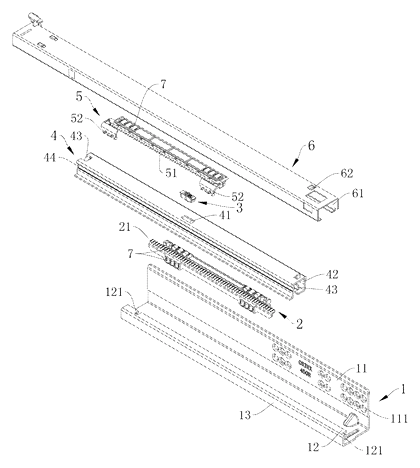
| No. | Part | What it does |
|---|---|---|
| 1 | Fixed rail | Mounting plate (11) and folded track (12). |
| 2, 21 | Lower slider and rack | Rides the track; rack under the gear. |
| 3 | Gear assembly | Gear (32) in a clip-in seat (31). |
| 4 | Middle rail | Carries the gear; slides over the lower slider. |
| 5, 51 | Upper slider and rack | Rack over the gear; carries the moving rail. |
| 6 | Moving rail | Holds the drawer. |
| 7 | Rollers | Guide the sliders. |
| 121, 43, 62 | Stops and limit plates | Keep each section in place. |
Opening and closing
- Pull the drawer - the moving rail and upper slider start to move.
- The upper rack turns the gear, which drives the middle rail along the lower rack at a fixed ratio.
- All sections extend together until the stops are reached at full extension.
- Push the drawer - the gear runs the sections back in step.
Applications
Kitchen drawers
Wide pot drawers and cutlery drawers run straight without racking.
Office pedestals and filing
File drawers carry heavy loads and are opened all day.
Tool chests and workshop storage
Synchronized slides keep heavy tool drawers steady as they extend.
Bathroom vanities
Vanity drawers in tight spaces benefit from smooth, quiet travel.
Retail and display cabinets
Pull-out display drawers in shops need a steady, controlled glide.
Where it is less suitable
- Very heavy industrial drawers - high-load ball-bearing slides are designed for those weights.
- Undermount concealed slides - this is a side-mount design; undermount slides use different rails.
- Lowest-cost furniture - a gear and two racks cost more than a simple roller runner.
Frequently asked questions
What does “synchronized” mean here?
A gear on the middle rail meshes with a rack below it and a rack above it. When the drawer rail moves, the gear drives the middle rail at a fixed ratio, so all sections extend and close together instead of one after another.
Why is the fixed rail “folded in”?
It is bent from one steel strip: one edge is the flat mounting plate, and the other is folded back toward it to form the running track. That keeps the profile compact and saves a separate part.
How much weight can it carry?
The patent gives no load rating. Load classes are set by steel thickness, rollers and gear size in design and confirmed by load tests.
Can it have soft-close?
Yes. A damper can be added at the closing end, which suits the steady motion the gear gives.
Which lengths are available?
Common drawer depths from about 10 to 24 inches, plus custom lengths, each with its own rail tooling.
Is it hard to install?
It is a side-mount slide with screw holes in the fixed rail’s mounting plate, installed like standard side-mount runners. Rear brackets can be added for face-frame cabinets.
Can this design be made and sold in the US?
The patent was filed only in China and has expired, so it does not restrict the design in the US or in China. Drawer slides may be covered by other US patents - see Patent & Production - so we recommend a freedom-to-operate check before volume production.
Are you affiliated with the patent owner?
No. IP2M is an independent design and manufacturing service working from the public patent document.
Request a quote
Click Request a Quote below to see our email address - copy it, or open your email app with a ready-made message. Please mention patent CN206314843U in the subject.
Helpful details to include:
- Your company and channel (hardware brand, cabinet maker, office or tool storage maker, RTA brand)
- Lengths and load class
- Finish and features (soft-close, push-to-open)
- Mounting type
- Estimated quantity and target price
- Timeline - when you would like samples and the first shipment
You can also reach us at (332) 203-9997.
Explore this product
Interested in building this?
Tell us your target market, quantity and timeline. We reply with options for prototyping, small-batch runs or volume production.
Send your inquiry to
Please put CN206314843U in the subject line and tell us your company, country, estimated quantity and timeline.
Prefer to talk? Call (332) 203-9997.
More product-ready patents
All Furniture, Bedding & Storage patents →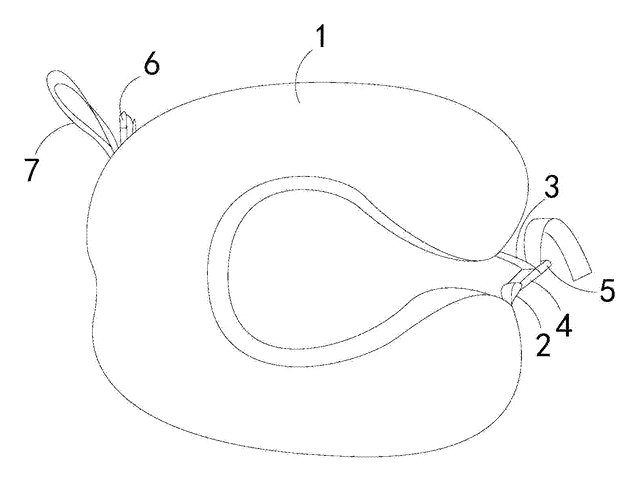
Furniture, Bedding & Storage
Roll-Up Travel Neck Pillow with Buckles
U-shaped travel pillow with a front buckle and a back buckle that holds it rolled up for carrying.
Patent CN206543091U
Furniture, Bedding & Storage
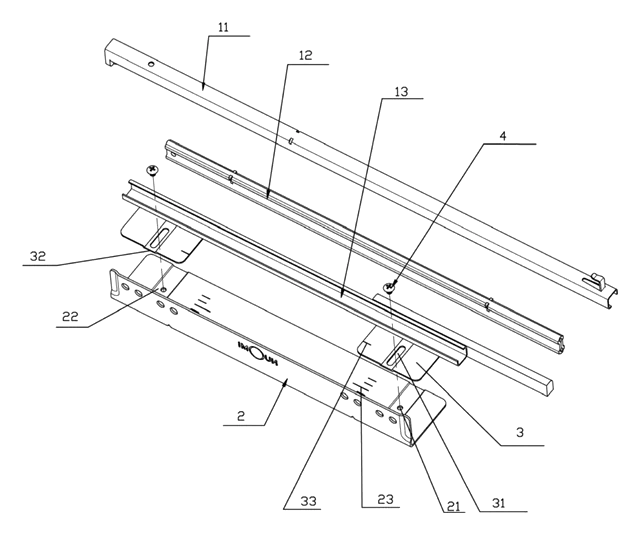
Width-Adjustable Slide Rail for Pull-Out Baskets
Basket slide rail on a slotted, scaled adjusting plate, so one pull-out basket fits several cabinet widths.
Patent CN208909382U
Furniture, Bedding & Storage
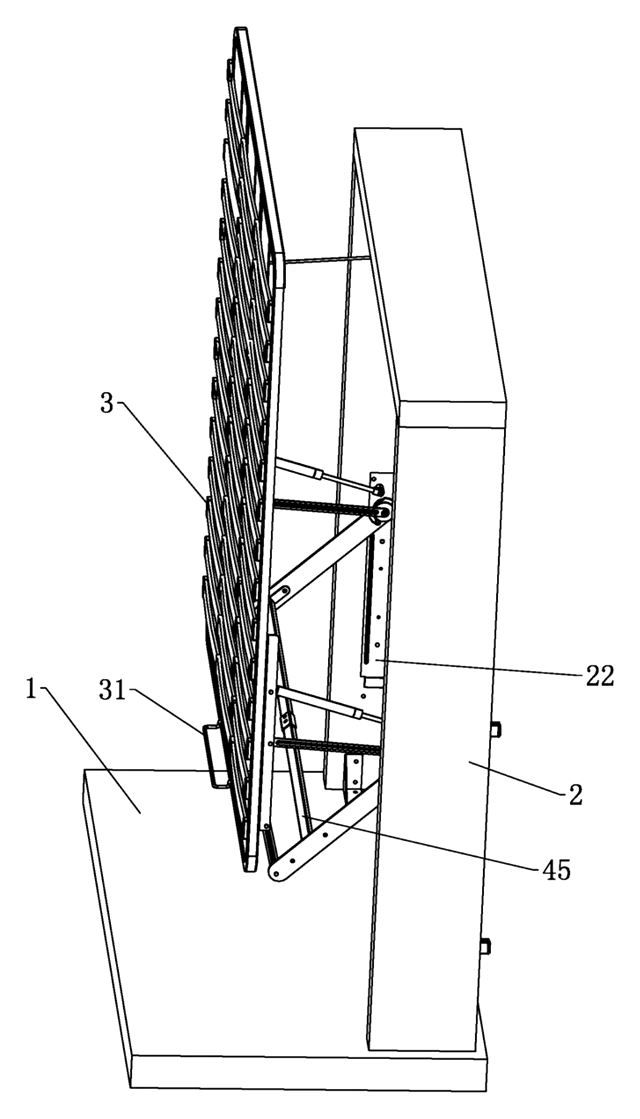
Lift-Up Storage Bed with Four-Bar Linkage That Slides the Deck Away from the Headboard
Storage bed deck that rises on four-bar linkages and gas springs, clearing the headboard as it opens.
Patent CN210870645U
Furniture, Bedding & Storage
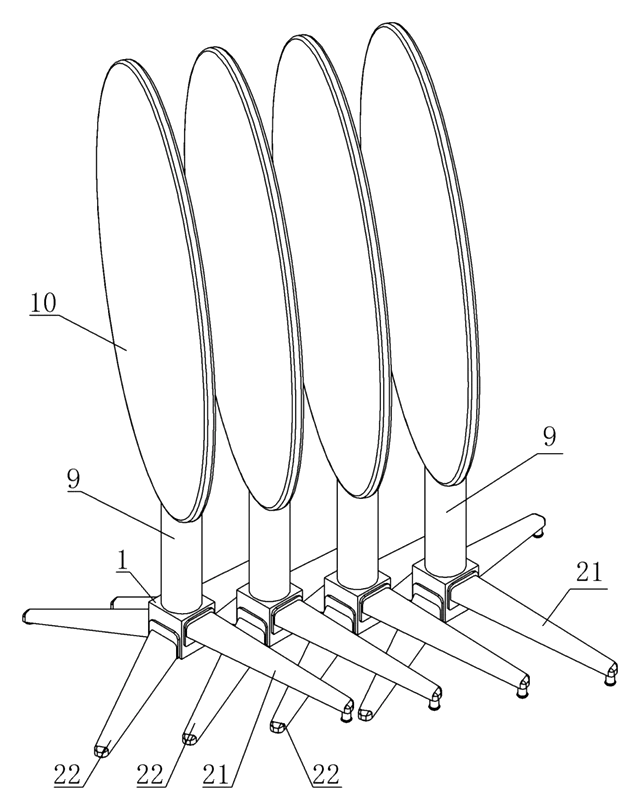
Self-Leveling, Nesting Table Base with a Torsion-Ring Leg Hub
Four-leg base that self-levels through a torsion-ring hub and nests sideways with flip-top tables.
Patent CN211483640U
Furniture & Bedding
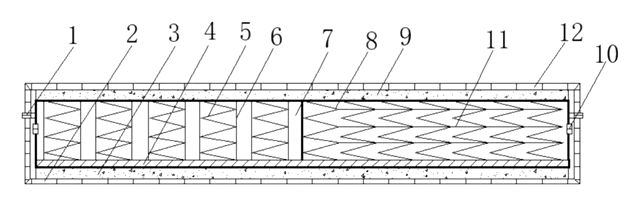
Dual-Zone Split-Spring Mattress with Removable Fabric Cover
Half-pocket, half-standard spring mattress sharing one base plate, with a removable cover.
Patent CN208355064U
Furniture, Bedding & Storage
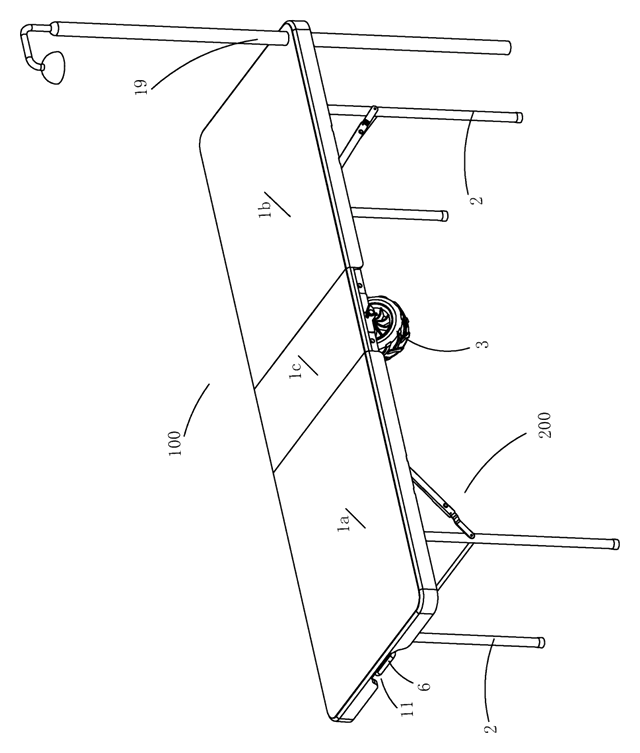
Telescopic Folding Table with Extension Panel and Built-In Trolley
Blow-molded folding table: slides open for an insert panel, folds into a wheeled trolley.
Patent CN216293323U
Browse by category
- Apparel & Accessories (22)
- Baby & Kids (16)
- Bags & Luggage (9)
- Bath & Personal Care (16)
- Car Accessories (10)
- Furniture, Bedding & Storage (12)
- Garden & Outdoor (18)
- Health & Wellness (8)
- Home, Kitchen & Cleaning (24)
- Lighting (12)
- Packaging & Containers (6)
- Pet Products (6)
- Phone & Camera Accessories (4)
- Retail Display (13)
- School, Office & Art (19)
- Sports & Recreation (25)
- Tools & Workshop (27)
- Toys & Games (12)
This page is based on the public patent document CN206314843U, assigned to Guangdong Dongrong Metal Product Co., Ltd.. IP2M is an independent manufacturing service and is not affiliated with, endorsed by or licensed by the patent owner. Images marked as concept renderings are illustrations, not photos of an existing product. Patent status information is provided for reference only and is not legal advice; confirm freedom to operate for your market before production. Full disclaimer.