
Patent CN206383856U
Updated October 25, 2026Infant Car Seat with a Load-Bearing Base That Wraps the Carrier
Parents carry an infant car seat by its handle from car to house, to the stroller, to the doctor's office - and a crash-ready carrier is heavy. In most systems the carrier shell does all the protecting, and the base only clips it to the car. This design moves part of that job into the base. The base has its own backrest that sits right behind the carrier's backrest, and side rails hinged at the front of the base that swing up and lie against the outside of the carrier's side panels. In a frontal or side impact, the carrier presses into the base's backrest and rails, so the patent describes being able to make the carrier lighter. To lift the carrier out, a button on the base backrest unlocks the rails, which fold forward out of the way.
- China utility model - in force in China until Dec 2026 at most
- No filings outside China
- Infant car seats & travel systems
- Molded plastic shells, steel lock parts, EPS foam
Splat! What let you down?
🛡️
Base takes the load
The base's backrest and side rails back up the carrier in frontal and side impacts.
🪶
Lighter carrier
With the base sharing the protection, the patent aims for a carrier that is easier to carry.
🚪
Swing-open side rails
Side rails hinged at the front of the base fold forward to let the carrier in or out.
🔒
Pin lock and release button
A sliding lock pin holds the carrier; a button on the base backrest unlocks the rails.
Bring this product to market
- ✓ Patent vetted China-only family and legal status checked
- 2 Product brief · now How it works, uses and options written up
- 3 Prototype First samples for buyers to review
- 4 Pilot run Small first batch for launch customers
- 5 Volume production Repeat orders at scale
Buyer interest
– of 100 buyers needed to start prototyping
One click, no sign-up. Each vote is one real visitor, and products with the most interest go to prototyping first.
Build team: no members yet. Need a partner, co-funding or skills to build this? Join and we introduce the team once it forms.
The problem
An infant car seat is two parts: a base that stays installed in the car and a carrier (basket) that clicks onto it and is carried by a handle. According to the patent, to protect the baby in a frontal or side collision, carriers are usually made thick and strong, which makes them heavy to carry once they are taken out of the car.
The solution
The patent lets the base share the crash loads:
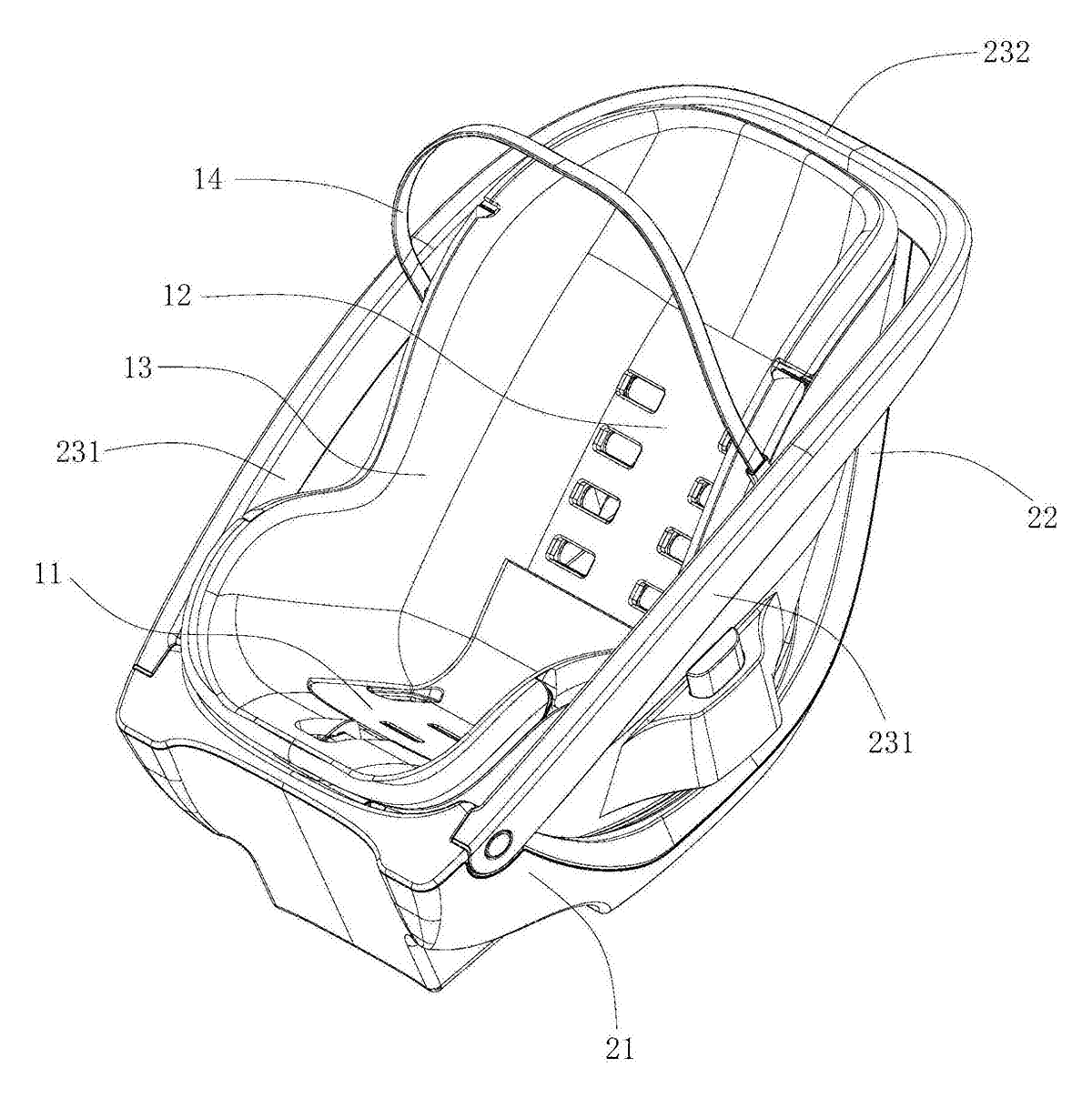
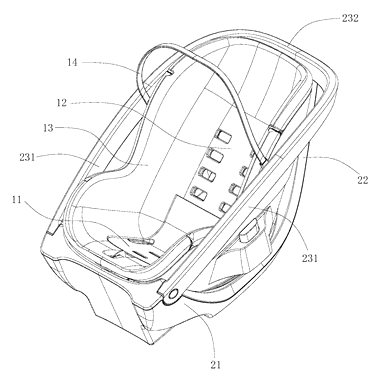
- The carrier (1) has a first base (11) for the baby to sit on, a first backrest (12), side panels (13) and a handle (14).
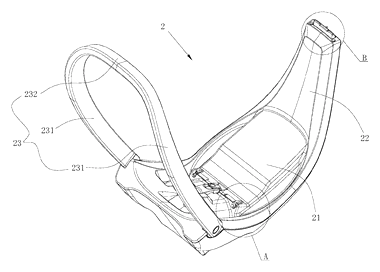
- The base assembly (2) has a second base (21) that supports the carrier from below, a second backrest (22) that stands right behind the carrier’s backrest, and a guardrail assembly (23).
- The guardrail has side rails (231) on the left and right, hinged at the front of the base, joined at the top by a cross rail (232).
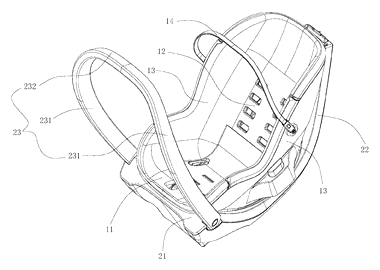
- With the carrier in place, the side rails lie against the outside of the carrier’s side panels. In a frontal impact, the carrier’s backrest presses on the base backrest; in a side impact, the side panels press on the side rails - according to the patent, so the carrier itself can be lighter.
- To fit or remove the carrier, the rails swing forward away from the backrest. A fixing mechanism keeps them closed, and an unlock button (4) sliding on the base backrest releases them.
- A lock pin (3), sliding side to side in the base, enters a groove under the carrier and holds it in place.
Who it is for
- Juvenile products brands developing an infant car seat or travel system and looking for a lighter-carrier selling point.
- Stroller brands adding a matching infant seat and base to complete a travel system.
- Car seat engineering teams exploring base-integrated side impact protection.
- Retailers with private-label baby lines that want a differentiated infant seat platform, developed with a certified partner.
How it works
The main parts
| No. | Part | What it does |
|---|---|---|
| 1 | Carrier | Seat shell with first base (11), backrest (12), side panels (13), handle (14). |
| 2 | Base assembly | Stays in the car; supports and backs up the carrier. |
| 21 | Second base | Supports the carrier from below. |
| 22 | Second backrest | Sits behind the carrier’s backrest. |
| 231 | Side rails | Hinged at the front; lie against the carrier’s sides. |
| 232 | Cross rail | Joins the side rails at the top. |
| 3 | Lock pin | Slides into a groove under the carrier. |
| 4 | Unlock button | Releases the closed rails. |
Using it
- Open the rails - press the unlock button on the base backrest and swing the side rails forward.
- Set the carrier on the base; the lock pin engages its groove.
- Close the rails - swing them back until they lie against the carrier’s side panels and latch.
- To take the baby out in the carrier, press the button, swing the rails open, release the lock pin and lift the carrier by its handle.
Applications
Infant travel systems
Brands pairing an infant seat with a stroller can promote a carrier that is lighter to move from car to stroller.
Parents in city apartments
Carrying a sleeping baby up stairs or across a parking lot is easier with a lighter carrier.
Two-car families
A second base in another car gets the same side-rail protection without buying a second carrier.
Grandparents and caregivers
Older caregivers lifting the carrier often benefit most from reduced weight.
Where it is less suitable
- Carrier used without its base - the design shares protection with the base, so baseless (belt-only) installation needs its own engineering and testing.
- Convertible and all-in-one seats - this is an infant-carrier concept, not a seat that stays in the car through the toddler years.
- Projects without crash-test capacity - any car seat must be engineered and dynamically tested by a qualified team before sale.
Frequently asked questions
What do the side rails on the base do?
They swing up and lie against the outside of the carrier’s side panels. In a side impact the carrier presses on the rails, and in a frontal impact its backrest presses on the base backrest, so the base shares the load.
Is the carrier really lighter?
That is the aim the patent states: because the base backs up the carrier, the carrier needs less strength of its own. The actual weight saving is set in design and proven by crash testing.
How do I take the carrier out?
Press the unlock button on the base backrest, swing the side rails forward, release the lock pin and lift the carrier by its handle.
Can the carrier be installed without the base?
The patent covers the carrier on its base. A baseless, belt-only installation is possible in principle but must be engineered and tested separately, because the rails would not be there.
Can it be part of a travel system?
Yes. The carrier can be fitted with adapters for a matching stroller, which is where a lighter carrier matters most.
Who does the crash testing?
Testing is done at an accredited lab against FMVSS 213. We work with your engineering team or a certified partner; we do not sell uncertified seats.
Can this design be made and sold in the US?
The patent was filed only in China, so it does not restrict the design in the US. It is in force in China until December 2026 at most, and making or selling it there needs the owner’s permission. Infant car seat bases may be covered by other US patents - see Patent & Production - so we recommend a freedom-to-operate check before volume production.
Are you affiliated with the patent owner?
No. IP2M is an independent design and manufacturing service working from the public patent document.
Request a quote
Click Request a Quote below to see our email address - copy it, or open your email app with a ready-made message. Please mention patent CN206383856U in the subject.
Helpful details to include:
- Your company and channel (juvenile brand, stroller brand, retailer private label)
- Weight and height range for the carrier
- Installation (LATCH, belt path, load leg) and travel-system needs
- Certification plan and engineering partner
- Estimated quantity and target price
- Timeline - when you would like samples and the first shipment
You can also reach us at (332) 203-9997.
Explore this product
Interested in building this?
Tell us your target market, quantity and timeline. We reply with options for prototyping, small-batch runs or volume production.
Send your inquiry to
Please put CN206383856U in the subject line and tell us your company, country, estimated quantity and timeline.
Prefer to talk? Call (332) 203-9997.
More product-ready patents
All Car Accessories patents →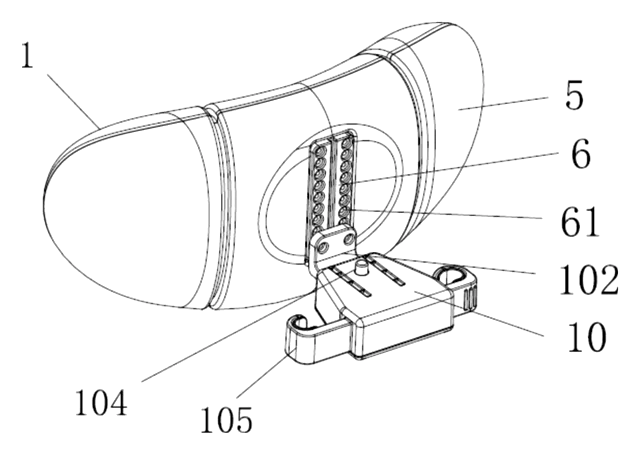
Car Accessories
Car Headrest Pillow with Ratchet Side Wings and Push-Button Reach
Post-mounted car headrest pillow with ratchet side wings and a push-button forward adjustment.
Patent CN212195197U
Car Accessories
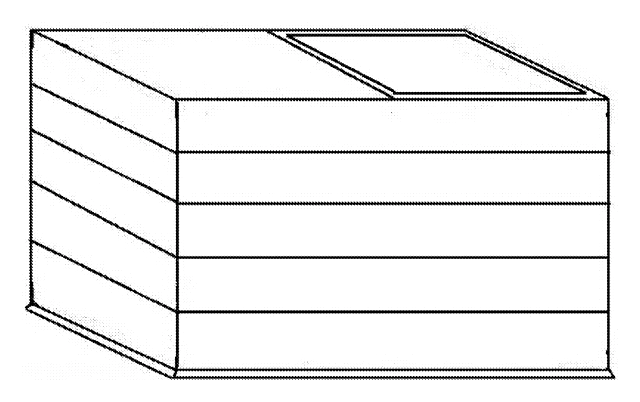
Hard-Shell Rooftop Tent That Doubles as a Cargo Box
Roof box whose hard frames lift on gas struts into a tent with door and skylight, and fold back for luggage.
Patent CN206327275U
Car Accessories
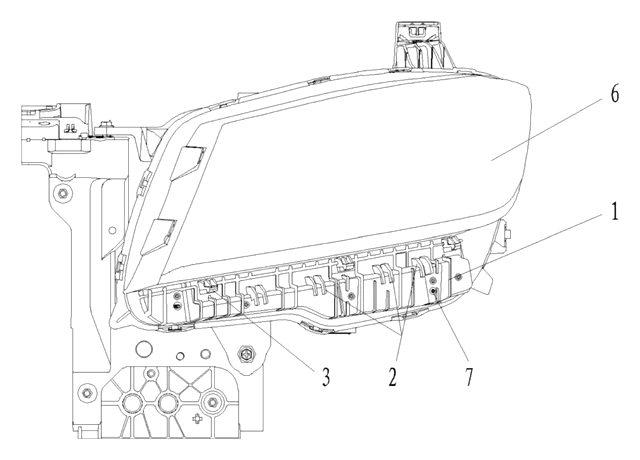
Headlamp-to-Bumper Adapter Bracket That Sets Gap and Flush in Three Directions
Molded bracket under the headlamp: support blocks and snap teeth locate the bumper flange for an even gap.
Patent CN216580316U
Car Accessories
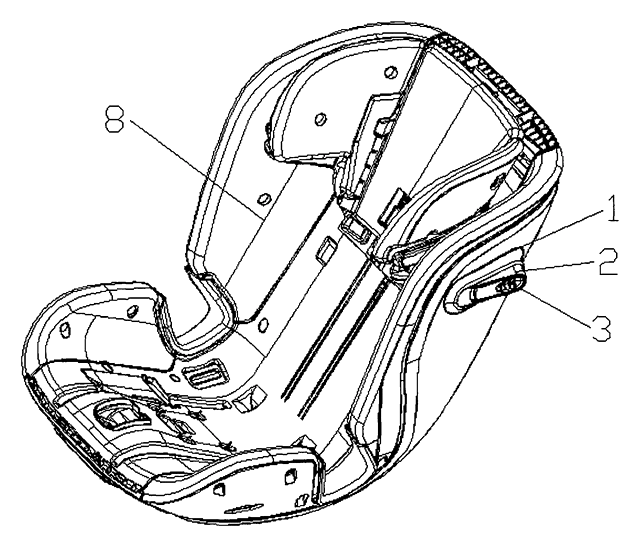
Retractable Side Impact Protection Block for Child Car Seats
Retractable side-impact block for child seats: springs out to provide side-impact buffering, folds flat.
Patent CN207028930U
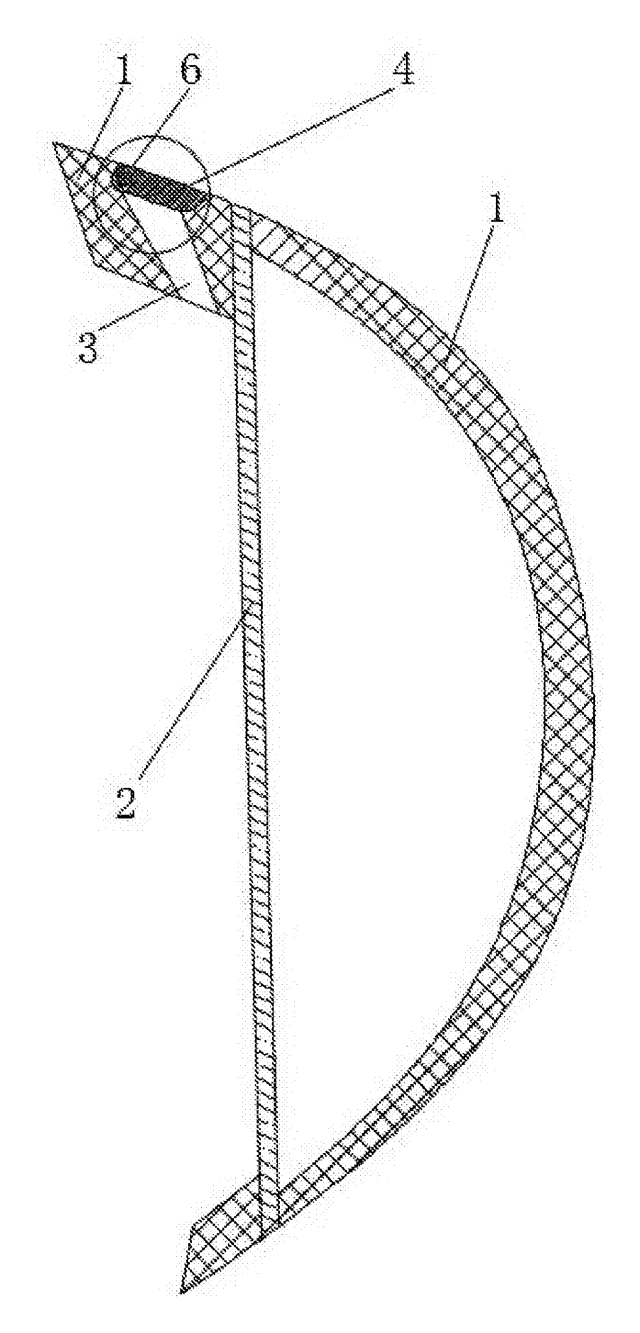
Car Accessories
Rain-Deflecting Side Mirror with a Pivoting Air-Guide Plate
Side mirror with a top air duct and folding guide plate that directs airflow across the glass.
Patent CN207345672U
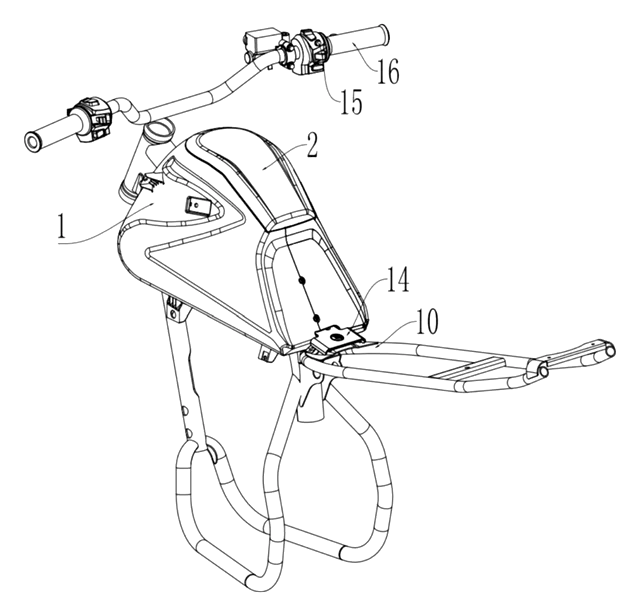
Automotive & Powersports
Electric Motorcycle Storage Box with Electromagnetic Lock and Torsion Spring Lid
Motorcycle storage box: electromagnetic lock and torsion spring open the lid via a handlebar button.
Patent CN212473759U
Browse by category
- Apparel & Accessories (22)
- Baby & Kids (16)
- Bags & Luggage (9)
- Bath & Personal Care (16)
- Car Accessories (10)
- Furniture, Bedding & Storage (12)
- Garden & Outdoor (18)
- Health & Wellness (8)
- Home, Kitchen & Cleaning (24)
- Lighting (12)
- Packaging & Containers (6)
- Pet Products (6)
- Phone & Camera Accessories (4)
- Retail Display (13)
- School, Office & Art (19)
- Sports & Recreation (25)
- Tools & Workshop (27)
- Toys & Games (12)
This page is based on the public patent document CN206383856U, assigned to Goodbaby Child Products Co., Ltd.. IP2M is an independent manufacturing service and is not affiliated with, endorsed by or licensed by the patent owner. Images marked as concept renderings are illustrations, not photos of an existing product. Patent status information is provided for reference only and is not legal advice; confirm freedom to operate for your market before production. Full disclaimer.