At a glance
| Patent number | CN206462545U (application CN201720019798) |
| Type | China utility model (实用新型) - protects product shape and structure |
| Original title | Full-automatic reverse folding umbrella (全自动开收反折伞) |
| Patent owner | XIAMEN MINGHE INDUSTRIAL Co Ltd |
| Inventors | Chen Tiancheng, Song Shunfeng |
| Filing date | 2017-01-09 |
| Grant date | 2017-09-05 |
| Status (China) | In force in China until at most 2027-01-09 (if annual fees are paid) |
| Patent family | Chinese filings only - no US, European, Japanese, PCT or other filings listed |
| Cited by | 11 later documents |
| Source | Google Patents (search for CN206462545U) |
What the claims cover, in plain language
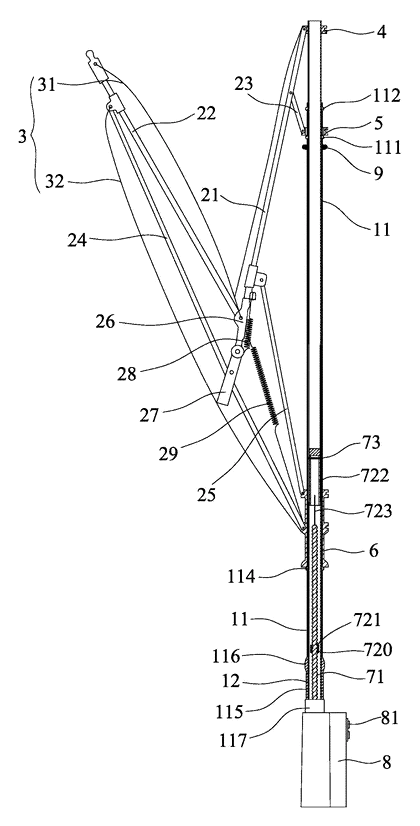
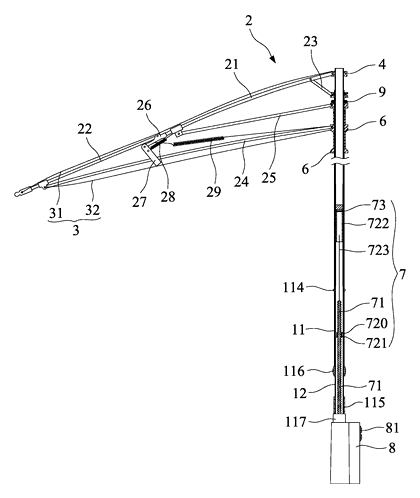
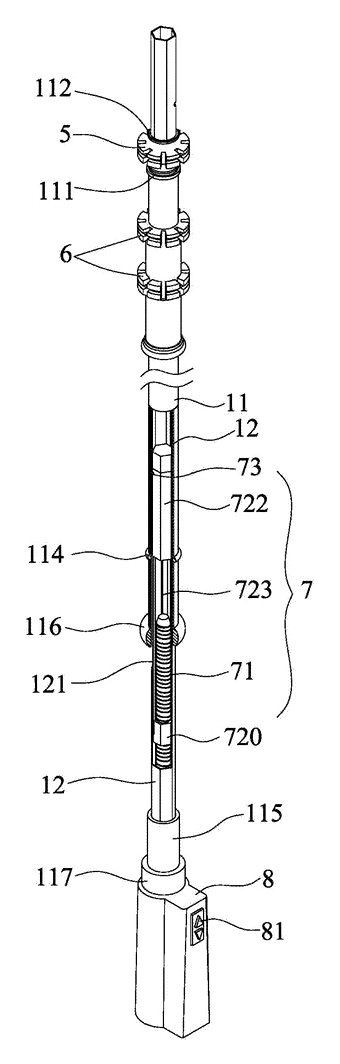
Claim 1 - a fully automatic reverse-folding umbrella comprising a middle rod group, umbrella frame, umbrella cloth, upper nest, middle nest, lower nest, automatic open-close driving structure, and umbrella handle. The umbrella frame includes main umbrella skeletons, a reflexed umbrella frame, traction fulcra, long branched bones, and short fulcra arranged in specific pivot connections. The driving structure includes a screw mandrel and an ejector sleeve driven up and down by the mandrel. The lower end of the screw mandrel connects to a power source for forward and reverse driving inside the handle. The middle rod group has a middle pipe connecting the handle and upper nest, and a movable outer tube outside the middle pipe. The ejector sleeve links to the outer tube through a slot in the middle pipe, and a position limiting structure on the outer tube acts on the middle nest.
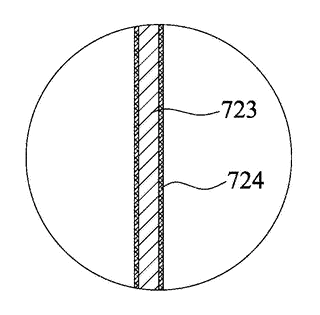
Claim 2 - the ejector sleeve includes a nut portion matching the screw mandrel, a connecting portion linked to the outer tube, and a supporting part between them. Claim 3 - the supporting part is a rigid blade. Claim 4 - the supporting part consists of at least two symmetrically set rigid wire bodies attached to the nut and connecting portions. Claim 5 - a sound-absorbing layer is wrapped outside the rigid wire bodies. Claim 6 - the nut portion has internal threads or a nut to coordinate with the screw mandrel. Claim 7 - the umbrella cloth includes an outer umbrella cloth covering the main skeletons and reflexed frame, and an inner umbrella cloth covering the long branched bones. Claim 8 - a soft pad is placed between the lower end of the screw mandrel and the top of the power source. Claim 9 - the power source is a machine drive or rotating motor driven through a change-speed gearing group.
This is a simplified reading for orientation only. The legal scope is defined by the exact claim wording in the official Chinese document.
What this means for US production
This patent was filed only in China and is currently in force there (until at most 2027-01-09, provided annual fees are maintained). It has no US or other foreign counterpart. Because it is active in China, making or selling this exact reverse-folding motorized umbrella structure in China needs the owner’s permission. It does not restrict manufacturing or sales in the United States based on this specific document.
Two points to settle early:
- Other patents may exist. The umbrella industry, particularly regarding automatic mechanisms and reverse-folding frames, contains numerous global patents held by various manufacturers. A freedom-to-operate (FTO) review focusing on the screw-drive actuation and reverse-folding geometry is recommended before launching production.
- Battery integration. The handle houses a power source and motor. The selection of the battery cell dictates the handle size, weight, and required electrical certifications for the US market.
Customization and manufacturing
What can be customized
| Area | Options |
|---|---|
| Canopy diameter | To be confirmed in design (about 38 to 48 inches for standard adult sizes) |
| Cloth material | Single-layer outer cloth or double-layer (outer and inner cloth) configurations |
| Handle ergonomics | Shape, grip texture, and dimensions to house the chosen motor and battery |
| Frame materials | Metal or composite selections for the main skeletons, branched bones, and fulcra |
| Colors and branding | Canopy printing, handle finishes, and sheath colors |
| Power source | Motor specifications and battery capacity set in design / confirmed on prototypes |
Things to plan for (US market)
- FCC Part 15 - if the motor controller or any electronic circuit in the handle emits radio frequency energy, it must comply with FCC rules for unintentional radiators.
- UN 38.3 - lithium batteries used in the handle must pass UN 38.3 transport testing to be shipped legally by air or sea.
- CPSC / CPSIA - if marketed for children under 12, the umbrella must meet lead and phthalate limits, and small parts regulations apply.
- California Prop 65 - plastics, fabrics, and metal finishes should be screened for listed chemicals.
How a project runs
- Inquiry - target canopy size, battery life expectations, material preferences, and order volume.
- Design - engineering the screw mandrel pitch, motor torque, frame pivot points, and handle enclosure.
- Prototype - 3D-printed or machined samples to test the automatic opening/closing cycle and reverse-folding alignment.
- Pilot run - small batch production to verify assembly tolerances, noise levels of the wire bodies, and battery safety tests.
- Production - injection molding for plastic components, stamping or extrusion for frame metals, sewing for canopy cloths, and final electronic assembly.
Quantities & timeline
Tooling includes injection molds for the handle housing, ejector sleeve components, and nests, alongside dies for the metal frame ribs and tubes. The screw mandrel requires precision machining or threading tooling. Certification tests such as UN 38.3 for the battery and FCC testing for the electronics add time before mass production can ship. Fabrication of the double-layer canopy involves specialized sewing jigs to ensure the inner cloth covers the outer cloth correctly upon reverse folding. Send us your canopy size, battery requirements, material preferences, quantity and target price and we will reply with options.
Patent drawings
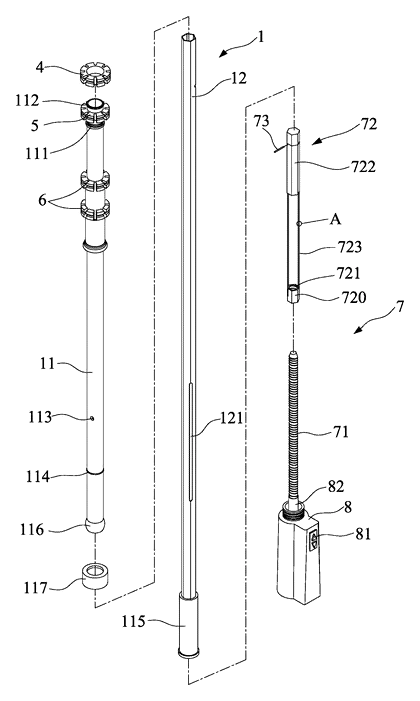
Drawings reproduced from the public patent document for reference.