
Patent CN206672576U
Updated November 2, 2026Modular Display Light Box with Plug-and-Play Power Connectors
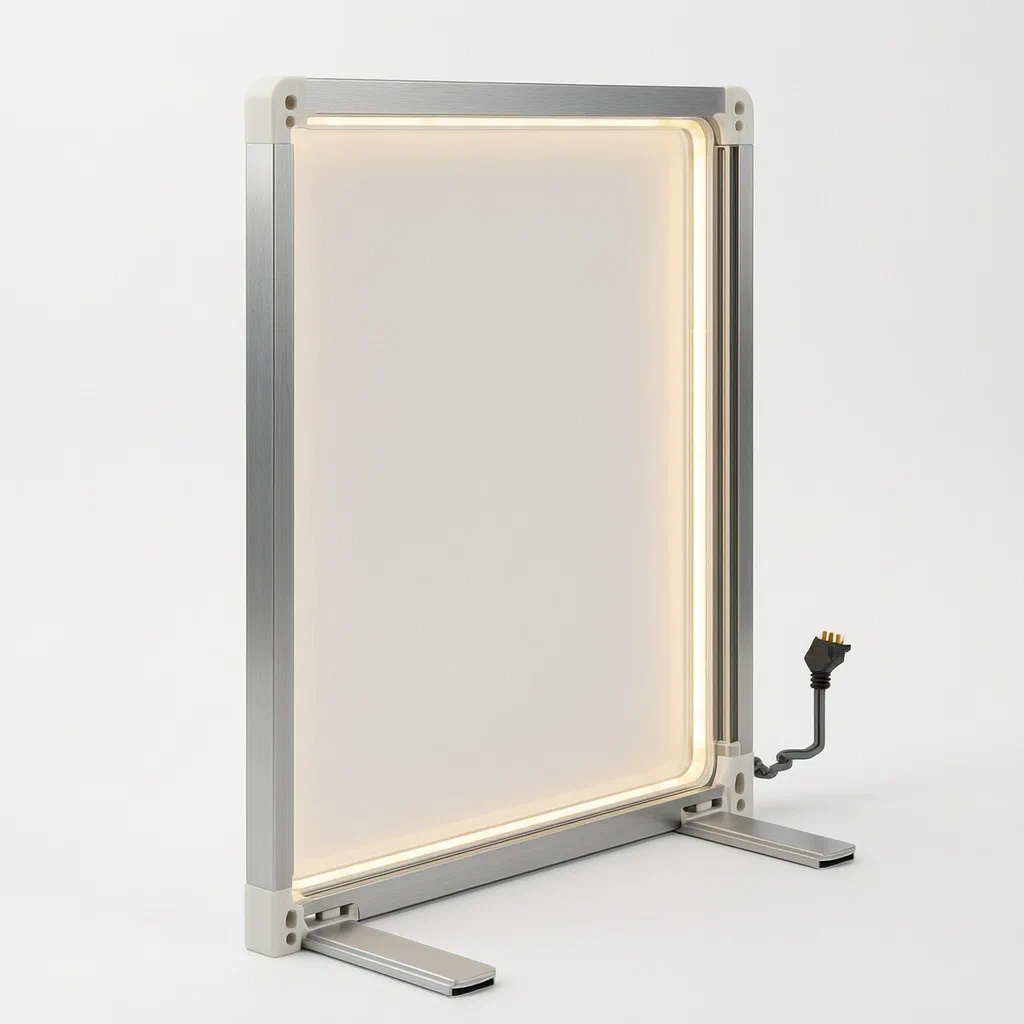
Traditional light boxes require electricians to strip wires, solder connections, and mount transformers separately before closing the frame. If a connection fails, you have to disassemble the whole unit. This modular design solves that by building the electrical path into the mechanical joints. When you snap two frame sections together, the male and female power connectors inside the corners and mullions plug into each other automatically. The result is an ultrathin, tool-free assembly process where graphics are inserted into cloth troughs, and the entire structure locks together like puzzle pieces, ready to illuminate immediately upon final closure.
- China utility model - active
- No filings outside China
- Retail & Trade Show Displays
- Aluminum extrusion, ABS corners, LED strips
Splat! What let you down?
🔌
Plug-and-Play Power
Internal connectors mate automatically when frame sections are joined; no field wiring.
🧩
Modular Geometry
Corner pieces allow 60° to 120° angles, enabling rectangular, hexagonal, or diamond shapes.
🖼️
Cloth Graphic Inserts
Graphics slide into dedicated troughs on both sides of the frame profile; single or double-sided.
🔒
Cam-Lock Assembly
Spring-loaded connectors lock with a simple handle turn, securing modules without screws.
Bring this product to market
- ✓ Patent vetted China-only family and legal status checked
- 2 Product brief · now How it works, uses and options written up
- 3 Prototype First samples for buyers to review
- 4 Pilot run Small first batch for launch customers
- 5 Volume production Repeat orders at scale
Buyer interest
– of 100 buyers needed to start prototyping
One click, no sign-up. Each vote is one real visitor, and products with the most interest go to prototyping first.
Build team: no members yet. Need a partner, co-funding or skills to build this? Join and we introduce the team once it forms.
The problem
Installing traditional backlit display cases is slow and prone to electrical faults. Workers must manually connect wires between the transformer, the LED strips, and the frame rails. This requires stripping insulation, crimping terminals, or soldering, often while holding heavy metal parts in place. If the unit needs to be moved or resized, the wiring must be disconnected and re-routed. Furthermore, standard frames are fixed at 90-degree angles, limiting design flexibility. Graphics usually require tension systems or adhesive mounting, which can bubble or peel over time. The bulkiness of external power supplies also detracts from the sleek aesthetic required in retail environments.
The solution
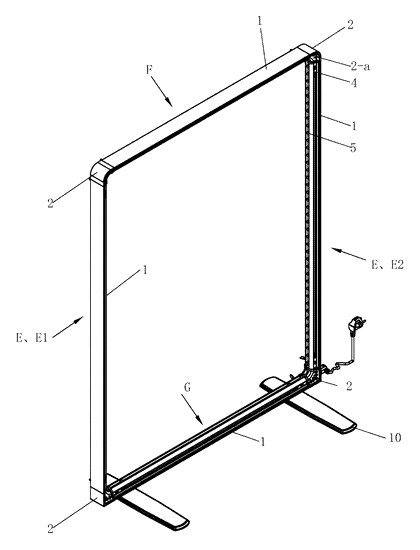
The patent describes a modular system where the electrical circuit is completed through the mechanical connection itself.
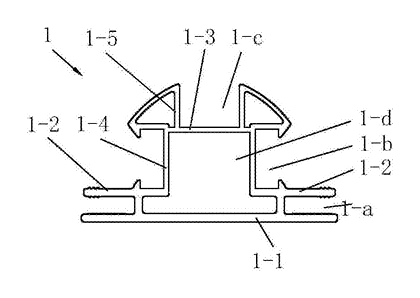
- Frame Modules: Vertical mullions and horizontal rails are made of aluminum section bars. Each bar contains a hollow cavity for the power supply adaptor and a groove for the LED light bar.
- Integrated Connectors: At the ends of the mullion modules and within the corner pieces, specific power connectors are installed. These are not loose wires but rigid interface points.
- Automatic Mating: When a mullion module is pushed into a corner piece, the power connector on the mullion plugs directly into the corresponding socket inside the corner’s cavity. This creates an electrical path instantly.
- Locking Mechanism: A connector component with spring steel plates and a cam lever locks the modules together. Turning the handle engages the cam, pressing the spring plate against the side wall of the adjacent module, securing the joint mechanically and maintaining the electrical contact pressure.
- Graphic Insertion: The outer faces of the aluminum profiles feature “cloth inserted troughs.” Fabric graphics are simply slid into these channels, held by friction and the frame geometry, eliminating the need for tools or adhesives.
Who it is for
- Trade Show Exhibitors who need to set up and tear down booths quickly. The lack of wiring means one person can assemble the display in minutes.
- Retail Chain Managers installing branded signage in stores. The modular nature allows for easy replacement of damaged sections without rewiring the entire fixture.
- Museum and Gallery Installers requiring clean, unobstructed visuals. The internal power routing keeps cables hidden, and the thin profile maximizes viewing area.
- Custom Furniture Builders integrating lighting into cabinets or shelving units. The ability to create non-90-degree angles (hexagons, diamonds) offers unique design possibilities.
How it works
The main parts
| No. | Part | What it does |
|---|---|---|
| 1 | Section Bar | Aluminum profile housing the LED, power adapter, and graphic troughs. |
| 2 | Corner Piece | Injection-molded plastic node joining two or three bars; houses mating connectors. |
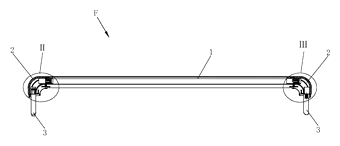
| 3 | Connector | Mechanical fastener with spring steel plates and cam lock; joins modules. |
| 4 | Locking Member | Cam lever mechanism used to tighten the connector and secure the joint. |
| 5 | LED Light Bar | Rigid or flexible strip fitted into the rear groove of the section bar. |
| 6 | Power Supply Adaptor | Driver placed inside the hollow cavity of the vertical mullion. |
| 7 | Power Connector | Electrical interface pins/sockets that mate automatically during assembly. |
| 8 | External Socket | Input point for the main power cable, located on one bottom corner. |
Operating steps
- Prepare Modules: Insert the LED strip into the rear groove of the section bar and place the power adapter in the central cavity. Ensure the end connectors are exposed.
- Join Verticals: Slide two mullion modules into a corner piece. The internal power connectors align and plug together.
- Lock Frame: Insert the mechanical connector (3) into the link slots (1-b) of the adjacent bars. Rotate the locking handle (4). The cam presses the spring plate, locking the bars firmly.
- Add Horizontals: Attach upper and lower transverse frame modules to the top and bottom corners. Again, power connectors mate automatically.
- Insert Graphics: Slide the fabric poster into the front or back troughs of the frame.
- Connect Power: Plug the main cord into the external socket (8) on the designated corner. The entire array lights up.
Applications
Retail Pop-Up Stores
Brands can deploy temporary storefronts in shopping malls. The tool-free assembly allows staff to erect multiple display columns in a single afternoon. If a panel gets scratched, it can be swapped out in seconds without cutting wires.
Museum Exhibit Cases
Curators need precise control over lighting angles. The modular system allows for creating hexagonal or triangular vitrines around artifacts. The hidden wiring ensures no visual clutter distracts from the object, and the uniform LED distribution provides consistent illumination.
Airport Advertising Panels
Large-format backlit posters in transit hubs require high uptime. The plug-and-play design simplifies maintenance. Technicians can replace a failed driver or LED strip by unlocking just that section, rather than dismantling the entire wall-mounted unit.
Corporate Reception Areas
Companies use these light boxes for brand messaging behind reception desks. The ability to form diamond or angular shapes adds architectural interest compared to standard rectangular frames. The slim depth saves space in tight lobbies.
Where it is less suitable
- Outdoor Weatherproofing: The patent describes internal cavities and sliding fabric graphics. Without additional sealing gaskets described in the claims, water ingress could damage the electronics if used in rain or snow.
- Very Large Spans: While modular, the structural integrity relies on the corner nodes. Extremely wide panels may require intermediate supports not detailed in this specific utility model.
- High-Voltage Systems: The design integrates low-voltage DC adapters directly into the frame. It is not intended for direct AC line voltage integration without separate safety enclosures.
Frequently asked questions
Do I need an electrician to install this?
No. The patent specifies a “plug-and-play” system. When you snap the aluminum frame sections into the plastic corner pieces, the internal power connectors mate automatically. There are no loose wires to strip, crimp, or solder. The only electrical task is plugging the main power cord into the designated socket on one corner.
Can I change the shape of the display?
Yes. The corner pieces are designed with turning angles between 60 and 120 degrees. This allows you to build standard rectangular boxes, but also hexagonal, triangular, or diamond-shaped structures by combining different corner angles.
How do I put the picture in?
The aluminum profile has slots called “cloth inserted troughs” on its face. You simply slide the fabric graphic into the channel. It can be done from either the front or the back, allowing for single-sided or double-sided displays. No tools are required to secure the graphic once it is seated in the trough.
Is the light even across the whole panel?
The LED light bar is mounted in a groove at the rear of the profile. The patent describes a “ultrathin” design. While it doesn’t specify a diffuser lens, the placement of the LED close to the backplane helps minimize hot spots. For best results, manufacturers typically pair this with a translucent acrylic front or a specialized fabric that diffuses light well.
What happens if a connector breaks?
Because the system is modular, you can unlock the cam-lever mechanism on the specific joint, detach the faulty section, and swap in a new one. The mechanical connector uses spring steel plates and cams, which are replaceable parts. You do not need to discard the entire frame.
Does it work with any voltage?
The patent shows an internal “power supply adaptor.” This implies the unit accepts a standard input (likely AC) and converts it internally to DC for the LEDs. However, the specific voltage rating (110V vs 220V) is a component choice, not fixed by the patent structure. For US sales, you must use UL-listed drivers compatible with 120V.
Can this design be made and sold in the US?
The patent was filed only in China and is active there. Since there is no US patent in this family, the specific structure described in CN206672576U is not restricted in the US. However, related technologies (like specific plug-in connector designs) may be covered by other US patents cited in the search results. We recommend a freedom-to-operate check before mass production.
Are you affiliated with the patent owner?
No. IP2M is an independent design and manufacturing service working from the public patent document.
Request a quote
Click Request a Quote below to see our email address - copy it, or open your email app with a ready-made message. Please mention patent CN206672576U in the subject.
Helpful details to include:
- Your company and channel (retail chain, trade show agency, museum installer)
- Dimensions (height, width, depth) and desired shape (rectangular, hexagon, etc.)
- Graphic type (fabric, vinyl, acrylic)
- Brightness requirements (lux level or lumens)
- Estimated quantity and target price
- Timeline - when you would like samples and the first shipment
You can also reach us at (332) 203-9997.
Explore this product
Interested in building this?
Tell us your target market, quantity and timeline. We reply with options for prototyping, small-batch runs or volume production.
Send your inquiry to
Please put CN206672576U in the subject line and tell us your company, country, estimated quantity and timeline.
Prefer to talk? Call (332) 203-9997.
More product-ready patents
All Retail Display patents →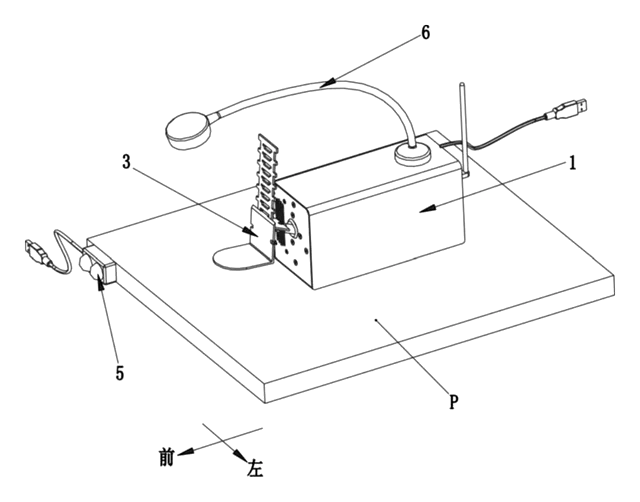
Retail Display
Motorized Shelf Display That Presents a Product to Shoppers
Shelf unit that lifts a product over the price rail toward shoppers when a sensor detects them.
Patent CN215077184U
Retail Display
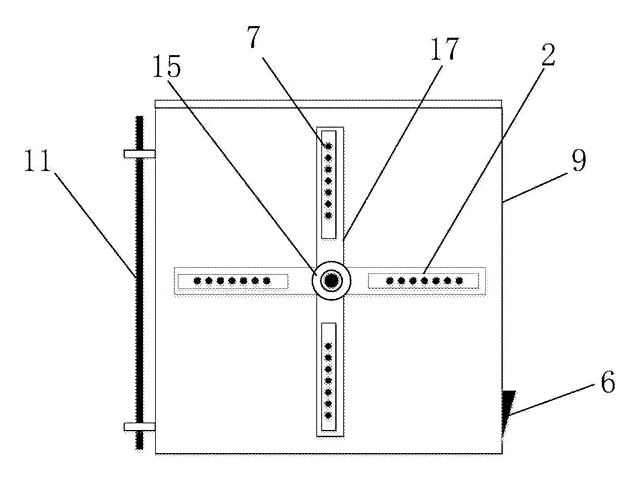
Portable Advertising Light Box with Spinning LED Display
Portable ad box whose spinning LED bars draw images and text; content changes by wireless or USB.
Patent CN207425291U
Retail Display
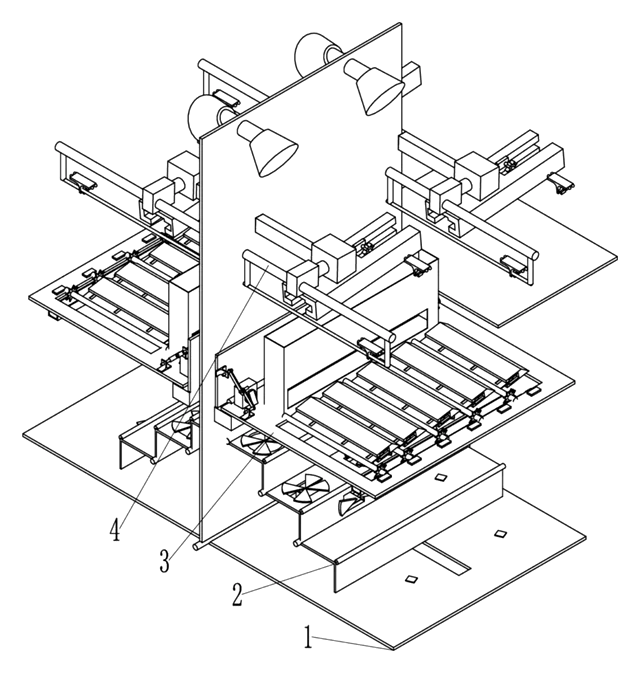
Automated Folding Store Shelf That Pushes Products Up to the Customer
Double-sided shelf for unmanned stores: folding tiers, screw pushers and lift cylinders present stock.
Patent CN109645754B
Retail Display
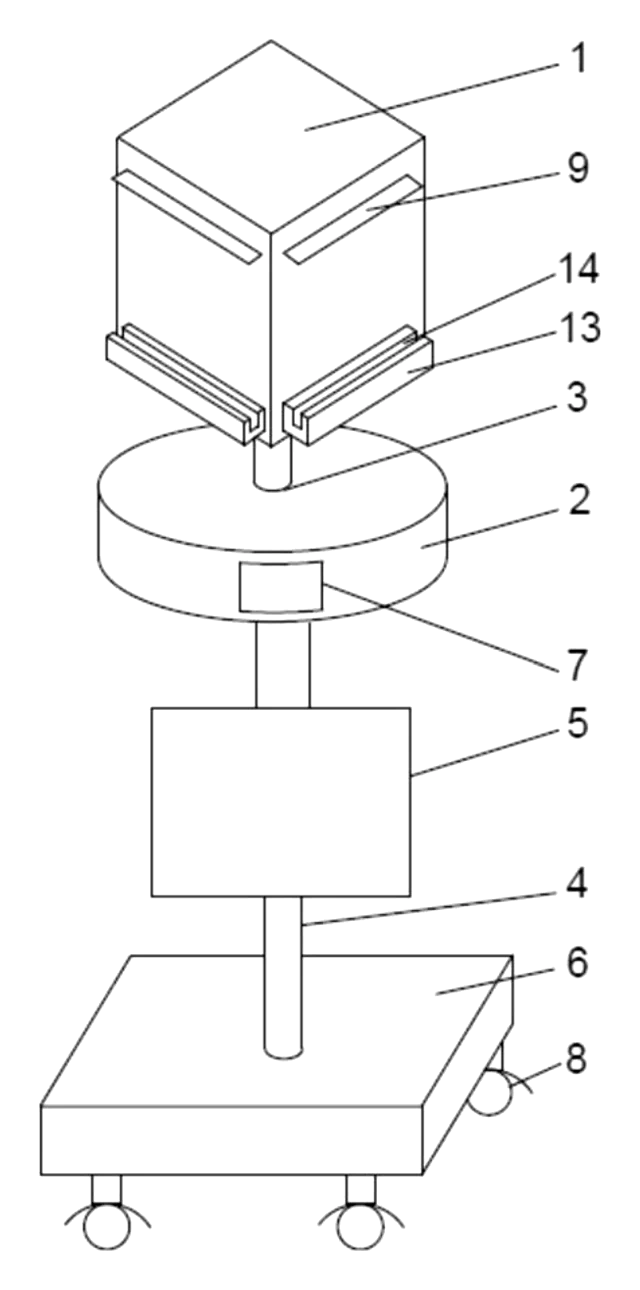
Motorized Rotating Display Pedestal with Lift Column, Info Screen and Clip-On Display Racks
Mobile pedestal: motorized rotating cube with lit faces and racks, electric lift column and info screen.
Patent CN208875862U
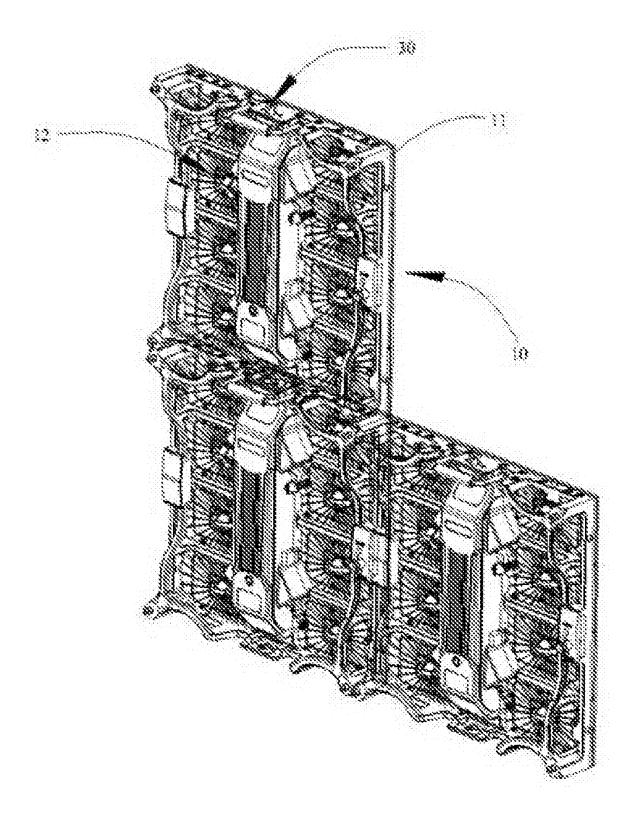
Retail Display
Thin Outdoor LED Video Wall Cabinet with Magnetic Modules and Tool-Free Locks
Thin outdoor LED wall cabinet: magnetic modules and rear body, rotary locks, finned rear cooling.
Patent CN205354557U
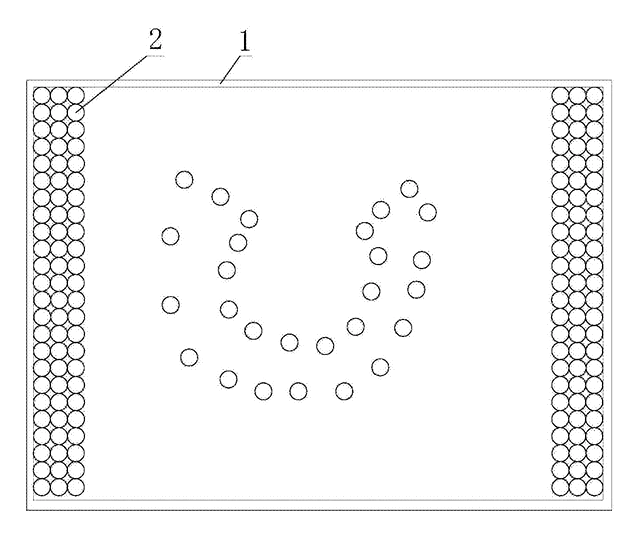
Store & Display
Magnetically Repositionable LED Advertising Panel
LED panel whose lamp beads slide to new positions via an external electromagnet.
Patent CN205487209U
Browse by category
- Apparel & Accessories (30)
- Baby & Kids (20)
- Bags & Luggage (13)
- Bath & Personal Care (21)
- Car Accessories (16)
- Furniture, Bedding & Storage (15)
- Garden & Outdoor (21)
- Health & Wellness (10)
- Home, Kitchen & Cleaning (32)
- Lighting (16)
- Packaging & Containers (8)
- Pet Products (7)
- Phone & Camera Accessories (6)
- Retail Display (17)
- School, Office & Art (24)
- Sports & Recreation (31)
- Tools & Workshop (36)
- Toys & Games (16)
This page is based on the public patent document CN206672576U, assigned to Changzhou Hawke display system Limited by Share Ltd. IP2M is an independent manufacturing service and is not affiliated with, endorsed by or licensed by the patent owner. Images marked as concept renderings are illustrations, not photos of an existing product. Patent status information is provided for reference only and is not legal advice; confirm freedom to operate for your market before production. Full disclaimer.