
Patent CN206689990U
Updated October 29, 2026Storage-Type Ratchet Wrench with Foldable Tool Bodies and Internal Bit Compartment
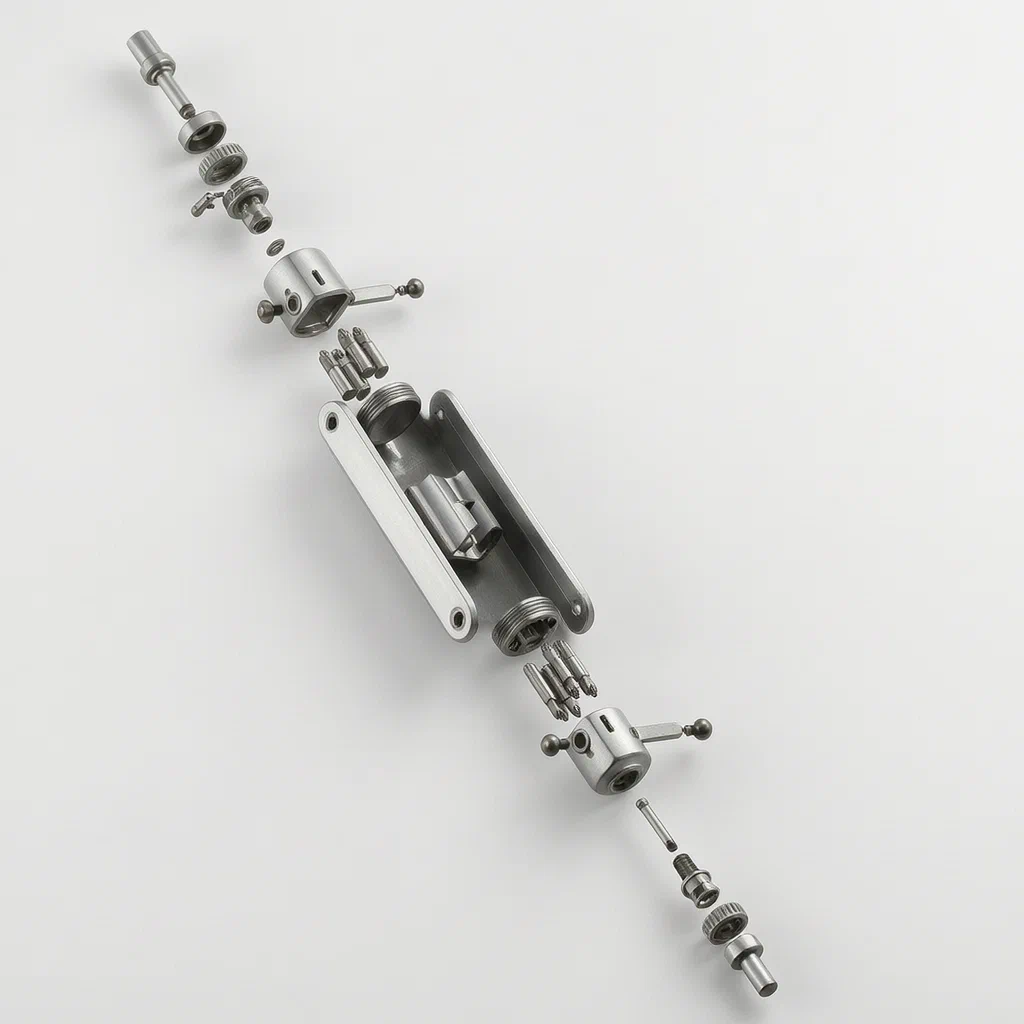
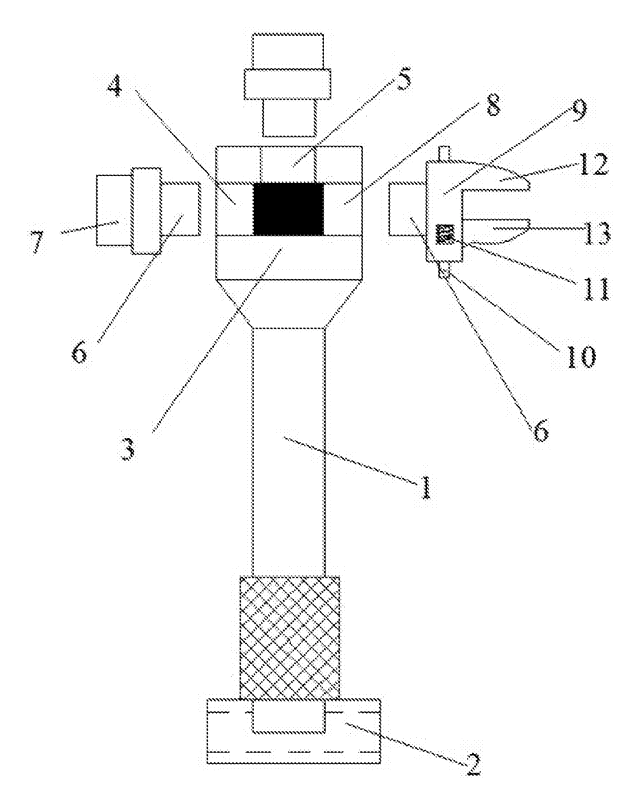
Carrying a full socket set means dealing with loose bits and heavy cases. This storage-type dismantling device solves that by folding the tool bodies directly into the mounting bracket and hiding spare tool heads inside the connecting seat itself. A positioning sliding block in the center of the bracket locks each tool body firmly when it is swung up for work, or lets it fold flat when stored. The ratchet mechanism uses a fluted disc, an adjusting ring with a plectrum, a cross-arm, and a steel ball seated by a compression spring to engage the drive and hold its position. Because the connecting seat box and lid clamp together to form a hollow chamber, users carry the exact tool heads they need without a separate toolbox. It is a compact, self-contained wrench system designed for assembly, repair, and maintenance tasks where space and organization matter.
- China utility model - lapsed
- No filings outside China
- Hand tools & workshop equipment
- Steel ratchet parts, sliding block, integrated bit storage
Splat! What let you down?
🧰
Built-in storage
The connecting seat box and lid clamp together to hold multiple tool heads inside the handle.
🔄
Foldable tool bodies
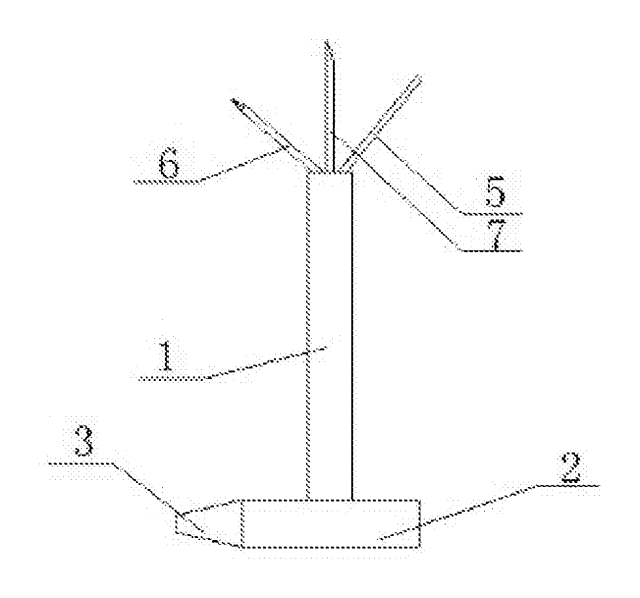
Tool bodies rotate on hinge pins from a horizontal storage position to a vertical working position.
🔒
Sliding block lock
A central positioning sliding block mates with head or side locating sections to secure the tool body.
⚙️
Ratchet mechanism
Fluted disc, adjusting ring, cross-arm, and steel ball provide directional drive and positional holding.
Bring this product to market
- ✓ Patent vetted China-only family and legal status checked
- 2 Product brief · now How it works, uses and options written up
- 3 Prototype First samples for buyers to review
- 4 Pilot run Small first batch for launch customers
- 5 Volume production Repeat orders at scale
Buyer interest
– of 100 buyers needed to start prototyping
One click, no sign-up. Each vote is one real visitor, and products with the most interest go to prototyping first.
Build team: no members yet. Need a partner, co-funding or skills to build this? Join and we introduce the team once it forms.
The problem
Technicians and mechanics often carry a handle and a separate case of sockets or bits. Loose tool heads get lost, and bulky cases take up room in tight workspaces. Standard folding multi-tools lack a ratcheting function, meaning the user must lift and reset the tool after every partial turn. When a folding tool does include a ratchet, there is usually no dedicated place to keep the required attachments, forcing the user to manage extra pieces.
The solution
This storage-type dismantling device combines a folding frame, a ratchet drive, and internal attachment storage into one unit.
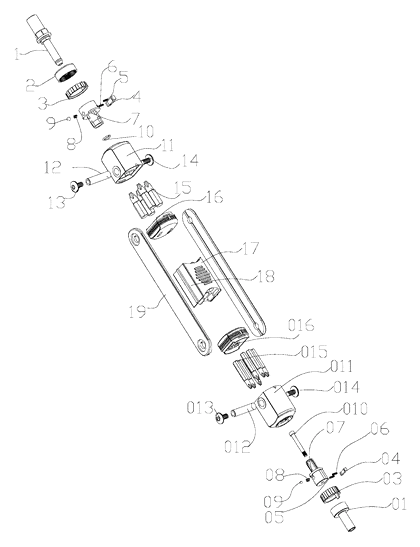
- A mounting bracket made of two parallel seat boards provides the main frame. Longitudinal slide grooves on the inner sides of these boards guide a positioning sliding block.
- At least one tool body attaches to the bracket via hinge pins passing through pin-and-holes at both ends of the seat boards.
- The tool body can swing from a horizontal folded position into a vertical working position.
- The positioning sliding block moves along the center of the bracket. Its end features a sliding block locating section that fits tightly against either a connecting seat head positioning portion or a connecting seat sided locating section on the tool body.
- This interference-fit plug-socket structure holds the tool body rigidly when deployed for work.
- The tool body’s connecting seat consists of a box and a clamping lid. Together they enclose a chamber to store several tool heads.
Who it is for
- Hand tool brands looking to expand their folding wrench lines with a model that carries its own sockets, reducing the need for separate bit kits.
- Automotive aftermarket wholesalers supplying mechanics who need compact tools for glovebox or motorcycle repair kits where space is limited.
- Bicycle and outdoor gear retailers offering trail-side multi-tools that include a ratcheting action and hidden storage for common hex or Torx heads.
- Maintenance, repair, and operations (MRO) suppliers equipping facility technicians who move between machines and benefit from an all-in-one fastening tool.
How it works
The main parts
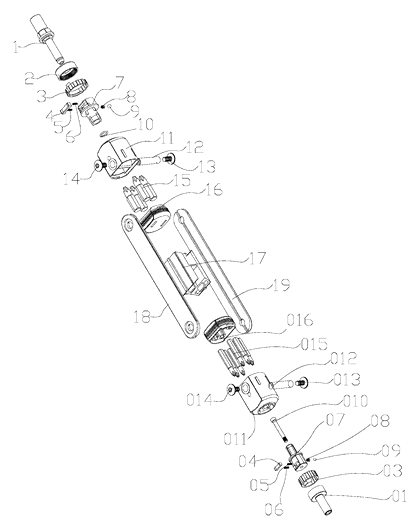
| No. | Part | What it does |
|---|---|---|
| 01 | Tool head mounting rod | Holds the working tool head; driven by the ratchet mechanism. |
| 03 | Adjusting ring | Rotates to change ratchet direction via its plectrum. |
| 04 | Cross-arm | Sits inside the adjusting ring; transfers motion to the fluted disc. |
| 06 | Spring two | Loads the cross-arm inside the ratchet shaft groove. |
| 07 | Ratchet shaft | Main axle holding the ratchet components; connects to the mounting rod. |
| 08 | Stage clip (compression spring) | Pushes the steel ball outward into the adjusting ring’s locating slot. |
| 09 | Steel ball | Engages locating slots to hold the adjusting ring in position. |
| 011 | Connecting seat box | Forms the main housing of the tool body; stores tool heads. |
| 012 | Connection flap (lid) | Clamps onto the box to close the storage chamber. |
| 18, 19 | Mounting bracket (seat boards) | Two parallel seat boards holding the hinge pins and slide rails. |
| 17 | Positioning sliding block | Slides centrally to lock the tool body vertically or horizontally. |
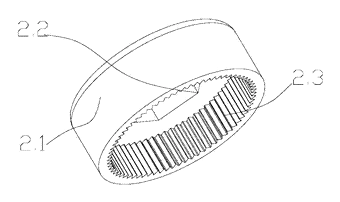
| 02 | Fluted disc | Contains internal teeth engaged by the cross-arm plectrum. |
| 010 | Long bolt | Threads into the mounting rod to secure the assembly axially. |
Operating steps
- Open the storage: Unclamp the connection flap from the connecting seat box and select the required tool head. Attach it to the tool head mounting rod.
- Deploy the tool body: Rotate the tool body on its hinge pin from the horizontal storage position to the vertical working position.
- Lock the position: Slide the positioning sliding block along the bracket’s slide rail until its locating section engages the connecting seat’s head or side positioning portion. The interference fit prevents the tool body from folding during use.
- Set ratchet direction: Turn the adjusting ring. The adjusting ring plectrum pushes against the cross-arm, which engages the fluted disc’s internal teeth. The steel ball, pushed by the stage clip, clicks into the corresponding adjusting ring locating slot to hold the setting.
- Fasten or loosen: Apply force to the mounting bracket. The ratchet mechanism drives the mounting rod in the selected direction while slipping freely in the opposite direction.
- Store: Reverse the process. Fold the tool body back horizontally, disengage the sliding block, and return the unused tool heads to the connecting seat box before clamping the lid shut.
Applications
Automotive glovebox and emergency kits
Drivers and roadside assistance technicians need basic fastening tools without carrying a full toolbox. This device folds flat, stores the necessary sockets inside its own handle, and deploys quickly when a battery terminal or interior panel needs tightening.
Bicycle trail-side repairs
Cyclists encounter loose bolts far from a workshop. A foldable ratchet wrench with internal hex-bit storage allows riders to adjust stems, seat posts, or derailleurs using one compact unit instead of a roll of separate keys.
Facility and machine maintenance
MRO technicians walk large plants checking panels, guards, and fixtures. Carrying a single multi-tool that locks rigidly in the vertical position speeds up repetitive fastening tasks across different machines without returning to a cart for bits.
Furniture assembly and flat-pack installation
Assembly workers building ready-to-assemble furniture deal with many fastener types. Storing the specific Allen or Phillips heads inside the tool handle keeps the workspace clear and prevents small bits from rolling under cabinets during installation.
Where it is less suitable
- Heavy-duty industrial bolting: The compact ratchet mechanism and folding hinge are not dimensioned for high-torque structural applications; solid, non-folding breaker bars are required there.
- Insulated electrical work: The patent does not describe dielectric coatings or insulated handles, so it is not specified for live-circuit environments.
Frequently asked questions
How do the tool bodies stay locked when in use?
A positioning sliding block sits in the center of the mounting bracket. When you swing a tool body up to the vertical working position, you slide the block until its locating section presses into the head or side positioning portion of the connecting seat. The patent describes this as an interference-fit plug-socket structure, meaning the parts wedge together tightly to prevent folding under load.
Where are the spare tool heads kept?
They are stored inside the tool body itself. The connecting seat is made of a box and a clamping lid. When the lid is snapped shut, it forms a hollow chamber that holds the extra bits or sockets, eliminating the need for a separate pouch or case.
How does the ratchet mechanism work?
The ratchet shaft holds a fluted disc with internal teeth. An adjusting ring surrounds it, featuring a plectrum that pushes against a cross-arm inside the shaft. Turning the adjusting ring changes which way the cross-arm catches the fluted disc teeth. A compression spring pushes a steel ball into one of several locating slots on the adjusting ring, clicking it into place so the direction does not shift during use.
Can it have more than one tool body?
Yes. The patent mentions that the mounting bracket has pin-and-holes at both ends, allowing a tool body to be hinged at each end. The internal ratchet parts for a second tool body mirror the first.
What materials are used?
The patent text does not specify exact alloys. For production, the bracket, ratchet shaft, and fluted disc are typically machined or stamped from carbon steel or chrome vanadium, while the connecting seat lid could be metal or molded polymer. The steel grade is chosen during design and proven on sample tools based on the required torque rating.
How much torque can it handle?
The patent does not list a maximum torque value. The safe working limit depends on the thickness of the mounting bracket seat boards, the diameter of the hinge pins, and the strength of the sliding block’s interference fit. These dimensions get fixed during design and are then verified on samples through torque testing.
Is the tool head removable?
The tool head mounting rod is secured axially by a long bolt threading into it from inside the ratchet shaft. The bolt head has an inner hexagonal hole to allow removal, so the mounting rod and attached tool head can be swapped or serviced.
Can this design be made and sold in the US?
The patent was filed only in China and is lapsed (terminated for non-payment of annual fees, recorded 2023-03-17), so it does not restrict the design in the US or in China. Hand tools and ratchet mechanisms may be covered by other US patents - see Patent & Production - so we recommend a freedom-to-operate check before volume production.
Are you affiliated with the patent owner?
No. IP2M is an independent design and manufacturing service working from the public patent document.
Request a quote
Click Request a Quote below to see our email address - copy it, or open your email app with a ready-made message. Please mention patent CN206689990U in the subject.
Helpful details to include:
- Your company and channel (hand tool brand, automotive wholesaler, bicycle accessory retailer, MRO supplier)
- Number of tool bodies (single-ended or double-ended)
- Drive type and size (square drive or hex bit receptacle)
- Quantity and types of tool heads to be stored internally
- Material and finish preferences
- Estimated quantity and target price
- Timeline - when you would like samples and the first shipment
You can also reach us at (332) 203-9997.
Explore this product
Interested in building this?
Tell us your target market, quantity and timeline. We reply with options for prototyping, small-batch runs or volume production.
Send your inquiry to
Please put CN206689990U in the subject line and tell us your company, country, estimated quantity and timeline.
Prefer to talk? Call (332) 203-9997.
More product-ready patents
All Tools & Workshop patents →
Tools & Workshop
Rolling Tool Box with Telescoping Step Ladder
Telescoping A-frame ladder with an attached rolling tool box that slides to your working height.
Patent CN206290197U
Tools & Workshop
Folding 3-Handle Wrench Multi-Tool
Folding three-handle wrench multi-tool with magnetic screwdriver bits, saw, file and bottle opener.
Patent CN205290875U
Tools & Workshop
Rolling Auto-Repair Tool Cabinet with Built-In Lights
Lockable rolling tool cabinet for car repair with interior lights, a lubricant tray, parts drawers and a tool bay.
Patent CN205989314U
Tools & Workshop
Wide-Opening Folding Bolt Cutter
Bolt cutter with linked, gear-meshing handles that open up to 190° and fold in half for storage.
Patent CN207206226U
Tools & Workshop
Nail-Holding Hammer with Fold-Out Drivers
Hammer with a nail-holding T-slot in the head and fold-out drivers stored in the handle.
Patent CN205254927U
Tools & Workshop
Modular Wrench with Screw-On Heads
Wrench handle with a three-way threaded hub for screw-on adjustable and hex heads, plus a pipe sleeve.
Patent CN206216564U
Browse by category
- Apparel & Accessories (22)
- Baby & Kids (16)
- Bags & Luggage (9)
- Bath & Personal Care (16)
- Car Accessories (10)
- Furniture, Bedding & Storage (12)
- Garden & Outdoor (18)
- Health & Wellness (8)
- Home, Kitchen & Cleaning (24)
- Lighting (12)
- Packaging & Containers (6)
- Pet Products (6)
- Phone & Camera Accessories (4)
- Retail Display (13)
- School, Office & Art (19)
- Sports & Recreation (25)
- Tools & Workshop (27)
- Toys & Games (12)
This page is based on the public patent document CN206689990U, assigned to SHAOXING HUANZHOU TOOL MANUFACTURING Co Ltd. IP2M is an independent manufacturing service and is not affiliated with, endorsed by or licensed by the patent owner. Images marked as concept renderings are illustrations, not photos of an existing product. Patent status information is provided for reference only and is not legal advice; confirm freedom to operate for your market before production. Full disclaimer.