
Patent CN206808261U
Updated October 23, 2026Wire-Mesh Tree Root & Trunk Guard Against Rodents
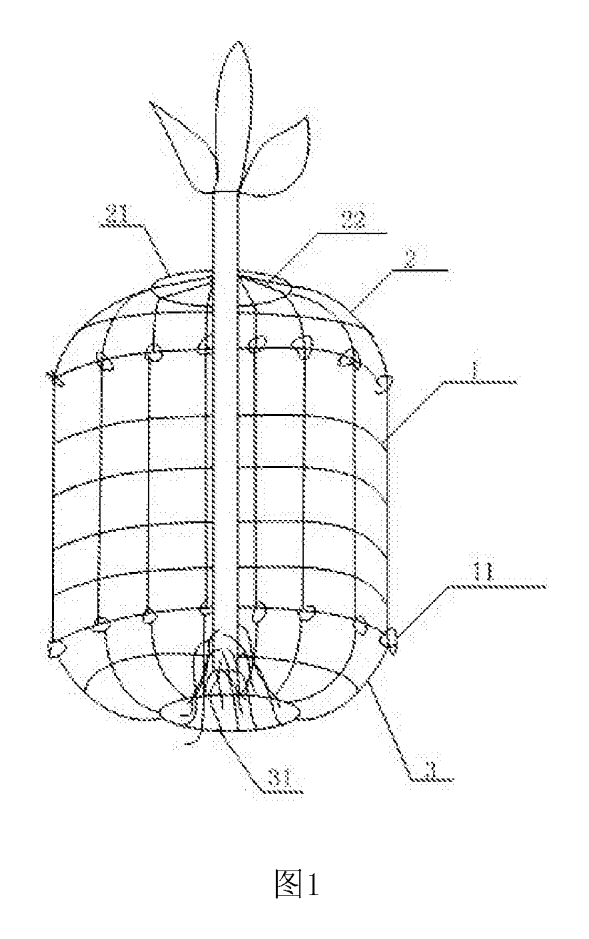
A simple wire cage for newly planted trees. A ring of mesh is buried around the planting hole, a mesh cylinder rises around the root zone and lower trunk, and a domed mesh collar closes the top around the trunk. Voles, gophers and rabbits are kept out without poison, and the thin coated wire is designed to corrode away after about 2-3 years so it does not girdle the roots.
- China utility model - lapsed
- No filings outside China
- Garden & orchard
- Coated wire mesh, no chemicals
Splat! What let you down?
🐀
No poison needed
A physical mesh barrier keeps voles, gophers, zokors and rabbits away from roots and bark.
🌳
Root zone + trunk
A buried ring, a middle cylinder and a top collar protect below and above the ground.
⏳
Fades away on time
Thin coated wire is designed to protect for about 2-3 years, then corrode and stop restricting the roots.
📦
Ships flat
The mesh panels ship flat and are joined on site with their own wire ends.
Bring this product to market
- ✓ Patent vetted China-only family and legal status checked
- 2 Product brief · now How it works, uses and options written up
- 3 Prototype First samples for buyers to review
- 4 Pilot run Small first batch for launch customers
- 5 Volume production Repeat orders at scale
Buyer interest
– of 100 buyers needed to start prototyping
One click, no sign-up. Each vote is one real visitor, and products with the most interest go to prototyping first.
Build team: no members yet. Need a partner, co-funding or skills to build this? Join and we introduce the team once it forms.
The problem
In the first years after planting, young fruit and nut trees are often killed from below: voles, gophers, zokors and rabbits eat the roots and gnaw the bark at the base. Orchards usually fight back with poison baits and repellents, which pollute the soil, can affect the crop, and cost money and labor every season.
The solution
The patent puts a mesh cage around the root zone and lower trunk:
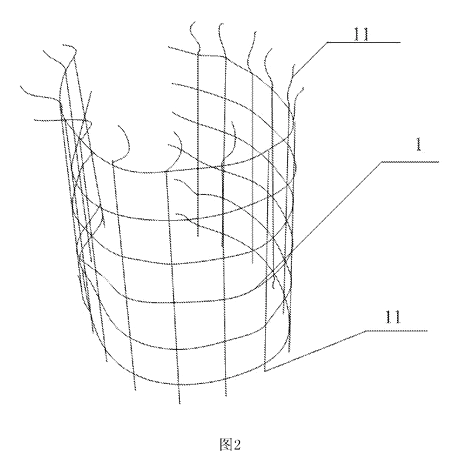
- A lower ring (3) of wire mesh is buried in the planting hole. Its center has an opening (31) so the main roots can grow down.
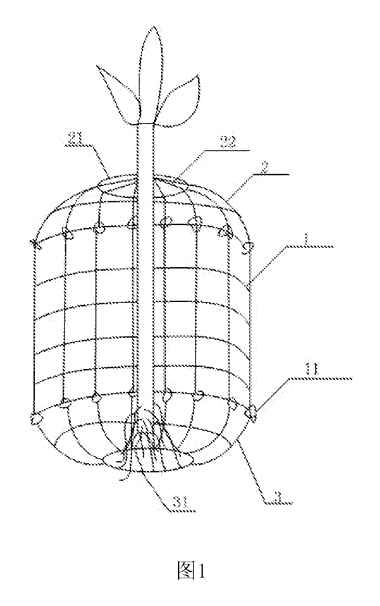
- A middle cylinder (1) - in the patent, a 30 x 30 cm mesh panel rolled into a tube - stands on the ring and surrounds the root ball and trunk base.
- A domed top collar (2) closes the cylinder. A center hole (21) with a tie (22) fits around the trunk.
- Bare wire ends (11) on the middle panel join the three parts on site - no tools or extra fasteners.
Who it is for
- Garden-supply and orchard-supply brands selling rodent guards and “gopher baskets”.
- Orchards, nurseries and tree-planting programs planting nut and fruit trees in rodent areas.
- Home gardeners protecting new trees and shrubs.
How it works
The main parts
| No. | Part | What it does |
|---|---|---|
| 1 | Middle cylinder | Mesh panel (30 x 30 cm in the patent) rolled into a tube around the root ball and trunk base. |
| 11 | Joining wires | Bare wire ends left on the middle panel; twisted to join the parts. |
| 2 | Top collar | Ring-shaped, domed mesh cover over the cylinder. |
| 21 | Trunk hole | Center opening in the top collar for the trunk. |
| 22 | Trunk tie | Joins the collar to the trunk. |
| 3 | Lower ring | Ring of mesh buried in the planting hole. |
| 31 | Root opening | Center of the lower ring, so roots can grow downward. |
Materials in the patent
- Wire: iron wire 0.5-1 mm in diameter, aluminum- or tin-coated.
- Mesh openings: 1.5 x 1.5 cm to 2 x 2 cm.
- Protection period: the patent states that this size suits more than 90% of trees and protects for 2-3 years, after which the wire corrodes and has little effect on root growth. Thicker or thinner wire can lengthen or shorten that period.
Installing it, step by step
- Dig the planting hole and lay the lower ring (3) in the bottom.
- Plant the tree over the root opening (31).
- Roll the middle panel (1) into a cylinder around the root ball and join it to the lower ring with the bare wire ends (11).
- Backfill the soil.
- Fit the top collar (2) over the cylinder, pass the trunk through the center hole (21), join the collar with the wire ends, and tie it to the trunk (22).
Applications
Nut and fruit orchards
The patent lists walnut, pecan, almond, pistachio, apricot, olive, cashew and other trees whose young roots are attacked by rodents.
Nurseries and new plantings
Protects young trees during the first seasons, when they are most at risk.
Reforestation and habitat projects
Planting many trees in fields where poison baits are not allowed or wanted.
Home gardens and landscaping
Fruit trees, roses and shrubs in yards with gophers or voles.
Medicinal and specialty crops
The patent also mentions protecting some medicinal plants and oil-tree peony.
Where it is less suitable
- Large, established trees - their root systems are far bigger than the guard.
- Deer and large animals - they browse above the guard; a tall trunk guard or fence is needed.
- Very rocky soil - burying the lower ring is harder.
Frequently asked questions
Which animals does it keep out?
The patent was written against voles, rabbits and zokors (burrowing rodents). In the US the same idea is used against gophers and voles. Mesh size is chosen for the target animal.
Will the wire choke the roots later?
The patent uses thin, coated wire designed to protect for about 2-3 years and then corrode, so it has little effect on later root growth. The lower ring also has an opening for roots to grow down.
How long does it last?
The patent states 2-3 years for its wire size. Thicker or galvanized wire lasts longer; we test the protection period before it is printed on packaging.
Is it hard to install?
It is installed while planting: ring in the hole, cylinder around the root ball, collar around the trunk. The parts are joined with their own bare wire ends.
What tree sizes does it fit?
The patent’s 30 x 30 cm panel suits young trees; other sizes can be made for different nursery stock.
Does it protect against deer?
No. Deer browse higher up; a tall trunk guard or fence is needed for them.
Can this design be made and sold in the US?
The patent was filed only in China and lapsed in 2018, so it does not restrict anyone. Other root-guard designs may be patented - see Patent & Production - so we recommend a freedom-to-operate check before volume production.
Are you affiliated with the patent owner?
No. IP2M is an independent design and manufacturing service working from the public patent document.
Request a quote
Click Request a Quote below to see our email address - copy it, or open your email app with a ready-made message. Please mention patent CN206808261U in the subject.
Helpful details to include:
- Your company and sales channel (garden retail, orchard supply, Amazon…)
- Target trees and pests
- Sizes, wire gauge and coating
- Pack sizes and branding
- Estimated quantity and target price
- Timeline - when you would like samples and the first shipment
You can also reach us at (332) 203-9997.
Explore this product
Interested in building this?
Tell us your target market, quantity and timeline. We reply with options for prototyping, small-batch runs or volume production.
Send your inquiry to
Please put CN206808261U in the subject line and tell us your company, country, estimated quantity and timeline.
Prefer to talk? Call (332) 203-9997.
More product-ready patents
All Garden & Outdoor patents →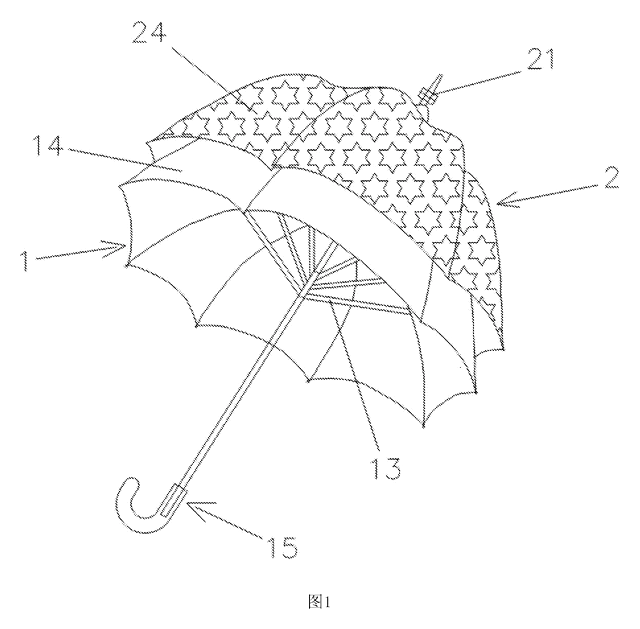
Garden & Outdoor
2-in-1 Parent & Child Umbrella
Full-size umbrella with a nested smaller umbrella on top - a rotating decorative layer that detaches into a kid-size umbrella.
Patent CN205611962U
Garden & Outdoor
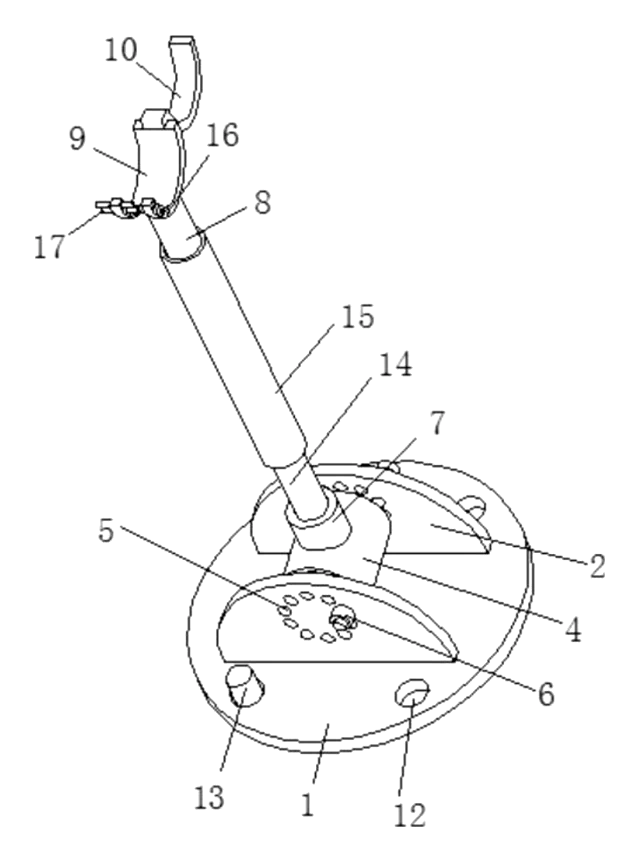
Adjustable-Angle Tree Support Prop
Tree prop with a pinned base, angle-locking hinge, twist-adjust tube and a locking trunk ring.
Patent CN208370491U
Garden & Outdoor
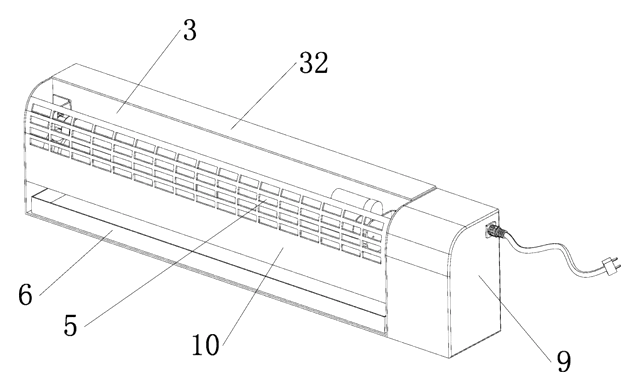
Self-Renewing Glue-Roller Mosquito Trap
UV insect trap with a glue roller that re-coats itself and scrapes the catch into a tray - no glue boards.
Patent CN217038569U
Garden & Outdoor
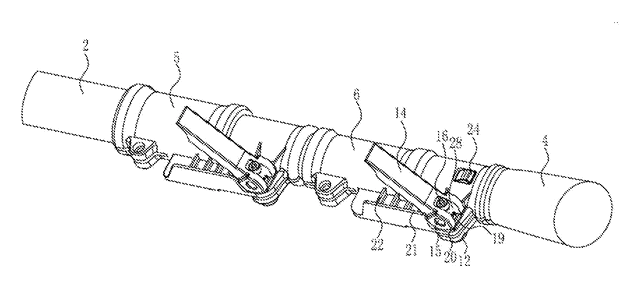
Cam-Lock Telescopic Pole for Garden Power Tools
Telescopic pole for garden power tools with cam-lever locks and a spring-button, tear-drop head socket.
Patent CN205812889U
Garden & Outdoor
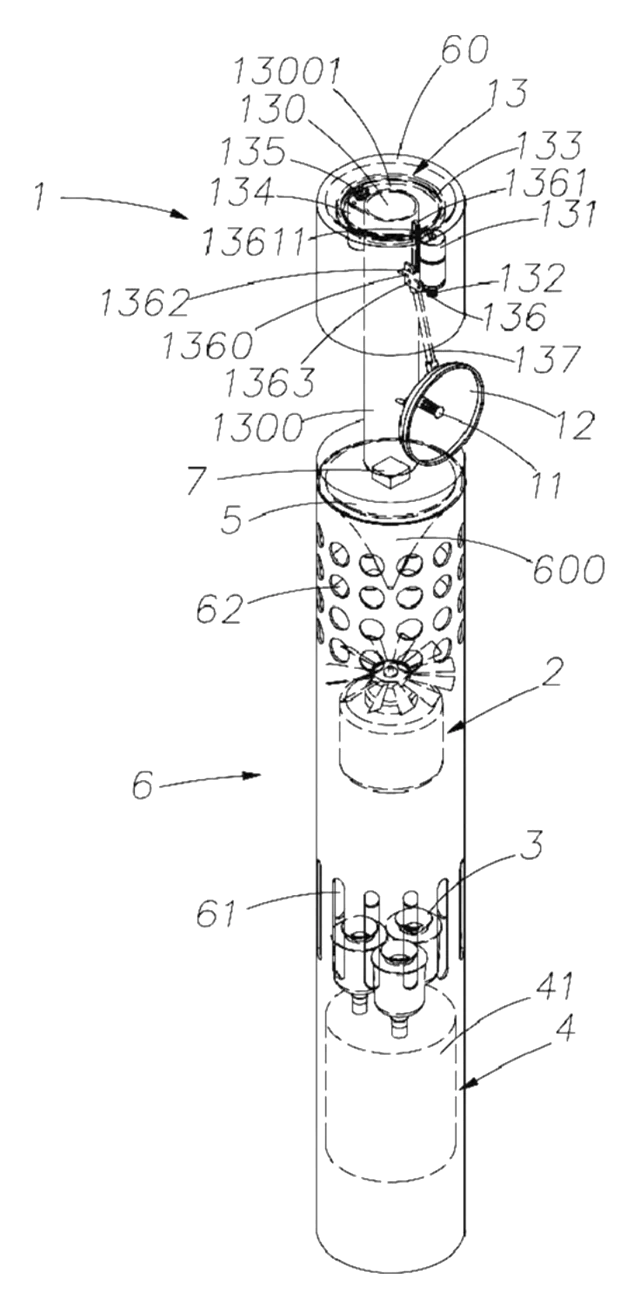
Mosquito Fan That Listens for Mosquitoes Before It Sprays
Fan with a scanning microphone dish that mists repellent only when it hears mosquitoes.
Patent CN208708542U
Garden & Outdoor
Flat Pressure-Compensating Drip Emitter with Built-In Filter Chamber for Drip Tape
Flat inline dripper for drip tape: filter chamber, labyrinth paths and a diaphragm for even flow.
Patent CN205922296U
Browse by category
- Apparel & Accessories (22)
- Baby & Kids (16)
- Bags & Luggage (9)
- Bath & Personal Care (16)
- Car Accessories (10)
- Furniture, Bedding & Storage (12)
- Garden & Outdoor (18)
- Health & Wellness (8)
- Home, Kitchen & Cleaning (24)
- Lighting (12)
- Packaging & Containers (6)
- Pet Products (6)
- Phone & Camera Accessories (4)
- Retail Display (13)
- School, Office & Art (19)
- Sports & Recreation (25)
- Tools & Workshop (27)
- Toys & Games (12)
This page is based on the public patent document CN206808261U, assigned to an individual inventor. IP2M is an independent manufacturing service and is not affiliated with, endorsed by or licensed by the patent owner. Images marked as concept renderings are illustrations, not photos of an existing product. Patent status information is provided for reference only and is not legal advice; confirm freedom to operate for your market before production. Full disclaimer.