At a glance
| Patent number | CN206856772U (application CN201720475293.8) |
| Type | China utility model (实用新型) - protects product shape and structure |
| Original title | Child stroller seat with linked folding armrest (扶手可联动收合的儿童推车座椅) |
| Patent owner | Shanghai Tongge Baby Products Co., Ltd. (上海童歌母婴用品有限公司) |
| Inventors | Liu Yimin, Min Yuanchao, Jiang Fangming |
| Filing date | 2017-05-02 (priority 2016-12-27) |
| Grant date | 2018-01-09 |
| Status (China) | Utility model given up (recorded 2024-01-26). Chinese law lets an applicant file a utility model and an invention patent for the same design on the same day and keep only one; the owner gave up this utility model when the invention patent CN107117199B (application CN201710302137.6) was granted on 2024-01-26. CN107117199B is in force in China; an invention patent lasts at most 20 years from filing (to 2037-05-02) |
| Patent family | Chinese filings only - no US, European, Japanese, PCT or other filings listed |
| Cited by | 11 later documents |
| Source | Google Patents (search for CN206856772U and CN107117199B) |
What the claims cover, in plain language
Claim 1 - a stroller seat with a backrest, seat and armrest whose pivots on each side are connected to each other, with the seat pivot between the backrest pivot and the armrest pivot, and a lock between the backrest and seat pivots. On each side an armrest linkage has an arc groove in the backrest pivot (a constant-depth part and a sloping part), a stepped through-hole in the seat pivot, a lock hole in the armrest pivot, an unlock pin, a lock pin and springs. Folding the backrest forward moves the unlock pin onto the slope, which pushes the lock pin out of the seat pivot so the armrest can turn.
Claim 2 - an armrest return (arc groove, limit pin and spring) that lifts the armrest again. Claims 3-4 - the recline lock: a gear engaging tooth slots in both pivots, with one thicker tooth and deeper slots for locking positions. Claims 5-6 - the release: rotor, pusher and cable on each side, both cables pulled by one handle. Claims 7-10 - tube backrest with the handle on a cross tube; board-type or tube-type seat; U-shaped armrest with molded pivots; adjustable canopy bar on the backrest.
This is a simplified reading for orientation only. The legal scope is defined by the exact claim wording in the official Chinese documents, and the claims of the invention patent CN107117199B may differ from the utility model.
What this means for US production
These patents were filed only in China. The invention patent CN107117199B is in force in China, so making or selling this design in China would need the owner’s permission while it lasts (at most until 2037-05-02). There is no US or other foreign counterpart, so these patents do not restrict the design outside China.
Before production, keep in mind:
- Other patents may exist. Stroller folding mechanisms are one of the most heavily patented areas in juvenile products, and large stroller brands hold many US patents on seat hinges and recline locks. A freedom-to-operate (FTO) search by a US patent attorney is essential before tooling.
- Production location. Because the Chinese patent is in force, plan where the hinge parts are made and assembled with your patent counsel.
Customization and manufacturing
What can be customized
| Area | Options |
|---|---|
| Seat frame | Aluminum or steel tubes; board seat or fabric over tubes |
| Hinge parts | Glass-filled nylon or POM pivots, steel pins and springs |
| Release | Handle position on the backrest; cable routing |
| Recline | Number and angle of recline positions - to be confirmed in design |
| Soft goods | Seat fabric, padding, canopy and leg-rest cover |
| Fit | Interface to your stroller frame, reversible-seat adapters |
Things to plan for (US market)
- Carriage and stroller safety standard - strollers sold in the US must meet the CPSC rule 16 CFR 1227, which adopts ASTM F833 (stability, brakes, restraints, hinge pinch points, locking mechanisms). Testing must be done at a CPSC-accepted third-party lab.
- Children’s Product Certificate - with CPSIA lead and phthalate limits, tracking labels and a product registration card.
- Pinch points - folding hinges near a child need careful design so fingers cannot be trapped; this is checked in ASTM F833 testing.
- Textiles - fabrics and padding should be checked for flammability and California Proposition 65.
How a project runs
- Inquiry - frame type, seat size, recline positions and quantity.
- Design - hinge and pin geometry, cable routing, interface to the frame.
- Prototype - working seats for fold, recline and durability cycling.
- Pilot run - small batch with third-party ASTM F833 / CPSIA testing.
- Production - volume production, packaging and shipping.
Quantities & timeline
The hinge parts need injection molds, and the tube frame needs bending fixtures; timing depends on the number of molded parts and the test plan. Send us your frame, seat size, quantity and target price and we will reply with options.
Patent drawings
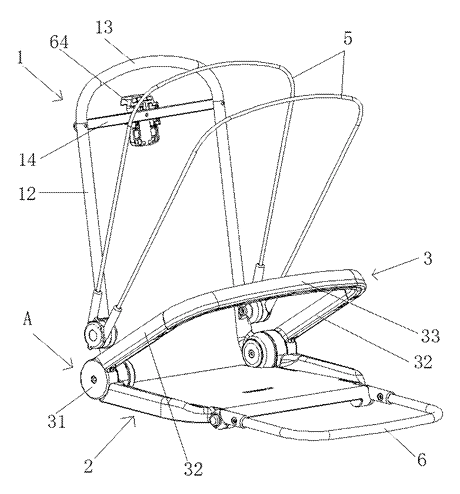
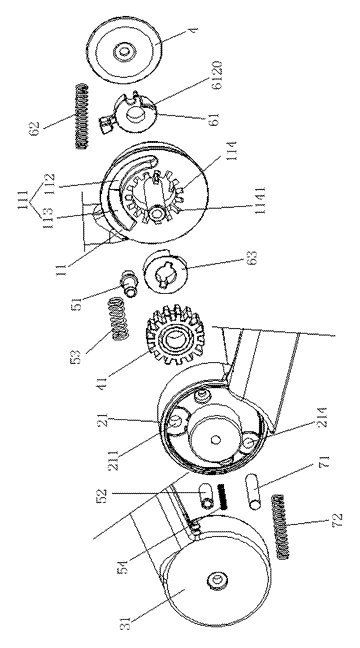
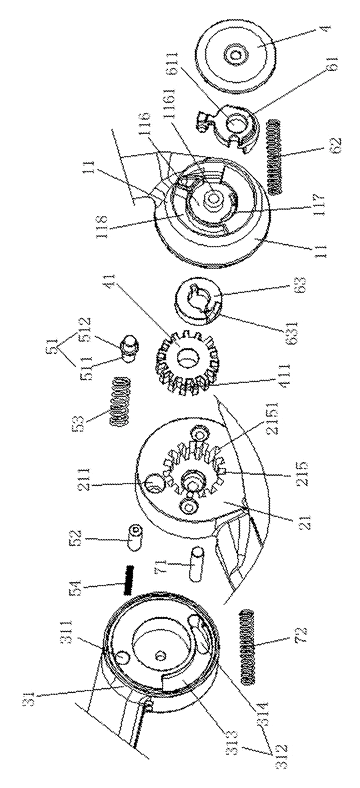
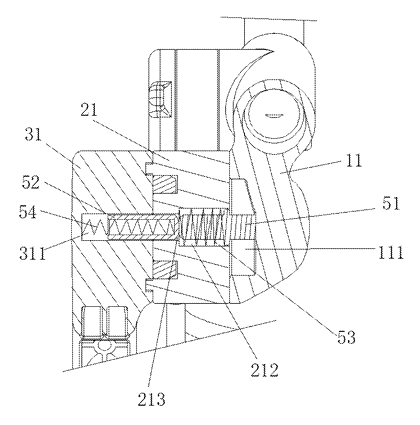
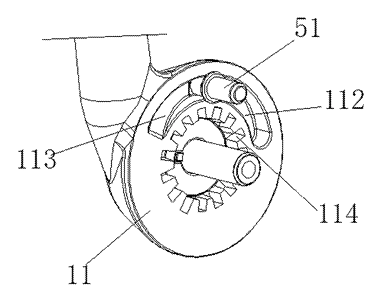
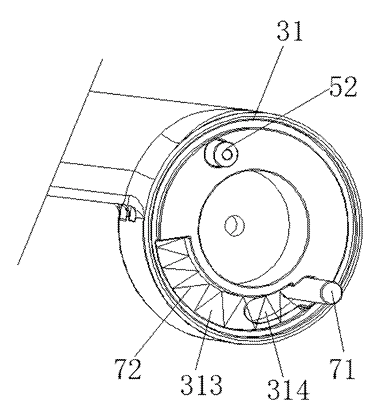
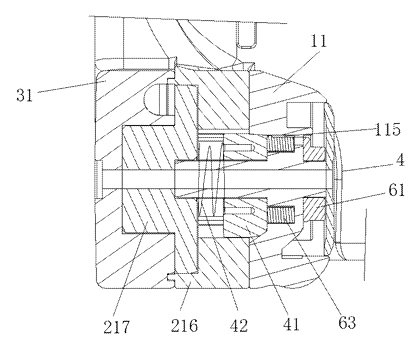
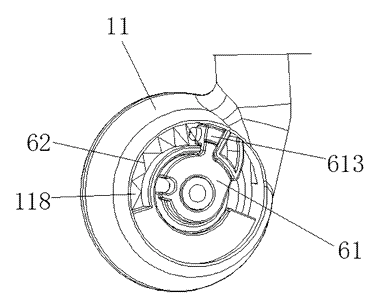
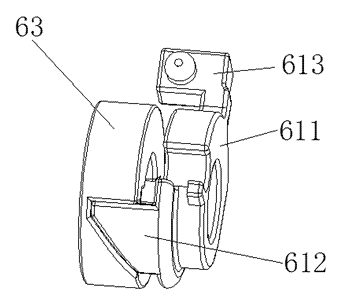
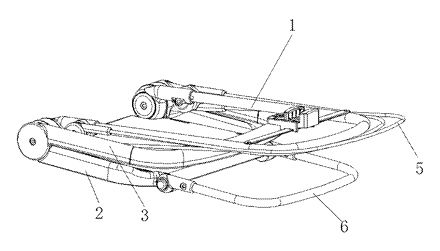
Drawings reproduced from the public patent document for reference.