
Patent CN206896783U
Updated October 24, 2026Card-Thin Magnetic Travel Mahjong and Chess Sets with Magnet Racks
A standard mahjong set is a heavy case of thick tiles; travel sets shrink the tiles but then they are hard to pick up and won't stand in a row. Board games such as Go or chess have the same trade-off between small and usable. This patent makes the pieces thin - down to card thickness - and mixes soft-magnetic powder into the plastic in a planned pattern, so a magnet can pick up a single piece and a magnetic board can hold them. A finger-cot picker with two small magnets lifts and drops pieces; L-shaped soft-steel racks hold mahjong tiles upright and fold back into a steel-framed box. The patent's example box for a full mahjong set is about the size of one and a half decks of playing cards.
- China utility model - in force in China until May 2027 at most
- No filings outside China
- Travel games & mahjong
- Plastic with soft-magnetic powder, magnetic rubber, steel
Splat! What let you down?
🀄
Card-thin tiles
Mahjong tiles and chess pieces in thickness bands from 0.1 mm up to 7.5 mm.
🧲
Magnetic powder inside
Soft-magnetic particles are arranged in channels so pieces respond to a magnet without being magnets themselves.
☝️
Finger picker
A finger cot with two small magnets lifts one piece at a time and pushes it onto the board.
📦
Racks fold into the box
L-shaped steel racks hold tiles upright in play and fold back onto the box frame.
Bring this product to market
- ✓ Patent vetted China-only family and legal status checked
- 2 Product brief · now How it works, uses and options written up
- 3 Prototype First samples for buyers to review
- 4 Pilot run Small first batch for launch customers
- 5 Volume production Repeat orders at scale
Buyer interest
– of 100 buyers needed to start prototyping
One click, no sign-up. Each vote is one real visitor, and products with the most interest go to prototyping first.
Build team: no members yet. Need a partner, co-funding or skills to build this? Join and we introduce the team once it forms.
The problem
Mahjong and board games are social games people want to take along - on trains and ferries, to hotels, on holiday. But a full mahjong set is bulky and heavy, and thick tiles clatter. Earlier travel ideas in China, cited in the patent, made pieces thinner or out of paper, but thin pieces are hard to pick up and sort, and some needed special magnetic wands that took practice. The patent’s aim is a set that is light, small and quiet, still looks right on the table, and is easy to handle.
The solution
The patent combines thin pieces, magnetic powder and simple magnetic tools:
- Pieces - mahjong tiles and pieces for Go, Chinese chess, chess, Korean chess, Junqi, Chinese checkers and gomoku - are made as thin sheets, in bands such as 0.1-0.5 mm, 0.5-5.5 mm and 5.5-7.5 mm.
- Each piece combines a non-magnetic material (a molded plastic) with soft-magnetic particles or powder (for example iron, silicon steel, permalloy or soft ferrite), placed so they form low-resistance paths for magnetic flux in chosen directions.
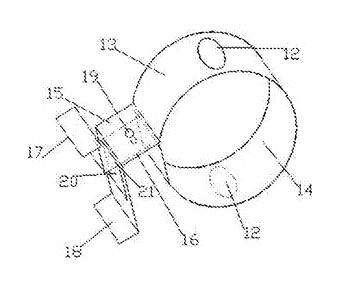
- A picking tool has two small permanent magnets joined by a connector worn on a finger like a cot. According to the patent, one magnet picks up only a single piece, and the thumb pushes it off onto the right square.
- Magnetic rubber boards hold the pieces on the playing surface.
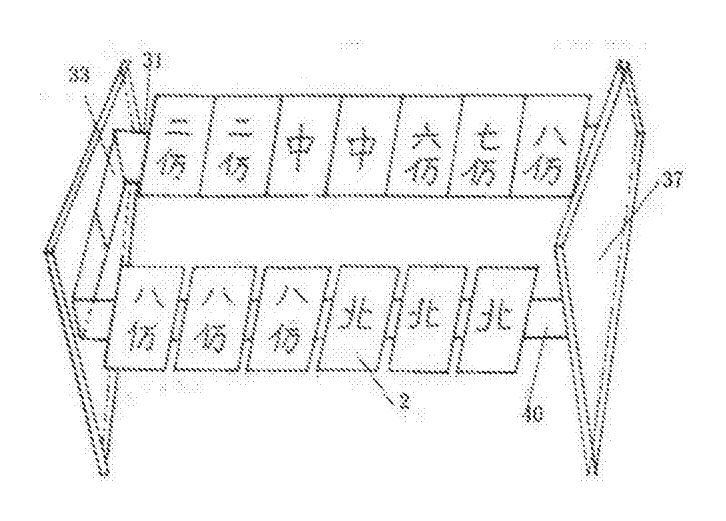
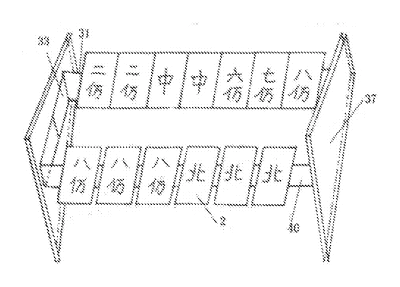
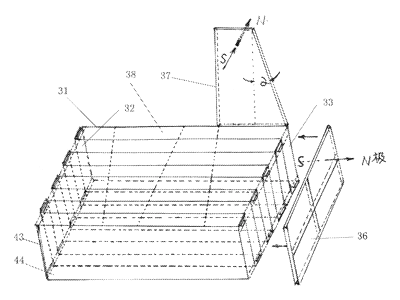
- For mahjong, a rack made of L-shaped soft-steel frames holds tiles upright in a row by magnetism; after play the frames fold back onto a soft-steel box frame that holds the tiles.
- Thicker tiles (3-7.5 mm) can have ridges or bumps on their end faces so they are easier to pinch from a stack without any tool.
Who it is for
- Game and toy brands with mahjong, chess or travel-game lines who want a genuinely pocket-size format.
- American mahjong sellers - the game has seen a strong revival in the US, and players look for portable and lightweight sets.
- Travel accessory and airport retail brands selling compact games for flights, cruises and camping.
- Gift and museum shops offering cultural games in small, giftable boxes.
How it works
The main parts
| Figure | Part | What it does |
|---|---|---|
| 1-3, 7 | Magnetic particle layout | Shows how particles inside a piece form flux paths compared with a solid iron piece. |
| 4-6 | Pieces | Round Go-type pieces and a mahjong tile with ridged ends. |
| 8-10 | Magnetic rubber board | Playing surface that holds pieces in place. |
| 11-13 | Picking tool | Two-magnet finger cot for lifting and placing thin pieces. |
| 14-15 | Rack and L-shaped frame | Soft-steel frames that hold tiles upright. |
| 16-19 | Box frame | Soft-steel box that stores tiles and racks. |
| 21 | Rack in use | Tiles standing in a row ready to play. |
Using it
- Open the box and fold the L-shaped frames out to form racks.
- Set out the board - a magnetic rubber mat for chess-type games.
- Pick pieces with the finger tool (thin tiles) or by the ridged ends (thicker tiles).
- Stand tiles on the rack - they cling to the steel frames.
- Pack up by folding the frames back onto the box frame, refilling the tiles and closing the lid.
Applications
Travel mahjong for commuters and holidays
A full set in a box about the size of 1.5 decks of cards (the patent’s example) fits a jacket pocket for trains, flights, ferries and hotel rooms.
American mahjong clubs
Players carrying sets to weekly games value low weight; a magnetic rack also keeps tiles in place on small café tables.
Multi-game compendium sets
One slim box with Go, chess, Chinese chess and mahjong pieces on a shared magnetic board makes a strong gift product.
Cruise ships, camping and RVs
Pieces that cling to a magnetic board do not slide around on moving or tilted surfaces.
Senior centers and teaching
Lightweight tiles and a magnetic picker help players with weaker grip; classroom chess sets can stick to a vertical demonstration board.
Where it is less suitable
- Automatic mahjong tables - machine shuffling needs standard thick tiles.
- Players who love the weight and click of full-size tiles - this is a travel format, not a replacement for a premium home set.
Frequently asked questions
Are the tiles magnets?
No. The tiles contain soft-magnetic powder - material that is attracted to a magnet but is not a magnet itself. The tiles do not stick to each other; they cling to the steel racks, the magnetic play mat and the finger picker.
How do you pick up a card-thin tile?
With the finger picker: a small cot worn on a finger with two magnets. According to the patent, one magnet lifts only a single piece, and the thumb slides it off onto the board. Thicker tiles can have ridged ends and are picked up by hand.
How small is a full mahjong set?
The patent’s example box is about 9.5 x 8 x 2.3 cm, roughly one and a half decks of playing cards. Actual size depends on tile thickness and the number of tiles in the chosen game.
Can you make an American mahjong set?
Yes. Tile count, jokers and artwork are set in design; we recommend confirming the layout with your target players before tooling.
Do the tiles stand up on their own?
Thin tiles stand on the L-shaped steel racks, which hold them by magnetism. The racks fold back onto the box frame for storage.
Is it suitable for children?
Chess and checkers sets can be made for children with toy-safety testing and age labelling. The picker’s magnets must be fully enclosed, and small pieces carry a choking warning.
Can this design be made and sold in the US?
The patent was filed only in China, so it does not restrict the design in the US. It is in force in China until May 2027 at most, and making or selling it there needs the owner’s permission. Magnetic travel games may be covered by other US patents - see Patent & Production - so we recommend a freedom-to-operate check before volume production.
Are you affiliated with the patent owner?
No. IP2M is an independent design and manufacturing service working from the public patent document.
Request a quote
Click Request a Quote below to see our email address - copy it, or open your email app with a ready-made message. Please mention patent CN206896783U in the subject.
Helpful details to include:
- Your company and channel (game brand, mahjong retailer, travel accessories, resale)
- Game - Chinese, American or Japanese mahjong, chess, multi-game set
- Tile thickness and size
- Artwork and colors
- Estimated quantity and target price
- Timeline - when you would like samples and the first shipment
You can also reach us at (332) 203-9997.
Explore this product
Interested in building this?
Tell us your target market, quantity and timeline. We reply with options for prototyping, small-batch runs or volume production.
Send your inquiry to
Please put CN206896783U in the subject line and tell us your company, country, estimated quantity and timeline.
Prefer to talk? Call (332) 203-9997.
More product-ready patents
All Toys & Games patents →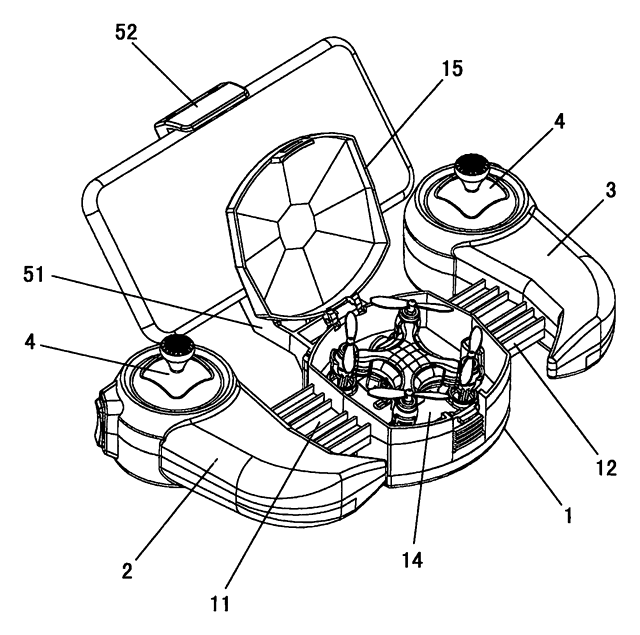
Toys & Games
Stretch-to-Fit Toy Remote with Drone Storage
Toy drone remote with slide-out handles for any hand size, a phone clamp and built-in drone storage.
Patent CN205412243U
Toys & Games
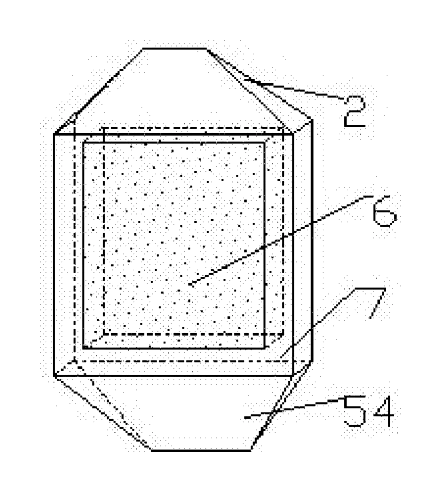
Magnetic Tile Racks for Ultra-Thin Travel Mahjong
Magnetic rack frames that hold ultra-thin mahjong tiles upright and fold into the set's carrying box.
Patent CN207169017U
Toys & Games
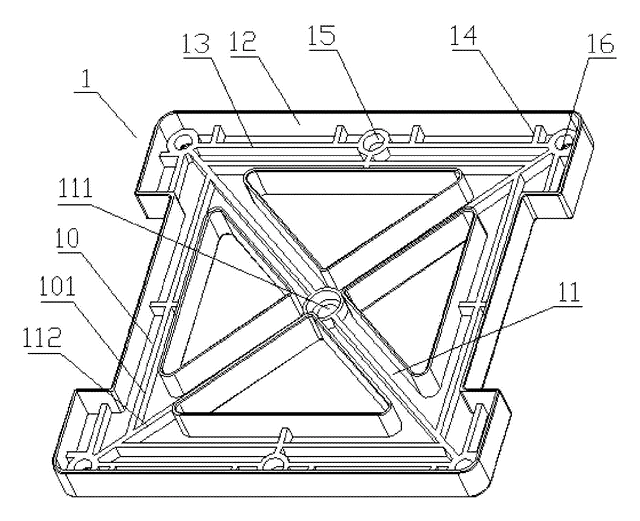
X-Braced Square Magnetic Building Tile with Locating-Post Shell
Square magnetic building tile: open X-brace frame, corner-lug magnets, two shells aligned by posts.
Patent CN105963988B
Toys & Games
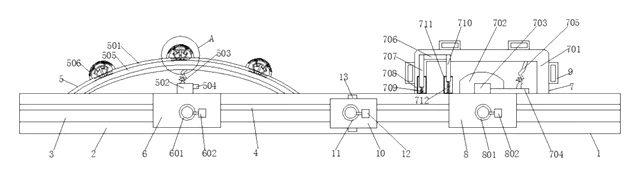
Inflatable Baby Climbing Mat with a Bumpy Hump and a Ramp Obstacle
Inflatable crawling mat: a bumpy rounded hump and a sloped ramp on a stiffened air base.
Patent CN108905229B
Toys, Games & Puzzles
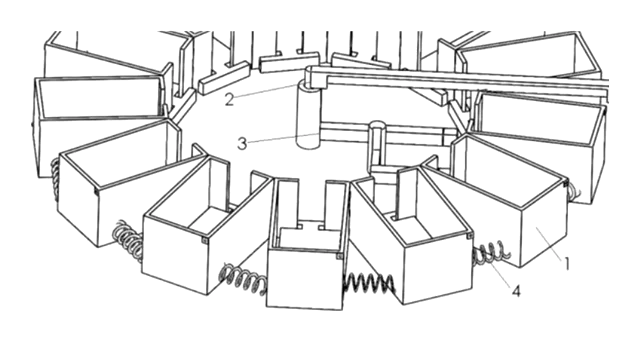
Ring-Layout Automatic Card Shuffler with Electromagnetic Box Coupling
Ring-layout card shuffler that sweeps stacks between boxes via electromagnetic coupling.
Patent CN209564602U
Toys & Games
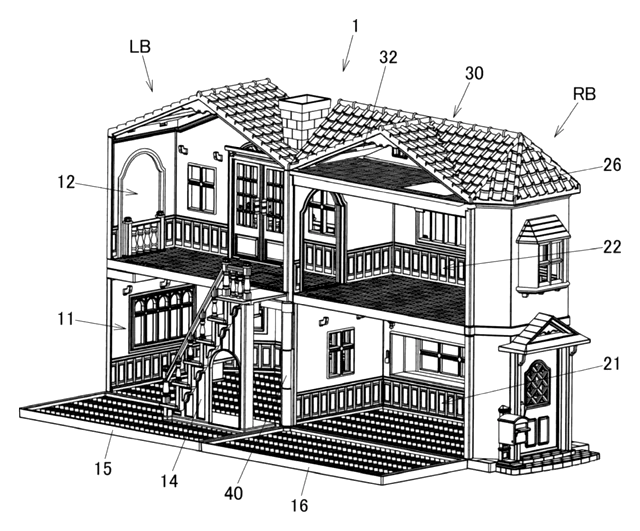
Transforming Construction Toy with an Extendable Roof Unit and Attic Room
Construction toy with a roof unit that lowers legs to add a smaller attic room above the main floor.
Patent CN219941768U
Browse by category
- Apparel & Accessories (22)
- Baby & Kids (16)
- Bags & Luggage (9)
- Bath & Personal Care (16)
- Car Accessories (10)
- Furniture, Bedding & Storage (12)
- Garden & Outdoor (18)
- Health & Wellness (8)
- Home, Kitchen & Cleaning (24)
- Lighting (12)
- Packaging & Containers (6)
- Pet Products (6)
- Phone & Camera Accessories (4)
- Retail Display (13)
- School, Office & Art (19)
- Sports & Recreation (25)
- Tools & Workshop (27)
- Toys & Games (12)
This page is based on the public patent document CN206896783U, assigned to Individual owners (no company listed). IP2M is an independent manufacturing service and is not affiliated with, endorsed by or licensed by the patent owner. Images marked as concept renderings are illustrations, not photos of an existing product. Patent status information is provided for reference only and is not legal advice; confirm freedom to operate for your market before production. Full disclaimer.