
Patent CN206964482U
Updated October 23, 2026Reinforced Disposable Soup Spoon
Cheap disposable soup spoons tend to fail in the same two places: they snap where the handle meets the bowl, and the thin rim cracks. This design adds a rib along the handle wall that continues into the bowl, stiffened edges with curved 'buffer' sections, and a raised ring under the bowl - more strength from the shape, not from more material.
- China utility model - lapsed
- No filings outside China
- Food service disposables
- Single-part molded
Splat! What let you down?
🦴
Rib from handle to bowl
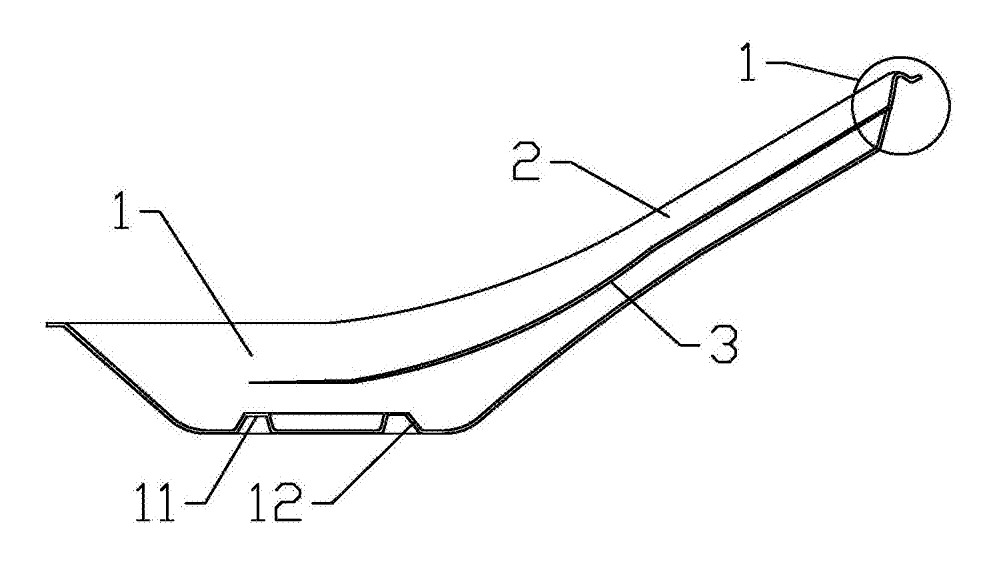
A reinforcing rib runs along the handle wall and on into the bowl wall - right across the usual snapping point.
🔁
Stiffened edges
Reinforced edges around the bowl and along both sides of the handle, joined into one frame.
〰️
Curved buffer sections
Arched sections in the handle edge spread stress and sit comfortably against the finger.
⭕
Ring foot
A raised ring with a sloped wall under the bowl stiffens the bottom and lets the spoon stand steady.
Bring this product to market
- ✓ Patent vetted China-only family and legal status checked
- 2 Product brief · now How it works, uses and options written up
- 3 Prototype First samples for buyers to review
- 4 Pilot run Small first batch for launch customers
- 5 Volume production Repeat orders at scale
Buyer interest
– of 100 buyers needed to start prototyping
One click, no sign-up. Each vote is one real visitor, and products with the most interest go to prototyping first.
Build team: no members yet. Need a partner, co-funding or skills to build this? Join and we introduce the team once it forms.
The problem
Disposable soup spoons - the deep, flat-bottomed Asian style used for soups, noodles, congee and desserts - are made in huge numbers and as thin as possible. The patent describes the result: the spoon breaks easily where the bowl meets the handle, and the edges of the bowl crack. A broken spoon in a takeout bag means an unhappy customer.
The solution
The patent strengthens the spoon by its shape:
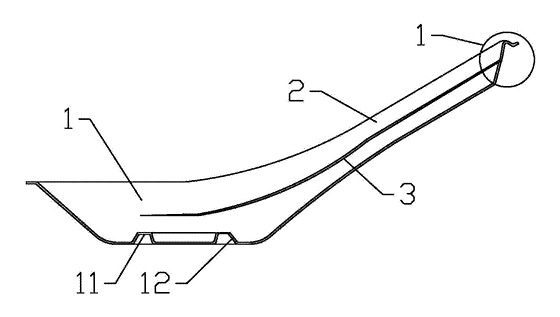
- A reinforcing rib (3) runs along the side wall of the handle (2) and continues into the side wall of the bowl (1). It thickens the wall and carries the bending load across the neck, where spoons usually snap.
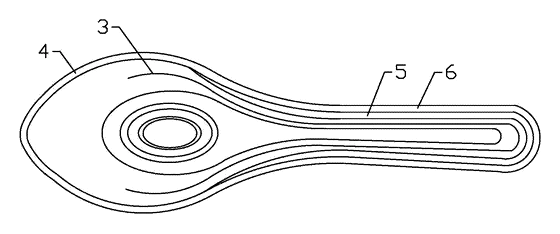
- The rim of the bowl has a reinforced edge (4). The handle has a second and third reinforced edge (5, 6), which run along to the bowl rim and join the first - forming one stiff frame around the whole spoon.
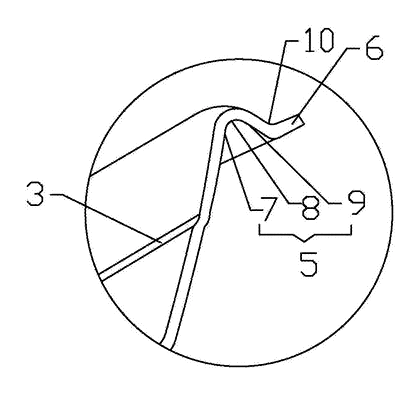
- The second edge is made of two supports with an arched buffer section (7, 8, 9), and a second arched buffer (10) joins it to the third edge. The arches spread stress, add strength, and give a smooth surface where the finger rests.
- Under the bowl, a raised ring-shaped rib (11) with a sloped wall (12) stiffens the bottom and supports the spoon.
Who it is for
- Food-service packaging distributors supplying restaurants, takeout and delivery.
- Asian restaurant chains, noodle and hot-pot brands that want a spoon that does not fail in soup.
- Catering, event and airline suppliers buying disposable cutlery in volume.
- Private-label cutlery brands looking for a feature they can explain on the case.
How it works
The main parts
| No. | Part | What it does |
|---|---|---|
| 1 | Bowl | Deep spoon head for soup. |
| 2 | Handle | Flat handle, molded in one piece with the bowl. |
| 3 | Reinforcing rib | Runs along the handle wall and into the bowl wall; stiffens the neck. |
| 4 | First reinforced edge | Around the bowl rim. |
| 5 | Second reinforced edge | Along the handle; made of supports 7 and 9 with buffer 8. |
| 6 | Third reinforced edge | Along the handle, joined to the second edge. |
| 7, 9 | First and second supports | Straight parts of the second edge. |
| 8, 10 | Buffer sections | Arched sections that spread stress and rest against the finger. |
| 11 | Ring rib | Raised ring under the bowl. |
| 12 | Sloped wall | The angled wall of the ring, for better support. |
Why it is stronger
- Bending at the neck - when the spoon is loaded, the rib (3) and the edges (5, 6), which both run from the handle into the bowl, carry the load across the joint.
- Knocks on the rim - the reinforced bowl edge (4) protects the thin front lip.
- Stress spread - the arched buffer sections (8, 10) avoid sharp corners where cracks start.
- Bottom support - the ring rib (11) and its sloped wall (12) stiffen the floor of the bowl and give the spoon a stable foot.
The patent does not name a material or give strength figures; both are set for each customer’s requirement and checked on samples.
Applications
Takeout and delivery
Soups, noodles, ramen, pho and congee - spoons travel in bags and are used with hot, heavy food.
Restaurants and food courts
Disposable soup spoons for counters, buffets and hot-pot restaurants.
Desserts and frozen treats
Shaved ice, tofu pudding, sweet soups and frozen yogurt.
Catering, events and travel
Banquets, airline and train catering, and event packs where breakage complaints matter.
Private-label cutlery
A branded “won’t snap” soup spoon in retail packs for home parties.
Where it is less suitable
- Reusable tableware - ceramic or melamine spoons do not need these ribs.
- Places that ban certain disposables - some US states and cities restrict single-use plastic cutlery; a compostable or paper-based material may be required (see Patent & Production).
Frequently asked questions
What makes this spoon stronger than a normal disposable spoon?
Its shape: a rib that runs from the handle into the bowl wall, reinforced edges joined around the whole spoon, arched buffer sections that spread stress, and a ring-shaped foot under the bowl.
How much stronger is it?
The patent gives no figures. Strength is measured on samples against your current spoon, for the material and weight you choose.
Which materials can be used?
The patent does not name one. Typical choices are PP (good for hot soup) or PS, and compostable or bio-based materials where required.
Is it safe for hot soup?
That depends on the material grade. We select a heat-resistant food-contact grade and test with hot liquid.
Can you make it in our brand color with a logo?
Yes - colored material and an embossed logo on the handle are common options.
Can it be supplied individually wrapped or in cutlery kits?
Yes. Bulk, wrapped and kit packing (with napkin, chopsticks or fork) are all possible.
Can this design be made and sold in the US?
The patent was filed only in China and has lapsed, so it does not restrict anyone. Other cutlery designs may be protected - see Patent & Production - so we recommend a freedom-to-operate check before volume production.
Are you affiliated with the patent owner?
No. IP2M is an independent design and manufacturing service working from the public patent document.
Request a quote
Click Request a Quote below to see our email address - copy it, or open your email app with a ready-made message. Please mention patent CN206964482U in the subject.
Helpful details to include:
- Your company and sales channel (food-service distribution, restaurant chain, retail…)
- Size and bowl capacity
- Material - PP, PS, compostable or other
- Color, logo and packing (bulk, wrapped, kits)
- Estimated quantity and target price
- Timeline - when you would like samples and the first shipment
You can also reach us at (332) 203-9997.
Explore this product
Interested in building this?
Tell us your target market, quantity and timeline. We reply with options for prototyping, small-batch runs or volume production.
Send your inquiry to
Please put CN206964482U in the subject line and tell us your company, country, estimated quantity and timeline.
Prefer to talk? Call (332) 203-9997.
More product-ready patents
All Home, Kitchen & Cleaning patents →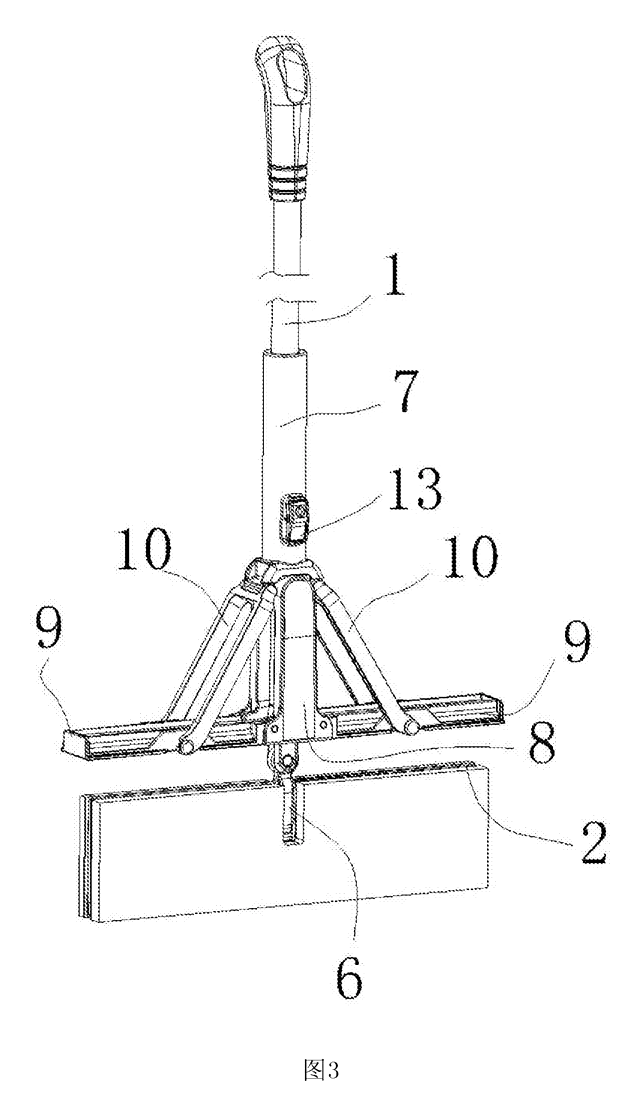
Home, Kitchen & Cleaning
Self-Wringing Flat Mop with Fold-Away Wringer
Flat mop with a built-in wringer that opens only when you wring and folds flat against the pole when you mop.
Patent CN207734114U
Home, Kitchen & Cleaning
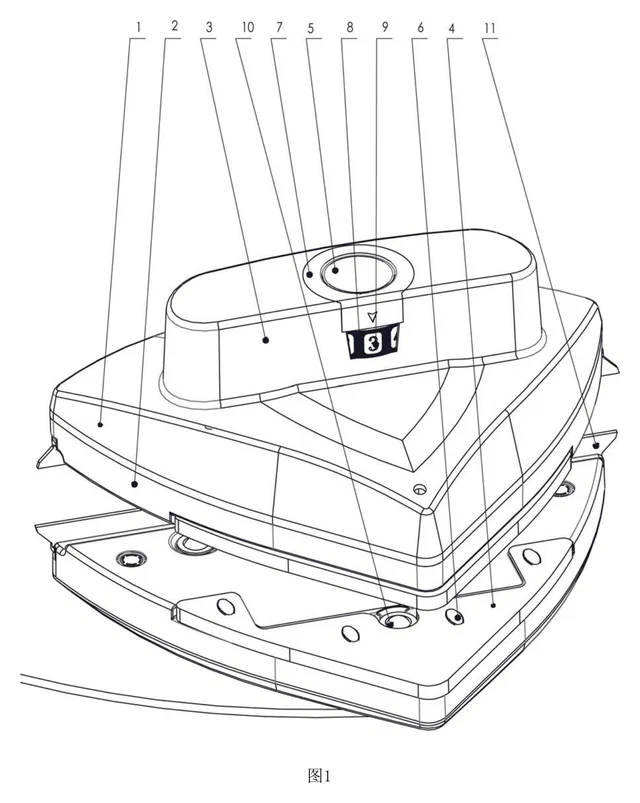
Magnetic Double-Sided Window Cleaner with Dial-Set Magnet Strength
Magnetic window cleaner with a sealed, sliding magnet, dial-set strength for different glass thicknesses and a spring-held idle position.
Patent CN209360543U
Home, Kitchen & Cleaning
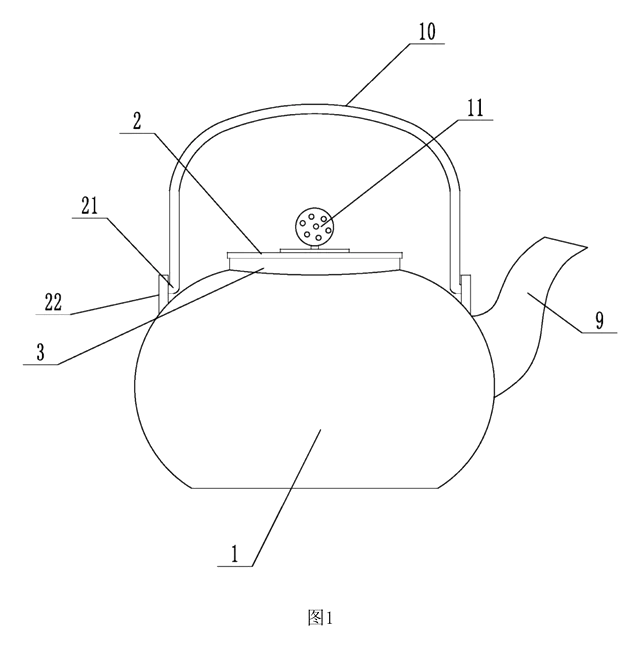
Metal Kettle with Magnetic Lid That Stays On When Pouring
Metal teapot/kettle with a magnet-held lid that does not fall off when pouring, and an insulated, vented lid knob.
Patent CN210540477U
Home, Kitchen & Cleaning
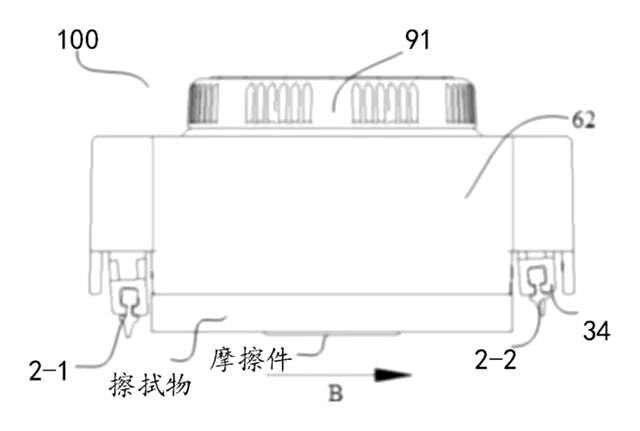
Self-Switching Double-Squeegee Window Cleaner
Cleaning head with two squeegee blades that switch automatically with the direction of movement.
Patent CN212630655U
Home, Kitchen & Cleaning
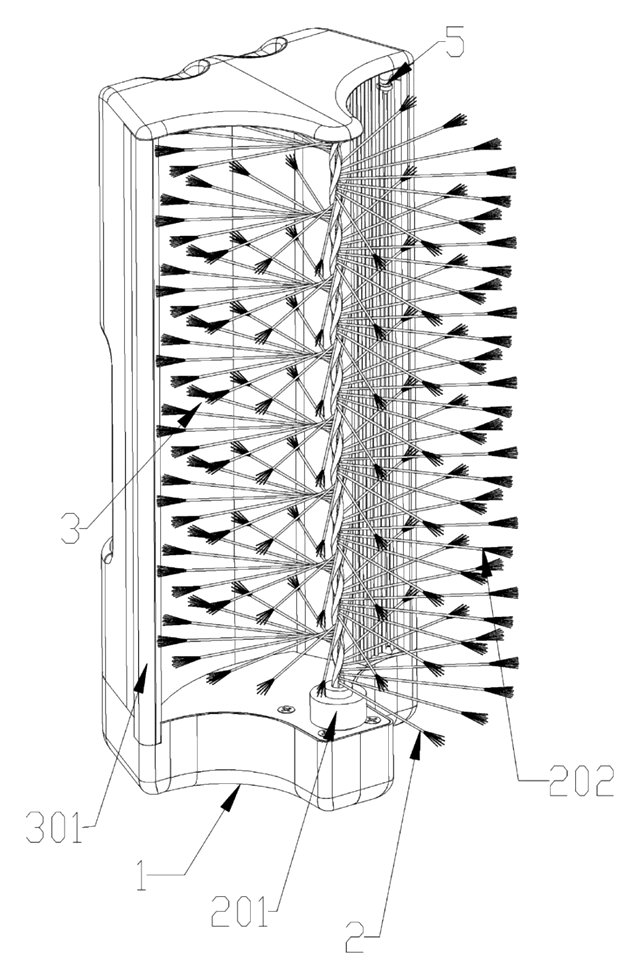
Self-Rinsing Roller Scrub Brush with Dirty-Water Tank
Powered roller brush that rinses and spins its bristles clean inside the body and stores the dirty water.
Patent CN210076909U
Home, Kitchen & Cleaning
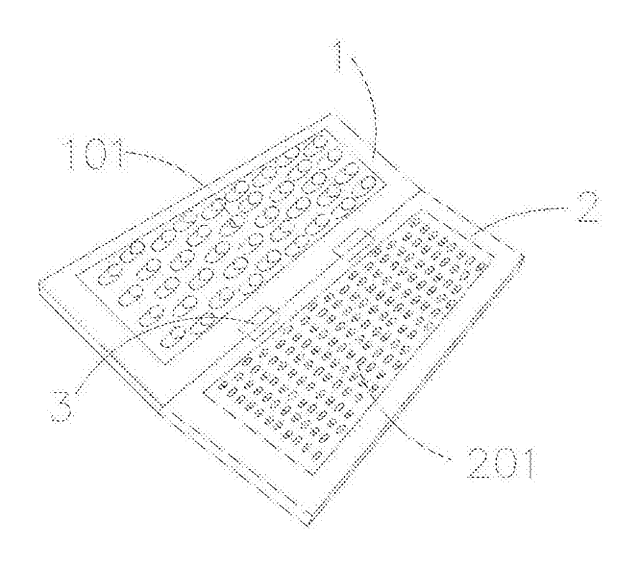
Folding Two-Panel Grater with Coarse and Fine Sides
Two hinged grater panels - coarse and fine, optional slicer - that fold flat for storage.
Patent CN206285003U
Browse by category
- Apparel & Accessories (22)
- Baby & Kids (16)
- Bags & Luggage (9)
- Bath & Personal Care (16)
- Car Accessories (10)
- Furniture, Bedding & Storage (12)
- Garden & Outdoor (18)
- Health & Wellness (8)
- Home, Kitchen & Cleaning (24)
- Lighting (12)
- Packaging & Containers (6)
- Pet Products (6)
- Phone & Camera Accessories (4)
- Retail Display (13)
- School, Office & Art (19)
- Sports & Recreation (25)
- Tools & Workshop (27)
- Toys & Games (12)
This page is based on the public patent document CN206964482U, assigned to Xin Yang and Shen Guan (individuals). IP2M is an independent manufacturing service and is not affiliated with, endorsed by or licensed by the patent owner. Images marked as concept renderings are illustrations, not photos of an existing product. Patent status information is provided for reference only and is not legal advice; confirm freedom to operate for your market before production. Full disclaimer.