
Patent CN207028930U
Updated October 25, 2026Retractable Side Impact Protection Block for Child Car Seats
Side-impact protection is an important consideration for child safety seats. This device provides side-impact buffering only when needed. A protection block sits flush inside a base mounted on the upper part of the seat. Operate the locking mechanism and a torsion spring swings the block outward until a pin snaps into a locking groove, holding it in place. It provides side-impact buffering when deployed, then folds back flat so the seat keeps a slim profile.
- China utility model - lapsed
- No filings outside China
- Car Seats & Interior
- Base, protection block, springs and locking pin
Splat! What let you down?
🛡️
Deployable side guard
A protection block swings outward from the side protection base to provide side-impact buffering.
🔄
Two-position lock
A pin engages either a locking groove for deployment or a gear slot to hold the block folded away.
⚡
Torsion spring return
A spring wrapped around the pivot shaft automatically pushes the block outward once the pin clears.
📐
Compact storage
When retracted, the block sits flush inside the base so the seat keeps a slim profile.
Bring this product to market
- ✓ Patent vetted China-only family and legal status checked
- 2 Product brief · now How it works, uses and options written up
- 3 Prototype First samples for buyers to review
- 4 Pilot run Small first batch for launch customers
- 5 Volume production Repeat orders at scale
Buyer interest
– of 100 buyers needed to start prototyping
One click, no sign-up. Each vote is one real visitor, and products with the most interest go to prototyping first.
Build team: no members yet. Need a partner, co-funding or skills to build this? Join and we introduce the team once it forms.
The problem
Side-impact protection is an important consideration for child safety seats. Fixed side wings can provide this protection, but they make the seat wider all the time, complicating installation in vehicles where three seats must fit across the rear bench. According to the patent, the objective is to provide a small, lightweight, low-cost device that improves side-impact performance without permanently increasing the seat’s width.
The solution
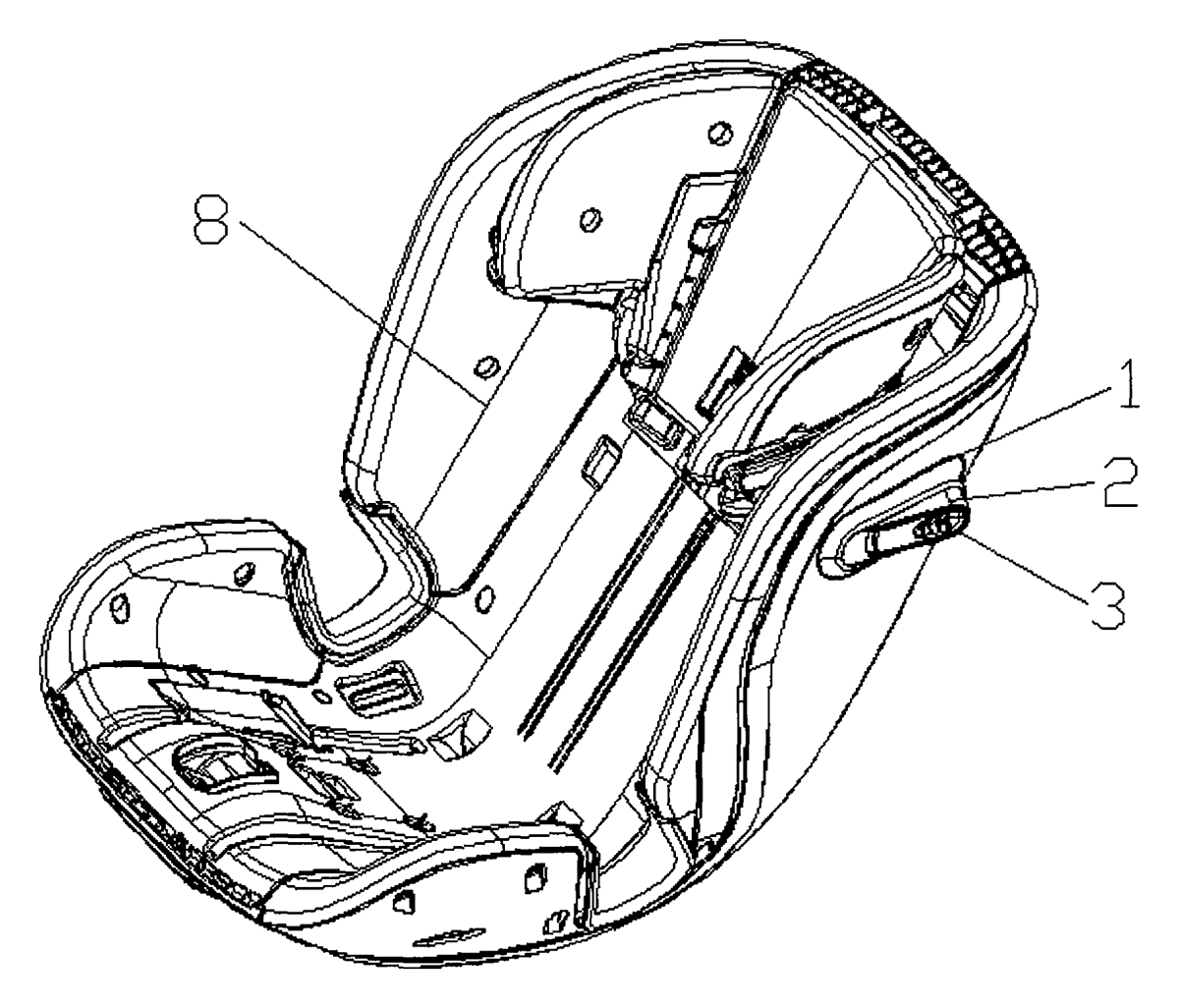
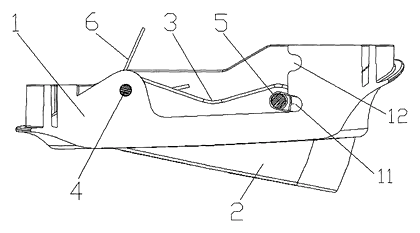
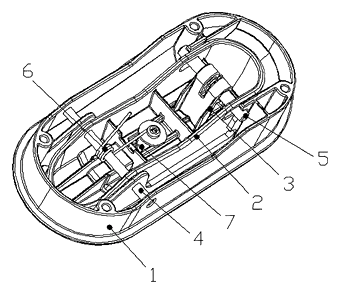
The device consists of a side protection base (1) fixed to the upper part of the seat (8), and a protection block (2) hinged inside it. A locking mechanism (3) uses a locking pin (5) pushed by a locking spring (7) to secure the block in one of two positions.
When extra side protection is needed, the user releases the pin from a gear slot (12). A return spring (6)—specifically a torsion spring sleeved on the rotating shaft (4)—swings the protection block outward until the pin snaps into a locking groove (11). In this deployed state, the block protrudes beyond the side protection base, providing side-impact buffering.
To fold it away, the user operates the locking mechanism to compress the locking spring, withdraws the pin from the locking groove, and pushes the block back against the return spring until the pin drops into the gear slot. The block then lies stored inside the base.
Who it is for
- Child car seat brands looking to add deployable side-impact protection to existing shell molds without redesigning the entire seat width.
- Private-label Amazon sellers sourcing compact, feature-rich car seats that differentiate from basic models by offering adjustable side guards.
- Vehicle fleet operators and ride-share services that need seats capable of fitting tightly together when retracted, yet offering protection when placed next to a door.
- Aftermarket accessory makers who could adapt the base-mounting concept as an add-on module for older seat models lacking modern side wings.
How it works
The main parts
| No. | Part | What it does |
|---|---|---|
| 1 | Side protection base | Mounts to the upper seat; houses the block and provides the locking groove (11) and gear slot (12). |
| 2 | Protection block | Protection block that pivots outward to provide side-impact buffering. |
| 3 | Locking mechanism | User-operated locking mechanism that moves the locking pin. |
| 4 | Rotating shaft | Hinge pin connecting one side of the block to the base. |
| 5 | Locking pin | Engages the locking groove or gear slot to hold the block in position. |
| 6 | Return spring | Torsion spring on the shaft that drives the block outward. |
| 7 | Locking spring | Compression spring that pushes the locking pin into its slots. |
| 8 | Seat | The child safety seat body. |
| 11 | Locking groove | Recess in the base that catches the pin when the block is deployed. |
| 12 | Gear slot | Recess in the base that catches the pin when the block is stored. |
Deploying the protection block
- Operate the locking mechanism (3) to compress the locking spring (7) and withdraw the locking pin (5) from the gear slot (12).
- Release pressure on the block—the return spring (6) rotates the protection block (2) outward around the rotating shaft (4).
- Allow the pin to snap into the locking groove (11) as the block reaches its fully extended angle. The block now protrudes past the side protection base (1).
Storing the protection block
- Operate the locking mechanism (3) again to pull the locking pin (5) out of the locking groove (11).
- Push the protection block (2) inward, overcoming the force of the return spring (6), until it sits flush inside the side protection base (1).
- Release the locking mechanism—the locking spring (7) drives the pin into the gear slot (12), holding the block securely in the stored position.
Applications
Narrow vehicle back seats
In compact cars where the rear bench is tight, parents can keep the blocks folded into the gear slot during daily driving to allow easier loading of other passengers or cargo. Before a highway trip, they deploy the blocks to gain side-impact buffering without buying a wider seat.
Three-across seating configurations
Families installing three child seats in a row often struggle with overlapping side wings. With this device, the middle seat keeps both blocks retracted, while the outboard seats deploy only the block facing the door. This preserves the slim profile where clearance matters most.
Ride-share and taxi fleets
Drivers frequently rearrange seats. A retractable guard means the seat stays narrow when stored in the trunk or placed in the center position, yet offers side protection when buckled next to a window. Fleet managers avoid stocking separate narrow and wide models.
Convertible seats transitioning between modes
As a child grows and the seat switches from rear-facing to forward-facing, the geometry relative to the door changes. The ability to lock the block in or out lets caregivers adjust the side profile to match the new orientation without replacing hardware.
Aftermarket upgrades for older seats
Older child seat shells often lack side wings entirely. Because the base fixes to the upper part of the seat, manufacturers could offer this assembly as a bolt-on kit, giving legacy models a deployable buffer.
Where it is less suitable
- Infant carriers (bucket seats) that click into a base—these are typically carried outside the car and need smooth, snag-free outer shells rather than protruding blocks.
- Seats relying entirely on deep foam walls for side impact, where adding a mechanical hinge might compromise the continuous crush zone unless integrated at the mold stage.
- Ultra-budget seats where the added cost of two springs, a pin mechanism, and a hinged block conflicts with the target retail price point.
Frequently asked questions
How does the protection block stay in place during a crash?
When deployed, the locking pin engages the locking groove in the side protection base. The patent describes a compression spring pressing the pin firmly into this groove. The torsion spring on the rotating shaft also applies outward force, keeping the block extended. Actual retention strength depends on the pin diameter, groove depth, and material grades chosen during engineering, which must be validated by sled testing.
Can a child accidentally push the block back in?
The mechanism requires the user to operate the locking mechanism to compress the locking spring and withdraw the pin from the locking groove before the block can rotate inward. The spring force and mechanism travel are set in design to resist casual bumps while remaining operable by an adult. Ergonomic testing during prototyping confirms the required actuation force.
What happens if the torsion spring breaks?
If the return spring fails, the block would no longer swing outward automatically when the pin releases from the gear slot. However, the locking pin and locking spring operate independently, so the block would remain secure in whichever position it was last locked. Spring fatigue life is specified during component selection to exceed the expected service life of the seat.
Is the block made of solid plastic or foam?
The patent identifies a protection block hinged to a base but does not specify the internal layering. The patent does not specify whether the block is solid plastic or foam. The exact stack-up is confirmed on prototypes based on crash-test results.
Does deploying the block make the seat too wide for airplane use?
Airline seats have strict width limits, and child restraints used in aircraft generally require a narrow profile. Because the block folds completely into the gear slot within the base, the seat retains its original width during air travel. The deployed state is intended for vehicle use where door clearance allows the protrusion.
Can this mechanism be retrofitted to an existing seat?
The patent states the side protection base is fixedly installed on the upper part of the seat. Retrofitting depends on whether the existing seat shell has mounting points or sufficient wall thickness to accept the base screws or clips. For aftermarket applications, a universal bracket might be engineered, but any modification to a certified child restraint voids its original FMVSS 213 compliance unless re-tested as a system.
Can this design be made and sold in the US?
The patent was filed only in China and has lapsed, so it does not restrict the design in the US or in China. Child car seat side-impact features may be covered by other US patents - see Patent & Production - so we recommend a freedom-to-operate check before volume production.
Are you affiliated with the patent owner?
No. IP2M is an independent design and manufacturing service working from the public patent document.
Request a quote
Click Request a Quote below to see our email address - copy it, or open your email app with a ready-made message. Please mention patent CN207028930U in the subject.
Helpful details to include:
- Your company and channel (child seat brand, private label seller, fleet supplier, aftermarket accessory maker)
- Host seat model or shell dimensions the base must fit
- Block size and preferred materials
- Target certifications (FMVSS 213, CPSIA, ASTM F2852)
- Estimated quantity and target price
- Timeline - when you would like prototypes, sled-test samples, and the first shipment
You can also reach us at (332) 203-9997.
Explore this product
Interested in building this?
Tell us your target market, quantity and timeline. We reply with options for prototyping, small-batch runs or volume production.
Send your inquiry to
Please put CN207028930U in the subject line and tell us your company, country, estimated quantity and timeline.
Prefer to talk? Call (332) 203-9997.
More product-ready patents
All Car Accessories patents →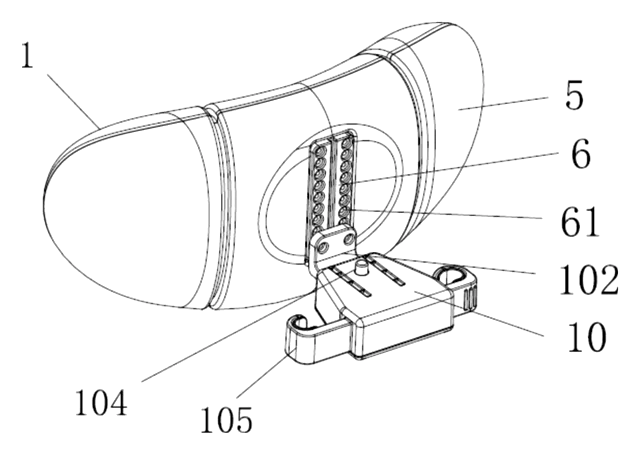
Car Accessories
Car Headrest Pillow with Ratchet Side Wings and Push-Button Reach
Post-mounted car headrest pillow with ratchet side wings and a push-button forward adjustment.
Patent CN212195197U
Car Accessories
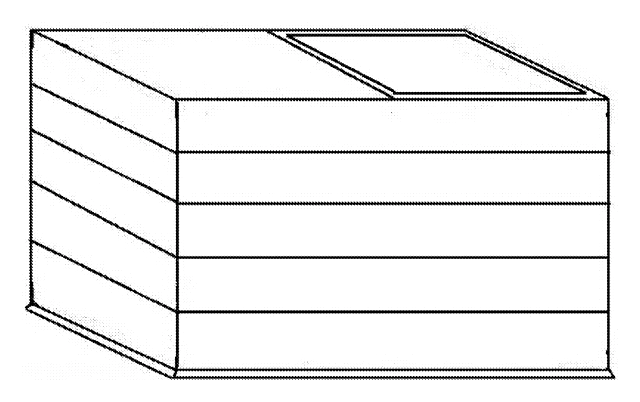
Hard-Shell Rooftop Tent That Doubles as a Cargo Box
Roof box whose hard frames lift on gas struts into a tent with door and skylight, and fold back for luggage.
Patent CN206327275U
Car Accessories
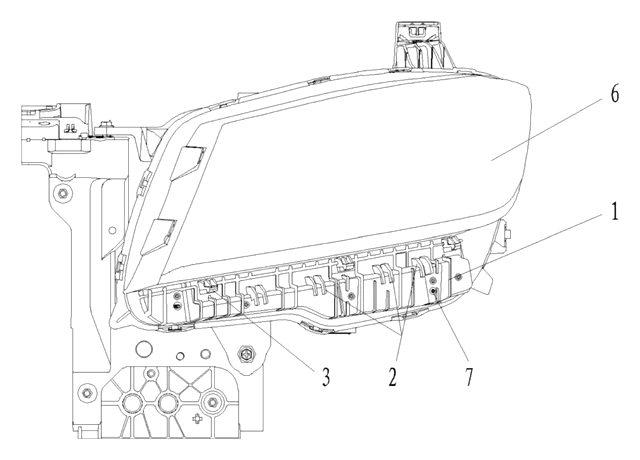
Headlamp-to-Bumper Adapter Bracket That Sets Gap and Flush in Three Directions
Molded bracket under the headlamp: support blocks and snap teeth locate the bumper flange for an even gap.
Patent CN216580316U
Car Accessories
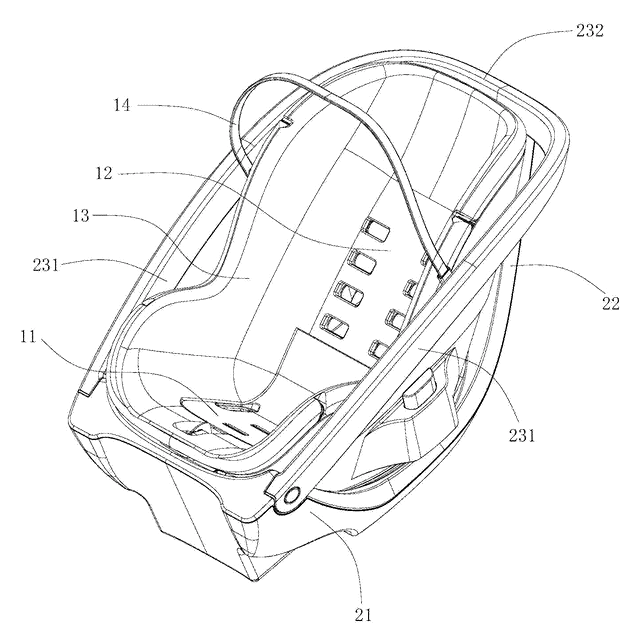
Infant Car Seat with a Load-Bearing Base That Wraps the Carrier
Infant car seat whose base has a backrest and swing-up side rails, so the carrier can be lighter.
Patent CN206383856U
Car Accessories
Rain-Deflecting Side Mirror with a Pivoting Air-Guide Plate
Side mirror with a top air duct and folding guide plate that directs airflow across the glass.
Patent CN207345672U
Automotive & Powersports
Electric Motorcycle Storage Box with Electromagnetic Lock and Torsion Spring Lid
Motorcycle storage box: electromagnetic lock and torsion spring open the lid via a handlebar button.
Patent CN212473759U
Browse by category
- Apparel & Accessories (22)
- Baby & Kids (16)
- Bags & Luggage (9)
- Bath & Personal Care (16)
- Car Accessories (10)
- Furniture, Bedding & Storage (12)
- Garden & Outdoor (18)
- Health & Wellness (8)
- Home, Kitchen & Cleaning (24)
- Lighting (12)
- Packaging & Containers (6)
- Pet Products (6)
- Phone & Camera Accessories (4)
- Retail Display (13)
- School, Office & Art (19)
- Sports & Recreation (25)
- Tools & Workshop (27)
- Toys & Games (12)
This page is based on the public patent document CN207028930U, assigned to Individual. IP2M is an independent manufacturing service and is not affiliated with, endorsed by or licensed by the patent owner. Images marked as concept renderings are illustrations, not photos of an existing product. Patent status information is provided for reference only and is not legal advice; confirm freedom to operate for your market before production. Full disclaimer.