At a glance
| Patent number | CN207028930U (application CN201720913315) |
| Type | China utility model (实用新型) - protects product shape and structure |
| Original title | Child safety seat side protection device (儿童安全座椅侧保护装置) |
| Patent owner | Individual |
| Inventors | Cheng Keyong |
| Filing date | 2017-07-19 |
| Grant date | 2018-02-23 |
| Status (China) | Lapsed - terminated for non-payment of annual fees (recorded 2024-07-26) |
| Patent family | Chinese filings only - no US, European, Japanese, PCT or other filings listed |
| Cited by | 12 later documents |
| Source | Google Patents (search for CN207028930U) |
What the claims cover, in plain language
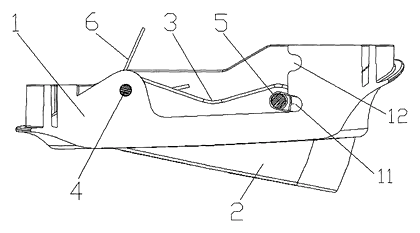
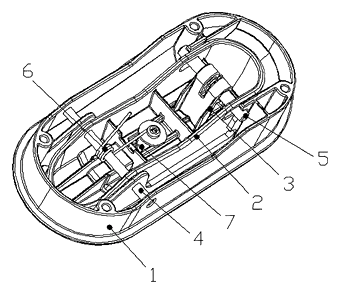
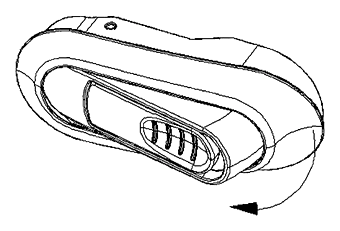
Claim 1 defines the core assembly: a side protection base fixed to the sides of a child seat, a protection block arranged on the base, and a locking mechanism connected to the block. The base has a locking groove. In the deployed protection state, the locking pin of the mechanism engages the groove, and the block protrudes outward from the base.
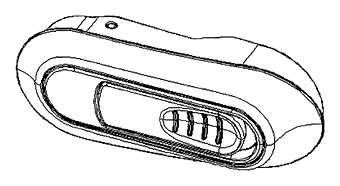
Claim 2 adds a storage state: the base also has a gear slot, and when stored, the locking pin snaps into this gear slot so the block folds into the base.
Claim 3 introduces a return spring linked to the block; when the pin unlocks, the spring pushes the block outward and moves the pin toward the locking groove.
Claim 4 specifies that one side of the block hinges to the base via a rotating shaft.
Claim 5 clarifies the return spring is a torsion spring sleeved on the rotating shaft, with its ends connected to the base and the block respectively.
Claims 6–7 describe a locking spring (a compression spring) inside the locking mechanism that forces the pin into whichever slot aligns with it.
Claim 8 states the base is fixed to the upper part of the seat.
This is a simplified reading for orientation only. The legal scope is defined by the exact claim wording in the official Chinese document.
What this means for US production
This patent was filed only in China and has lapsed due to non-payment of annual fees, so it no longer restricts anyone in China either. It has no US or other foreign counterpart.
Two points to settle early:
- Other patents may exist. Side-impact protection mechanisms for child car seats—including deployable pods, flip-out wings, and side panels—are heavily patented by major seat brands such as Britax, Graco, Chicco, and Maxi-Cosi in the US and Europe. A thorough freedom-to-operate (FTO) review covering the specific hinge, spring, and pin-lock arrangement is essential before committing to tooling for the American market.
- Crash-test validation. Any structural change to a child restraint system requires full dynamic sled testing under the applicable standard. The spring force, pin shear strength, and block material density must be engineered to pass these tests, not merely replicate the patent drawings.
Customization and manufacturing
What can be customized
| Area | Options |
|---|---|
| Block dimensions | Width, thickness, and protrusion angle set in design to match the seat shell contour |
| Base mounting | Screw bosses, snap-fit clips, or ultrasonic weld tabs tailored to the host seat mold |
| Spring rates | Torsion spring wire gauge and coil count adjusted for deployment speed; compression spring force tuned for actuation feel |
| Locking interface | Mechanism shape, travel distance, and tactile click feedback |
| Colors and finish | Base and block outer shells color-matched to the seat fabric line |
Things to plan for (US market)
- FMVSS 213 (49 CFR 571.213) - Federal Motor Vehicle Safety Standard for child restraint systems. Every configuration (block deployed and block stored) must pass the frontal sled test requirements, and labeling, instructions, and buckle release forces must comply.
- ASTM F2852 - Standard specification for belt-positioning booster seats, if the host seat is a booster.
- CPSIA (15 U.S.C. §§ 2051-2089) - Lead and phthalate limits for children’s products, plus mandatory third-party testing at a CPSC-accepted laboratory.
- Flammability (FMVSS 302 / 49 CFR 571.302) - The block and shell must meet the burn-rate limit for interior materials.
- Tracking labels - Permanent, distinguishable marks indicating manufacture date, batch, and origin as required by CPSIA Section 14(a)(5).
How a project runs
- Inquiry - target seat model, desired block size, material preferences, and estimated volumes.
- Design and engineering - CAD integration of the base into the existing seat shell mold, selection of spring rates, and FEA simulation of the pin and shaft under load.
- Prototype and sled testing - 3D-printed or soft-tooled samples fitted to production seats for preliminary static checks, followed by dynamic sled tests at an accredited facility.
- Tooling - injection molds for the base and block shells, progressive dies for the springs and pin.
- Production and QC - assembly of the mechanism, functional check of every unit’s lock/unlock action, and batch traceability documentation.
Quantities & timeline
The project requires injection molds for the base and block housing, custom-wound torsion and compression springs. Sled testing cycles dominate the schedule because each failure requires design tweaks and re-testing. Send us your seat model details, target dimensions, material specs, quantity and certification requirements and we will reply with options.
Patent drawings
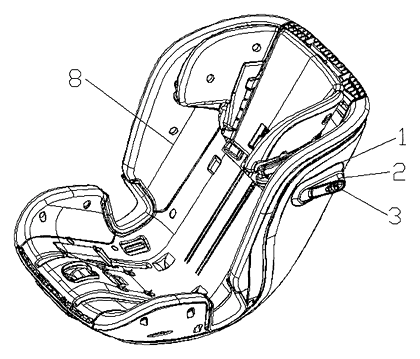
Drawings reproduced from the public patent document for reference.