
Patent CN207040403U
Updated October 26, 2026Adjustable-Angle LED Mushroom Cultivation Rack
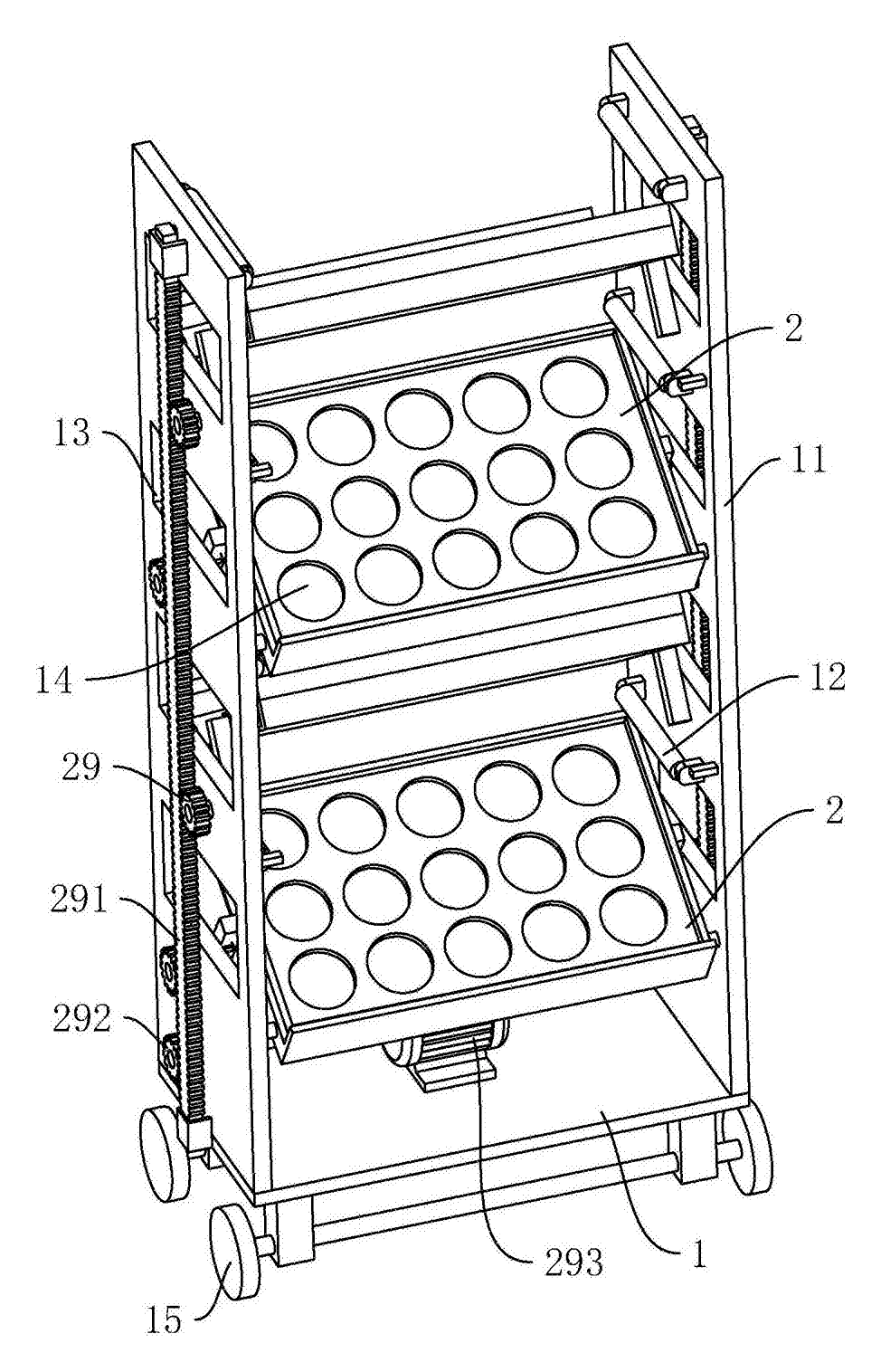
Stacking flat trays under one light source leaves the bottom tiers in shadow, forcing growers to constantly rotate trays or accept uneven crops. This rack solves it by letting each shelf tilt independently—adjacent shelves angle in opposite directions—so light reaches every level evenly. A single motor at the base pushes a vertical double-sided rack, which turns driven gears on alternating sides of the frame, pivoting all shelves at once. Adjustable-intensity LEDs fill any remaining gaps, and recessed grooves keep culture trays from sliding when the angles change.
- China utility model - lapsed
- No filings outside China
- Mushroom & indoor farming equipment
- Steel frame, LED modules, motor-driven rack and pinion tilt
Splat! What let you down?
📐
Opposing shelf angles
Adjacent shelves tilt in opposite directions so upper trays do not block light from lower ones.
💡
Adjustable LEDs
LED strips between shelves let growers fine-tune intensity per tier without moving fixtures.
⚙️
Single-motor tilt
One motor drives a double-sided rack that turns gears on both sides, adjusting all shelves together.
🛞
Rolling base
Wheels on the base let workers roll the loaded rack between climate-controlled rooms easily.
Bring this product to market
- ✓ Patent vetted China-only family and legal status checked
- 2 Product brief · now How it works, uses and options written up
- 3 Prototype First samples for buyers to review
- 4 Pilot run Small first batch for launch customers
- 5 Volume production Repeat orders at scale
Buyer interest
– of 100 buyers needed to start prototyping
One click, no sign-up. Each vote is one real visitor, and products with the most interest go to prototyping first.
Build team: no members yet. Need a partner, co-funding or skills to build this? Join and we introduce the team once it forms.
The problem
In traditional multi-tier mushroom racks, flat shelves stacked directly above one another cast heavy shadows on the lower levels. Growers must either space the tiers far apart—wasting vertical room—or manually rotate trays to compensate for uneven growth. According to the patent, this uneven illumination causes inconsistent crop development across the rack, reducing yield quality and increasing labor.
The solution
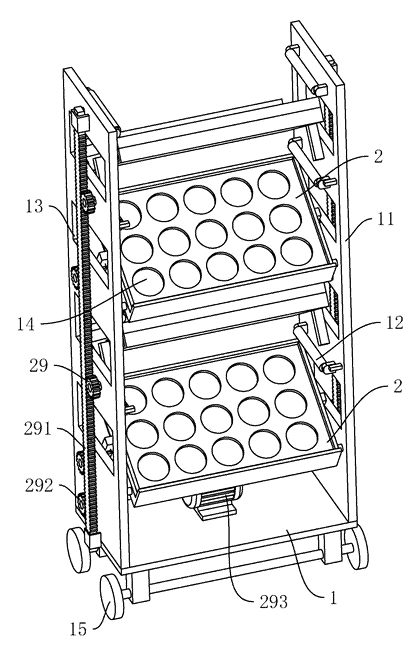
The design replaces fixed horizontal shelves with hinged trays that pivot to controlled angles. Adjacent shelves tilt in opposite directions, creating a staggered profile that lets ambient light reach deeper into the stack. Between each pair of shelves, an adjustable-intensity LED strip compensates for any remaining difference. A push-rod and slider linkage connects each shelf to a rotating shaft on the support plate. On the outside of the frame, these shafts carry driven gears that mesh with a single vertical double-sided rack. One motor at the base moves the rack up or down, turning all shelves simultaneously but in alternating directions. Recessed grooves on each shelf hold culture trays securely during tilting, and ventilation holes in the support plates promote airflow around the crop.
Who it is for
- Commercial mushroom farms growing light-sensitive species like enoki, where uniform fruiting body length requires precise, even illumination across hundreds of trays.
- Indoor vertical farming operators who need high-density shelving that does not sacrifice light penetration on lower tiers.
- Agricultural research stations testing phototropism responses or optimizing light recipes for fungal mycelium, requiring repeatable shelf angles.
- Turnkey greenhouse suppliers looking for a specialized racking system to include in controlled-environment agriculture packages.
How it works
The main parts
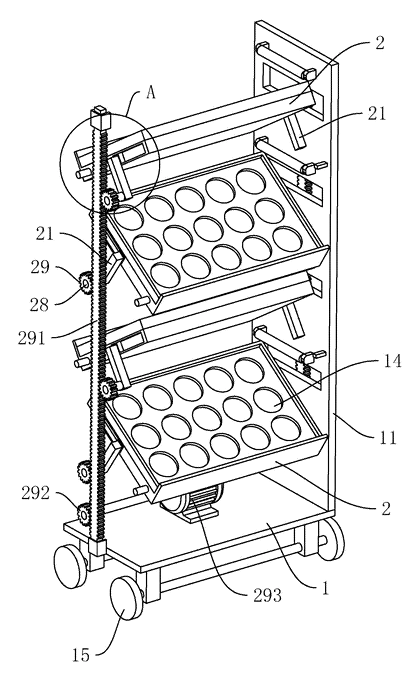
| No. | Part | What it does |
|---|---|---|
| 1 | Base | Supports the entire structure and houses the drive motor. |
| 11 | Support plate | Vertical side panels holding the hinge points, LEDs and ventilation holes. |
| 12 | LED | Adjustable-intensity light strips mounted between shelves. |
| 13 | Ventilating opening | Holes in the support plates for air circulation. |
| 14 | Standing groove | Recesses on the shelf surface to hold culture trays in place. |
| 15 | Road wheel | Casters on the base for mobility. |
| 2 | Shelf (shelve plate) | The tilting platform holding the culture trays. |
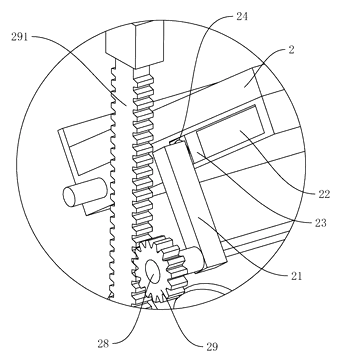
| 21 | Push rod | Linkage arm transferring rotation from the gear to the shelf. |
| 22 | Chute | Slot on the shelf side wall guiding the slider. |
| 23 | Slider | Block moving inside the chute, connected to the push rod. |
| 24 | Bearing | Reduces friction between the slider and pivot pin. |
| 25 | Pivot pin | Connects the push rod to the bearing inside the slider. |
| 26 | Upper limit position block | Stop preventing the push rod from over-rotating past vertical. |
| 27 | Lower position block | Stop supporting the shelf when it is fully horizontal. |
| 28 | Rotating shaft | Axle passing through the support plate, linking push rod to gear. |
| 29 | Driven gear | Gear on the shaft end, meshing with the central rack. |
| 291 | Rack | Double-sided toothed bar sliding vertically to turn the gears. |
| 292 | Driving gear | Motor-driven gear engaging the rack to move it. |
| 293 | Motor | Electric drive fixed to the base powering the tilt mechanism. |
Adjusting the shelf angles
- Start horizontal - When the motor is off and the rack is in its lowest position, the push rods rest against the lower position blocks (27), keeping all shelves (2) flat for loading trays into the standing grooves (14).
- Activate the motor - The motor (293) turns the driving gear (292), which pushes the double-sided rack (291) upward along the outside of the support plate (11).
- Gears turn alternately - Because adjacent driven gears (29) sit on opposite sides of the rack’s teeth, they rotate in opposite directions. This turns the rotating shafts (28) and swings the push rods (21) accordingly.
- Shelves tilt - The pivot pin (25) pushes the slider (23) along the chute (22) on the shelf’s side wall, lifting the shelf around its hinge point. Adjacent shelves angle away from each other.
- Stop at maximum tilt - When the push rod reaches perpendicular to the shelf, the upper limit position block (26) halts further travel, ensuring the mechanism does not bind.
- Fine-tune light - The LEDs (12) are adjusted to supplement whatever ambient light the new angles expose, evening out the total illumination per tier.
Applications
Enoki mushroom fruiting rooms
Enoki mushrooms require specific low-light triggers to elongate properly. By staggering the shelves, the rack ensures the lower trays receive the same directional stimulus as the top ones, producing uniform stem lengths without manual tray swapping.
Oyster and shiitake propagation
These species often benefit from indirect light and strong airflow to initiate pinning. The ventilation holes in the support plates combined with the angled shelves prevent stagnant air pockets that form between tightly stacked flat racks.
Research and strain trials
Agronomists comparing light intensities can use the motorized tilt to set exact, repeatable angles for each test group. The adjustable LEDs allow them to isolate variables without rebuilding the physical setup.
Multi-room facility logistics
Large farms move racks between dark incubation rooms and lit fruiting chambers daily. The road wheels on the base let a single worker roll a fully loaded unit down narrow aisles without unstacking trays, thanks to the retaining grooves.
Specialty microgreen or sprout racks
While designed for fungi, the opposing-angle geometry and supplemental lighting work equally well for short-cycle sprouts that bolt or stretch unevenly under single-direction overhead lamps.
Where it is less suitable
- Heavy substrate bags - The hinge and slider linkage is engineered for standard culture trays; large, heavy compost bags used for button mushrooms may exceed the mechanical limits of the push rod.
- Fully automated conveyor lines - Facilities using continuous belt systems rather than batch rooms cannot integrate a stationary tilting rack into their flow.
- Outdoor sun-only setups - Without the adjustable LEDs, the rack relies entirely on ambient angles; outdoor wind and weather also threaten the exposed gear teeth.
Frequently asked questions
How do adjacent shelves tilt in opposite directions?
Each shelf connects to a rotating shaft passing through the side panel. On the outside, these shafts have driven gears. A single vertical rack with teeth on both sides meshes with them. Because neighboring gears sit on opposite sides of the rack, pushing the rack up turns one gear clockwise and the next counter-clockwise, angling the shelves away from each other.
What keeps the trays from sliding off when tilted?
The shelf surface has uniformly spaced standing grooves sized to hold the culture dishes. These recesses prevent lateral movement during tilting and while the rack is being rolled between rooms.
Can I adjust the light intensity independently of the tilt?
Yes. The LEDs mounted between the shelves have adjustable luminous intensity. The tilt changes how much ambient or overhead light reaches each tier, while the LEDs fill in the difference to achieve the exact target illumination per level.
Is the tilt mechanism manual or motorized?
The patent describes a motor at the base driving a gear that moves the central rack. For smaller operations or prototypes, the motor could be replaced with a manual crank acting on the same driving gear, though the motorized version reduces labor significantly when adjusting multiple racks.
How does the rack handle humidity and heat?
The support plates feature ventilating openings to strengthen air circulation and improve heat dissipation. Material selection during manufacturing—such as stainless steel or coated aluminum—determines long-term corrosion resistance in high-humidity grow rooms.
What prevents the shelves from tilting too far and jamming?
An upper limit position block on the inner face of the support plate stops the push rod when it becomes perpendicular to the shelf. A lower position block supports the shelf when it returns to a fully horizontal resting state, preventing the linkage from collapsing backward.
Can this design be made and sold in the US?
The patent was filed only in China and has lapsed due to non-payment of annual fees, so it does not restrict the design in the US or in China. Agricultural racking and lighting systems may be covered by other US patents - see Patent & Production - so we recommend a freedom-to-operate check before volume production.
Are you affiliated with the patent owner?
No. IP2M is an independent design and manufacturing service working from the public patent document.
Request a quote
Click Request a Quote below to see our email address - copy it, or open your email app with a ready-made message. Please mention patent CN207040403U in the subject.
Helpful details to include:
- Your company and channel (commercial farm, vertical farming integrator, research institution, greenhouse supplier)
- Tray dimensions and weight per loaded shelf
- Number of tiers and overall rack footprint constraints
- Lighting requirements (spectrum, intensity range, dimming protocol)
- Material preference (stainless steel, coated aluminum, etc.)
- Estimated quantity and target price
- Timeline - when you would like samples and the first shipment
You can also reach us at (332) 203-9997.
Explore this product
Interested in building this?
Tell us your target market, quantity and timeline. We reply with options for prototyping, small-batch runs or volume production.
Send your inquiry to
Please put CN207040403U in the subject line and tell us your company, country, estimated quantity and timeline.
Prefer to talk? Call (332) 203-9997.
More product-ready patents
All Garden & Outdoor patents →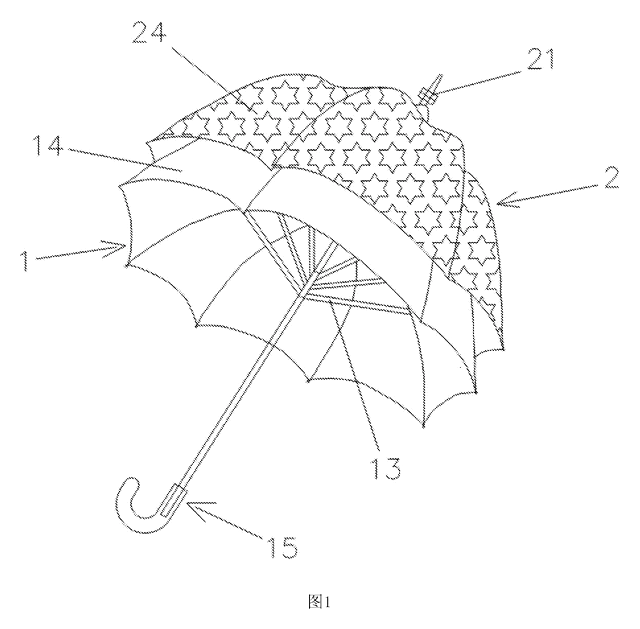
Garden & Outdoor
2-in-1 Parent & Child Umbrella
Full-size umbrella with a nested smaller umbrella on top - a rotating decorative layer that detaches into a kid-size umbrella.
Patent CN205611962U
Garden & Outdoor
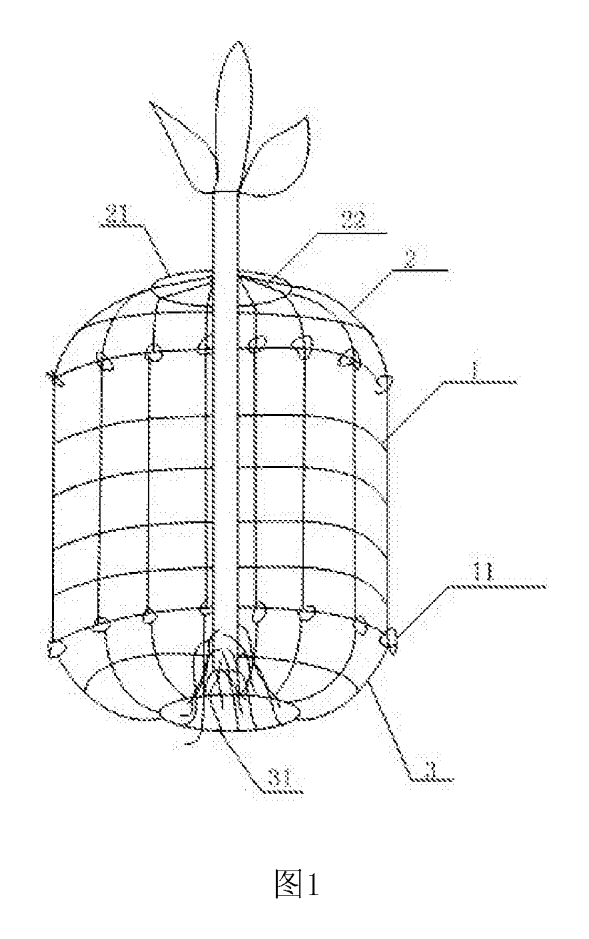
Wire-Mesh Tree Root & Trunk Guard Against Rodents
Three-part wire-mesh guard that protects the roots and lower trunk of young trees from burrowing and gnawing animals.
Patent CN206808261U
Garden & Outdoor
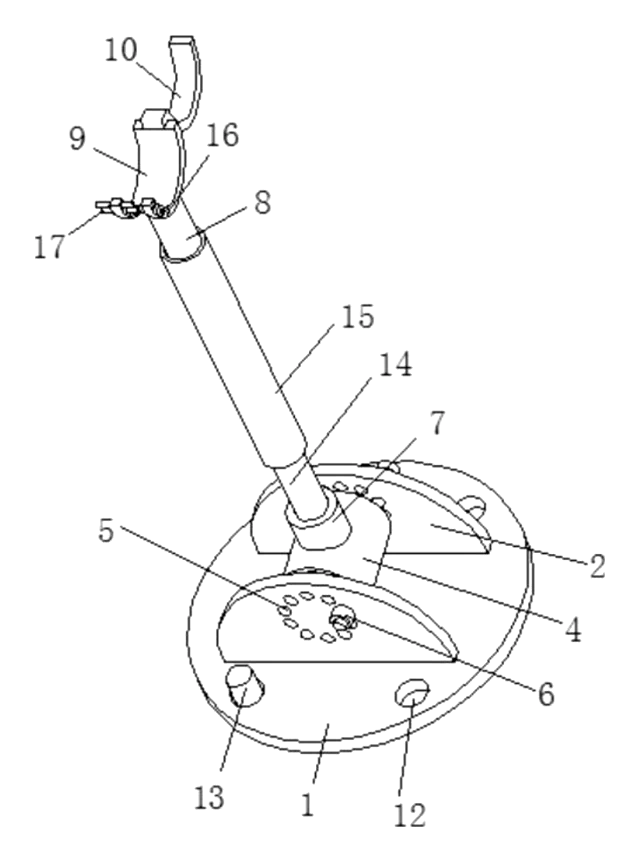
Adjustable-Angle Tree Support Prop
Tree prop with a pinned base, angle-locking hinge, twist-adjust tube and a locking trunk ring.
Patent CN208370491U
Garden & Outdoor
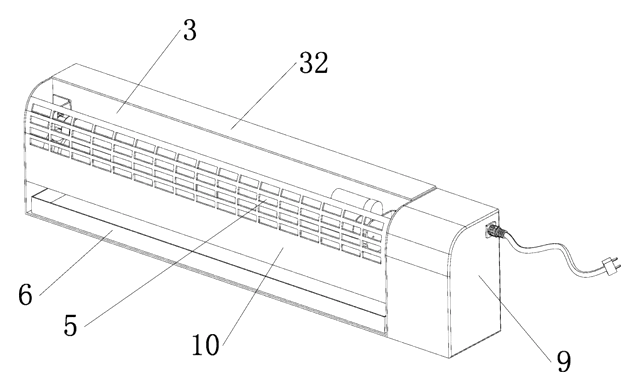
Self-Renewing Glue-Roller Mosquito Trap
UV insect trap with a glue roller that re-coats itself and scrapes the catch into a tray - no glue boards.
Patent CN217038569U
Garden & Outdoor
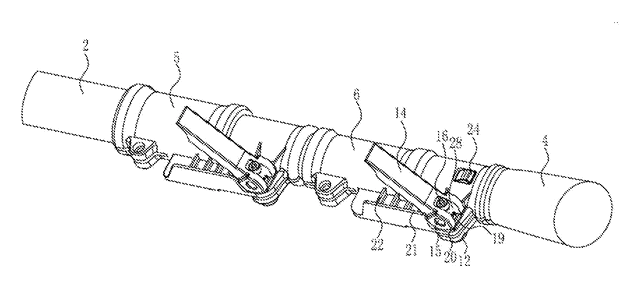
Cam-Lock Telescopic Pole for Garden Power Tools
Telescopic pole for garden power tools with cam-lever locks and a spring-button, tear-drop head socket.
Patent CN205812889U
Garden & Outdoor
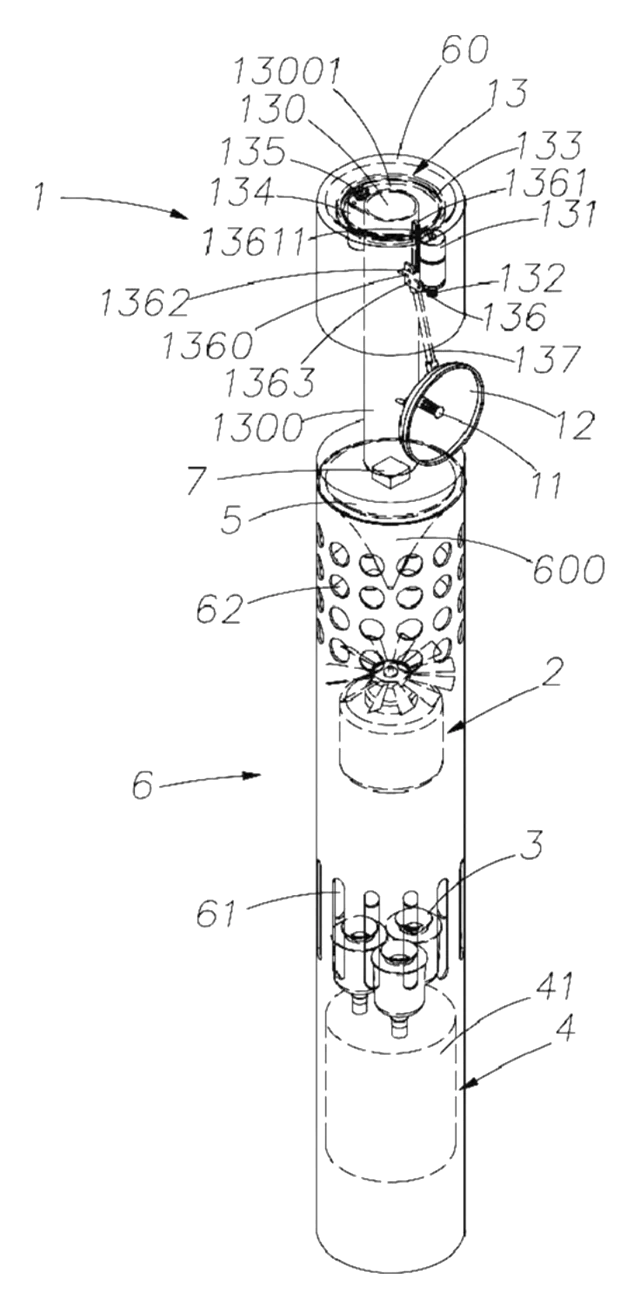
Mosquito Fan That Listens for Mosquitoes Before It Sprays
Fan with a scanning microphone dish that mists repellent only when it hears mosquitoes.
Patent CN208708542U
Browse by category
- Apparel & Accessories (22)
- Baby & Kids (16)
- Bags & Luggage (9)
- Bath & Personal Care (16)
- Car Accessories (10)
- Furniture, Bedding & Storage (12)
- Garden & Outdoor (18)
- Health & Wellness (8)
- Home, Kitchen & Cleaning (24)
- Lighting (12)
- Packaging & Containers (6)
- Pet Products (6)
- Phone & Camera Accessories (4)
- Retail Display (13)
- School, Office & Art (19)
- Sports & Recreation (25)
- Tools & Workshop (27)
- Toys & Games (12)
This page is based on the public patent document CN207040403U, assigned to Tianjin Mao Mushroom Development Co Ltd. IP2M is an independent manufacturing service and is not affiliated with, endorsed by or licensed by the patent owner. Images marked as concept renderings are illustrations, not photos of an existing product. Patent status information is provided for reference only and is not legal advice; confirm freedom to operate for your market before production. Full disclaimer.