
Patent CN207100569U
Updated October 28, 2026Wind Coat with Detachable Inner Liner Inserted Through a Back Opening
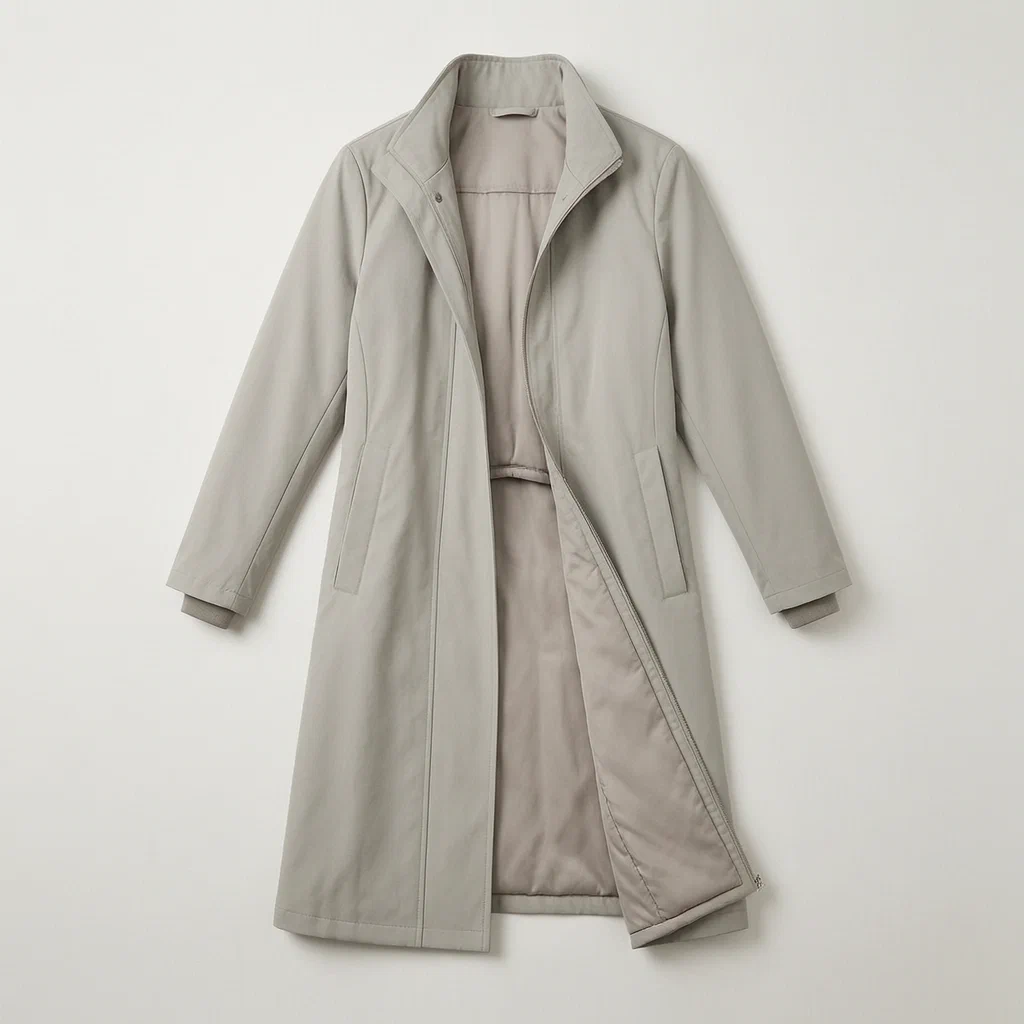
A single wind coat rarely handles both cool mornings and warm afternoons well. Adding a fixed heavy liner makes it too hot later in the day, while wearing only a shell leaves the wearer cold when the temperature drops. This design solves that by placing a separate inner bag between the outer cover and the liner, inserted through a dismounting mouth located at the back waist lining. Once inside, the inner bag connects to the coat at specific points: a connection sleeve inside the outer cover cuff links flexibly to the liner cuff, and the left front plackets of the inner bag and outer cover join together. When the weather warms up, the wearer opens the back dismounting mouth, disconnects the cuffs and front, and pulls the inner bag out. The coat then functions as a lighter unlined garment. When it cools down, the bag goes back in. The patent describes the outer cover material as PU skin, noted for wearability, breathability, and flexibility. The inner bag is made of purified cotton cloth connected to silk floss wadding using cotton thread sutured in rhombus or oval patterns, which keeps the wadding from shifting during cleaning.
- China utility model - lapsed
- No filings outside China
- Outerwear & apparel
- PU skin outer cover, cotton inner bag with silk floss wadding
Splat! What let you down?
🧥
Back-waist insertion
The inner bag slides between the outer cover and liner through a dismounting mouth at the back waist lining.
🔗
Flexible cuff link
A connection sleeve inside the outer cover cuff attaches flexibly to the liner cuff to keep sleeves aligned.
🌡️
Weather adaptable
Remove the inner bag for breathability in warmer conditions or install it for warmth when temperatures drop.
🧵
Secured wadding
Cotton thread sutures the inner bag in rhombus or oval patterns to prevent the silk floss wadding from shifting.
Bring this product to market
- ✓ Patent vetted China-only family and legal status checked
- 2 Product brief · now How it works, uses and options written up
- 3 Prototype First samples for buyers to review
- 4 Pilot run Small first batch for launch customers
- 5 Volume production Repeat orders at scale
Buyer interest
– of 100 buyers needed to start prototyping
One click, no sign-up. Each vote is one real visitor, and products with the most interest go to prototyping first.
Build team: no members yet. Need a partner, co-funding or skills to build this? Join and we introduce the team once it forms.
The problem
Standard wind coats are built for a narrow temperature range. A heavily insulated coat becomes uncomfortable on mild days, forcing the wearer to carry a separate jacket or endure overheating. Conversely, a lightweight shell offers little protection when the wind picks up or the temperature falls unexpectedly. Layering multiple separate garments often results in bunching at the sleeves and collar, restricting movement and creating an uneven silhouette. Buyers looking for a single outerwear solution that transitions smoothly between seasons face limited options without purchasing two distinct coats.
The solution
This wind coat design separates the insulation from the shell entirely. The garment consists of an outer cover and a liner joined together at their edges. Between these two layers sits an independent inner bag. Instead of being sewn permanently into the coat, the inner bag is inserted through a dismounting mouth positioned at the back waist lining. Once inside, the bag is secured at key stress points to prevent it from twisting or bunching during wear. A connection sleeve located inside the outer cover cuff attaches flexibly to the liner cuff, keeping the sleeve layers aligned. At the front, the left front placket of the inner bag connects flexibly to the corresponding inner side of the outer cover’s left front placket. When warmth is no longer needed, the wearer simply reverses the process: disconnecting the cuffs and front placket, then pulling the inner bag out through the back opening. The coat then serves as a lighter, unlined garment.
Who it is for
- Outerwear brands seeking a versatile trench or wind coat that functions across multiple seasons without requiring customers to buy separate spring and winter versions.
- Uniform and workwear suppliers needing a single coat specification for employees who work in environments with fluctuating indoor and outdoor temperatures throughout the day.
- Private-label Amazon sellers looking for a practical outerwear listing with a clear functional feature—the removable liner—that differentiates the product from standard wind coats.
- Wholesale apparel distributors supplying retail chains where buyers demand garments that offer extended seasonal use to maximize shelf life and reduce inventory complexity.
How it works
The main parts
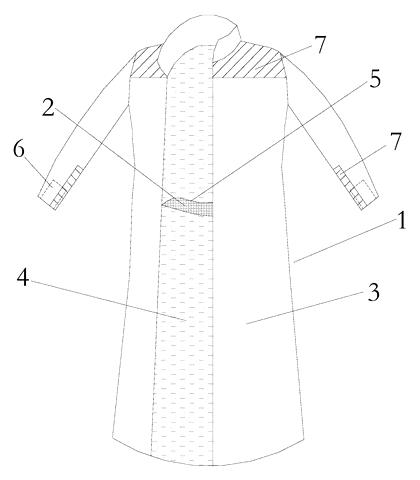
| No. | Part | What it does |
|---|---|---|
| 1 | Wind coat body | The complete assembled garment including outer cover and liner. |
| 2 | Inner bag | The removable insulating layer placed between the outer cover and liner. |
| 3 | Outer cover | The exterior shell of the coat, made of PU skin material. |
| 4 | Liner | The interior facing layer, joined to the outer cover at the edges. |
| 5 | Dismounting mouth | The opening at the back waist lining used to insert or remove the inner bag. |
| 6 | Connection sleeve | Located inside the outer cover cuff; links the outer cover to the liner cuff. |
| 7 | PU skin | The cortex material used for the outer cover. |
Operating steps
- Insert the inner bag - Open the dismounting mouth (5) at the back waist lining and slide the inner bag (2) into the space between the outer cover (3) and the liner (4).
- Connect the cuffs - Thread the liner cuff through the inner bag cuff and align it with the connection sleeve (6) inside the outer cover cuff, joining them flexibly.
- Secure the front - Attach the left front placket of the inner bag to the inner side of the outer cover’s left front placket.
- Close the back - Fasten the dismounting mouth to enclose the inner bag completely within the coat body (1).
- Remove for warmer weather - Reverse the steps: open the back mouth, disconnect the front placket and cuffs, and pull the inner bag out to wear the coat as an unlined garment.
Applications
Transitional season commuting
Commuters traveling in early spring or late autumn face cool mornings and warmer afternoons. With the inner bag installed, the coat provides necessary warmth at the start of the day. By midday, the wearer removes the bag through the back opening and stores it, continuing the commute in a breathable, unlined wind coat.
Outdoor field work
Workers moving between climate-controlled buildings and outdoor sites need adaptable clothing. The detachable inner bag allows them to maintain warmth outside without overheating indoors, using a single garment rather than constantly changing jackets.
Travel and packing
Travelers visiting destinations with unpredictable weather benefit from a two-in-one garment. Packing one wind coat with a removable inner bag takes less luggage space than carrying both a heavy winter coat and a light spring jacket.
Retail uniform programs
Companies issuing uniforms to staff working in varied zones—such as loading docks and air-conditioned offices—can standardize on this single coat style. Employees adjust their own warmth level by inserting or removing the inner bag as their shift location changes.
Where it is less suitable
- Extreme winter conditions - The patent describes a silk floss wadding inner bag, which may not provide sufficient insulation for sub-zero environments compared to dedicated heavy parkas.
- High-intensity athletic use - The multi-layer construction and flexible connections at the cuffs and placket add slight bulk, making it less ideal for activities requiring maximum freedom of movement and minimal weight.
- Formal evening wear - While structured as a wind coat, the visible dismounting mouth and utilitarian connection points prioritize function over formal tailoring aesthetics.
Frequently asked questions
How does the inner bag stay in place?
The inner bag is inserted through a dismounting mouth at the back waist lining. Once inside, it connects to the coat at the cuffs via a connection sleeve inside the outer cover, and at the left front placket using a slide fastener. These flexible attachment points keep the bag aligned with the outer shell during movement.
What materials are described in the patent?
The patent specifies PU skin for the outer cover. The inner bag uses purified cotton cloth connected to silk floss wadding material, sutured with cotton thread in rhombus or oval patterns. Exact fabric weights and compositions for production are to be confirmed in design.
Can the coat be washed with the inner bag inside?
The patent notes that the cotton thread suture pattern on the inner bag prevents the silk floss wadding from shifting into pockets during cleaning. However, because the outer cover is PU skin and the inner bag is cotton-based, care instructions should be set in design and confirmed on prototypes to determine if they should be washed separately.
Is the back opening noticeable when worn?
The dismounting mouth is located at the back waist lining and can be closed using a zipper. When fastened, it sits against the lower back, hidden beneath the outer cover’s drape.
What sizes can be produced?
The patent does not list specific measurements. Size grading from XS to XXL or custom dimensions are set in design based on the buyer’s target market specifications.
Can the insulation material be changed?
Yes. While the patent describes silk floss wadding, manufacturers can substitute synthetic down, fleece, or other quilted fills depending on the desired warmth level and cost targets.
Can this design be made and sold in the US?
The patent was filed only in China and is lapsed, so it does not restrict the design in the US or in China. Outerwear designs may be covered by other US patents - see Patent & Production - so we recommend a freedom-to-operate check before volume production.
Are you affiliated with the patent owner?
No. IP2M is an independent design and manufacturing service working from the public patent document.
Request a quote
Click Request a Quote below to see our email address - copy it, or open your email app with a ready-made message. Please mention patent CN207100569U in the subject.
Helpful details to include:
- Your company and channel (outerwear brand, uniform supplier, Amazon seller, wholesale distributor)
- Target sizes and fit requirements
- Preferred materials for the outer cover and inner bag insulation
- Closure types for the dismounting mouth, cuffs, and front placket
- Estimated quantity and target price
- Timeline - when you would like samples and the first shipment
You can also reach us at (332) 203-9997.
Explore this product
Interested in building this?
Tell us your target market, quantity and timeline. We reply with options for prototyping, small-batch runs or volume production.
Send your inquiry to
Please put CN207100569U in the subject line and tell us your company, country, estimated quantity and timeline.
Prefer to talk? Call (332) 203-9997.
More product-ready patents
All Apparel & Accessories patents →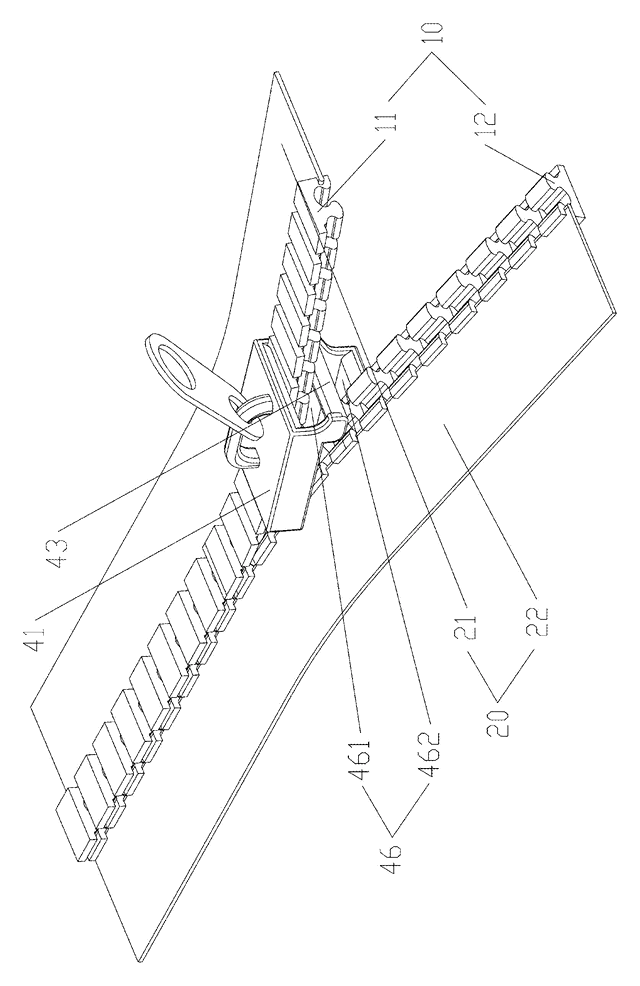
Apparel & Accessories
Stacked Zipper with Teeth That Mesh Top-to-Bottom
Zipper whose two identical tooth rows mesh on top of each other, closed by a simplified slider.
Patent CN205795062U
Apparel & Accessories
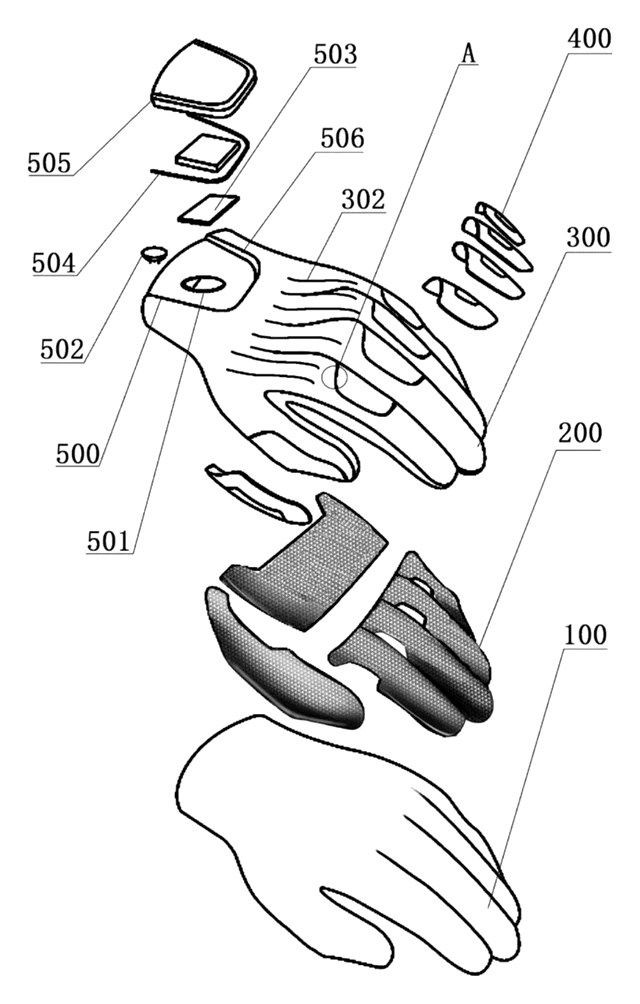
Impact-Resistant Glove with a 3D-Printed Lattice Layer
Work glove with a 3D-printed lattice impact layer, TPU knuckle guards and a light mounting area.
Patent CN213785583U
Apparel & Accessories
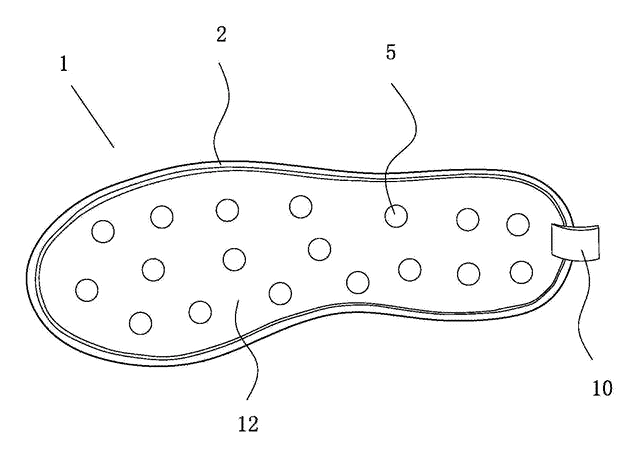
Massage Insole with Spring-Back Silicone Nubs and a Removable Top Layer
Layered insole: silicone nubs rise through a removable perforated top sheet and sink under each step.
Patent CN208286505U
Apparel & Accessories
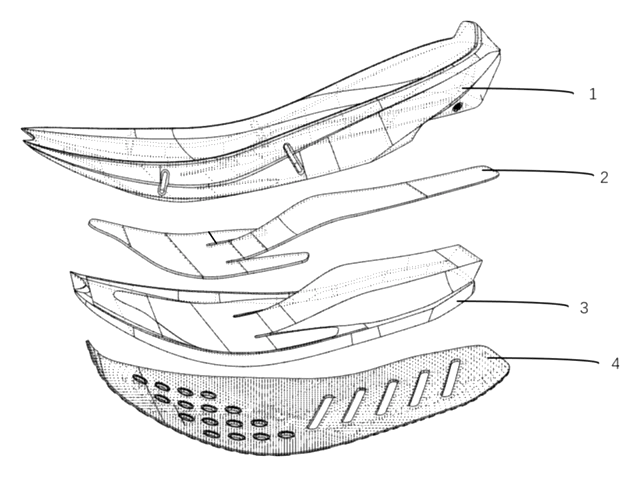
Heel-Less Carbon Plate Running Shoe Sole for Forefoot Strikers
Running sole for forefoot strikers: no ground-touching heel, winged carbon plate between two midsoles.
Patent CN216723354U
Apparel & Accessories
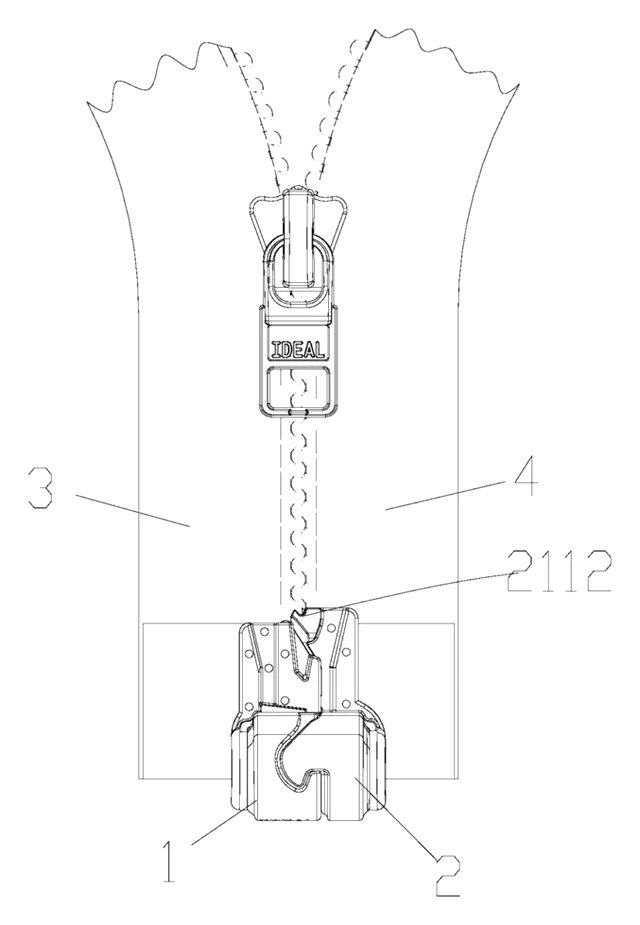
Waterproof Magnetic Zipper Stop That Snaps the Two Halves Together
Separating-zipper stop with sealed magnets: pin and box snap together one-handed, safe in rain and wash.
Patent CN215075936U
Apparel & Accessories
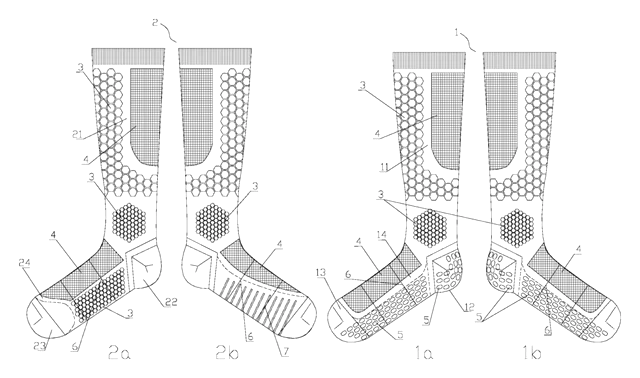
Left-Right Specific Soccer Socks: Grip for the Plant Foot, Touch Pads for the Kicking Foot
Soccer socks knitted as a left-right pair: grip zones for the plant foot, pads for the kicking foot.
Patent CN212728807U
Browse by category
- Apparel & Accessories (22)
- Baby & Kids (16)
- Bags & Luggage (9)
- Bath & Personal Care (16)
- Car Accessories (10)
- Furniture, Bedding & Storage (12)
- Garden & Outdoor (18)
- Health & Wellness (8)
- Home, Kitchen & Cleaning (24)
- Lighting (12)
- Packaging & Containers (6)
- Pet Products (6)
- Phone & Camera Accessories (4)
- Retail Display (13)
- School, Office & Art (19)
- Sports & Recreation (25)
- Tools & Workshop (27)
- Toys & Games (12)
This page is based on the public patent document CN207100569U, assigned to Aoyang Group Co Ltd. IP2M is an independent manufacturing service and is not affiliated with, endorsed by or licensed by the patent owner. Images marked as concept renderings are illustrations, not photos of an existing product. Patent status information is provided for reference only and is not legal advice; confirm freedom to operate for your market before production. Full disclaimer.