At a glance
| Patent number | CN207125593U (application CN201720275698) |
| Type | China utility model (实用新型) - protects product shape and structure |
| Original title | Constant temperature smoldering inner bag and its thermally insulated cup for braising (一种恒温焖烧内胆及其焖烧杯) |
| Patent owner | Individual |
| Inventors | Dong Zhu |
| Filing date | 2017-03-21 |
| Grant date | 2018-03-23 |
| Status (China) | Lapsed - terminated for non-payment of annual fees (recorded 2023-03-07) |
| Patent family | Chinese filings only - no US, European, Japanese, PCT or other filings listed |
| Cited by | 2 later documents |
| Source | Google Patents (search for CN207125593U) |
What the claims cover, in plain language
Claim 1 - an inner pot body made of a heat-conductive material, having a side wall and a bottom, equipped with an insulating inner lid. Phase-change material is sealed within either the side wall or the bottom.
Claim 2 - when the phase-change material is in the bottom, the side wall and bottom are formed as two separate pieces. The bottom acts as an energy-storage unit, while the side wall is joined with a separate device bottom to form the food container unit. Claim 3 - when the phase-change material is in the side wall, the wall consists of a ring-shaped container wall and a cylindrical sleeve containing the material. The sleeve fits over the outside of the container wall as an energy-storage layer. Claim 4 - the phase transition temperature of the phase-change material is 95 degrees Celsius. Claim 5 - two lifting ears are arranged symmetrically at the top of the inner pot body. Claim 6 - a thermal cooker comprising the inner pot above, an outer insulating cup with a cavity to receive it, and an insulating outer lid. Claim 7 - the outer cup is made of a heat-insulating material. Claim 8 - the outer cup is a composite housing with an inner insulating layer and an outer stainless steel layer. Claim 9 - the outer cup is a double-layer stainless steel shell with a vacuum cavity between the layers.
This is a simplified reading for orientation only. The legal scope is defined by the exact claim wording in the official Chinese document.
What this means for US production
This patent was filed only in China and is lapsed due to non-payment of annual fees, so it no longer restricts anyone in China either. It has no US or other foreign counterpart.
Two points to settle early:
- Other patents may exist. Vacuum-insulated cookware and thermal-retention vessels are widely patented by major drinkware and housewares brands, particularly regarding vacuum-sealing methods and specific PCM encapsulation geometries, so a freedom-to-operate (FTO) review of the PCM integration and double-lid structure is needed before tooling.
- Food contact safety. Because the phase-change material is sealed within the cooking vessel’s walls, the integrity of that seal under repeated thermal cycling must be validated to ensure no migration into food.
Customization and manufacturing
What can be customized
| Area | Options |
|---|---|
| Capacity | Personal size (about 0.5 L) up to family size (about 2-3 L), dimensions to be confirmed in design |
| PCM placement | Sealed in the bottom base or wrapped around the side wall |
| PCM temperature | Standard 95 degrees Celsius for hot cooking, or lower transition temperatures for warm-holding applications |
| Outer cup insulation | Foam-filled composite, or double-wall stainless steel with vacuum insulation |
| Inner pot material | Food-grade stainless steel or aluminum alloy for conductivity |
| Exterior finish | Powder coating, painted finishes, or bare brushed steel on the outer cup |
| Lids | Silicone sealing rings, vent valves, or locking latches |
Things to plan for (US market)
- FDA 21 CFR 175/177 - all materials contacting food, including the inner pot metal, the inner lid, and the sealing rings, must comply with FDA food-contact regulations.
- California Proposition 65 - metals, solder alloys, and exterior paints must be screened for restricted substances.
- ASTM F963 / CPSIA - if the product is marketed or packaged in a way that appeals to children, heavy metals testing and physical hazard checks apply.
- UL or ETL listing - while this is a passive vessel without electrical components, retail buyers often request general product safety evaluations for heated kitchenware.
How a project runs
- Inquiry - capacity, PCM target temperature, outer shell preference and quantity.
- Design - engineering the PCM chamber, selecting the phase-change compound, designing the conductive inner pot and outer cup mating geometry.
- Prototype - producing sample units to verify heat retention curves, seal integrity after thermal shock, and lid fit.
- Pilot run - extended cycle testing simulating daily boiling and cooling, plus food-contact migration tests.
- Production - deep drawing or spinning the inner pot, PCM filling and welding, vacuum brazing or foam injection for the outer cup, final assembly.
Quantities & timeline
Manufacturing requires deep-draw dies for the inner pot, specialized welding fixtures to seal the PCM chamber without degrading the chemical payload, and vacuum-brazing equipment if a double-wall stainless outer cup is chosen. Tooling complexity scales with the separable PCM-base option versus the integrated wall design. Send us your capacity, PCM temperature, outer shell material, quantity and target price and we will reply with options.
Patent drawings
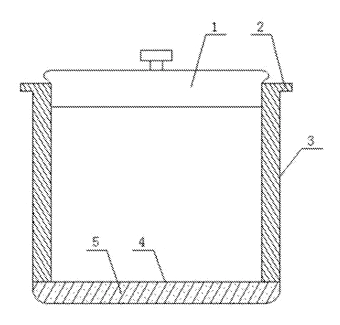
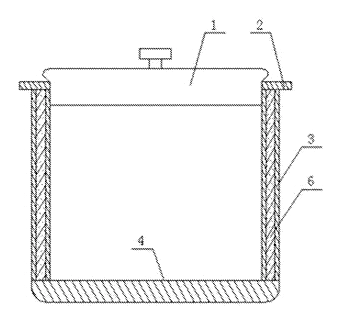
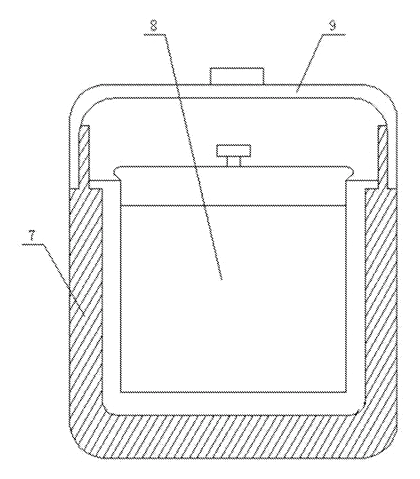
Drawings reproduced from the public patent document for reference.