At a glance
| Patent number | CN207169017U (application CN201720609377) |
| Type | China utility model (实用新型) - protects product shape and structure |
| Original title | Mahjong tile stand and packing box (麻将牌助立架及包装盒) |
| Patent owner | Cao Yiyang (individual) |
| Inventors | Liu Bing, Xiao Wei, Miao Qifan |
| Filing date | 2017-05-27 |
| Grant date | 2018-04-03 (claims corrected 2018-05-01) |
| Status (China) | In force - no termination recorded; a China utility model lasts at most 10 years from filing (to 2027-05-27) |
| Patent family | Chinese filings only - no US, European, Japanese, PCT or other filings listed |
| Cited by | 2 later documents |
| Source | Google Patents (search for CN207169017U) |
What the claims cover, in plain language
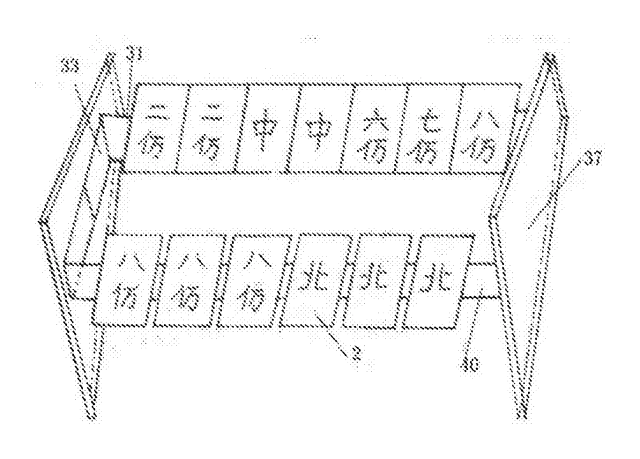
Claim 1 - a tile stand made of at least one strip-shaped frame body, with or without connectors between strips, a support and/or angle-adjusting body that lets the stand stand up, and a permanent magnet on at least one strip that holds magnetic mahjong tiles upright.
Claim 2 - one-piece or multi-section strips, connectors between strips, and the magnet as a permanent-magnet strip along all or part of the strip. Claims 3-7 - frame layouts: two parallel strips joined by end pieces, L-shaped support pieces, and connectors that are themselves permanent magnets (rectangular or trapezoid sheets). Claims 8-11 - a packing box made from the stands plus a box frame, with variants of the box frame, its openings and the way the parts connect.
This is a simplified reading for orientation only. The legal scope is defined by the exact claim wording in the official Chinese document.
What this means for US production
This patent was filed only in China. It is still in force in China, so making or selling this design in China would need the owner’s permission while it lasts (at most until 2027-05-27). It has no US or other foreign counterpart and does not restrict the design outside China.
Before production, keep in mind:
- Other patents may exist. Magnetic game pieces, travel game sets and mahjong racks appear in US patents and design patents. Have a freedom-to-operate (FTO) search done by a US patent attorney before volume production.
- Tile artwork. Traditional tile designs are public, but specific modern tile art and brand names may be protected; use your own artwork.
Customization and manufacturing
What can be customized
| Area | Options |
|---|---|
| Tiles | Thickness and size - to be confirmed in design; printed or engraved faces |
| Tile sets | Chinese, American (with jokers) or other regional sets |
| Racks | Molded plastic or aluminum frames; magnetic strip strength |
| Lean | Fixed or adjustable tile angle |
| Case | Rack-and-frame box, with a pouch or outer sleeve |
| Extras | Dice, wind markers, score cards, rule booklet |
Things to plan for (US market)
- Magnets and children - small powerful magnets are a serious swallowing hazard. Products with magnets for children must meet ASTM F963 magnet requirements, and the CPSC rule 16 CFR 1262 restricts loose, high-powered magnets in consumer products. Keep magnets fully enclosed and use weaker flexible magnetic strips where possible.
- Age grading - a game for adults should be clearly labeled 14+; a children’s version needs CPSIA testing and a Children’s Product Certificate.
- Materials - check plastics and inks for California Proposition 65 substances.
How a project runs
- Inquiry - tile set, size, racks, case and quantity.
- Design - tile material with magnetic filler, magnet strength, rack and box.
- Prototype - samples tested for holding force and play.
- Pilot run - small batch with safety testing.
- Production - volume production, packaging and shipping.
Quantities & timeline
Tiles and racks need molds, and tile faces need printing setups. Send us your tile set, size, case design, quantity and target price and we will reply with options.
Patent drawings
The patent’s drawings were separated automatically; captions give the patent’s own figure numbers.
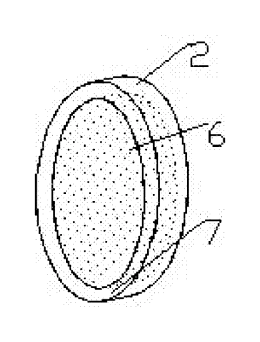
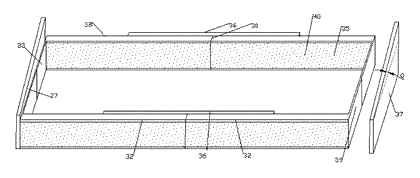
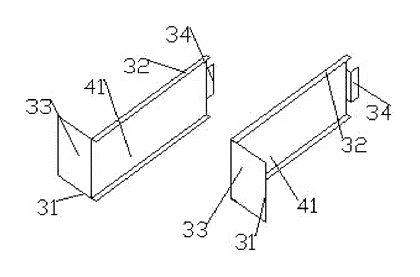
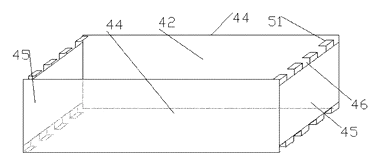
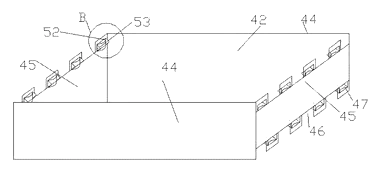
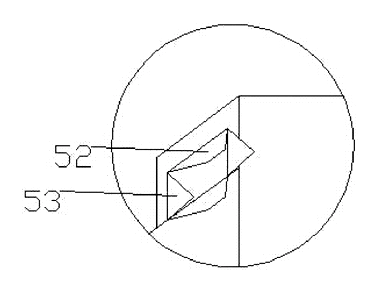
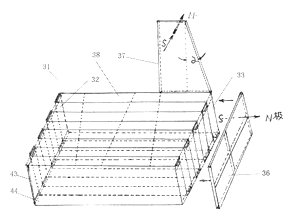
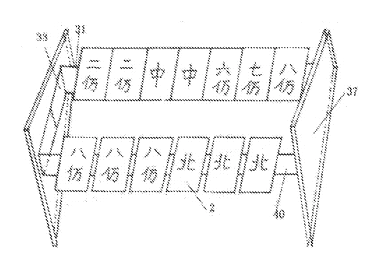
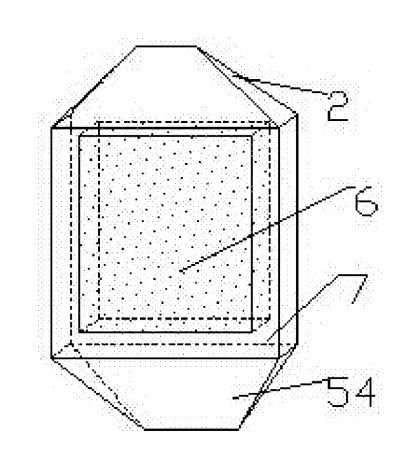
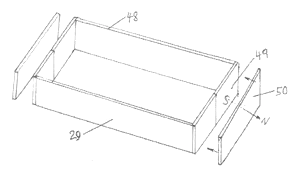
Drawings reproduced from the public patent document for reference.