At a glance
| Patent number | CN207202980U (application CN201720147814) |
| Type | China utility model (实用新型) - protects product shape and structure |
| Original title | Multi-dimensional movement cervical traction apparatus (多维运动颈部牵引装置) |
| Patent owner | Hebei University |
| Inventors | Xiao Jinzhuang, Su Na, Wang Hongrui |
| Filing date | 2017-02-20 |
| Grant date | 2018-04-10 |
| Status (China) | Lapsed - terminated for non-payment of annual fees (recorded 2020-02-11) |
| Patent family | Chinese filings only - no US, European, Japanese, PCT or other filings listed |
| Cited by | 4 later documents |
| Source | Google Patents (search for CN207202980U) |
What the claims cover, in plain language
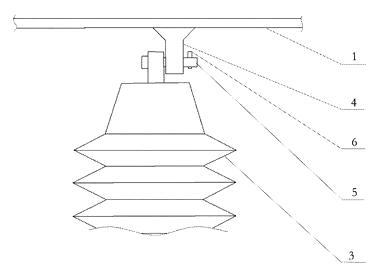
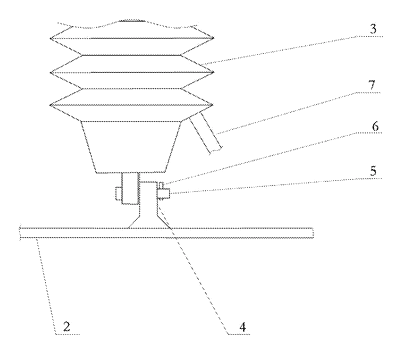
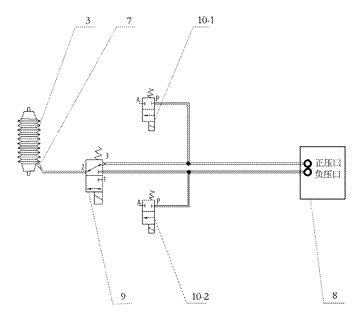
Claim 1 - A multi-dimensional movement cervical traction apparatus comprising an upper skeleton, a lower skeleton, three airbags, and air intake devices. Both skeletons are ring-shaped with an opening, arranged vertically. The airbags sit between the upper and lower skeletons. Three connecting tabs are fixed to the bottom of the upper skeleton and three to the top of the lower skeleton, arranged in an equilateral triangle pattern. The top of each airbag is mounted to an upper tab via a pin shaft and cotter pin, allowing it to rotate around the pin. The bottom of each airbag is similarly mounted to a lower tab via a pin shaft and cotter pin. There are three air intake devices, connected one-to-one with the airbags. Each airbag has an air inlet pipe communicating with its interior, linking it to the corresponding intake device.
Claim 2 - The air intake device comprises a solenoid valve block connected to the air inlet pipe, and a vacuum pump connected to the solenoid valve block.
Claim 3 - The airbag is an organ-type (accordion) airbag.
This is a simplified reading for orientation only. The legal scope is defined by the exact claim wording in the official Chinese document.
What this means for US production
This patent was filed only in China and has lapsed due to non-payment of annual fees (termination recorded 2020-02-11), so it no longer restricts anyone in China either. It has no US or other foreign counterpart.
Two points to settle early:
- Other patents may exist. Pneumatic cervical traction collars and multi-chamber neck braces are patented by various medical device companies and consumer wellness brands in the US, particularly regarding the sequencing of air chambers and specific pivot mechanisms, so a freedom-to-operate (FTO) review of the three-bag pivot design and control logic is needed before tooling.
- Regulatory classification. Depending on marketing claims and intended use, this device may be classified as a medical device by the FDA, requiring appropriate clearances before commercial distribution in the United States.
Customization and manufacturing
What can be customized
| Area | Options |
|---|---|
| Frame material | Medical-grade polycarbonate, ABS, nylon, or lightweight aluminum alloy |
| Airbag material | TPU-coated nylon, silicone, or PVC-free accordion bellows |
| Frame sizing | Adjustable circumference, or fixed sizes (S/M/L) based on anthropometric data |
| Padding | Removable memory foam or gel liners for the upper and lower rings |
| Control interface | Wired handheld remote, Bluetooth-enabled smartphone app, or integrated clinic console |
| Pump type | Micro-diaphragm pumps, piezoelectric pumps, or external clinical compressors |
| Valve configuration | Proportional solenoid valves for variable pressure control vs. simple on/off valves |
Things to plan for (US market)
- FDA Classification and Registration - If marketed for rehabilitation, pain relief, or treating musculoskeletal conditions, the device is likely a Class I or Class II medical device under 21 CFR 890.5900 (physical medicine therapeutic devices). The manufacturer and the US importer/distributor must register with the FDA, and a 510(k) premarket notification may be required depending on the predicate device comparison.
- Biocompatibility (ISO 10993) - Materials contacting the skin (frames, padding, airbags) must undergo cytotoxicity, sensitization, and irritation testing per FDA guidance for medical devices.
- Electrical Safety (IEC 60601-1 / UL 60601-1) - If the vacuum pumps and solenoid valves are electrically powered, the complete system must meet medical electrical equipment safety standards.
- Electromagnetic Compatibility (FCC Part 15 / IEC 60601-1-2) - Devices containing electronic controllers, solenoids, or wireless modules (like Bluetooth) require FCC certification for the US market.
- California Prop 65 - Plastics, foams, and metal alloys must be screened for restricted substances.
How a project runs
- Inquiry - intended use (clinical vs. consumer wellness), sizing requirements, control preferences, and regulatory pathway.
- Design - CAD modeling of the frame geometry, airbag fold patterns, pin-shaft tolerances, and pneumatic circuit layout.
- Prototype - 3D-printed frames and hand-welded airbags assembled for bench testing of the inflation sequences and pivot mechanics.
- Verification & Validation - biocompatibility testing, electrical safety testing, pressure cycle testing on the airbags, and software validation if applicable.
- Production - injection molding for frames, heat-sealing or dip-molding for airbags, PCB assembly for controllers, final pneumatic leak testing, and packaging.
Quantities & timeline
The rigid frames require precision injection molds, and the accordion airbags need custom welding dies or dip-molding tooling to ensure consistent fold behavior. Solenoid valves and micro-pumps are typically sourced as standard components but require integration testing. Regulatory submissions (such as FDA 510(k)) add significant lead time before commercial distribution can begin. Send us your intended use case, target market, quantity estimates, and preferred materials, and we will reply with a tailored manufacturing roadmap.
Patent drawings
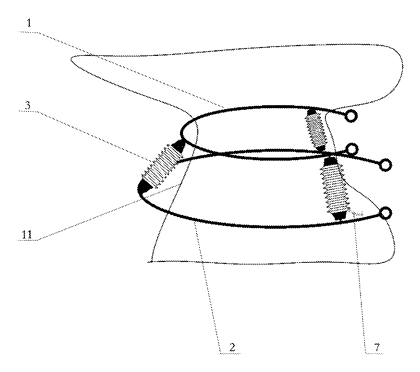
Drawings reproduced from the public patent document for reference.