
Patent CN207345672U
Updated October 25, 2026Rain-Deflecting Side Mirror with a Pivoting Air-Guide Plate
Rain pooling on a side mirror blocks the driver's view of adjacent lanes. This mechanical approach uses a small pivoting plate at the top of the mirror housing to direct airflow through a shaped internal passage onto the glass. The air stream pushes water droplets off the reflective surface before they can settle. When not needed, the plate can be fitted fully into the matching slot.
- China utility model - lapsed
- No filings outside China
- Automotive exterior accessories
- Passive aerodynamic rain clearing
Splat! What let you down?
💨
Directed airflow
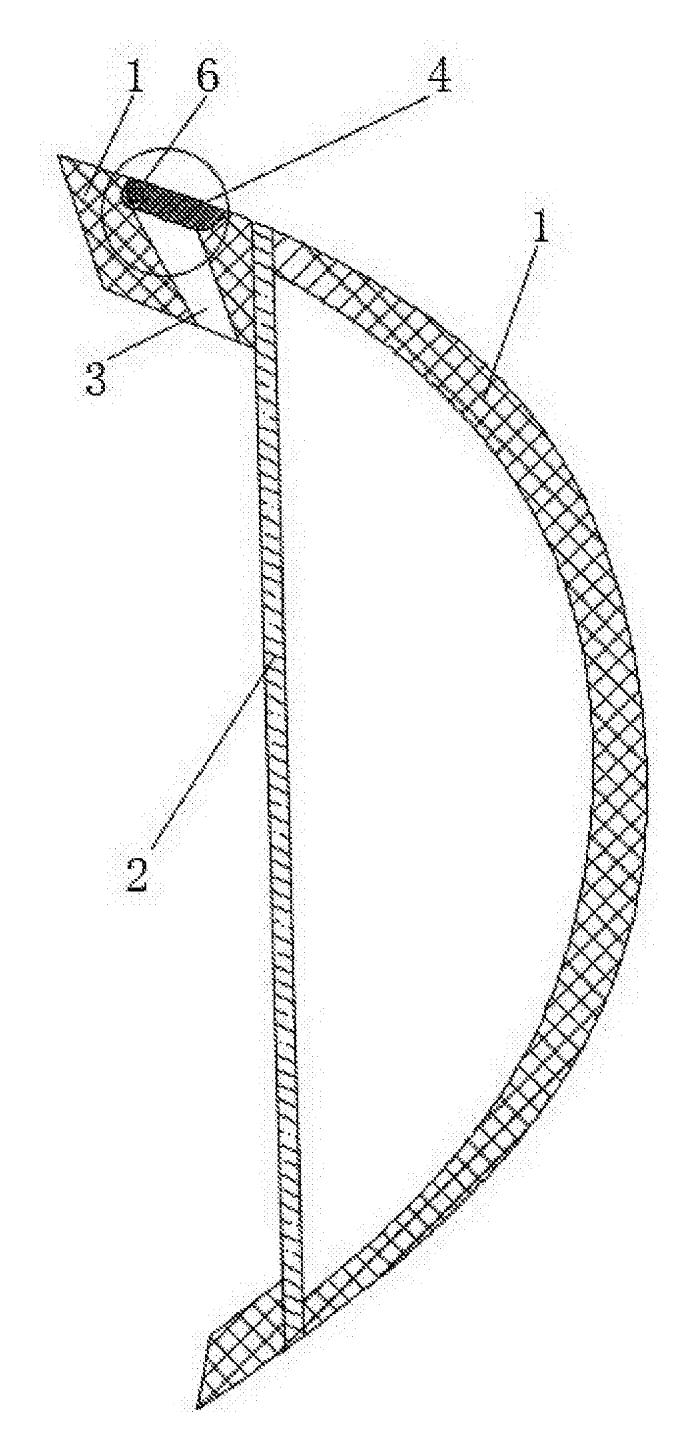
The guide plate directs airflow through the top passage toward the mirror glass.
🔄
Pivoting guide plate
A plate at the passage inlet rotates on a shaft; it fits fully into a matching slot when not in use.
📐
Tapered duct
The air passage width gradually decreases from inlet to outlet.
🛑
Angle limiter
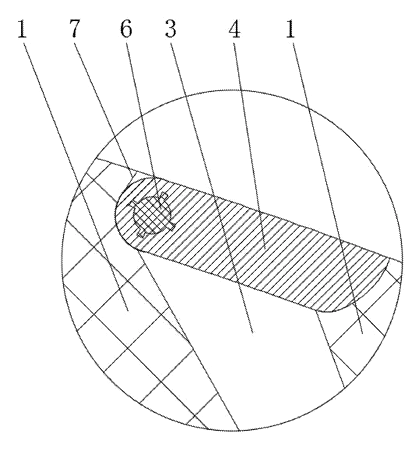
A planar section inside the slot stops the guide plate from opening past 90 degrees relative to horizontal.
Bring this product to market
- ✓ Patent vetted China-only family and legal status checked
- 2 Product brief · now How it works, uses and options written up
- 3 Prototype First samples for buyers to review
- 4 Pilot run Small first batch for launch customers
- 5 Volume production Repeat orders at scale
Buyer interest
– of 100 buyers needed to start prototyping
One click, no sign-up. Each vote is one real visitor, and products with the most interest go to prototyping first.
Build team: no members yet. Need a partner, co-funding or skills to build this? Join and we introduce the team once it forms.
The problem
During rain, water droplets accumulate on the side-view mirror glass and distort the reflected image. Drivers lose sight of vehicles in adjacent lanes, increasing the risk of lane-change collisions. Conventional solutions rely on electrical heating elements embedded behind the glass, which draw battery or alternator power and require several minutes to evaporate standing water. Aftermarket hydrophobic coatings degrade over time and need reapplication. According to the patent, the objective is to prevent raindrops from remaining on the mirror surface by using a structural arrangement that directs airflow toward the mirror surface.
The solution
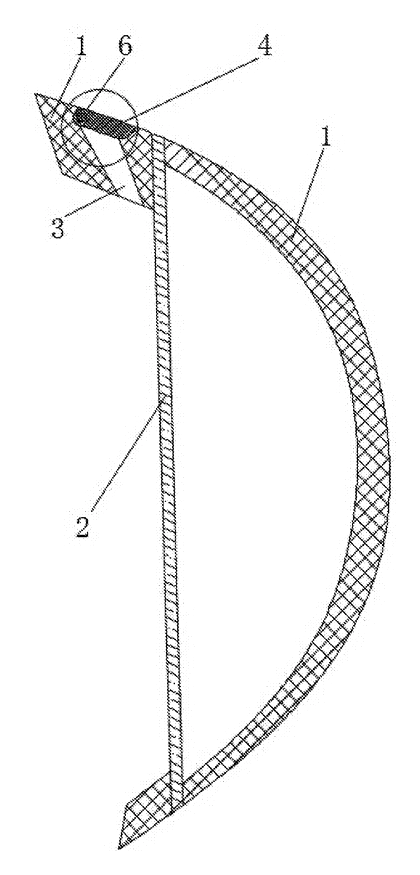
- An air passage (3) is formed along the top of the side mirror housing (1). Its outlet points downward toward the face of the rearview mirror glass (2), and the angle between the passage and the glass surface is acute.
- At the inlet of the air passage, a guide plate (4) is mounted on a shaft (6) connected to a driving device. The driving device controls the rotation of the plate relative to the housing.
- When deployed, the guide plate is rotated at the inlet to introduce airflow into the air passage. The passage width gradually decreases from inlet to outlet, and the outlet faces the mirror glass.
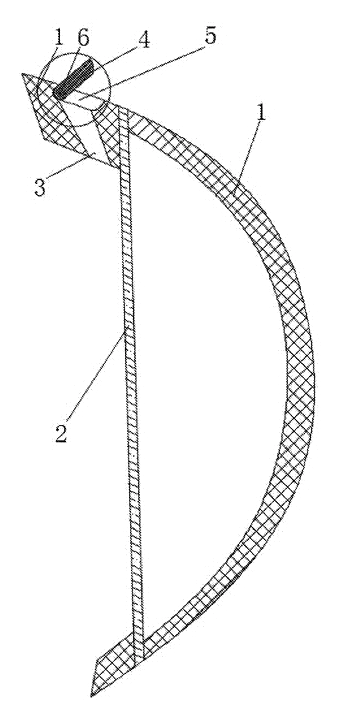
- The housing includes a guide plate slot (5) shaped to receive the plate. One end of the plate has a protruding circular-arc planar surface, and the other end has a protruding arc surface. Corresponding groove portions inside the slot provide face-to-face sliding contact.
- A planar section (7) at the upper part of the circular-arc groove limits the maximum opening angle of the guide plate to no more than 90 degrees from horizontal.
- When closed, the guide plate fits entirely within the slot. The mirror glass length falls within the coverage area of the air passage.
Who it is for
- Aftermarket automotive accessory brands seeking a mechanical rain-clearing mirror upgrade.
- Commercial fleet operators (trucks, delivery vans, buses) whose vehicles spend long hours in varied weather and benefit from visibility aids.
- OEM mirror tier suppliers evaluating structural features to differentiate their housing designs for mid-range vehicle platforms.
- Off-road and agricultural equipment manufacturers where electrical heating elements may be vulnerable to vibration or moisture ingress.
How it works
The main parts
| No. | Part | What it does |
|---|---|---|
| 1 | Side mirror housing | Encloses the mirror glass and contains the air passage structure. |
| 2 | Rearview mirror glass | Reflective surface positioned below the air passage outlet. |
| 3 | Air passage | Duct running along the top of the housing; width tapers from inlet to outlet. |
| 4 | Guide plate | Pivoting deflector at the passage inlet that directs airflow. |
| 5 | Guide plate slot | Recess in the housing that receives the guide plate when folded closed. |
| 6 | Shaft | Pivot axis connecting the guide plate to the driving device. |
| 7 | Planar section | Flat stop inside the slot that limits the guide plate’s opening angle. |
Operating steps
- Deploy the guide plate - the driving device rotates the shaft (6) so the plate (4) rotates relative to the side mirror housing (1).
- Direct airflow - the guide plate directs airflow into the inlet of the air passage (3).
- Passage geometry - the passage width gradually decreases from inlet to outlet. The angle between the passage and the mirror glass (2) is acute.
- Clear water - the moving air pushes raindrops off the glass before they can pool, maintaining a clear reflection.
- Stow the plate - when rain stops or the vehicle parks, the driving device rotates the plate back until it sits fully inside the guide plate slot. The planar section (7) prevents over-rotation during deployment.
Applications
Highway driving in heavy rain
At sustained speeds, the volume of air entering the passage sweeps large droplets off the glass continuously. Drivers changing lanes on wet highways maintain an unobstructed view of adjacent traffic without waiting for a heater element to warm up.
Commercial truck fleets
Long-haul trucks encounter diverse weather across routes. Adding electrical heating to every mirror increases wiring complexity and alternator load. A structural aerodynamic housing reduces maintenance points while keeping mirrors clear during prolonged rain exposure on interstates.
Delivery vans in urban areas
Frequent stops and starts mean heated mirrors cool down between deliveries. The guide plate deploys instantly, providing airflow across the glass during short bursts of travel between drop-off points in rainy conditions.
Agricultural and construction equipment
Tractors and excavators operate in muddy, wet environments where electrical components face higher failure risks from vibration and water ingress. A mechanical air-guide system built into the mirror housing avoids fragile heating wires and connectors.
Off-road and overland vehicles
Overland builds prioritize reliability over complex electronics. A folding guide plate that stows fully when parked on trails provides active rain clearing once the vehicle is moving on wet roads.
Where it is less suitable
- Stationary driving - when parked, no air passes through the duct, so droplets will remain on the glass.
- Vehicles with highly streamlined mirror pods - some modern aerodynamic mirror shapes leave little room for a top-mounted passage without altering the approved housing envelope.
- Regions with freezing rain or ice - the mechanism clears liquid water but does not generate heat. Ice accumulation requires a separate thermal solution.
Frequently asked questions
How does the mirror clear rain without electricity?
The housing contains a duct along its top edge. A pivoting plate at the inlet of the air passage directs airflow into the passage. The air exits across the mirror glass, pushing water droplets away before they pool.
Does it work at low city speeds?
The patent does not specify vehicle-speed requirements.
How does the guide plate stay in position?
The plate rotates on a shaft connected to a driving device. Inside the housing slot, a flat planar section acts as a mechanical stop, limiting the plate’s opening angle to no more than 90 degrees from horizontal.
Can the plate be operated manually?
Yes. While the patent mentions a driving device, production versions can use a simple manual lever, a spring mechanism released by a cabin cable, or a small electric actuator depending on the buyer’s cost and feature targets.
What happens when the plate is not needed?
When not needed, the plate can be fitted fully into the matching slot. The slot contours match the plate’s surfaces, and the guide plate can be fully received in the slot.
Will this fit my existing mirror mounts?
The housing must be designed around the specific vehicle’s mounting bracket and adjustment mechanism. For aftermarket sales, adapters or model-specific shells are tooled during the design phase to match OEM bolt patterns.
Does the air duct change the mirror’s field of view?
The duct is located above the mirror glass. As long as the housing dimensions comply with FMVSS 111 field-of-view requirements for the target vehicle class, the duct placement does not obstruct the reflective area.
Can this design be made and sold in the US?
The patent was filed only in China and has lapsed, so it does not restrict the design in the US or in China. Automotive mirror housings and aerodynamic deflectors may be covered by other US patents - see Patent & Production - so we recommend a freedom-to-operate check before volume production.
Are you affiliated with the patent owner?
No. IP2M is an independent design and manufacturing service working from the public patent document.
Request a quote
Click Request a Quote below to see our email address - copy it, or open your email app with a ready-made message. Please mention patent CN207345672U in the subject.
Helpful details to include:
- Your company and channel (aftermarket brand, fleet supplier, OEM tier manufacturer)
- Target vehicle models or universal-fit requirements
- Actuation preference (manual, cable, electric)
- Material and finish specifications
- Estimated quantity and target price
- Timeline - when you would like prototypes and the first shipment
You can also reach us at (332) 203-9997.
Explore this product
Interested in building this?
Tell us your target market, quantity and timeline. We reply with options for prototyping, small-batch runs or volume production.
Send your inquiry to
Please put CN207345672U in the subject line and tell us your company, country, estimated quantity and timeline.
Prefer to talk? Call (332) 203-9997.
More product-ready patents
All Car Accessories patents →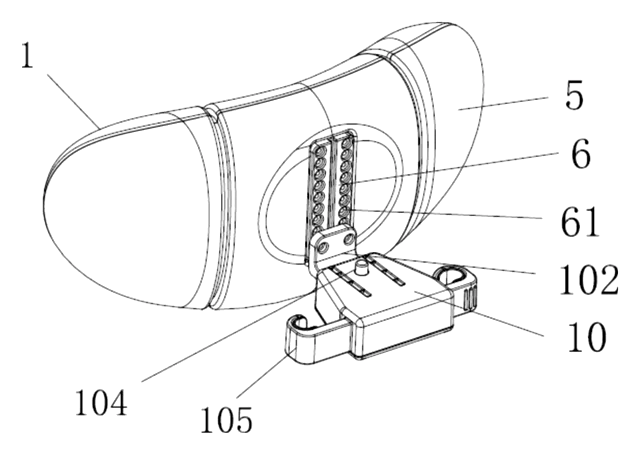
Car Accessories
Car Headrest Pillow with Ratchet Side Wings and Push-Button Reach
Post-mounted car headrest pillow with ratchet side wings and a push-button forward adjustment.
Patent CN212195197U
Car Accessories
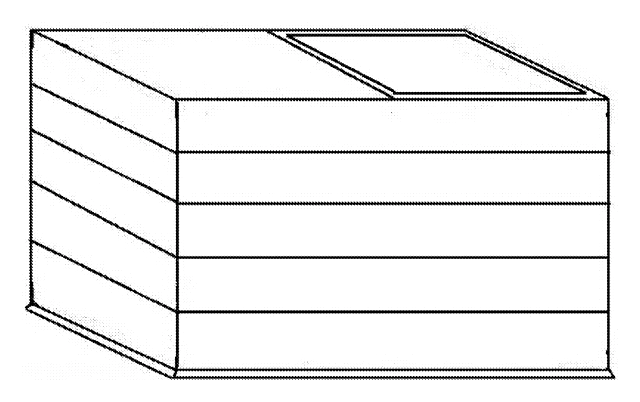
Hard-Shell Rooftop Tent That Doubles as a Cargo Box
Roof box whose hard frames lift on gas struts into a tent with door and skylight, and fold back for luggage.
Patent CN206327275U
Car Accessories
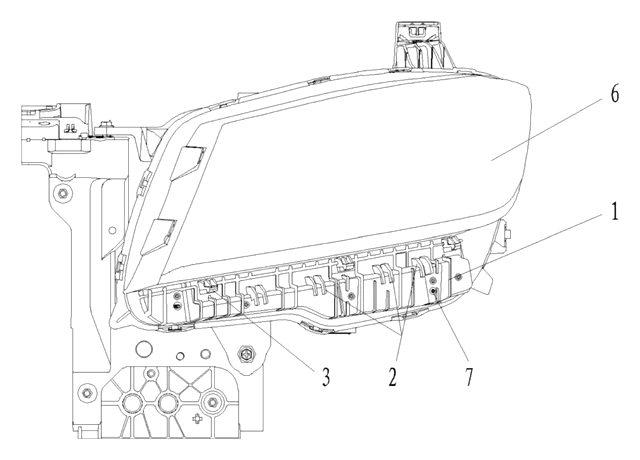
Headlamp-to-Bumper Adapter Bracket That Sets Gap and Flush in Three Directions
Molded bracket under the headlamp: support blocks and snap teeth locate the bumper flange for an even gap.
Patent CN216580316U
Car Accessories
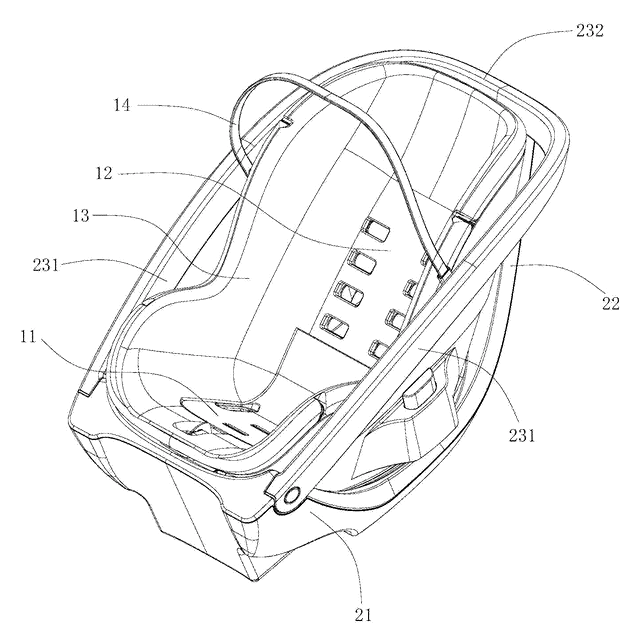
Infant Car Seat with a Load-Bearing Base That Wraps the Carrier
Infant car seat whose base has a backrest and swing-up side rails, so the carrier can be lighter.
Patent CN206383856U
Car Accessories
Retractable Side Impact Protection Block for Child Car Seats
Retractable side-impact block for child seats: springs out to provide side-impact buffering, folds flat.
Patent CN207028930U
Automotive & Powersports
Electric Motorcycle Storage Box with Electromagnetic Lock and Torsion Spring Lid
Motorcycle storage box: electromagnetic lock and torsion spring open the lid via a handlebar button.
Patent CN212473759U
Browse by category
- Apparel & Accessories (22)
- Baby & Kids (16)
- Bags & Luggage (9)
- Bath & Personal Care (16)
- Car Accessories (10)
- Furniture, Bedding & Storage (12)
- Garden & Outdoor (18)
- Health & Wellness (8)
- Home, Kitchen & Cleaning (24)
- Lighting (12)
- Packaging & Containers (6)
- Pet Products (6)
- Phone & Camera Accessories (4)
- Retail Display (13)
- School, Office & Art (19)
- Sports & Recreation (25)
- Tools & Workshop (27)
- Toys & Games (12)
This page is based on the public patent document CN207345672U, assigned to Sichuan College of Architectural Technology. IP2M is an independent manufacturing service and is not affiliated with, endorsed by or licensed by the patent owner. Images marked as concept renderings are illustrations, not photos of an existing product. Patent status information is provided for reference only and is not legal advice; confirm freedom to operate for your market before production. Full disclaimer.