At a glance
| Patent number | CN207345672U (application CN201721354296) |
| Type | China utility model (实用新型) - protects product shape and structure |
| Original title | A car side rearview mirror device preventing water drop residence (一种防水滴驻留的汽车侧后视镜装置) |
| Patent owner | Sichuan College of Architectural Technology |
| Inventors | Wu Pengfei |
| Filing date | 2017-10-20 |
| Grant date | 2018-05-11 |
| Status (China) | Lapsed - terminated for non-payment of annual fees (recorded 2022-09-30) |
| Patent family | Chinese filings only - no US, European, Japanese, PCT or other filings listed |
| Cited by | 4 later documents |
| Source | Google Patents (search for CN207345672U) |
What the claims cover, in plain language
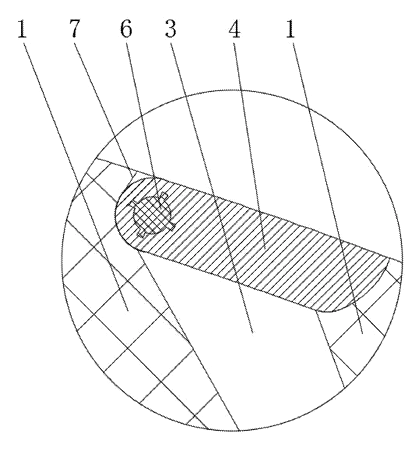
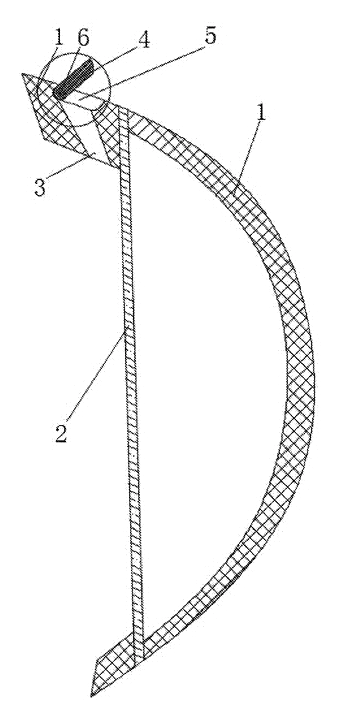
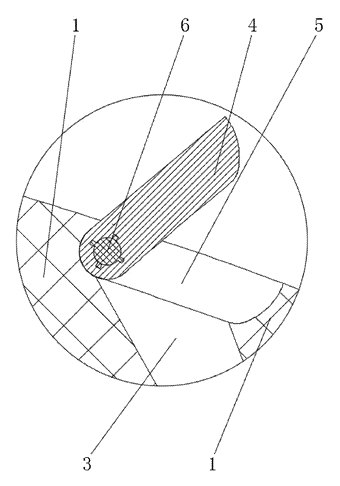
Claim 1 - a side-view mirror device comprising a mirror housing (1) and a mirror glass (2) installed in it. An air passage (3) is provided at the top of the housing, with its outlet facing the mirror glass surface. A guide plate (4) is rotatably mounted at the inlet position of the air passage to direct airflow into the passage. The housing also has a guide plate slot (5) matched to the guide plate, allowing the plate to fold fully into the slot.
Claim 2 - the width of the air passage gradually decreases from its entrance to its outlet. Claim 3 - one end of the guide plate connects via a shaft (6) to a driving device that controls the plate’s rotation relative to the housing. Claim 4 - the end of the guide plate connecting to the shaft has a protruding circular-arc planar surface, and the opposite end has a protruding arc surface. The guide plate slot contains matching circular-arc planar and arc-surface groove portions. The circular-arc planar end slides in face contact with its groove, and when closed, the arc-surface end contacts its groove. A planar section (7) on the upper part of the circular-arc groove limits the guide plate’s maximum opening angle. Claim 5 - the planar section limits the maximum opening angle of the guide plate relative to the horizontal plane to no more than 90 degrees. Claim 6 - the angle between the air passage and the mirror glass surface is an acute angle. Claim 7 - the length of the mirror glass falls within the coverage range of the air passage.
This is a simplified reading for orientation only. The legal scope is defined by the exact claim wording in the official Chinese document.
What this means for US production
This patent was filed only in China and is lapsed, so it no longer restricts anyone in China either. It has no US or other foreign counterpart.
Two points to settle early:
- Other patents may exist. Aerodynamic mirror housings, integrated airflow channels, and deployable mirror deflectors are actively patented by major automotive OEMs and tier-one mirror suppliers such as Gentex, Magna, and SMR. A freedom-to-operate (FTO) review covering the specific duct geometry and pivoting plate mechanism is essential before committing to tooling for the US market.
- Vehicle integration. The housing must match the mounting footprint and adjustment mechanisms of the target vehicle platform. Molds are typically cut per vehicle model or adapter bracket series.
Customization and manufacturing
What can be customized
| Area | Options |
|---|---|
| Housing shape | Contoured to fit specific vehicle makes/models or designed as a universal clamp-on shell |
| Guide plate actuation | Manual lever, spring-loaded with cabin release cable, or small electric motor/solenoid |
| Duct geometry | Passage width, taper ratio, and outlet angle tuned in CFD for target vehicle speeds |
| Materials | ASA, ABS, or PC/ABS blend for UV and impact resistance; glass-filled nylon for the guide plate |
| Finish | Textured black, primed for paint, or color-matched to vehicle body |
| Slot sealing | Rubber gasket or foam strip inside the guide plate slot to prevent dust and water ingress when closed |
Things to plan for (US market)
- FMVSS 111 (49 CFR 571.111) - Federal Motor Vehicle Safety Standard for rearview mirrors. Any replacement housing must maintain the required field of view and not introduce optical distortion.
- SAE J2800 / SAE J1757 - recommended practices for mirror reflectivity and environmental durability testing used by many US buyers.
- FMVSS 302 (49 CFR 571.302) - flammability of interior and certain exterior materials; plastics used in the housing and guide plate must meet burn-rate limits if applicable to the mounting zone.
- California Prop 65 - plastic resins, paints, and rubber seals must be screened for listed chemicals.
How a project runs
- Inquiry - target vehicle platforms, actuation preference, material requirements and estimated volumes.
- Design - CAD modeling of the housing, duct taper calculation, guide plate kinematics, and slot interface.
- Prototype - 3D-printed or CNC-machined samples for wind-tunnel or on-vehicle airflow validation and fitment checks.
- Pilot run - injection-molded trial batch for FMVSS 111 field-of-view verification, UV aging, vibration, and water-ingress tests.
- Production - steel mold fabrication, injection molding, secondary finishing, assembly of shaft and driving device, packaging.
Quantities & timeline
Each vehicle-specific housing requires a dedicated injection mold set (housing halves, guide plate, slot insert components). Actuation mechanisms add assembly steps. Wind-tunnel or road testing to validate the duct taper and plate angle takes significant development time before molds are cut. Send us your target vehicle models, preferred actuation method, material specifications, quantity and target price and we will reply with options.
Patent drawings
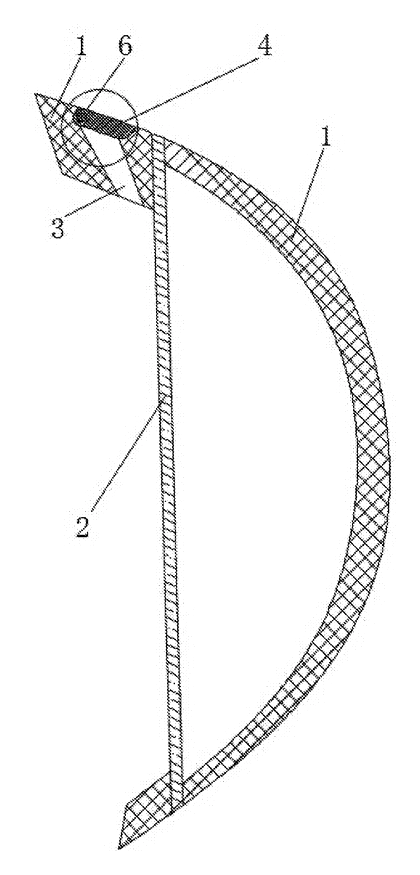
Drawings reproduced from the public patent document for reference.