
Patent CN207360133U
Updated October 26, 2026Child Safety Seat with Rotatable Side Impact Protection Device
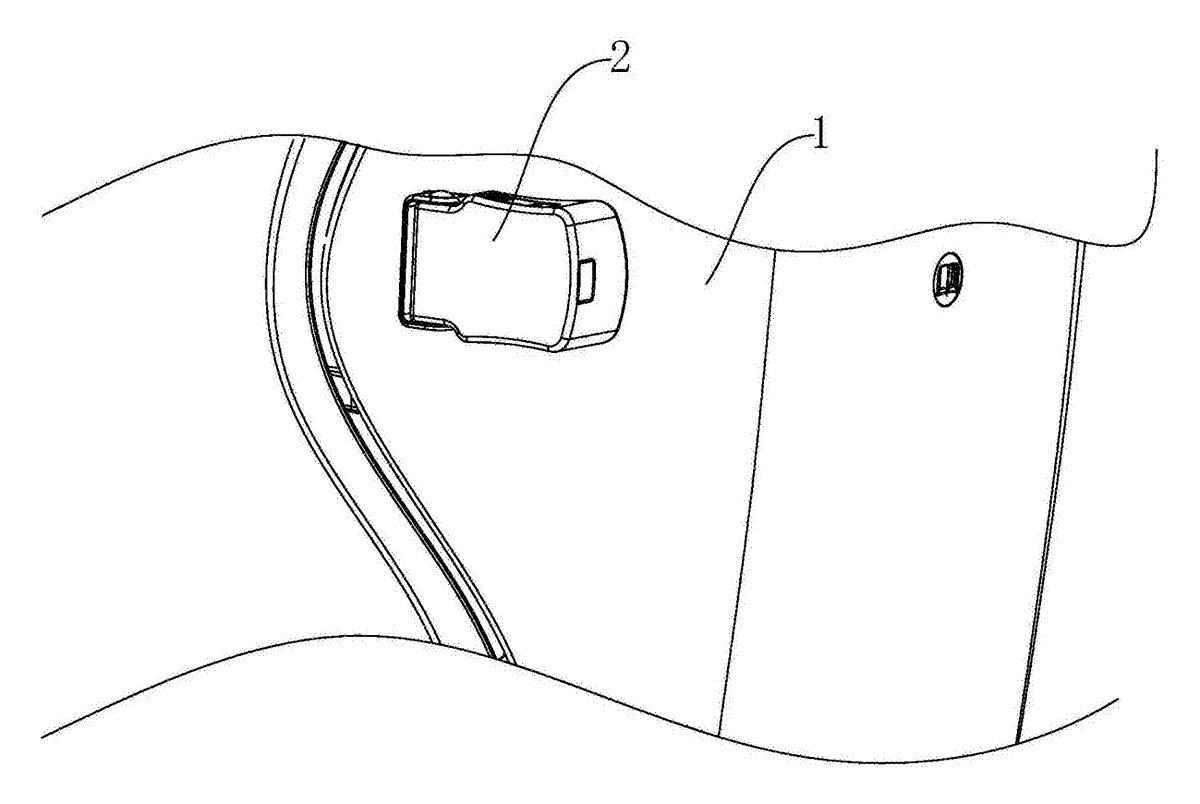
Side-impact guards on child seats often add bulk and are difficult to store when not needed. This design solves that by making the guard rotatable. When folded in, the side impact piece fits flush against the seat portion, keeping the profile narrow for installation or storage. When swung out, it extends beyond the seat side to intercept lateral forces. A built-in locking mechanism uses a rod, spring and operating part to hold the guard firmly in the open or closed position, so it does not shift during use or transport.
- China utility model - lapsed
- No filings outside China
- Child car seats & interior
- Rotatable side impact guard with mechanical lock
Splat! What let you down?
🔄
Rotatable guard
The side impact piece swings between a flush closed position and an extended open position.
🔒
Dual-position lock
A locking rod engages cavities in the base to hold the guard securely open or closed.
🧩
Integrated mechanism
Locking base, rod, elastic member and operating part are housed within the side impact assembly.
📏
Compact storage
Folding the guard flat reduces the seat width for easier vehicle installation and warehouse packing.
Bring this product to market
- ✓ Patent vetted China-only family and legal status checked
- 2 Product brief · now How it works, uses and options written up
- 3 Prototype First samples for buyers to review
- 4 Pilot run Small first batch for launch customers
- 5 Volume production Repeat orders at scale
Buyer interest
– of 100 buyers needed to start prototyping
One click, no sign-up. Each vote is one real visitor, and products with the most interest go to prototyping first.
Build team: no members yet. Need a partner, co-funding or skills to build this? Join and we introduce the team once it forms.
The problem
Child safety seats must manage lateral forces in a collision, which is why many models include fixed side-impact wings or blocks. Fixed guards increase the overall width of the seat, making it harder to fit three seats across a rear bench or to maneuver the seat through narrow vehicle doors. Removable guards solve the width issue but introduce loose parts that can be lost or installed incorrectly. Parents and fleet operators need a side-impact device that provides outward extension when required yet stays compact when the extra width is unnecessary, without relying on separate detachable pieces.
The solution
This patent describes a child safety seat where the side impact protection device is permanently attached but rotatable.
- A seat portion forms the main body of the child safety seat.
- A side impact piece is rotatably arranged on the side of the seat portion.
- When rotated to the closed position, the side impact piece fits flush against the side of the seat portion, minimizing width.
- When rotated to the open position, the side impact piece extends toward the outer side of the seat, creating a buffer zone.
- A locking mechanism maintains the side impact piece securely in either the closed position or the open position.
Who it is for
- Child safety seat brands looking to offer a seat whose width adjusts for different vehicles without removable parts.
- Amazon sellers and wholesalers sourcing compact-packaging car seats that reduce shipping volume while retaining side-protection features.
- Rental car companies and ride-share fleets needing seats that fold narrow for trunk storage and swing open for passenger protection.
- Private-label baby product importers specifying mechanical details for their OEM manufacturing partners.
How it works
The main parts
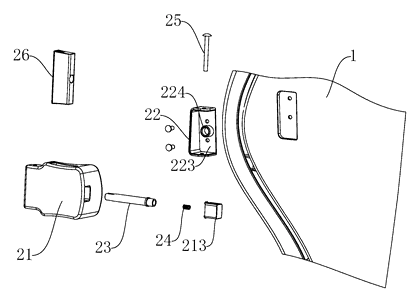
| No. | Part | What it does |
|---|---|---|
| 1 | Seat portion | Main body of the child safety seat. |
| 21 | Side impact piece | Rotatable guard that swings between open and closed positions. |
| 22 | Locking base | Mounted on the seat side; contains open and closed locking cavities. |
| 23 | Locking rod | Moves to insert into or withdraw from the locking cavities. |
| 24 | Elastic member | Spring placed behind the locking rod to drive it into the cavity. |
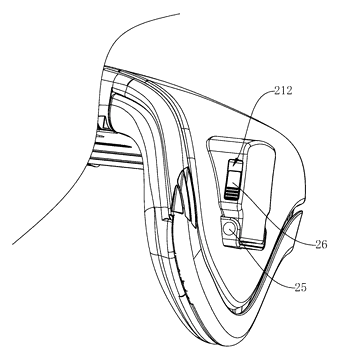
| 26 | Operating part | External slider connected to the locking rod for manual release. |
| 224 | Positioning chamber | Surrounds the open locking cavity; its end face restricts rod rotation in the closed position. |
| 213 | End cover | Detachable cap closing the rear of the locking rod installation cavity. |
Operating steps
- To open the guard: The user slides the operating part along the chute on the side wall of the side impact piece. This pulls the locking rod out of the closed locking cavity, compressing the elastic member.
- Swing the side impact piece outward away from the seat portion until it reaches the open position.
- Release the operating part. The elastic member resets, driving the front end of the locking rod into the open locking cavity in the locking base. The guard is now locked outward.
- To close the guard: Slide the operating part again to withdraw the rod from the open locking cavity.
- Rotate the side impact piece inward until it fits flush against the seat side. Release the operating part so the elastic member pushes the rod into the closed locking cavity. In this state, the end of the locking rod is restricted by the end face of the positioning chamber and cannot rotate.
Applications
Narrow vehicle cabins
When installing a child seat in a compact car or fitting multiple seats across a rear bench, the side impact piece is folded into the closed position. This reduces the overall width, allowing the seat to clear door frames and adjacent passengers. Once installed, the guard is swung to the open position for travel.
Warehouse storage and shipping
Wholesalers and Amazon sellers benefit from the closed position during logistics. Folding the guards flat allows more units per pallet or carton, reducing dimensional weight charges without detaching any components.
Rental fleets and ride-share vehicles
Fleet operators store folded seats in trunks between trips. The integrated locking mechanism means staff do not handle loose side-impact attachments, and the guard deploys quickly when placing the seat in a vehicle.
Everyday parent use
Parents moving the seat between two cars of different widths adjust the guard without tools. The operating part slides along the chute, and the elastic member snaps the rod into the correct cavity, providing tactile confirmation that the guard is locked.
Where it is less suitable
- Seats requiring energy-absorbing foam inserts inside the guard - the patent describes the mechanical rotation and lock, not specific foam materials or crush zones; those are set in design / confirmed on prototypes.
- Infant carriers that click into a base - the drawings show a larger seat portion; dimensions and carrier compatibility are to be confirmed in design.
Frequently asked questions
How does the side impact guard move?
The side impact piece is rotatably mounted on the side of the seat portion. It swings outward to an open position for protection or folds inward to a closed position where it fits flush against the seat side.
What keeps the guard from swinging during a trip?
A locking mechanism holds it in place. A locking rod, driven by an elastic member, inserts into either an open locking cavity or a closed locking cavity on the locking base. The rod must be manually withdrawn via the operating part before the guard can rotate.
How do I release the guard?
Slide the operating part along the chute on the side wall of the side impact piece. This pulls the locking rod out of the cavity, compressing the elastic member. You can then rotate the guard. Releasing the operating part lets the spring push the rod into the next cavity.
Are there loose parts to keep track of?
No. The locking base, rod, elastic member, operating part and end cover are all integrated into the side impact assembly. Nothing needs to be detached or stored separately.
What materials are used?
The patent describes the mechanical structure but does not specify resins or metals. Plastics for the shell and guard, and steel for the rod and spring, are set in design / confirmed on prototypes.
Does the patent mention crash test results?
No. The patent covers the rotatable structure and the locking mechanism. Dynamic performance numbers are not in the document and must be confirmed through sled testing per applicable standards.
Can this design be made and sold in the US?
The patent was filed only in China and is lapsed (terminated for non-payment of annual fees), so it does not restrict the design in the US or in China. Child safety seat side-impact systems may be covered by other US patents - see Patent & Production - so we recommend a freedom-to-operate check before volume production.
Are you affiliated with the patent owner?
No. IP2M is an independent design and manufacturing service working from the public patent document.
Request a quote
Click Request a Quote below to see our email address - copy it, or open your email app with a ready-made message. Please mention patent CN207360133U in the subject.
Helpful details to include:
- Your company and channel (child seat brand, Amazon seller, wholesaler, rental fleet buyer)
- Target seat model or shell dimensions for integration
- Guard size and preferred extension distance
- Material preferences for plastics and hardware
- Estimated quantity and target price
- Timeline - when you would like prototypes and the first shipment
You can also reach us at (332) 203-9997.
Explore this product
Interested in building this?
Tell us your target market, quantity and timeline. We reply with options for prototyping, small-batch runs or volume production.
Send your inquiry to
Please put CN207360133U in the subject line and tell us your company, country, estimated quantity and timeline.
Prefer to talk? Call (332) 203-9997.
More product-ready patents
All Baby & Kids patents →
Baby & Kids
Portable Folding Rocking Bassinet Frame
Rocking bassinet frame that folds flat: telescopic hub, folding rails, two-part legs, curved rockers.
Patent CN206910143U
Baby & Kids
Stroller Seat with Linked Fold-Away Armrest
Stroller seat whose armrest unlocks and folds automatically when the backrest is folded forward.
Patent CN206856772U
Baby & Kids
One-Motion Folding Baby Crib with Linked Frame
Portable baby crib whose top rails fold down automatically as the A-frame legs are closed.
Patent CN207202585U
Baby & Kids
Motorized Rocking Stroller That Rocks by Turning Its Wheels
Baby rocker or stroller whose motor turns the wheels back and forth; a clutch switches to pushing.
Patent CN208119238U
Baby & Kids
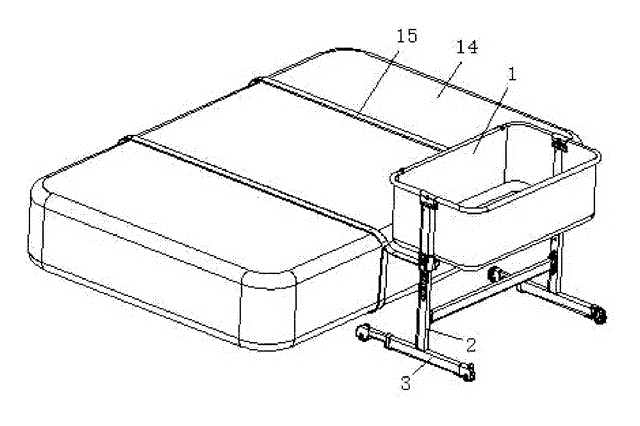
Bedside Crib Base with Spring-Loaded Telescoping Caster Legs
Bedside crib feet with spring-loaded sliding casters: wide when alone, short to sit flush at the bed.
Patent CN207168269U
Baby & Kids
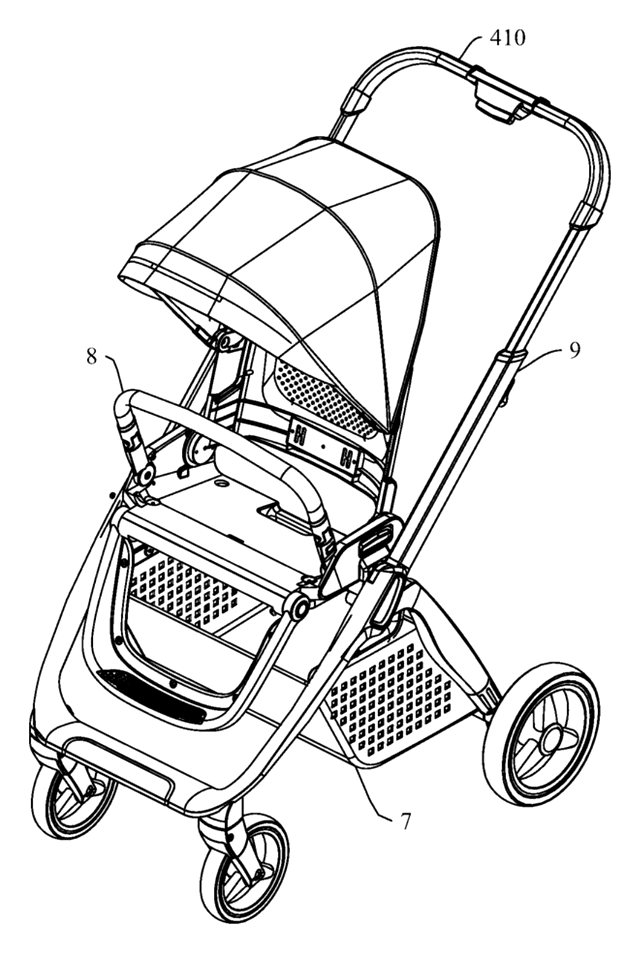
Compact-Fold Stroller with a Four-Bar Side Frame and Telescoping Handle
Stroller with four-bar side frames: handle and rear leg fold onto the front leg, handle telescopes.
Patent CN213799844U
Browse by category
- Apparel & Accessories (22)
- Baby & Kids (16)
- Bags & Luggage (9)
- Bath & Personal Care (16)
- Car Accessories (10)
- Furniture, Bedding & Storage (12)
- Garden & Outdoor (18)
- Health & Wellness (8)
- Home, Kitchen & Cleaning (24)
- Lighting (12)
- Packaging & Containers (6)
- Pet Products (6)
- Phone & Camera Accessories (4)
- Retail Display (13)
- School, Office & Art (19)
- Sports & Recreation (25)
- Tools & Workshop (27)
- Toys & Games (12)
This page is based on the public patent document CN207360133U, assigned to Ningbo Baby First Baby Products Co Ltd. IP2M is an independent manufacturing service and is not affiliated with, endorsed by or licensed by the patent owner. Images marked as concept renderings are illustrations, not photos of an existing product. Patent status information is provided for reference only and is not legal advice; confirm freedom to operate for your market before production. Full disclaimer.