At a glance
| Patent number | CN207360133U (application CN201721138781) |
| Type | China utility model (实用新型) - protects product shape and structure |
| Original title | A kind of safety seat and side impact protective device (一种安全座椅以及侧碰保护装置) |
| Patent owner | Ningbo Baby First Baby Products Co Ltd |
| Inventors | Zhou Xiaolin, other inventors requested anonymity |
| Filing date | 2017-09-06 |
| Grant date | 2018-05-15 |
| Status (China) | Lapsed - terminated for non-payment of annual fees (recorded 2024-08-30) |
| Patent family | Chinese filings only - no US, European, Japanese, PCT or other filings listed |
| Cited by | 46 later documents |
| Source | Google Patents (search for CN207360133U) |
What the claims cover, in plain language
Claim 1 - a side impact protection device for a child safety seat. It has a side impact piece rotatably arranged on the side of the seat portion. In the closed position it fits the seat side; in the open position it extends outward. A locking mechanism holds it in either position.
Claim 2 - the locking mechanism has a locking base on the seat side and a locking rod on the side impact piece. The base has an open locking cavity and a closed locking cavity. The rod moves to insert into or withdraw from these cavities. Claim 3 - the locking base has an installation bottom surface with a positioning chamber. The chamber wall surrounds the open locking cavity, and its end face forms part of the closed locking cavity. When closed, the rod end is restricted by this end face. Claim 4 - an elastic member sits between the locking rod and the side impact piece. It compresses when external force pulls the rod out, and drives the rod back into the cavity when released. Claim 5 - the side impact piece has a locking rod installation cavity with an outlet and an end cap hole. The rod front extends through the outlet; the elastic member sits behind it. A detachable end cover closes the hole. Claim 6 - an operating part connects to the locking rod and extends through a chute in the side wall of the side impact piece to allow manual movement. Claim 7 onward - the operating part has a through hole and the locking rod has a step for connection.
This is a simplified reading for orientation only. The legal scope is defined by the exact claim wording in the official Chinese document.
What this means for US production
This patent was filed only in China and is lapsed (terminated for non-payment of annual fees), so it no longer restricts anyone in China either. It has no US or other foreign counterpart.
Two points to settle early:
- Other patents may exist. Child safety seat side-impact systems are heavily patented. Companies including Wonderland Switzerland Ag and Bambino Prezioso Switzerland AG hold later US and foreign patents in this field (e.g., US11945345B2, US12311815B2, US12662027B2), so a freedom-to-operate (FTO) review of the rotating guard and locking mechanism is needed before tooling.
- Crash performance validation. The patent covers the mechanical rotation and lock, not dynamic test results; shell thickness, hinge strength and guard geometry must be validated through sled testing per applicable standards.
Customization and manufacturing
What can be customized
| Area | Options |
|---|---|
| Guard dimensions | Length, height and extension distance to be confirmed in design |
| Plastics | PP, HDPE or ABS for the side impact piece and locking base |
| Spring rate | Elastic member stiffness set in design / confirmed on prototypes |
| Operating part | Slider shape, texture and color for ergonomic grip |
| Seat shell integration | Mounting points adapted to the buyer’s existing seat mold |
| Colors and finish | Matte, textured or painted surfaces matching brand guidelines |
Things to plan for (US market)
- FMVSS 213 - Federal Motor Vehicle Safety Standard for child restraint systems; all structural and dynamic requirements apply.
- CPSC 16 CFR Part 1227 (if marketed for infants/carriers) or general juvenile product rules.
- California Prop 65 - plastics, flame retardants and metal springs are screened.
- ASTM F963 does not apply here as this is a vehicle restraint, not a toy, but material toxicity limits for children’s products still guide resin selection.
How a project runs
- Inquiry - target seat model, guard size, materials and quantity.
- Design - CAD for the side impact piece, locking base, rod, spring and operating part chute.
- Prototype - 3D printed or machined samples to verify rotation, lock engagement and ergonomics.
- Pilot run - injection molds opened; units assembled for static pull tests and fit checks on the seat shell.
- Production - molding, assembly, quality inspection and packing.
Quantities & timeline
The side impact piece, locking base, operating part and end cover require dedicated injection molds. The locking rod and elastic member are standard hardware items sized to the mold. Sled testing and FMVSS 213 certification take significant development time. Send us your seat model drawings, guard dimensions, material preferences, quantity and target price and we will reply with options.
Patent drawings
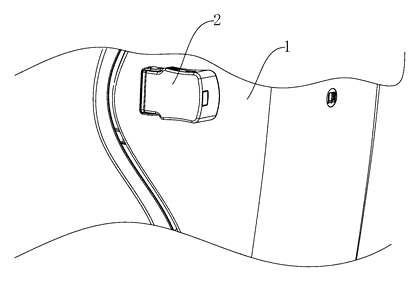
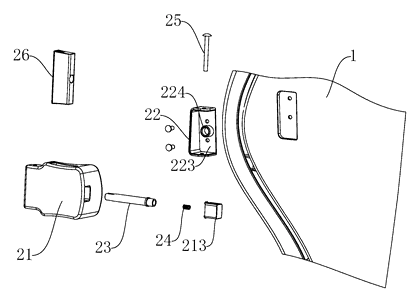
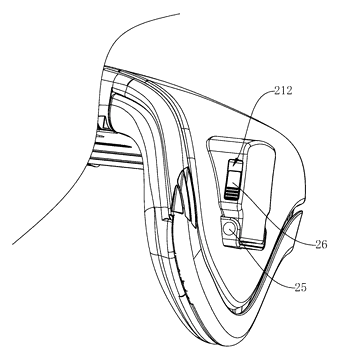
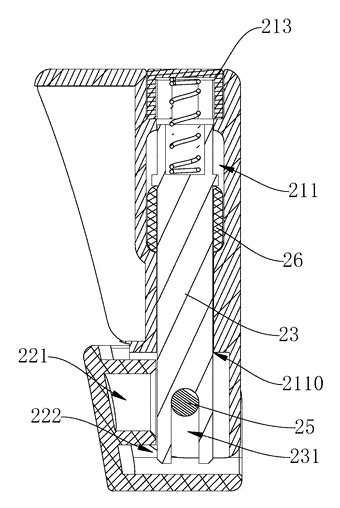
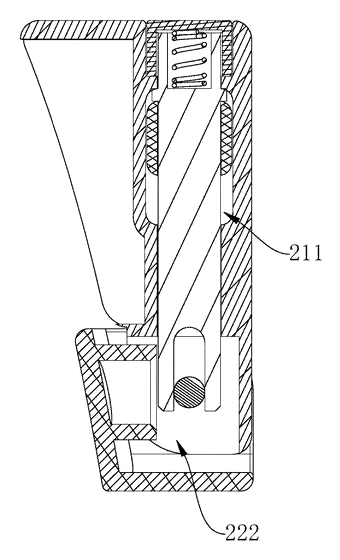
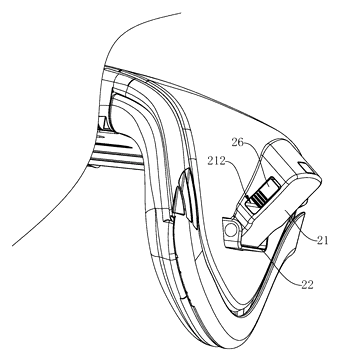
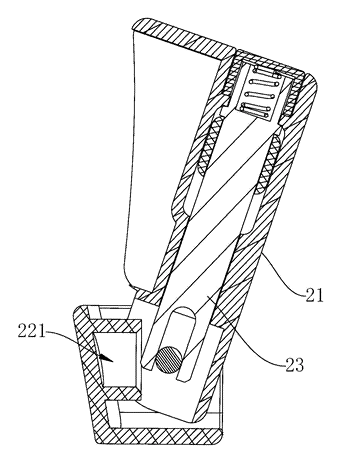
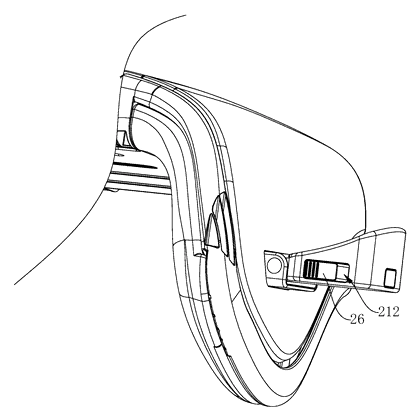
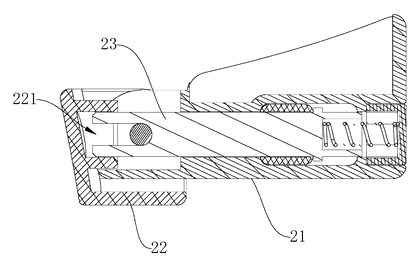
Drawings reproduced from the public patent document for reference.