
Patent CN207523494U
Updated October 29, 2026Ventilated Child Car Seat with Built-In Fan and Air Ducts
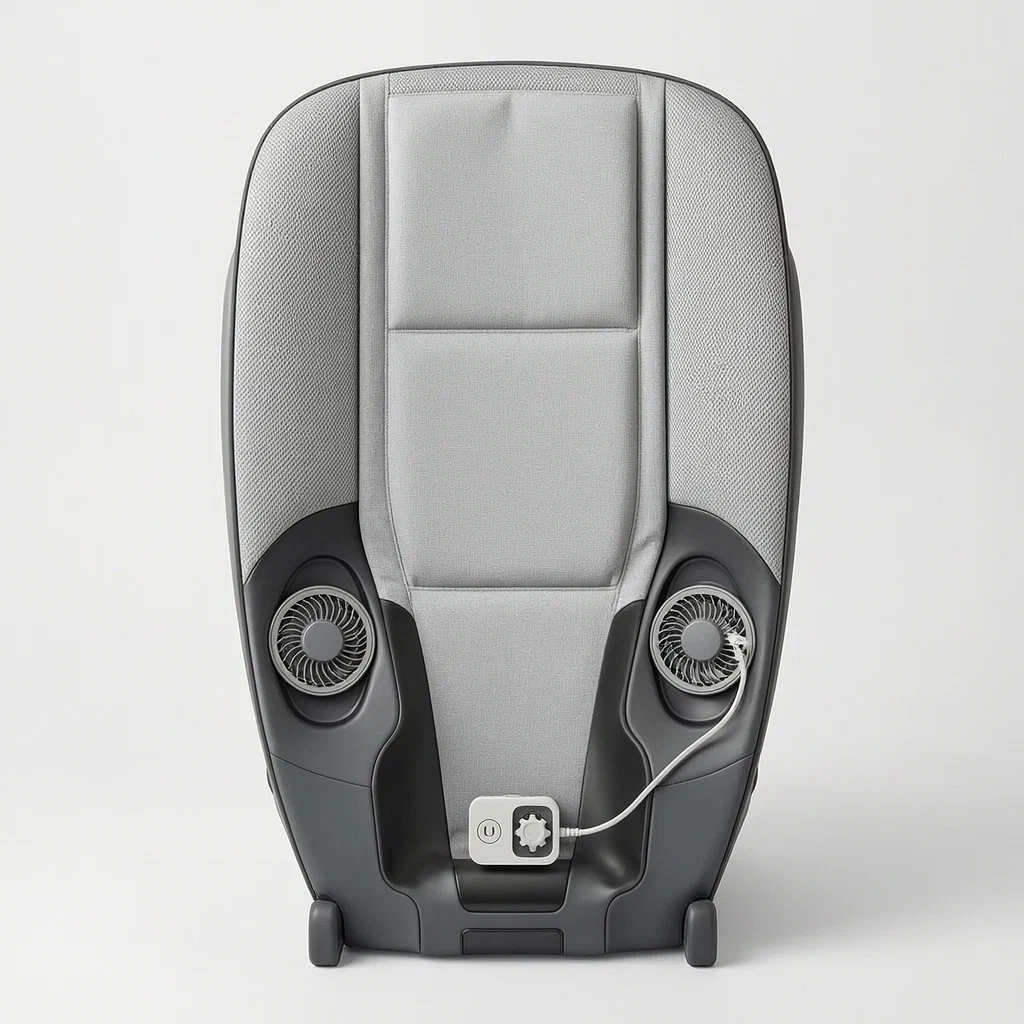
Children sitting in standard car seats often build up heat and sweat against the backrest because solid padding blocks airflow. This patent describes a cold-air structure built directly into the seat to move air across the child's back. An air duct is placed symmetrically on both sides at the lower part of the backrest, crossing through it. Inside the duct sits a smaller air channel. One end of this channel holds a fan clamped by a ferrule at the base opening, and the other end connects to a flat cloth sewn under the breathable fabric cover. Because the flat cloth and the duct are made of gas-impermeable material, the fan pushes air along the intended path instead of leaking through the padding. Raised support ridges arranged in parallel on the breathable fabric hold the cover slightly away from the flat cloth, leaving a gap for the air to travel. A control device wired to the fan allows speed adjustment, and power is supplied via a battery or a vehicle USB connection.
- China utility model - in force
- No filings outside China
- Child car seat ventilation
- Fan, air ducts, breathable fabric, USB or battery power
Splat! What let you down?
💨
Directed airflow
Gas-impermeable air ducts and a flat cloth channel fan air along the backrest without leaking into the padding.
⚙️
Adjustable fan speed
A wired control device with a switch and gear adjuster lets the user select the airflow rate.
🔌
Flexible power
The power connector supports direct battery connection or a vehicle USB supply.
🧵
Support ridges
Parallel raised ridges on the breathable fabric maintain an air gap for steady circulation.
Bring this product to market
- ✓ Patent vetted China-only family and legal status checked
- 2 Product brief · now How it works, uses and options written up
- 3 Prototype First samples for buyers to review
- 4 Pilot run Small first batch for launch customers
- 5 Volume production Repeat orders at scale
Buyer interest
– of 100 buyers needed to start prototyping
One click, no sign-up. Each vote is one real visitor, and products with the most interest go to prototyping first.
Build team: no members yet. Need a partner, co-funding or skills to build this? Join and we introduce the team once it forms.
The problem
Standard child car seats use thick foam padding and fabric covers to provide crash protection and comfort. In warm weather or during long drives, this padding traps body heat against the child’s back and waist. Sweat builds up quickly, making the child uncomfortable and restless. Parents often try external clip-on fans or cooling mats, but these add loose parts that can shift during travel or interfere with the seat’s harness system. A ventilation method built directly into the seat structure addresses this without adding aftermarket accessories.
The solution
This patent describes a cold-air structure integrated into the backrest of a child safety seat.
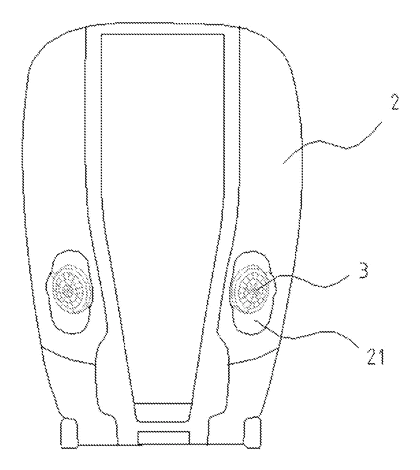
- Symmetrical air ducts are positioned at the lower part of the backrest on both sides, crossing through the seat structure toward the waist area of the user.
- Inside each duct runs a separate air channel. One end of the channel is fixed at an opening on the side of the base away from the seat.
- A fan is mounted at this base opening. A ferrule clamps onto the fan, securing the edge of the air cylinder between the fan and the ferrule.
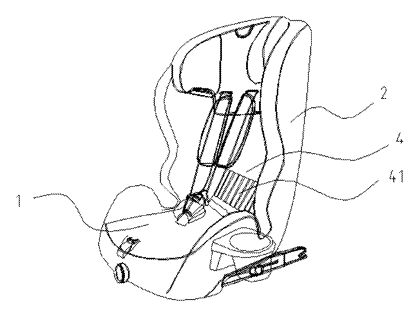
- The opposite end of the air channel connects to a flat cloth. All four sides of this flat cloth are sewn to the cloth cover on the backrest.
- The sewing area uses breathable fabric, allowing the pushed air to pass through to the child’s back.
- Both the flat cloth and the air ducts are made of gas-impermeable material, ensuring the air travels the full length of the path rather than escaping into the foam.
- Several raised support ridges are arranged in parallel and at intervals on the breathable fabric, holding the cover away from the flat cloth to maintain an air gap.
- A control device containing a switch and a gear adjuster is wired to the fan, allowing the user to select the output wind velocity.
- Power is delivered through a power connector that plugs into a battery or a vehicle USB port. A mesh storage bag on the side of the cloth cover holds the control device and connector.
Who it is for
- Child car seat manufacturers looking to integrate active cooling into their existing seat shells without redesigning the primary safety frame.
- Automotive accessory brands developing premium travel solutions for families who frequently drive in warm climates.
- Wholesalers and Amazon sellers sourcing differentiated baby products that address a common parental complaint about heat buildup.
- Baby product OEM buyers needing a documented structural design to hand to a factory for tooling and assembly.
How it works
The main parts
| No. | Part | What it does |
|---|---|---|
| 1 | Air duct | Symmetrically placed at the lower sides of the backrest; crosses through the seat. Made of gas-impermeable material. |
| 2 | Air channel | Runs inside the air duct; directs air from the fan to the flat cloth. |
| 3 | Fan | Fixed at the base opening; pushes air into the channel. Clamped by a ferrule. |
| 4 | Ferrule | Secures the edge of the air cylinder between itself and the fan. |
| 5 | Flat cloth | Connected to the end of the air channel; sewn on all four sides to the backrest cover. Gas-impermeable. |
| 6 | Breathable fabric | Located where the flat cloth is sewn; allows air to pass through to the user. |
| 7 | Support ridges | Parallel raised structures on the breathable fabric; maintain an air gap. |
| 8 | Control device | Wired to the fan; includes a switch and gear adjuster for fan speed. |
| 9 | Power connector | Wires to the control device; connects to a battery or vehicle USB. |
| 10 | Storage bag | Mesh bag on the cloth cover holding the control device and power connector. |
Operating steps
- Connect power - plug the power connector into a battery or the vehicle’s USB port.
- Turn on the fan - use the switch on the control device stored in the mesh bag.
- Adjust speed - use the gear adjuster to set the desired wind velocity.
- Airflow path - the fan pushes air through the air channel inside the gas-impermeable duct, into the flat cloth, and out through the breathable fabric. The support ridges keep the fabric lifted so air circulates evenly across the backrest.
Applications
Long-distance family road trips
During extended highway driving in summer, children in rear-facing or forward-facing seats press heavily against the backrest. The built-in fan moves air continuously through the gas-impermeable ducts, reducing sweat accumulation at the waist and back without requiring the driver to stop and adjust external accessories.
Daily school and daycare commutes
Short but frequent drives in warm urban environments cause heat to build up quickly inside parked cars. Parents can power the seat via the vehicle’s USB port as soon as they start the engine, providing immediate airflow through the breathable fabric before the cabin air conditioning reaches the rear seats.
Travel systems and stroller adapters
Some child seats click into stroller bases for walks outside the car. When used outdoors on warm days, the battery-powered option allows the fan to run independently of the vehicle, keeping air moving through the support ridges while walking through parks or shopping centers.
Rideshare and taxi use for families
Parents traveling with young children in rideshares cannot rely on the driver’s climate settings to reach the back seat effectively. A self-contained ventilation structure powered by a portable battery ensures the child has directed airflow regardless of the vehicle provided.
Where it is less suitable
- Infant carriers for newborns - very small infants require specific recline angles and padding densities that may conflict with routing rigid air ducts through the shell.
- Seats without accessible power - if neither a battery nor a USB source is available, the fan cannot operate, leaving the seat functioning as a standard padded seat.
- Wet or spill-heavy environments - liquid entering the fan housing or the air channels requires careful sealing not detailed in this utility model.
Frequently asked questions
How does the air reach the child’s back?
A fan mounted at the base pushes air into an air channel inside a gas-impermeable duct. The duct runs up the lower sides of the backrest and connects to a flat cloth sewn beneath a breathable fabric cover. The air passes through the breathable fabric, and parallel raised support ridges keep the fabric lifted to allow even circulation.
What powers the fan?
The patent describes a power connector that can attach directly to a battery or plug into a vehicle’s power supply via USB. A wired control device manages the connection.
Can the fan speed be adjusted?
Yes. The control device includes a switch and a gear adjuster on the same structure, allowing the user to select the appropriate wind velocity.
Where are the electronics stored when not in use?
A mesh storage bag is provided on the side of the cloth cover. The control device and the power connector are placed inside this bag.
Does this replace the car seat’s safety padding?
No. The patent describes an air structure added to the seat. The air ducts cross through the backrest, and the flat cloth is sewn to the existing cloth cover. The structural safety components of the child seat remain separate.
Is the material around the ducts breathable?
The air ducts and the flat cloth are specifically made of gas-impermeable material to prevent air from leaking into the foam. Only the fabric cover where the flat cloth is sewn uses breathable fabric to let the air reach the user.
Can this design be made and sold in the US?
The patent was filed only in China and is in force in China until at most 2027-09-07 (if annual fees are paid). It has no US counterpart, so it does not restrict manufacturing or sales in the United States. However, child car seats are strictly regulated in the US, and other patents on seat ventilation may exist, so a freedom-to-operate check and FMVSS 213 compliance testing are required before production.
Are you affiliated with the patent owner?
No. IP2M is an independent design and manufacturing service working from the public patent document.
Request a quote
Click Request a Quote below to see our email address - copy it, or open your email app with a ready-made message. Please mention patent CN207523494U in the subject.
Helpful details to include:
- Your company and channel (car seat brand, baby product wholesaler, Amazon seller, automotive accessory maker)
- Target seat model or shell dimensions for integration
- Power preference (USB vehicle power, standalone battery, or both)
- Fan specifications (desired airflow, noise limits)
- Fabric choices (colors, textures for the breathable cover)
- Estimated quantity and target price
- Timeline - when you need prototypes and certification testing to begin
You can also reach us at (332) 203-9997.
Explore this product
Interested in building this?
Tell us your target market, quantity and timeline. We reply with options for prototyping, small-batch runs or volume production.
Send your inquiry to
Please put CN207523494U in the subject line and tell us your company, country, estimated quantity and timeline.
Prefer to talk? Call (332) 203-9997.
More product-ready patents
All Baby & Kids patents →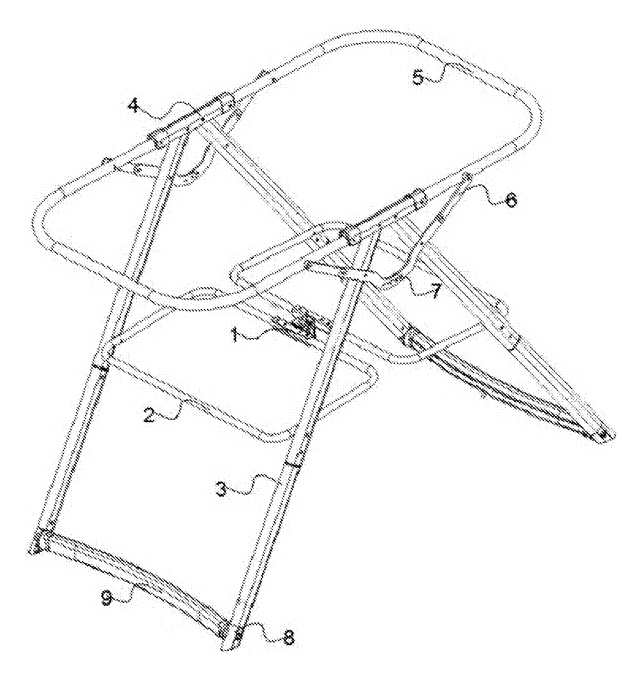
Baby & Kids
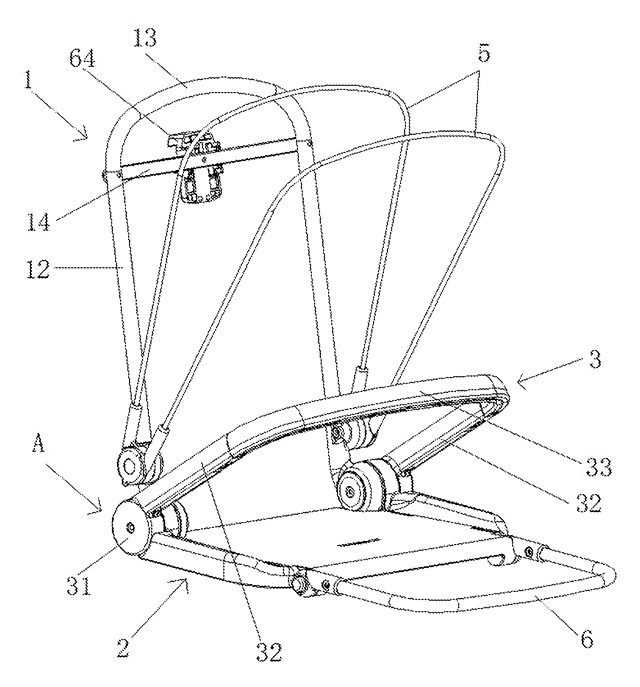
Portable Folding Rocking Bassinet Frame
Rocking bassinet frame that folds flat: telescopic hub, folding rails, two-part legs, curved rockers.
Patent CN206910143U
Baby & Kids
Stroller Seat with Linked Fold-Away Armrest
Stroller seat whose armrest unlocks and folds automatically when the backrest is folded forward.
Patent CN206856772U
Baby & Kids
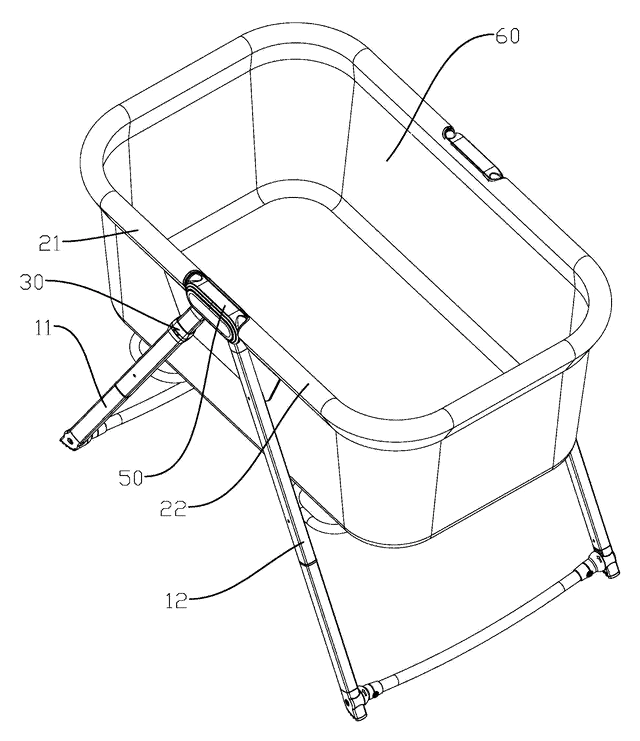
One-Motion Folding Baby Crib with Linked Frame
Portable baby crib whose top rails fold down automatically as the A-frame legs are closed.
Patent CN207202585U
Baby & Kids
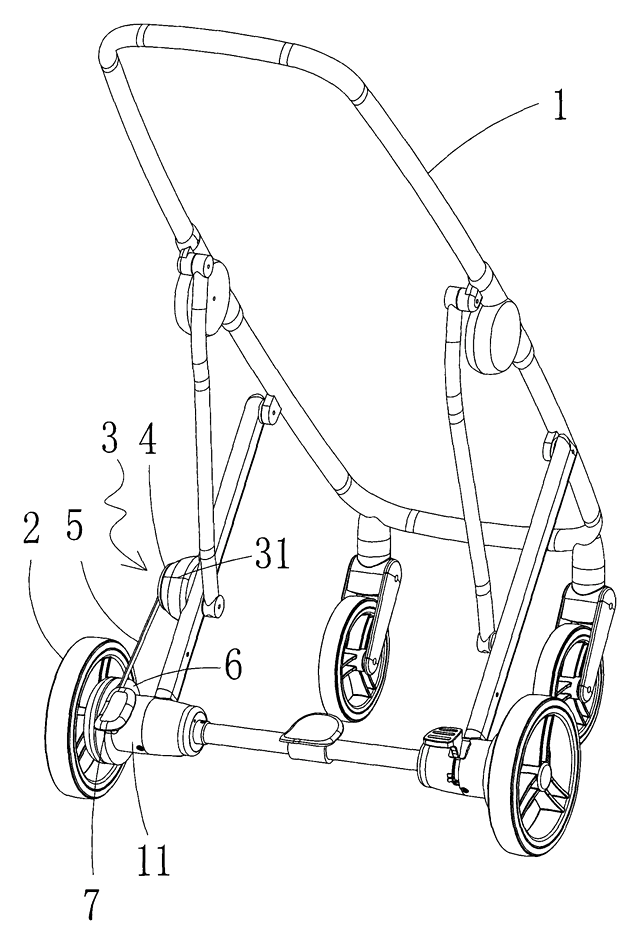
Motorized Rocking Stroller That Rocks by Turning Its Wheels
Baby rocker or stroller whose motor turns the wheels back and forth; a clutch switches to pushing.
Patent CN208119238U
Baby & Kids
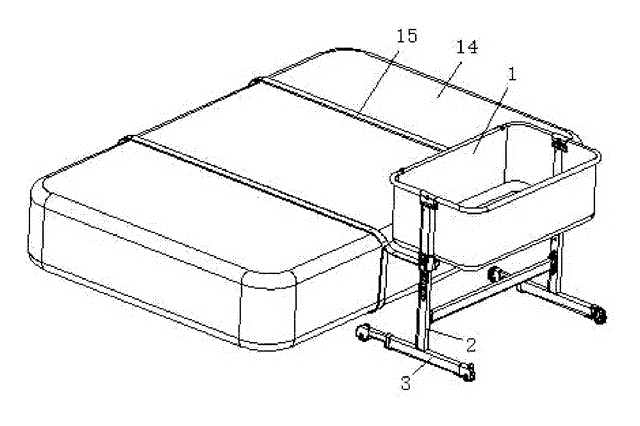
Bedside Crib Base with Spring-Loaded Telescoping Caster Legs
Bedside crib feet with spring-loaded sliding casters: wide when alone, short to sit flush at the bed.
Patent CN207168269U
Baby & Kids
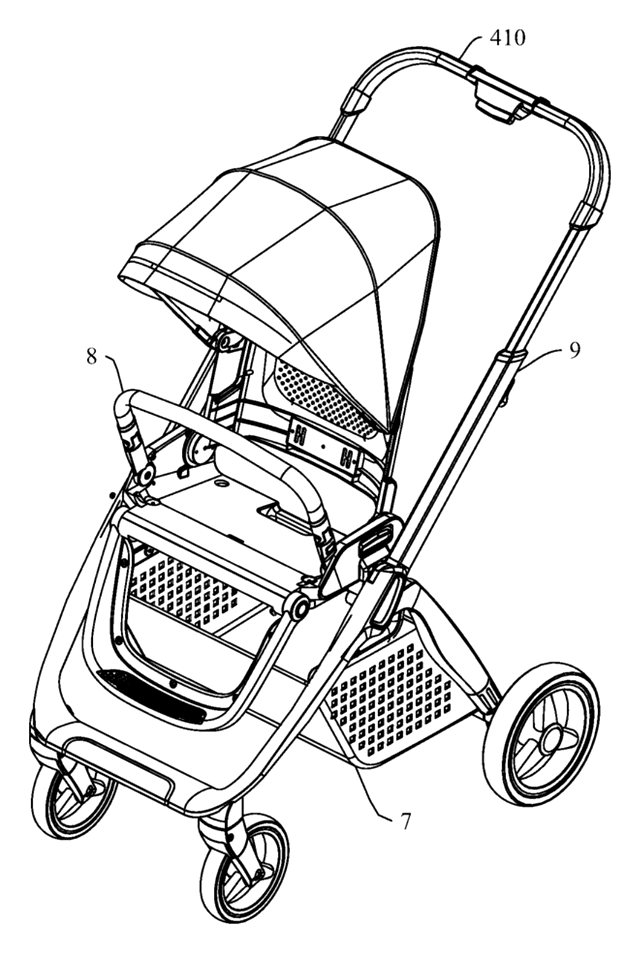
Compact-Fold Stroller with a Four-Bar Side Frame and Telescoping Handle
Stroller with four-bar side frames: handle and rear leg fold onto the front leg, handle telescopes.
Patent CN213799844U
Browse by category
- Apparel & Accessories (22)
- Baby & Kids (16)
- Bags & Luggage (9)
- Bath & Personal Care (16)
- Car Accessories (10)
- Furniture, Bedding & Storage (12)
- Garden & Outdoor (18)
- Health & Wellness (8)
- Home, Kitchen & Cleaning (24)
- Lighting (12)
- Packaging & Containers (6)
- Pet Products (6)
- Phone & Camera Accessories (4)
- Retail Display (13)
- School, Office & Art (19)
- Sports & Recreation (25)
- Tools & Workshop (27)
- Toys & Games (12)
This page is based on the public patent document CN207523494U, assigned to Ningbo Welldon Infant And Child Safety Technology Co Ltd. IP2M is an independent manufacturing service and is not affiliated with, endorsed by or licensed by the patent owner. Images marked as concept renderings are illustrations, not photos of an existing product. Patent status information is provided for reference only and is not legal advice; confirm freedom to operate for your market before production. Full disclaimer.