At a glance
| Patent number | CN207523494U (application CN201721143872) |
| Type | China utility model (实用新型) - protects product shape and structure |
| Original title | A kind of children’s seat cold wind structure (一种儿童座椅冷风结构) |
| Patent owner | Ningbo Welldon Infant And Child Safety Technology Co Ltd |
| Inventors | Shen Siyuan, Huang Jiayin |
| Filing date | 2017-09-07 |
| Grant date | 2018-06-22 |
| Status (China) | In force in China until at most 2027-09-07 (if annual fees are paid) |
| Patent family | Chinese filings only - no US, European, Japanese, PCT or other non-Chinese filings listed |
| Cited by | 4 later documents |
| Source | Google Patents (search for CN207523494U) |
What the claims cover, in plain language
Claim 1 - a cold air structure for a child seat comprising an air duct, a fan, an air channel and an air-permeable fabric. The air duct is symmetrically arranged on both sides of the backrest and crosses through it. The air channel sits inside the air duct. One end of the air channel is fixed at an opening on the side of the base away from the seat, where the fan is mounted. The other end connects to a flat cloth. All four sides of the flat cloth are sewn to the cloth cover on the backrest, and the material at the sewing location is breathable fabric.
Claim 2 - the air-permeable fabric is located at the opening of the cloth cover on the side of the air duct away from the base. Claim 3 - the air duct is arranged at the lower part of the backrest, positioning it at the user’s waist area. Claim 4 - a ferrule clamps onto the fan, with the edge of the air cylinder clamped between the fan and the ferrule. Claim 5 - a control device is wired to the fan and to a power connector. Claim 6 - multiple air ducts connect to the flat cloth, which is made of gas-impermeable material distinct from the breathable fabric. Claim 7 - a mesh storage bag on the cloth cover holds the control device and power connector. Claim 8 - several parallel, spaced raised support ridges are on the air-permeable fabric. Claim 9 - the control device includes a switch and a gear adjuster on the same structure. Claim 10 - the power connector attaches directly to a battery or to a vehicle power supply via USB.
This is a simplified reading for orientation only. The legal scope is defined by the exact claim wording in the official Chinese document.
What this means for US production
This patent was filed only in China and is currently in force in China until at most 2027-09-07 (if annual fees are paid). It has no US or other foreign counterpart. However, because it is active in China, making or selling this exact structure in China needs the owner’s permission.
Two points to settle early:
- Other patents may exist. Child car seat ventilation and cooling structures are actively developed globally. For example, Ningbo Baby First Baby Products Co., Ltd. holds later foreign filings citing this technology (e.g., WO2020011270A1), indicating broader patent activity in this field. A freedom-to-operate (FTO) review covering active airflow in child restraints is necessary before production.
- Electrical safety within a restraint system. Integrating a fan and wiring into a child safety seat introduces electrical components near a child. Wire routing, battery placement, and fan enclosure must be planned to ensure they do not compromise the seat’s structural integrity or create pinch points.
Customization and manufacturing
What can be customized
| Area | Options |
|---|---|
| Seat shell compatibility | Dimensions to fit specific car seat molds; duct routing adapted to the shell geometry |
| Fan specifications | Voltage, airflow rate, noise level; brushless DC motors for quiet operation |
| Fabric materials | Type of breathable fabric, color, texture; gas-impermeable flat cloth material |
| Control interface | Button style, dial type, placement of the switch and gear adjuster |
| Power options | USB cable length, battery pack capacity, connector types |
| Support ridges | Height, spacing, and shape of the raised ridges on the breathable fabric |
Things to plan for (US market)
- FMVSS 213 (49 CFR 571.213) - Federal Motor Vehicle Safety Standard for child restraint systems. Any added structure, including ducts and fans, must not interfere with dynamic sled testing, harness routing, or flammability requirements.
- CPSC regulations - general consumer product safety rules for children’s products, including third-party testing at a CPSC-accepted laboratory.
- FCC Part 15 - if the control device or fan motor emits radio frequency energy, or if wireless features are ever added, FCC compliance applies.
- UL / IEC standards for batteries - if a rechargeable battery pack is included, it must meet UN 38.3 for transport and relevant safety standards for lithium cells in consumer goods.
- California Prop 65 - plastics, fabrics, and electronic components must be screened for listed chemicals.
How a project runs
- Inquiry - define the target seat model, power source, airflow requirements and quantity.
- Design - engineer the duct path, fan mount, ferrule clamp, and fabric layout to fit the specific seat shell.
- Prototype - produce samples to test airflow distribution, noise levels, and physical fit within the seat cover.
- Testing - conduct safety tests to confirm the ventilation structure does not alter the seat’s crash performance or flammability rating.
- Production - manufacture the molded ducts, cut and sew the fabrics, assemble the fan and wiring, and perform final quality checks.
Quantities & timeline
Tooling is required for the plastic air ducts, the fan housing, the ferrule, and the raised support ridges if they are molded rather than sewn. Fabric cutting dies and sewing jigs are needed for the flat cloth and breathable cover. Certification testing for child restraint modifications takes significant time due to dynamic sled tests. Send us your target seat dimensions, power preference, airflow requirements, estimated quantity and timeline and we will reply with options.
Patent drawings
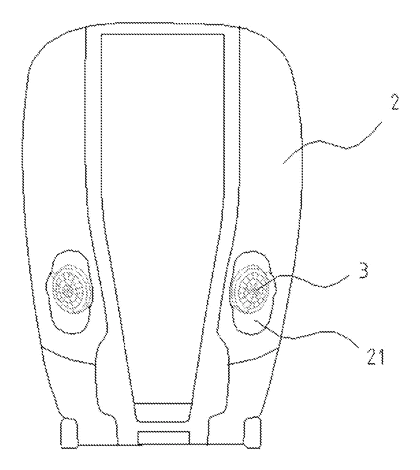
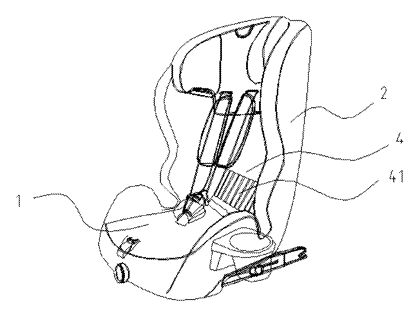
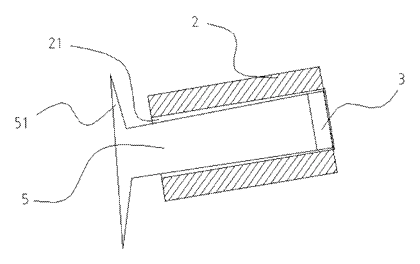
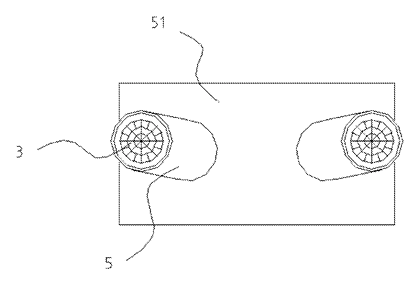
Drawings reproduced from the public patent document for reference.