
Patent CN207534578U
Updated October 26, 2026Angle Grinder with Built-In Dust Extraction and Oscillating Air Cooling
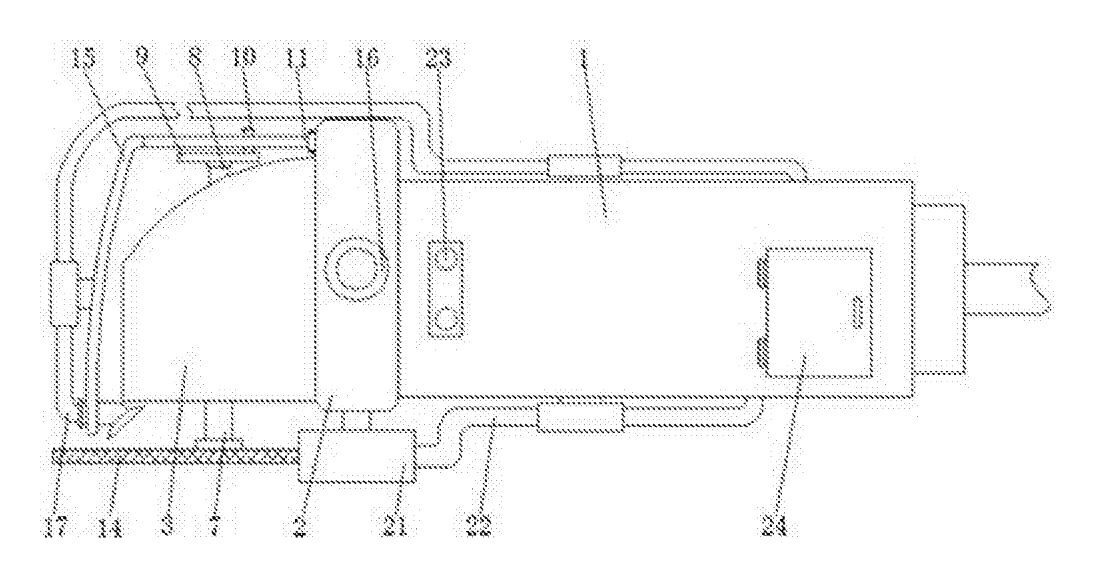
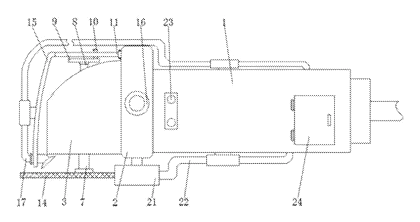
Standard angle grinders throw sparks and fine dust straight toward the operator, while the disc heats up during long cuts or heavy grinding passes. This design tackles both issues inside a single tool body. A protective cover over the grinding disc feeds debris through an exhaust column into an internal filter box equipped with a removable screen. An exhaust fan draws the dirty air in, traps the particles, and pushes the cleaned air out through a soft guide pipe aimed at the work zone. The pipe is not fixed in place; it sits on an oscillating deck that sweeps side to side, driven by a turntable and sliding bar linked to the tool's reducer shaft. The result is a continuous stream of filtered air moving across the disc to carry heat away, while the dust stays locked inside the box instead of drifting into the operator's breathing zone.
- China utility model - in force
- No filings outside China
- Power tools / multi-tools
- Integrated dust filtration and active disc cooling
Splat! What let you down?
🌬️
Sweeping air cooling
An oscillating deck drives a flexible air duct back and forth, directing filtered airflow across the grinding disc to reduce heat buildup.
🧹
Internal dust capture
A protective cover routes particles through an exhaust column into a filter box with a screen, keeping dust out of the surrounding air.
⚙️
Worm gear transmission
The motor drives the spindle through a worm gear and sleeve inside a dedicated transmission casing for reliable torque transfer.
🔧
Serviceable filter access
A hinged chamber door on the housing allows quick access to the filter box interior for cleaning or screen replacement.
Bring this product to market
- ✓ Patent vetted China-only family and legal status checked
- 2 Product brief · now How it works, uses and options written up
- 3 Prototype First samples for buyers to review
- 4 Pilot run Small first batch for launch customers
- 5 Volume production Repeat orders at scale
Buyer interest
– of 100 buyers needed to start prototyping
One click, no sign-up. Each vote is one real visitor, and products with the most interest go to prototyping first.
Build team: no members yet. Need a partner, co-funding or skills to build this? Join and we introduce the team once it forms.
The problem
When operators use conventional angle grinders for cutting metal, stone or tile, the spinning disc generates a dense cloud of fine particulate matter that drifts directly into their breathing zone. Prolonged exposure to this dust causes respiratory irritation and long-term health risks, especially in enclosed workshops. At the same time, friction from continuous grinding raises the disc temperature significantly, which can warp thin workpieces, glaze abrasive surfaces, and shorten the life of the wheel. External vacuum attachments exist, but they add bulk, require a separate hose and power source, and often get knocked loose on job sites. According to the patent, the objective is to provide an angle grinder that handles both dust extraction and disc cooling within the tool itself, protecting the user and maintaining stable grinding performance.
The solution
The tool combines a standard angle grinder layout with two integrated subsystems housed inside the main body. First, a protective cover surrounds the grinding disc and connects to an exhaust column. This column routes airborne particles directly into a filter box mounted at the base of the housing, where a screen traps the dust. Second, an exhaust fan on top of the filter box creates suction to pull debris in, then forces the cleaned air out through a soft guide pipe. Instead of pointing the pipe in one fixed direction, the design mounts it on an arc-shaped bracket attached to an oscillating deck. This deck pivots back and forth, driven mechanically by a turntable, sliding bar and groove linked to the output shaft of the tool’s speed reducer. As the deck sweeps, the guide pipe distributes a steady stream of cooled, filtered air across the entire face of the grinding disc, lowering its operating temperature while the dust remains captured inside the sealed box.
Who it is for
- Professional power tool brands looking to expand their lineup with grinders that offer built-in environmental controls without requiring external vacuum units.
- Metal fabrication shops where workers cut and grind steel all day, generating large volumes of metallic dust that must be contained to meet workplace safety standards.
- Tile and masonry contractors who need to manage silica dust during dry cutting operations on construction sites where dragging a separate dust extractor is impractical.
- Industrial equipment distributors supplying maintenance teams in automotive, aerospace or shipbuilding sectors, where localized dust control and tool longevity are critical purchasing factors.
How it works
The main parts
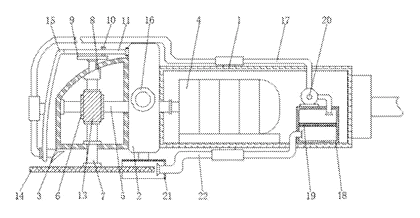
| No. | Part | What it does |
|---|---|---|
| 1 | Casing body | Main housing containing the motor, filter box and control interfaces. |
| 2 | Connecting plate | Joins the casing body to the transmission casing. |
| 3 | Transmission casing | Encloses the gear train that transfers power to the spindle. |
| 4 | Power motor | Provides rotational force to the drive link. |
| 5 | Drive link | Shaft connecting the motor output to the worm gear. |
| 6 | Transmission worm gear | Meshes with the worm screw sleeve to turn the spindle. |
| 7 | Swingle (spindle) | Rotates the grinding disc at the working end. |
| 8 | Retarder (speed reducer) | Reduces speed and increases torque; also drives the oscillating mechanism. |
| 9 | Turntable | Mounted on the reducer output shaft to convert rotation into lateral motion. |
| 10 | Sliding bar | Pin on the turntable that engages the sliding groove. |
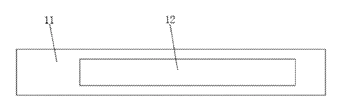
| 11 | Oscillating deck | Pivoting platform that swings back and forth when pushed by the sliding bar. |
| 12 | Sliding groove | Slot in the oscillating deck that receives the sliding bar. |
| 13 | Worm screw sleeve | Gear on the spindle that meshes with the transmission worm gear. |
| 14 | Mill (grinding disc) | The abrasive wheel performing the cutting or grinding work. |
| 15 | Arc mounting bracket | Curved support fixed to the oscillating deck holding the air duct. |
| 16 | Handle | Grip for the operator to hold and steer the tool. |
| 17 | Soft air-guide pipe | Flexible duct delivering filtered air onto the grinding disc. |
| 18 | Rose Box (filter box) | Chamber at the base of the housing where dust is collected. |
| 19 | Filter screen | Removable mesh inside the filter box that traps particles. |
| 20 | Exhaust fan | Draws dusty air into the filter box and pushes clean air out through the guide pipe. |
| 21 | Protective cover | Guard over the grinding disc that channels debris into the exhaust column. |
| 22 | Exhaust column | Tube routing dust from the protective cover into the filter box. |
| 23 | Control switch | Power button on the front of the casing body. |
| 24 | Chamber door | Hinged panel providing access to the filter box interior for cleaning. |
Operating steps
- Power on - the operator holds the handle (16) and presses the control switch (23), starting the power motor (4) and the exhaust fan (20) simultaneously.
- Grinding begins - the motor spins the drive link (5), which turns the transmission worm gear (6). The worm gear meshes with the worm screw sleeve (13) on the swingle (7), rotating the grinding disc (14) at working speed.
- Dust extraction - as the disc cuts or grinds, the protective cover (21) catches flying particles and directs them down the exhaust column (22) into the Rose Box (18). The air passes through the filter screen (19), leaving the dust trapped inside.
- Active cooling - the exhaust fan (20) pulls the filtered air from the Rose Box and pushes it out through the soft air-guide pipe (17). Meanwhile, the retarder (8) turns the turntable (9). The sliding bar (10) on the turntable rides inside the sliding groove (12), forcing the oscillating deck (11) to pivot left and right. This sweeps the air-guide pipe back and forth across the grinding disc, distributing the cooling airflow evenly.
- Maintenance - when the filter screen accumulates dust, the operator opens the chamber door (24) via its hinge to remove and clean the screen.
Applications
Metal fabrication and welding prep
Welders preparing steel joints generate clouds of iron oxide and abrasive dust. The integrated filter box captures these heavy metallic particles before they settle on nearby workbenches or electronics, while the sweeping air duct keeps the grinding disc from overheating during prolonged beveling passes.
Tile setting and masonry work
Cutting ceramic, porcelain or concrete produces fine silica dust that poses severe respiratory hazards. By pulling debris directly from the protective cover into the sealed Rose Box, the tool reduces the amount of airborne silica released into the room, making indoor tile installation safer without needing a bulky external vacuum cart.
Automotive body repair
Mechanics grinding weld seams or smoothing filler on car panels need precise control and minimal mess. The oscillating cooling airflow prevents the thin sheet metal from warping due to localized heat buildup, and the internal dust capture keeps abrasive residue out of the vehicle’s interior and paint booth environment.
Shipyard and heavy equipment maintenance
Maintenance crews working on large steel structures often operate in confined spaces where external dust extractors are difficult to position. A self-contained grinder with its own filtration and cooling loop allows workers to perform extended grinding tasks in tight compartments without trailing hoses or losing visibility to dust clouds.
Where it is less suitable
- Wet cutting applications - the internal filter box, fan and electrical components are designed for dry dust; introducing water would damage the screen and motor.
- Extremely fine chemical powders - if the material being ground produces toxic or reactive fumes rather than inert mechanical dust, a specialized HEPA or chemical filtration system is required beyond what this basic screen provides.
- Ultra-lightweight precision detailing - the added weight of the transmission casing, filter box, fan and oscillating mechanism makes this tool heavier than a bare mini-grinder intended for delicate craft work.
Frequently asked questions
How does the dust actually get from the disc into the filter box?
The grinding disc is surrounded by a protective cover (21) that acts as a collection hood. When the disc spins, it throws dust and air downward into this cover. From there, an exhaust column (22) — a tube routed through the main casing body — channels the debris-laden air directly into the Rose Box (18), which is the internal filter chamber located at the base of the tool.
Does the cooling air blow continuously in one spot?
No. The patent describes a mechanical sweeping action. An exhaust fan (20) pushes filtered air out through a soft guide pipe (17). This pipe is mounted on an oscillating deck (11) that pivots back and forth. The movement is driven by a turntable (9) and sliding bar (10) connected to the output shaft of the speed reducer (8). As the reducer turns, the sliding bar travels inside a groove (12) on the deck, physically sweeping the air duct side to side across the grinding disc to distribute the cooling effect evenly.
How do you clean or replace the filter?
A hinged chamber door (24) is built into the front side of the casing body, opposite the control switch. According to the patent description, this door allows the operator to open the filter box (18) directly, access the internal filter screen (19), and either tap out the accumulated dust or swap the screen entirely without disassembling the rest of the tool.
Is the exhaust fan powered by the main motor or a separate one?
The patent states that activating the control switch (23) causes both the power motor (4) and the exhaust fan (20) to start working. The exact electrical wiring — whether the fan runs off a tap on the main motor armature, shares the same circuit, or uses an independent micro-motor — is not detailed in the utility model and would be determined during the electrical engineering phase.
Can this design be scaled for larger grinding discs?
The mechanical principles apply to various sizes, but scaling up requires recalculating the worm gear ratio, increasing the fan’s static pressure to move more air through a larger filter area, and reinforcing the oscillating linkage to handle a wider sweep arc. Disc diameter and motor wattage are set in design based on the intended application.
Does the added filter box make the tool too heavy to hold?
The patent does not provide weight specifications. Integrating the filter box, fan, transmission casing and oscillating mechanism into the main housing inevitably adds mass compared to a bare grinder. Material selection — such as using glass-filled nylon instead of metal for the casings — and ergonomic handle placement are key factors to be confirmed on prototypes to ensure the tool remains manageable for overhead or extended use.
Can this design be made and sold in the US?
The patent was filed only in China and is in force in China until at most 2027-12-13 (if annual fees are paid), so it does not restrict the design in the US. However, power tools with integrated dust extraction and cooling systems may be covered by other US patents held by major tool manufacturers - see Patent & Production - so we recommend a freedom-to-operate check before volume production.
Are you affiliated with the patent owner?
No. IP2M is an independent design and manufacturing service working from the public patent document.
Request a quote
Click Request a Quote below to see our email address - copy it, or open your email app with a ready-made message. Please mention patent CN207534578U in the subject.
Helpful details to include:
- Your company and channel (power tool brand, industrial distributor, contractor supply)
- Target disc size and preferred motor type (brushed or brushless, corded or battery platform)
- Filtration requirements (standard screen vs. high-efficiency cartridge)
- Intended applications (metalworking, masonry, automotive) to guide compliance planning
- Estimated quantity and target price
- Timeline - when you would like functional prototypes and the first production shipment
You can also reach us at (332) 203-9997.
Explore this product
Interested in building this?
Tell us your target market, quantity and timeline. We reply with options for prototyping, small-batch runs or volume production.
Send your inquiry to
Please put CN207534578U in the subject line and tell us your company, country, estimated quantity and timeline.
Prefer to talk? Call (332) 203-9997.
More product-ready patents
All Tools & Workshop patents →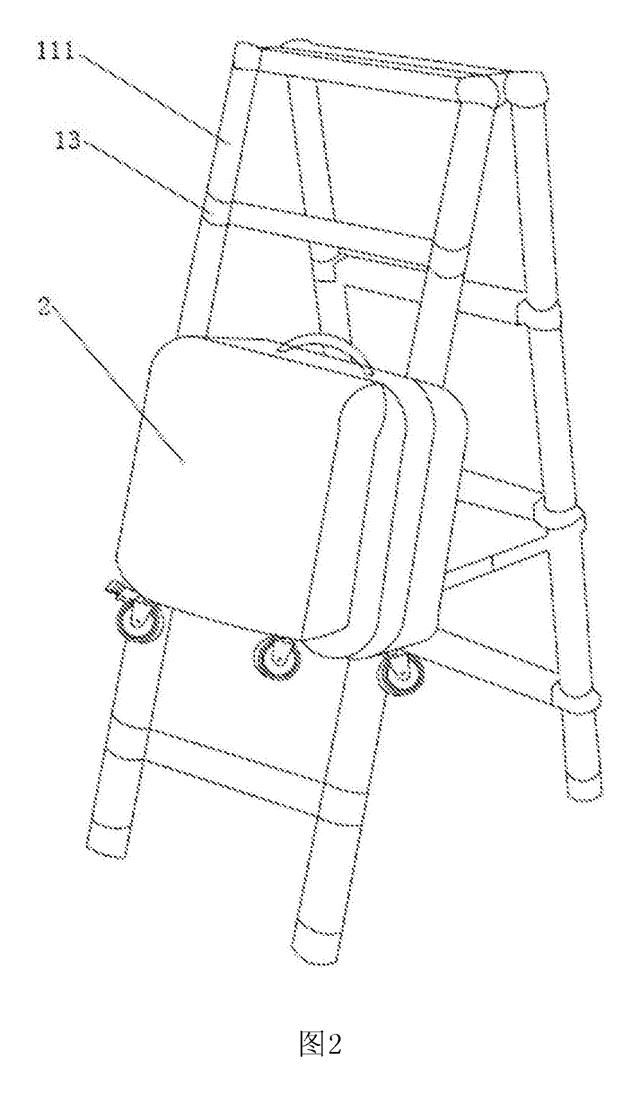
Tools & Workshop
Rolling Tool Box with Telescoping Step Ladder
Telescoping A-frame ladder with an attached rolling tool box that slides to your working height.
Patent CN206290197U
Tools & Workshop
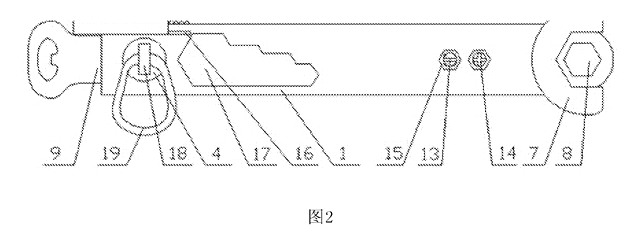
Folding 3-Handle Wrench Multi-Tool
Folding three-handle wrench multi-tool with magnetic screwdriver bits, saw, file and bottle opener.
Patent CN205290875U
Tools & Workshop
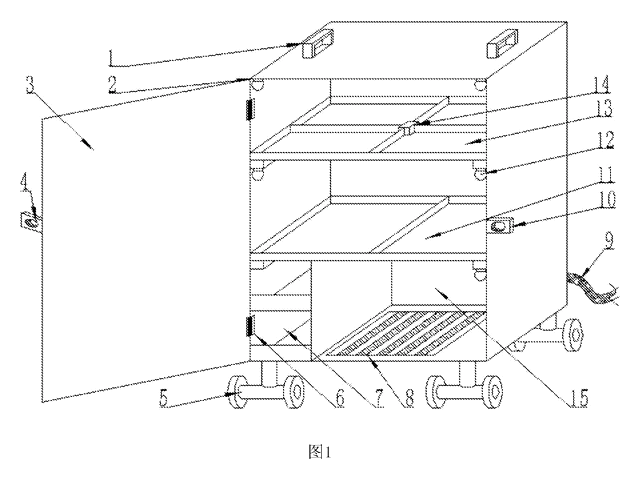
Rolling Auto-Repair Tool Cabinet with Built-In Lights
Lockable rolling tool cabinet for car repair with interior lights, a lubricant tray, parts drawers and a tool bay.
Patent CN205989314U
Tools & Workshop
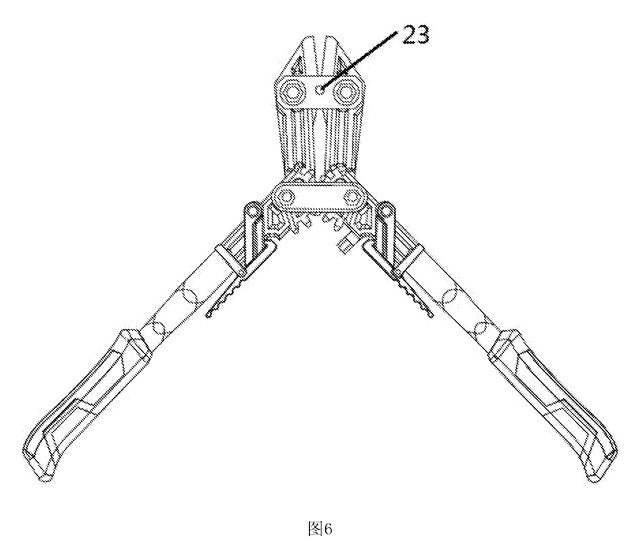
Wide-Opening Folding Bolt Cutter
Bolt cutter with linked, gear-meshing handles that open up to 190° and fold in half for storage.
Patent CN207206226U
Tools & Workshop
Nail-Holding Hammer with Fold-Out Drivers
Hammer with a nail-holding T-slot in the head and fold-out drivers stored in the handle.
Patent CN205254927U
Tools & Workshop
Modular Wrench with Screw-On Heads
Wrench handle with a three-way threaded hub for screw-on adjustable and hex heads, plus a pipe sleeve.
Patent CN206216564U
Browse by category
- Apparel & Accessories (22)
- Baby & Kids (16)
- Bags & Luggage (9)
- Bath & Personal Care (16)
- Car Accessories (10)
- Furniture, Bedding & Storage (12)
- Garden & Outdoor (18)
- Health & Wellness (8)
- Home, Kitchen & Cleaning (24)
- Lighting (12)
- Packaging & Containers (6)
- Pet Products (6)
- Phone & Camera Accessories (4)
- Retail Display (13)
- School, Office & Art (19)
- Sports & Recreation (25)
- Tools & Workshop (27)
- Toys & Games (12)
This page is based on the public patent document CN207534578U, assigned to Zhejiang Fujian Power Tools Co Ltd. IP2M is an independent manufacturing service and is not affiliated with, endorsed by or licensed by the patent owner. Images marked as concept renderings are illustrations, not photos of an existing product. Patent status information is provided for reference only and is not legal advice; confirm freedom to operate for your market before production. Full disclaimer.