At a glance
| Patent number | CN207884908U (application CN201820068866) |
| Type | China utility model (实用新型) - protects product shape and structure |
| Original title | A kind of hair dryer ceramic thick film heater (一种电吹风用陶瓷厚膜加热器) |
| Patent owner | Shenzhen Aite Jia Technology Co Ltd |
| Inventors | Hu Jin |
| Filing date | 2018-01-16 |
| Grant date | 2018-09-18 |
| Status (China) | Lapsed - terminated for non-payment of annual fees (recorded 2020-12-25) |
| Patent family | Chinese filings only - no US, European, Japanese, PCT or other filings listed |
| Cited by | 7 later documents |
| Source | Google Patents (search for CN207884908U) |
What the claims cover, in plain language
Claim 1 defines a hair dryer heater comprising a shell (1) with an inner ceramic thick film pipe (10) in the center. The inner pipe has heat-conducting plates (7) on its inner wall and heating tubes (9) on its outer wall. An outer ceramic thick film pipe (13) surrounds the heating tubes. Outside the outer pipe is an asbestos gauge (12), supported by symmetric damping springs (11). The shell contains a vacuum layer (8). A wind turbine (15) and constant-voltage controller (14) are inside the shell. At the outlet, baffles (3) are hinged to bars (2) that slide in rails (5) via blocks (6) to adjust airflow angle.
Claim 2 specifies three groups of damping springs, equally spaced. Claim 3 states the inner ceramic pipe is made of aluminium oxide. Claim 4 notes the heat-conducting plate length matches the inner pipe length. Claim 5 adds an air filter (4) at the inlet end of the inner pipe. Claim 6 describes a handle with finger recesses on the bottom of the shell.
This is a simplified reading for orientation only. The legal scope is defined by the exact claim wording in the official Chinese document.
What this means for US production
This patent was filed only in China and has lapsed due to non-payment of fees. It no longer restricts anyone in China either. It has no US or other foreign counterpart.
Two points to settle early:
- Other patents may exist. Hair dryer heating technologies are heavily patented globally, including various ceramic, halogen, and PTTC (Positive Temperature Coefficient) elements. A freedom-to-operate (FTO) review is needed before tooling to ensure the specific combination of double ceramic pipes, asbestos shielding, and sliding baffles does not infringe active US patents.
- Material Regulations. The use of asbestos is strictly regulated or banned in many jurisdictions, including the US. Modern equivalents (such as fiberglass or silica cloth) must be substituted, requiring re-validation of thermal performance.
Customization and manufacturing
What can be customized
| Area | Options |
|---|---|
| Insulation Material | Replace asbestos with fiberglass, mica, or high-temp ceramic fiber |
| Pipe Dimensions | Diameter and length of inner/outer ceramic pipes to fit specific fan sizes |
| Heating Element | Resistance wire type and winding pitch on the ceramic tube |
| Baffle Mechanism | Friction-fit sliders vs. detented positions for airflow angle |
| Controller | Integration of digital thermostat or analog constant-voltage modules |
| Housing Fit | Mounting flanges to match existing hair dryer chassis designs |
Things to plan for (US market)
- UL 1729 / IEC 60335 - Safety standards for household appliances; specifically covers heating element construction, creepage distances, and thermal protection.
- CPSC Requirements - General consumer product safety rules regarding electrical hazards and fire risks.
- EPA Asbestos Ban - Strict prohibition on asbestos in new consumer products; any historical reference to asbestos in the patent must be updated to compliant materials.
- RoHS Compliance - Restriction of hazardous substances in soldering and wiring components.
How a project runs
- Inquiry - Target wattage, physical dimensions, and airflow requirements.
- Design - Select compliant insulation materials, define ceramic pipe specs, and design the baffle slider mechanism.
- Prototype - Build samples with substitute insulation; test thermal output and surface temperature.
- Pilot run - Validate durability of damping springs and sliding rails under repeated drop tests.
- Production - Ceramic firing, resistor winding, insulation wrapping, spring assembly, and electrical integration.
Quantities & timeline
Ceramic pipes require specialized kiln firing processes. Heating elements need precision winding machinery. The sliding baffle mechanism involves injection molding for rails and blocks. Thermal testing cycles are critical for certification. Send us your target wattage, dimensions, insulation preferences, quantity and target price and we will reply with options.
Patent drawings
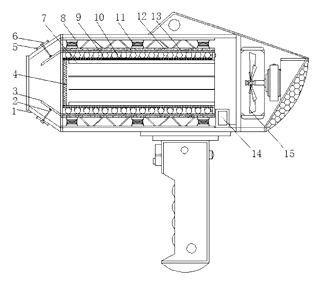
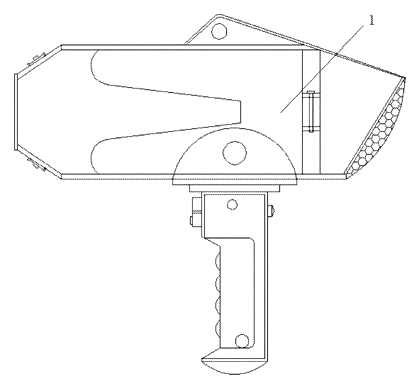
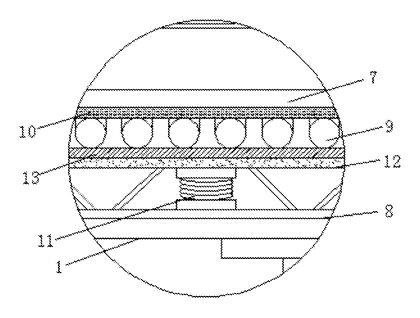
Drawings reproduced from the public patent document for reference.