
Patent CN208119237U
Updated November 3, 2026Motorized Rocking Chair and Trolley with Wheel-Driven Oscillation
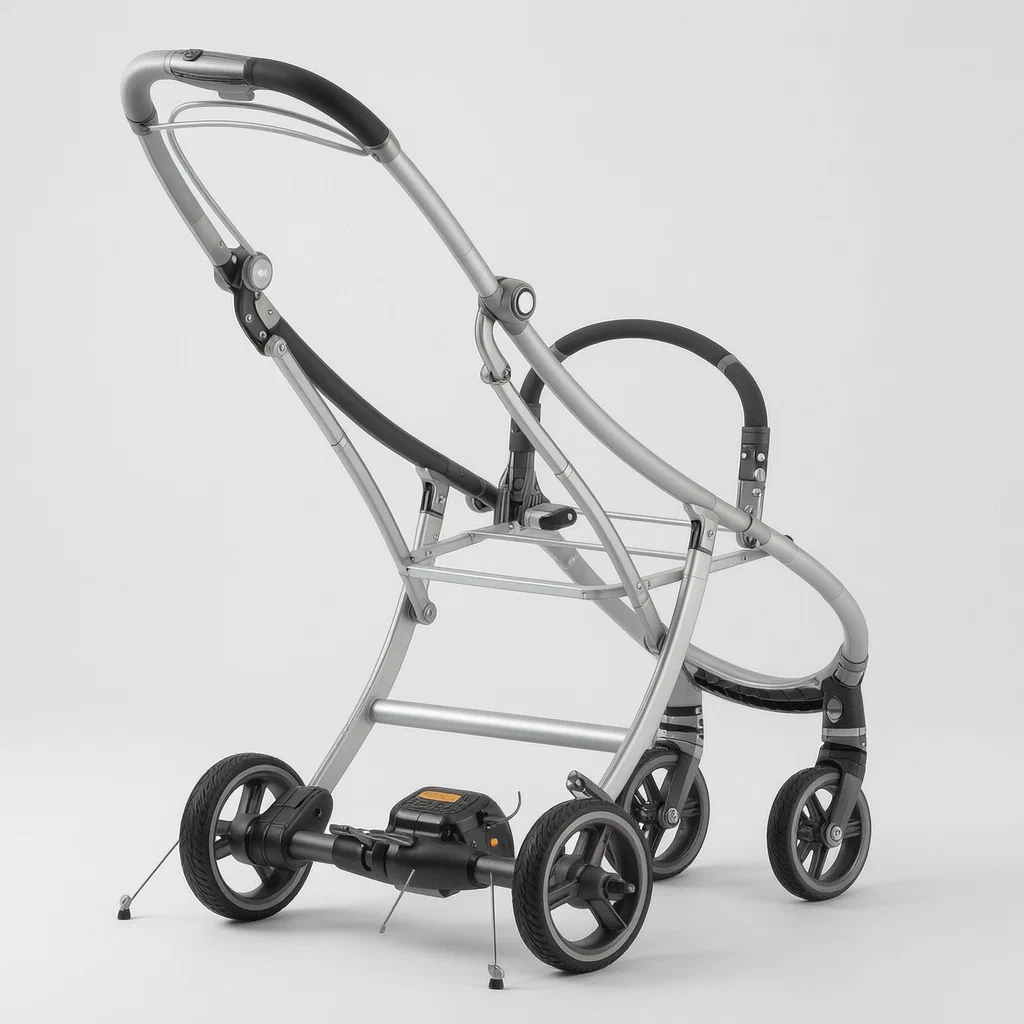
Traditional rocking chairs require manual pushing or complex linkage systems that add weight and cost. This design integrates the rocking function directly into the wheel assembly of a chair or trolley. By using a motor-driven crank mechanism attached to the wheel's mounting point, it converts rotational motion into the back-and-forth oscillation needed for rocking. The inclusion of a clutch device means the wheels can be locked for stable rocking or released for easy manual pushing, offering versatility without heavy structural changes.
- China utility model - active
- No filings outside China
- Baby gear & mobility
- Electric drive with mechanical clutch
Splat! What let you down?
🪑
Dual Function
Works as both a stationary rocking chair and a mobile trolley by switching the wheel lock.
⚙️
Wheel-Crank Drive
A motor rotates an eccentric arm that swings the wheel mount, creating natural rocking motion.
🔘
Manual Override
Integrated clutch disengages the drive, allowing wheels to roll freely when power is off.
📦
Compact Housing
Gearbox and battery box are integrated into the wheel mounting structure to save space.
Bring this product to market
- ✓ Patent vetted China-only family and legal status checked
- 2 Product brief · now How it works, uses and options written up
- 3 Prototype First samples for buyers to review
- 4 Pilot run Small first batch for launch customers
- 5 Volume production Repeat orders at scale
Buyer interest
– of 100 buyers needed to start prototyping
One click, no sign-up. Each vote is one real visitor, and products with the most interest go to prototyping first.
Build team: no members yet. Need a partner, co-funding or skills to build this? Join and we introduce the team once it forms.
The problem
Many baby products need to serve two distinct purposes: soothing a child through rocking and transporting them through movement. Standard solutions often involve separate mechanisms for each, leading to bulky frames and higher manufacturing costs. Additionally, traditional rocking chairs rely on curved runners that prevent mobility, while strollers lack built-in rocking features unless manually pushed back and forth. Parents and caregivers often struggle with devices that are difficult to convert between these modes or that require significant physical effort to operate the rocking function manually. There is a need for a simple, integrated mechanical solution that provides automated rocking while retaining the ability to move the unit freely.
The solution
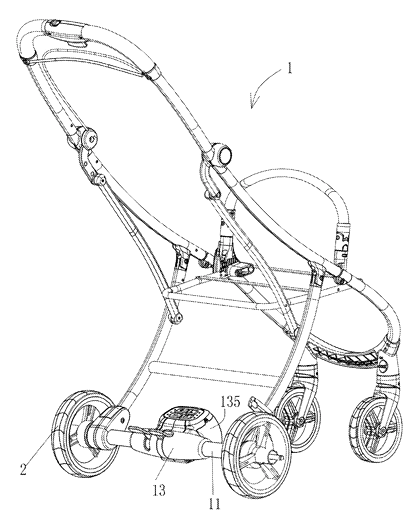
The patent describes a support frame with a seat frame and wheels attached via mounting parts. The core innovation is an electric driving mechanism fixed to the support frame that powers the rocking action directly through the wheel assembly.
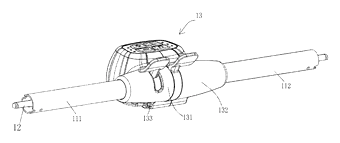
- A drive motor group is mounted on the frame. Its output shaft connects to a rotating member.
- A driving member (crank) is pivotally connected to the rotating member at an offset position.
- The other end of the driving member connects to a swinging member, which is pivotally linked to the wheel mounting part.
- As the motor turns the rotating member, the offset connection causes the swinging member to oscillate back and forth.
- This oscillation moves the wheel mount, causing the entire chair or trolley to rock.
- A clutch device is positioned between the swinging member and the wheel (or motor). When engaged, it locks the rocking mechanism; when disengaged, the wheels rotate freely for transport.
Who it is for
- Baby Gear Brands: Companies looking to differentiate their product lines with multi-functional furniture that doubles as transport equipment.
- Amazon Sellers: Merchants seeking lightweight, compact designs that reduce shipping volume by integrating motors into existing wheel structures rather than adding large external boxes.
- Wholesalers: Distributors needing versatile products that appeal to parents who want both a nursery rocker and a travel system component.
- Product Designers: Engineers exploring simple electromechanical linkages to replace complex gear trains or spring-loaded mechanisms.
How it works
The main parts
| No. | Part | What it does |
|---|---|---|
| 1 | Support Frame | Holds the seat and mounts the drive system. |
| 2 | Wheels | Provide mobility and serve as the pivot point for rocking. |
| 3 | Electric Drive Mechanism | Motor and gearbox that generate the oscillating force. |
| 31 | Drive Motor Group | Rotates the primary shaft. |
| 4 | Rotating Member | Converts motor rotation into circular motion. |
| 5 | Driving Member | Crank arm connecting the rotating member to the swing arm. |
| 6 | Swinging Member | Transfers the crank motion to the wheel mount. |
| 7 | Clutch Device | Engages/disengages the drive from the wheels. |
| 11 | Fixing Piece | Secures the mounting box to the frame. |
| 13 | Mounting Box | Houses gears and electronics near the wheel axis. |
Operating Steps
- Powered Mode: The user activates the switch. The clutch engages, locking the wheel’s rotational freedom relative to the rocking action. The motor turns the rotating member, which pushes and pulls the swinging member. This causes the wheel mount to oscillate, rocking the chair.
- Transport Mode: The user disengages the clutch. The swinging member decouples from the wheel’s locking mechanism. The wheels can now roll freely on the ground, allowing the unit to be pushed like a standard trolley.
- Stopping: Turning off the motor stops the oscillation. If the clutch remains engaged, the chair stays still but cannot roll easily; if disengaged, it remains stationary but ready for movement.
Applications
Nursery Rocking Chairs
Parents use this in bedrooms to soothe infants. The motor handles the repetitive motion, freeing hands for feeding or bonding, while the sturdy frame ensures stability during rocking.
Travel Systems
Families transition from car to home without changing seats. In “trolley” mode, the unit rolls smoothly over floors. In “chair” mode, it rocks gently in hotel rooms or living areas, reducing the need for portable cribs.
Senior Care Facilities
Caregivers utilize the dual function for patients with limited mobility. It provides therapeutic rocking for comfort and easy transport between rooms, simplifying daily care routines.
Retail Display Units
Stores use these as interactive demo stations. The automatic rocking attracts customer attention to baby products, while the wheels allow staff to reposition displays quickly during floor changes.
Where it is less suitable
- Heavy Industrial Use: The housings and small wheels described are not designed for high-load industrial carts or rough outdoor terrain.
- Silent Operation Requirements: The gear and motor noise may be unsuitable for environments requiring absolute silence, such as libraries or recording studios.
- Complex Terrain: Standard small wheels with this oscillating mount are best suited for smooth indoor floors; uneven surfaces may hinder the rocking mechanism.
Frequently asked questions
How does the rocking motion work?
The patent describes a motor that turns a rotating member. Attached to this is a crank arm (driving member) that connects to a swinging arm. Because the connection points are offset from the center, the rotation converts into a back-and-forth oscillation of the wheel mount, rocking the chair.
Can I push it like a normal stroller?
Yes. The design includes a clutch device. When you disengage the clutch, the rocking mechanism separates from the wheels, allowing them to roll freely. This lets you use the unit as a standard trolley without fighting the motor resistance.
Is the battery removable?
The patent mentions a battery box integrated into the mounting structure. Whether the battery is removable depends on the specific implementation chosen during manufacturing. For US exports, removable batteries are often preferred for charging convenience and UN 38.3 compliance.
What safety standards apply in the US?
If marketed for children, it must comply with ASTM F833 and CPSC 16 CFR 1227 for strollers. Electrical components must meet FCC rules if wireless, and batteries require UN 38.3 certification for transport.
How loud is the motor?
The patent does not specify noise levels. Noise depends on the motor type (brushed vs. brushless) and gear quality selected during production. Brushless motors with precision gears typically offer quieter operation suitable for nurseries.
Can the rocking speed be adjusted?
The patent describes a fixed mechanical linkage. Speed adjustment would require variable-speed motor controllers, which can be added during the customization phase. Amplitude is set by the offset distance of the crank arm.
Can this design be made and sold in the US?
The patent CN208119237U is a Chinese utility model with no US counterpart. Therefore, this specific patent does not restrict manufacturing or sales in the US. However, other patents may exist in this field (e.g., US10988158B2 by Titan Medical Inc.), so a freedom-to-operate check is recommended.
Are you affiliated with the patent owner?
No. IP2M is an independent design and manufacturing service working from the public patent document.
Request a quote
Click Request a Quote below to see our email address - copy it, or open your email app with a ready-made message. Please mention patent CN208119237U in the subject.
Helpful details to include:
- Your company and channel (baby brand, medical supplier, general retail)
- Target user (infant, toddler, adult/senior)
- Power source preference (rechargeable Li-ion, AA batteries, AC adapter)
- Control method (buttons, remote, app)
- Estimated quantity and target price
- Timeline - when you would like samples and the first shipment
You can also reach us at (332) 203-9997.
Explore this product
Interested in building this?
Tell us your target market, quantity and timeline. We reply with options for prototyping, small-batch runs or volume production.
Send your inquiry to
Please put CN208119237U in the subject line and tell us your company, country, estimated quantity and timeline.
Prefer to talk? Call (332) 203-9997.
More product-ready patents
All Baby & Kids patents →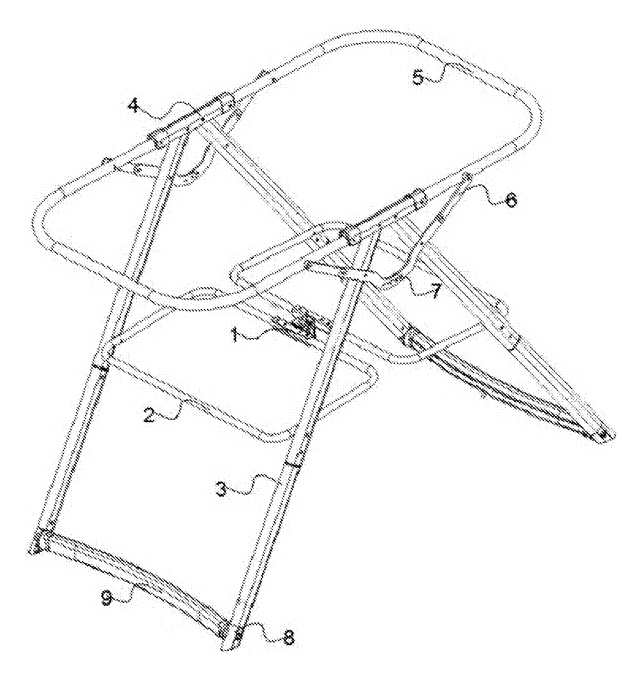
Baby & Kids
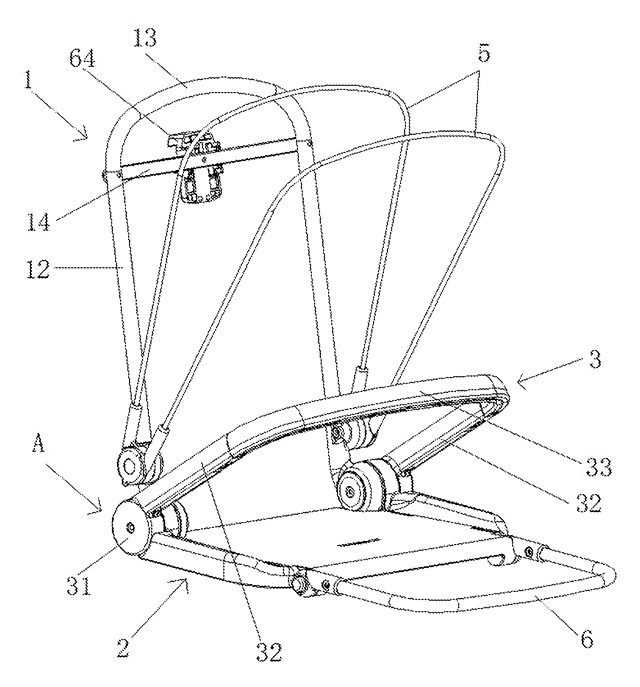
Portable Folding Rocking Bassinet Frame
Rocking bassinet frame that folds flat: telescopic hub, folding rails, two-part legs, curved rockers.
Patent CN206910143U
Baby & Kids
Stroller Seat with Linked Fold-Away Armrest
Stroller seat whose armrest unlocks and folds automatically when the backrest is folded forward.
Patent CN206856772U
Baby & Kids
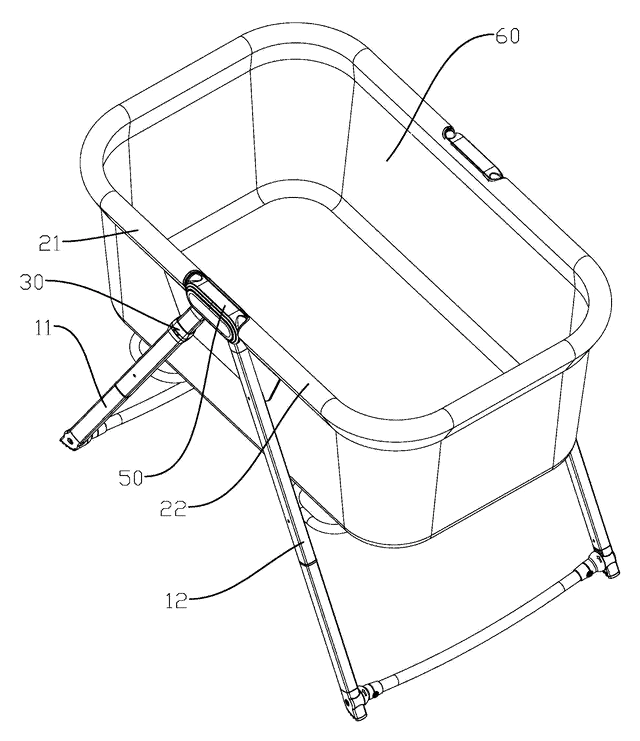
One-Motion Folding Baby Crib with Linked Frame
Portable baby crib whose top rails fold down automatically as the A-frame legs are closed.
Patent CN207202585U
Baby & Kids
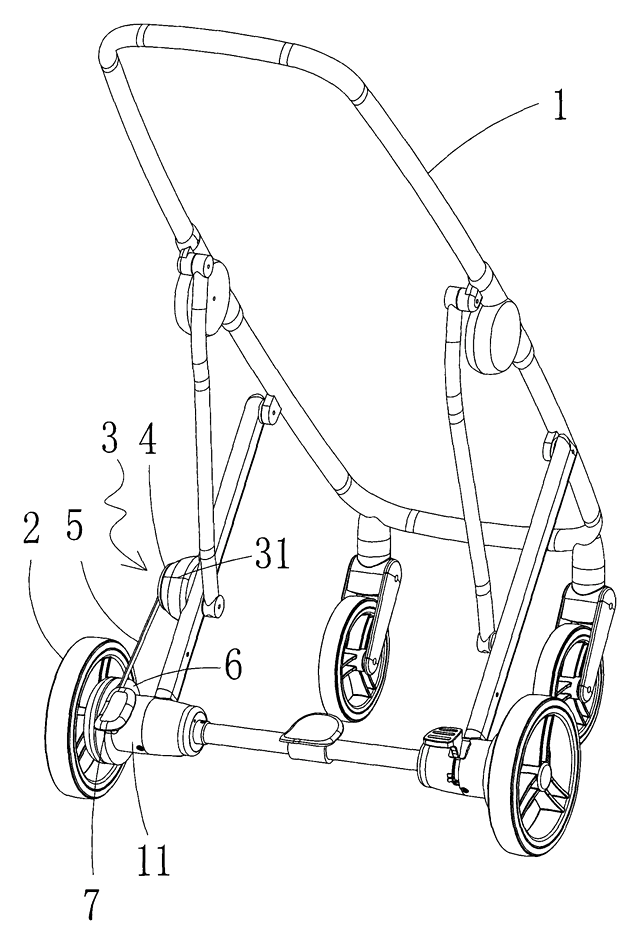
Motorized Rocking Stroller That Rocks by Turning Its Wheels
Baby rocker or stroller whose motor turns the wheels back and forth; a clutch switches to pushing.
Patent CN208119238U
Baby & Kids
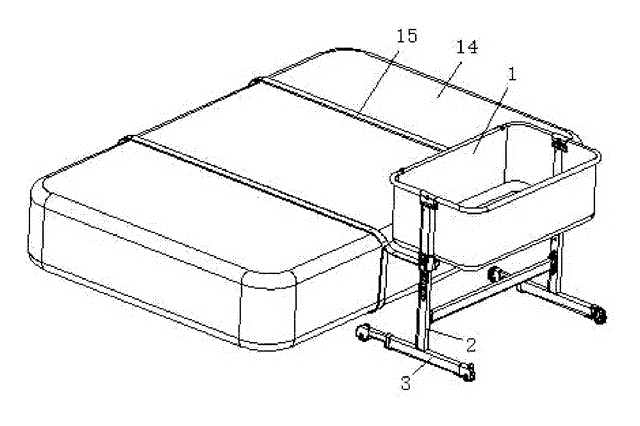
Bedside Crib Base with Spring-Loaded Telescoping Caster Legs
Bedside crib feet with spring-loaded sliding casters: wide when alone, short to sit flush at the bed.
Patent CN207168269U
Baby & Kids
Compact-Fold Stroller with a Four-Bar Side Frame and Telescoping Handle
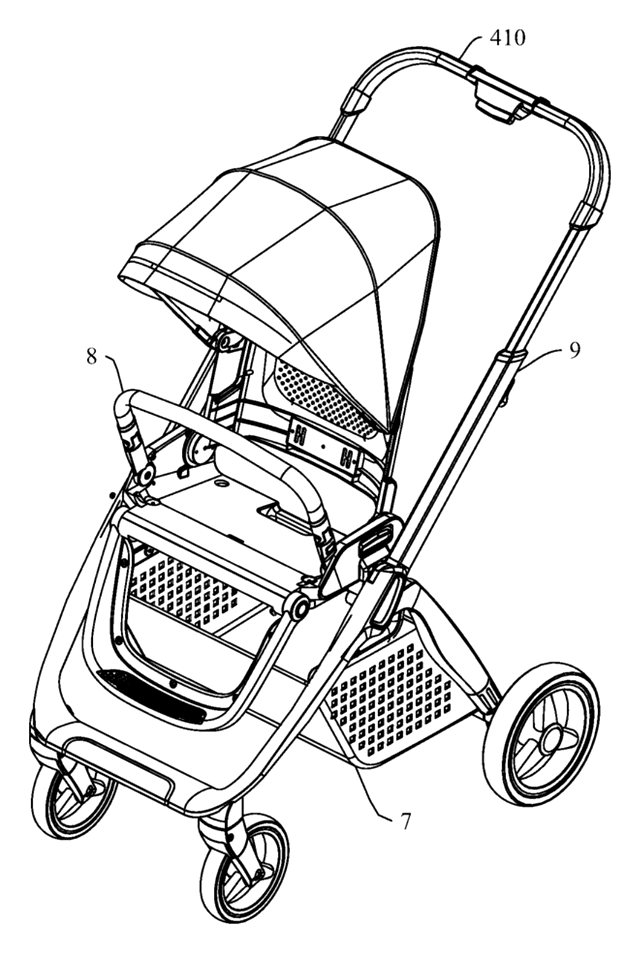
Stroller with four-bar side frames: handle and rear leg fold onto the front leg, handle telescopes.
Patent CN213799844U
Browse by category
- Apparel & Accessories (31)
- Baby & Kids (23)
- Bags & Luggage (13)
- Bath & Personal Care (22)
- Car Accessories (19)
- Furniture, Bedding & Storage (17)
- Garden & Outdoor (25)
- Health & Wellness (10)
- Home, Kitchen & Cleaning (36)
- Lighting (17)
- Packaging & Containers (9)
- Pet Products (8)
- Phone & Camera Accessories (6)
- Retail Display (18)
- School, Office & Art (25)
- Sports & Recreation (32)
- Tools & Workshop (41)
- Toys & Games (17)
This page is based on the public patent document CN208119237U, assigned to Zhongshan City Togyibaby Co Ltd. IP2M is an independent manufacturing service and is not affiliated with, endorsed by or licensed by the patent owner. Images marked as concept renderings are illustrations, not photos of an existing product. Patent status information is provided for reference only and is not legal advice; confirm freedom to operate for your market before production. Full disclaimer.