At a glance
| Patent number | CN208119238U (application CN201721930352) |
| Type | China utility model (实用新型) - protects product shape and structure |
| Original title | Rocking chair or trolley with wheels (一种带轮子的摇椅或手推车) |
| Patent owner | Zhongshan City Togyibaby Co., Ltd. (中山市童印儿童用品有限公司) |
| Inventors | Liu Weibing, Lan Zhengjun |
| Filing date | 2017-12-13 |
| Grant date | 2018-11-20 |
| Status (China) | Utility model given up by the owner (recorded 2025-03-21). Chinese law lets an applicant file a utility model and an invention application for the same design on the same day and keep only one. Google Patents lists a related Chinese record as active, so the design may still be protected in China |
| Patent family | Chinese filings only - no US, European, Japanese, PCT or other filings listed |
| Cited by | 6 later documents |
| Source | Google Patents (search for CN208119238U) |
What the claims cover, in plain language
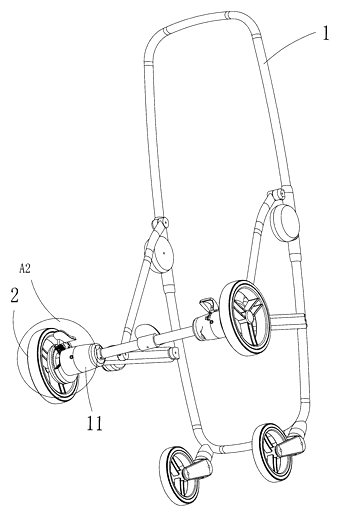
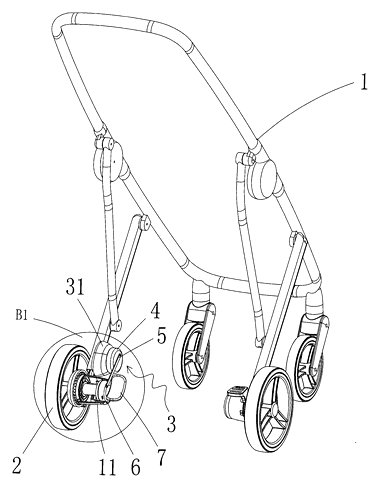
Claim 1 - a rocking chair or trolley with a support frame with a seat and wheel mounts, and an electric drive that turns the wheels back and forth. The drive has a motor on the frame, a rotating part on the motor shaft, a drive link pinned off-center to the rotating part, and a swing part pinned off-center to the link and mounted at the wheel. A clutch sits between the swing part and the wheel, or between the swing part and the motor.
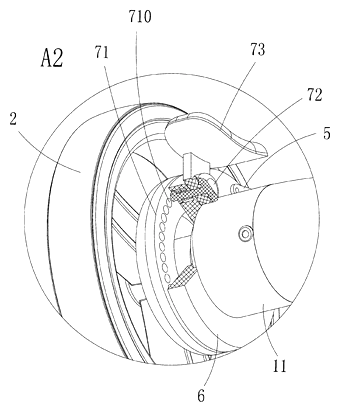
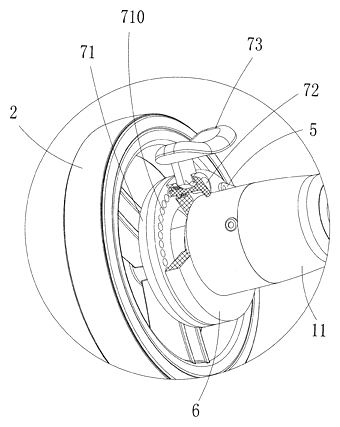
Claims 2-3 - the clutch has a lock ring with holes on the wheel, a lock pin that enters a hole, a return spring and a clutch switch with a raised part, a recess and a sloped or curved transition that pushes the pin. Claims 4 onward - further features described in the patent (43 claims in total): a sliding lock core, the drive box on a cross bar between the wheels, drive and battery boxes beside the wheels, and a brake device with a brake pin and a brake actuator.
This is a simplified reading for orientation only. The legal scope is defined by the exact claim wording in the official Chinese document.
What this means for US production
This utility model was filed only in China and has been given up, but a related Chinese record is listed as active, so making or selling this design in China may still need the owner’s permission. There is no US or other foreign counterpart, so these filings do not restrict the design outside China.
Before production, keep in mind:
- Other patents may exist. Motorized strollers, self-rocking bassinets and infant swings are actively patented by large juvenile-products companies, and later filings by stroller makers cite this patent. Have a freedom-to-operate (FTO) search done by a US patent attorney before volume production.
- Product classification. A US version marketed as a stroller, an infant rocker or a bassinet falls under different federal standards; the choice shapes the design.
Customization and manufacturing
What can be customized
| Area | Options |
|---|---|
| Base product | Stroller, pram with bassinet, or wheeled infant rocker |
| Drive | Motor size, rocking amplitude and speed settings, timer, quiet gearbox |
| Clutch | Manual switch, foot pedal or automatic engagement |
| Power | Removable rechargeable battery, USB-C charging |
| Brake | Manual foot brake plus optional electric brake |
| Extras | App or remote control, sound and lullabies, canopy, fabrics |
Things to plan for (US market)
- Strollers - 16 CFR 1227 (ASTM F833) for carriages and strollers, including brake, stability and locking tests.
- Infant rockers or bassinets - if marketed for rocking or sleep, the CPSC mandatory rule for that product type applies (for example 16 CFR 1218 for bassinets); the Safe Sleep for Babies Act bans inclined sleepers.
- CPSIA - Children’s Product Certificate, third-party testing, lead and phthalate limits and tracking labels; product registration card under 16 CFR 1130.
- Battery and electronics - UL 2054 or UL 62133 cells, UN 38.3 transport testing, FCC Part 15 for the motor controller and any wireless remote.
- Motion limits - rocking amplitude and speed, pinch points at the drive and clutch, and a reliable brake when stopped are tested on prototypes.
How a project runs
- Inquiry - base product, drive features, target price and quantity.
- Design - frame, drive box, clutch and brake engineered to the target US standard.
- Prototype - working samples for motion, noise, battery life and safety tests.
- Pilot run - small batch with third-party CPSC testing and electronics certification.
- Production - volume production, packaging and shipping.
Quantities & timeline
The project needs frame tooling, injection molds for the drive and battery boxes, clutch and brake parts, a motor and gearbox supplier, a controller board and fabric patterns, plus juvenile-product and electronics testing. Send us your base product, features, quantity and target price and we will reply with options.
Patent drawings
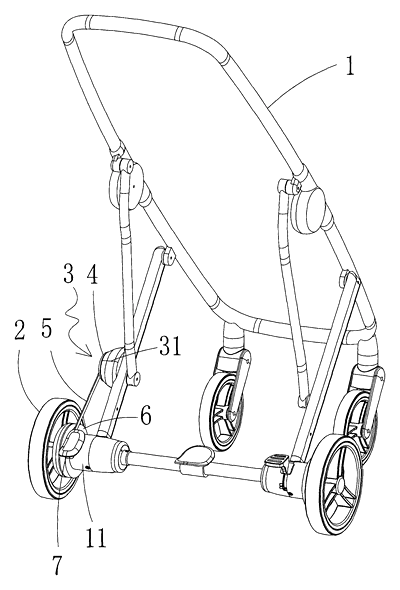
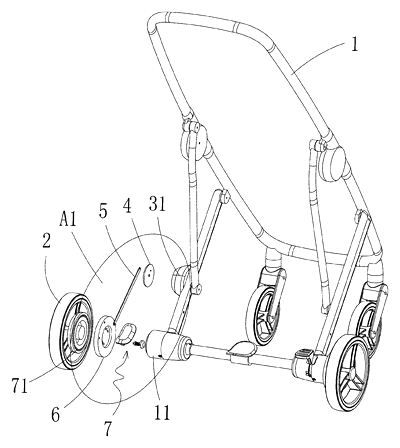
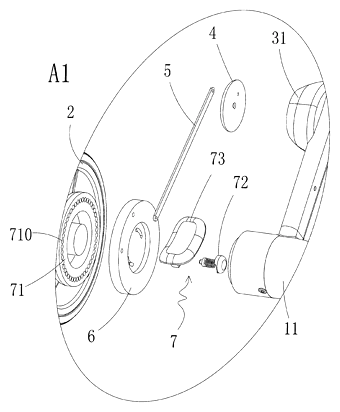
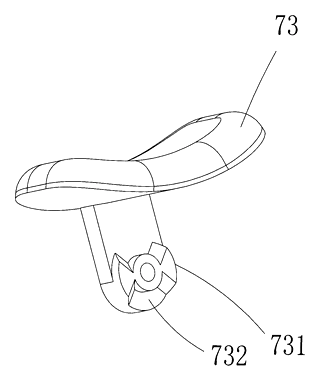
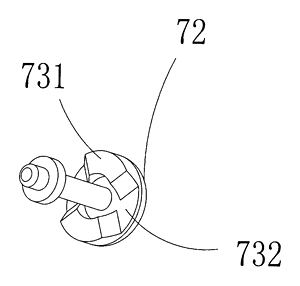
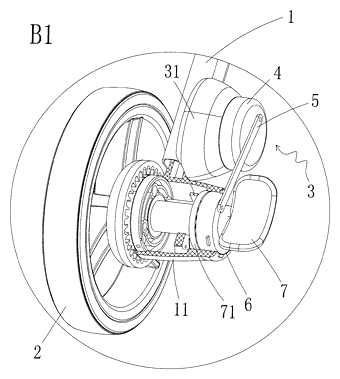
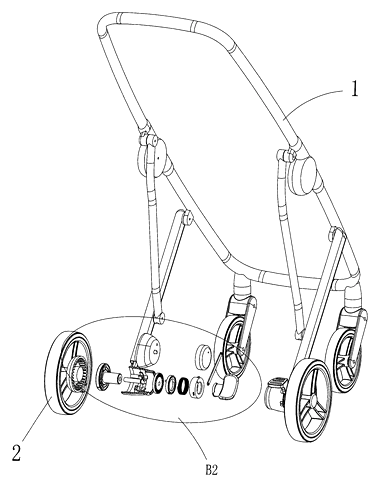
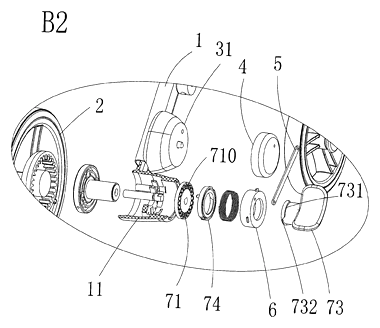
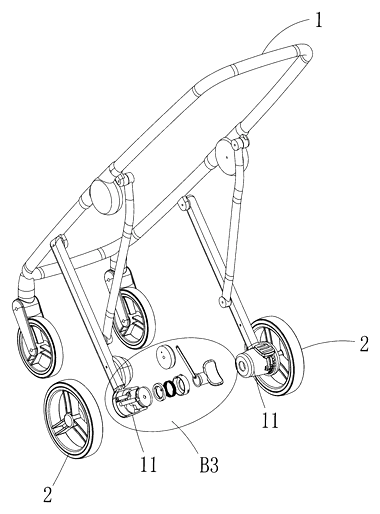
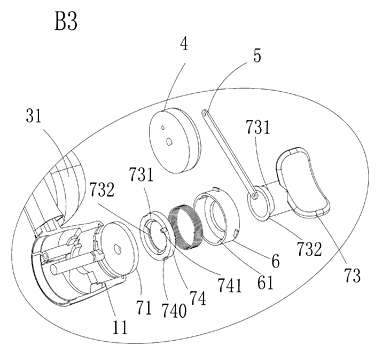
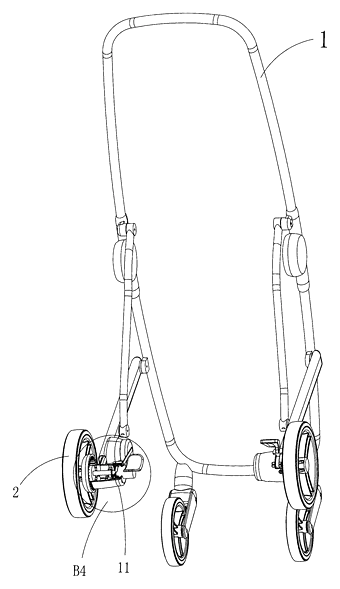
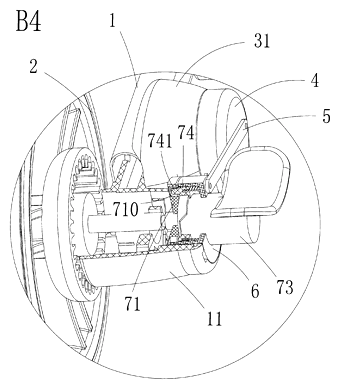
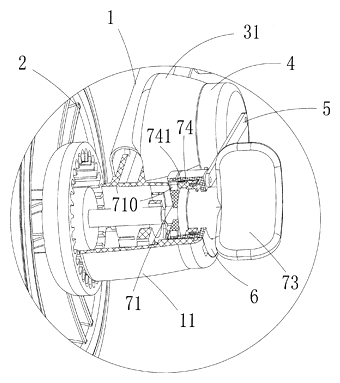
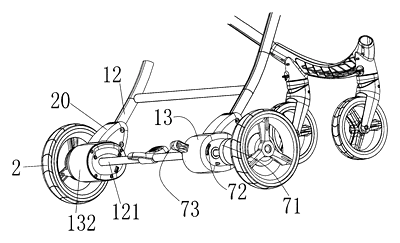
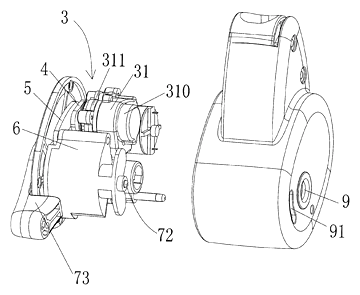
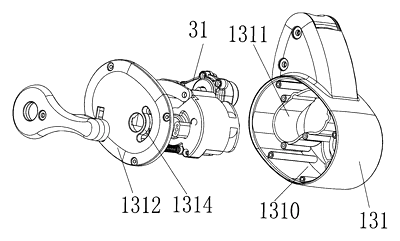
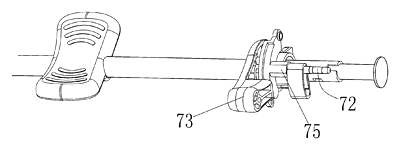
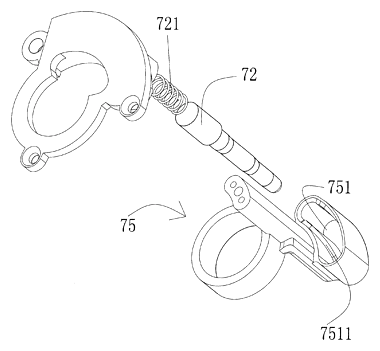
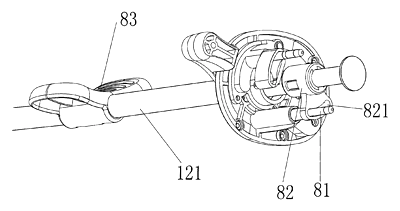
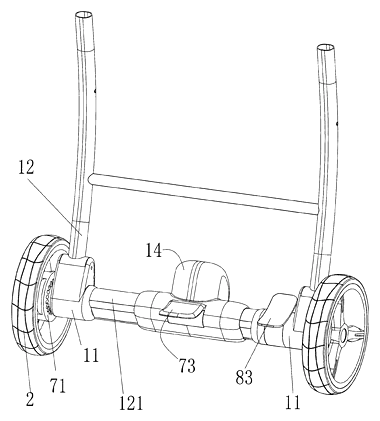
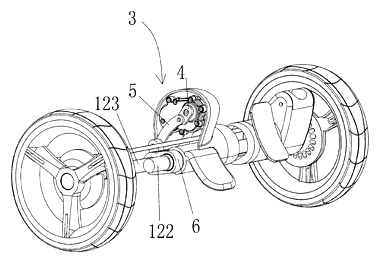
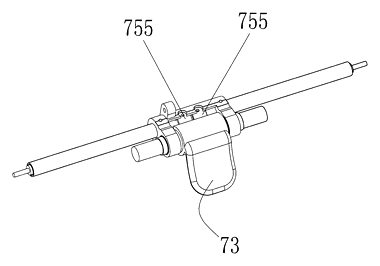
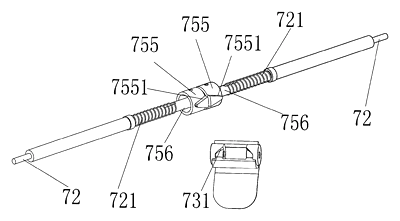
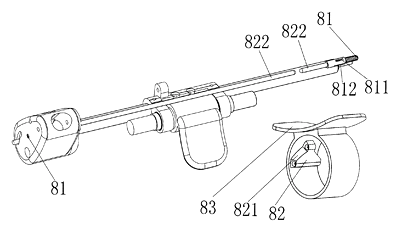
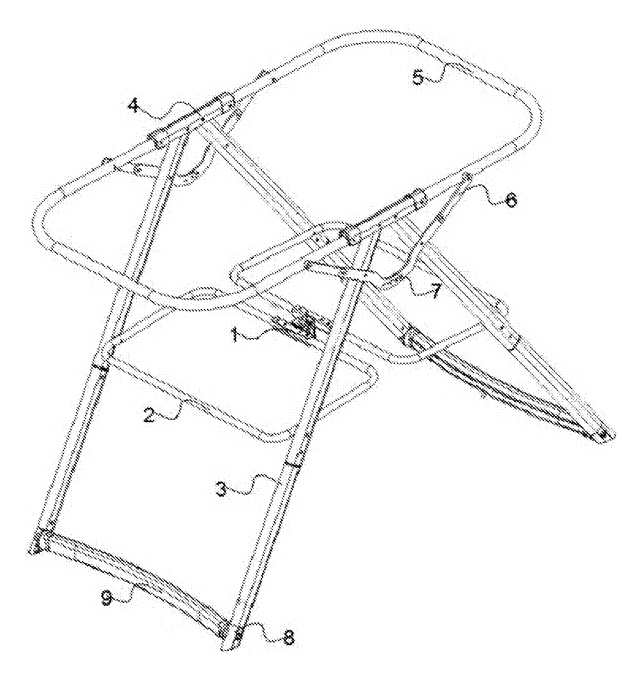
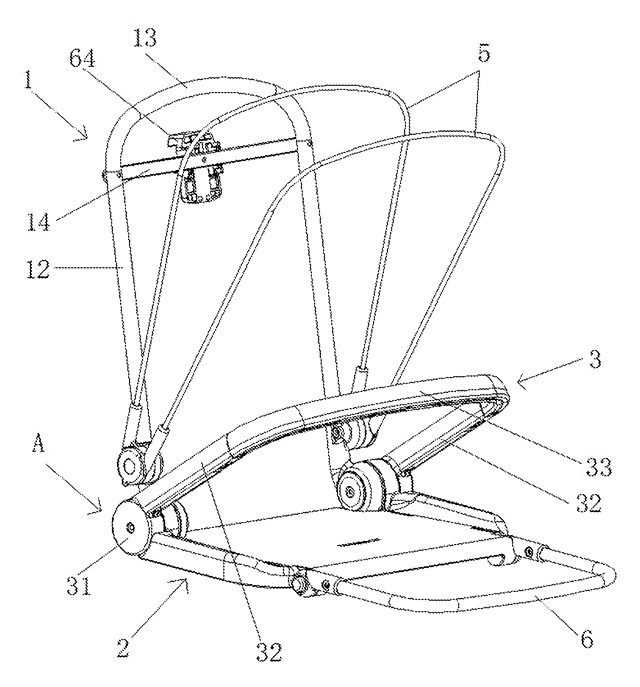
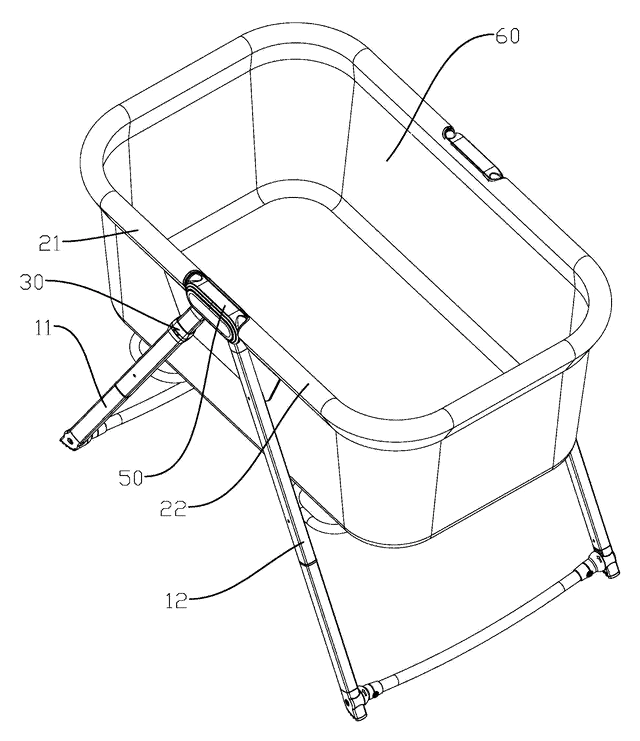
Drawings reproduced from the public patent document for reference.