
Patent CN208355064U
Updated October 25, 2026Dual-Zone Split-Spring Mattress with Removable Fabric Cover
Couples often disagree on mattress firmness, forcing a compromise that leaves both sides unsatisfied. This design solves the problem by splitting the mattress width exactly in half. One side uses individually pocketed springs that compress independently to isolate movement, while the other side uses traditional interconnected springs that deform together as a unit. Both spring types reach the same top height, creating a level sleeping surface inside a single zip-off cover.
- China utility model - in force
- No filings outside China
- Bedroom furniture
- Pocket springs, standard springs, cotton padding, quilted cover
Splat! What let you down?
🛏️
Two spring systems, one mattress
The width is split evenly between independent pocket springs and interconnected standard springs.
✂️
Sewn partition cloth
A divider stitched inside the rectangular fabric bag separates the two spring zones cleanly.
🧼
Zip-off outer cover
The quilted mattress cover attaches via a zipper so it can be removed and washed.
📏
Flush spring tops
Both spring types are designed to reach the exact same horizontal plane for an even surface.
Bring this product to market
- ✓ Patent vetted China-only family and legal status checked
- 2 Product brief · now How it works, uses and options written up
- 3 Prototype First samples for buyers to review
- 4 Pilot run Small first batch for launch customers
- 5 Volume production Repeat orders at scale
Buyer interest
– of 100 buyers needed to start prototyping
One click, no sign-up. Each vote is one real visitor, and products with the most interest go to prototyping first.
Build team: no members yet. Need a partner, co-funding or skills to build this? Join and we introduce the team once it forms.
The problem
When two people share a bed, they rarely agree on how firm the mattress should feel. Buying two separate twin mattresses creates a gap in the middle, while a single compromise mattress often leaves one sleeper uncomfortable. According to the patent, the goal is to build a single integrated mattress that provides two different support experiences side by side without sacrificing structural stability or hygiene.
The solution
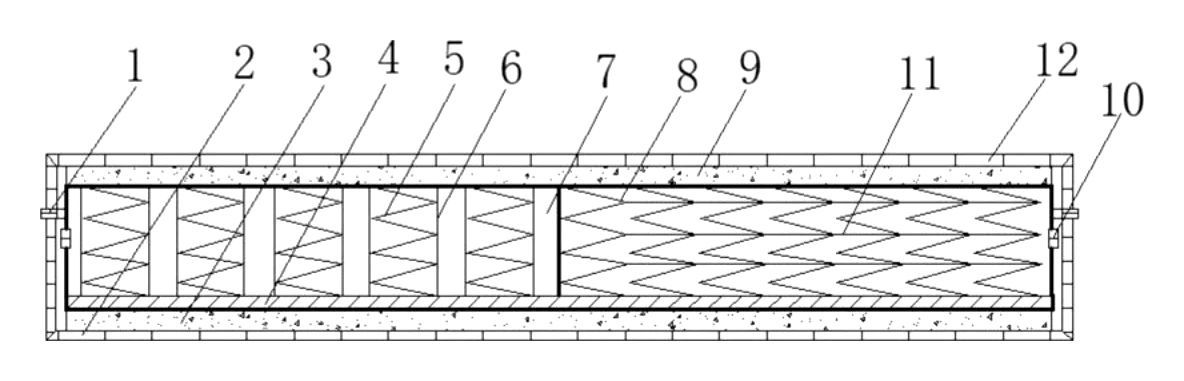
- A rigid bottom plate (4) serves as the foundation. Its outer edge is sleeved by a rectangular cloth bag.
- A partition cloth is sewn down the middle of this bag, dividing the interior into an independent cylinder spring bag (7) on one side and a standard spring bag (11) on the other.
- On the first side, independent cylinder springs (5) are screwed vertically to the bottom plate at equal intervals. Each spring slides into a non-woven tube bag (6), whose top touches the inner roof of the pocket zone.
- On the second side, standard springs (8) are screwed to the plate and linked together in series using stainless steel wire. A rectangular non-woven block is glued to the top of each standard spring, touching the inner roof of its bag.
- Open zippers (10) run along both sides of the spring bags.
- A lower cotton pad (3) rests beneath the spring layer, and an upper cotton pad (9) sits directly on top.
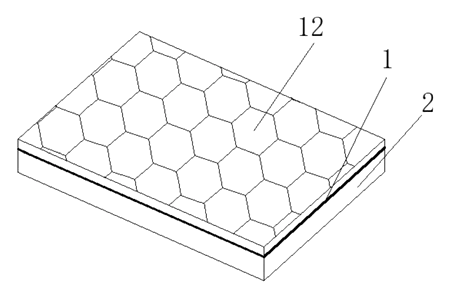
- The entire core drops into a mattress surface material bag (2). A mattress fabric zipper (1) connects this bag to a removable mattress fabric cover (12).
Who it is for
- Mattress brands targeting couples who want to market a “dual-firmness” or “split-feel” product without requiring buyers to purchase two separate beds.
- Hospitality and hotel procurement teams looking for a versatile mattress that accommodates guests with varying weight profiles and comfort preferences on a single bed frame.
- E-commerce private-label sellers on platforms like Amazon who need a distinct, easy-to-explain feature (two springs in one bed) to stand out in a crowded bedding category.
- Contract furniture manufacturers supplying dormitories or assisted-living facilities where standardized frames must serve occupants with different support needs.
How it works
The main parts
| No. | Part | What it does |
|---|---|---|
| 1 | Mattress fabric zipper | Connects the outer cover to the base bag for removal. |
| 2 | Mattress surface material bag | Holds the entire internal assembly; made of two fabric layers filled with cotton thread. |
| 3 | Lower cotton pad | Provides cushioning beneath the spring core. |
| 4 | Bottom plate | Rigid foundation where all springs are screwed down. |
| 5 | Independent cylinder springs | Pocketed coils on one half of the mattress, distributing point loads individually. |
| 6 | Non-woven tube bags | Fabric sleeves enclosing each independent spring. |
| 7 | Independent cylinder spring bag | The partitioned zone holding the pocketed springs. |
| 8 | Standard springs | Interconnected standard coils on the other half, linked by stainless steel wire. |
| 9 | Upper cotton pad | Cushioning layer placed over the rectangular cloth bag. |
| 10 | Open zippers | Sewn on both sides of the spring bags for access. |
| 11 | Standard spring bag | The partitioned zone holding the interconnected springs. |
| 12 | Mattress fabric cover | Quilted outer shell, removable via zipper 1. |
Assembly and use
- Spring installation - The independent springs (5) are screwed into the bottom plate (4) on one side of the center line, and the standard springs (8) are screwed in on the other. The distribution area of both spring types is identical, and their tops align on the same horizontal plane.
- Bagging - The springs slide into their respective zones inside the rectangular cloth bag, divided by the sewn partition cloth. Non-woven blocks on the standard springs and tube bags on the pocket springs press against the top inner walls of their compartments.
- Padding - The lower cotton pad (3) is laid under the bag, and the upper cotton pad (9) is laid over it.
- Covering - The padded core is placed inside the mattress surface material bag (2). The top inner edges of this bag attach to the outer wall of the rectangular cloth bag using concealed snaps, and the bag’s height is three-quarters of the cloth bag’s height.
- Zipping - The quilted mattress fabric cover (12) is zipped onto the opening of bag (2) using the mattress fabric zipper (1). When the cover needs cleaning, the user simply unzips it.
Applications
Master bedrooms for couples
One partner sleeps on the pocket-spring side to minimize motion transfer when the other turns over, while the second partner sleeps on the interconnected-spring side. The single cover hides the split entirely.
Guest rooms and boutique hotels
Hotel operators can place this mattress on any standard queen or king frame. Guests who prefer one type of spring system gravitate to that side, reducing the need to stock multiple mattress types.
Online direct-to-consumer bedding
E-commerce brands struggle to differentiate heavy, expensive-to-ship mattresses. The visual story of two distinct spring systems inside one zip-off cover gives marketing teams a clear diagram to show on product pages, helping justify premium pricing.
Student housing and dormitories
Dorm beds take heavy abuse from occupants of widely varying weights. The interconnected spring side handles heavier loads through shared tension, while the pocket side offers lighter students pressure relief. The washable cover simplifies maintenance between semesters.
Where it is less suitable
- Adjustable bed bases - The rigid bottom plate (4) described in the patent prevents the mattress from bending at the hinges required for adjustable frames.
- Ultra-thin mattress profiles - Because the design relies on a base plate, two types of vertical springs, and dual cotton pads, it cannot be compressed into a low-profile roll-pack format.
- All-foam preference markets - Buyers specifically seeking memory foam or latex constructions will not be interested in a dual-spring mechanical core.
Frequently asked questions
How different do the two sides actually feel?
The patent describes one side using independent cylinder springs enclosed in non-woven bags, which compress individually under body weight. The other side uses standard springs linked in series by stainless steel wire, meaning pressure on one coil distributes across its neighbors. This may create different feels on the two sides, but the patent does not specify which side is softer or firmer.
Will I feel my partner moving on the other side?
Because the two spring systems are physically separated by a sewn partition cloth inside the rectangular bag, motion transfer across the center is reduced compared to a single continuous spring unit. The pocket-spring side further isolates movement locally.
Can the mattress be rolled up for shipping?
The original design specifies a bottom plate to which the springs are screwed, suggesting a rigid foundation. For US e-commerce roll-pack shipping, the base plate would likely need to be redesigned as a flexible border-wire system or eliminated in favor of a reinforced foam rail. That modification is set in design and confirmed on prototypes.
How does the cover come off for washing?
A mattress fabric zipper runs along the opening of the outer material bag. Unzipping it detaches the quilted mattress fabric cover from the internal core. The cover itself consists of two fabric layers sewn together with vertical cotton threads and filled with cotton, allowing it to be laundered separately.
Are the two spring zones exactly the same size?
Yes. According to the patent claims, the distribution area of the independent cylinder springs is identical to the distribution area of the standard springs, and their tops are engineered to rest on the exact same horizontal plane so the sleeping surface remains flat.
What padding goes over the springs?
The patent lists an upper cotton pad placed directly over the spring bags and a lower cotton pad beneath them. For US production, these cotton pads are typically replaced or supplemented with polyurethane foam, gel memory foam, or latex layers depending on the brand’s comfort specifications.
Can this design be made and sold in the US?
The patent was filed only in China and is in force in China until at most 2027-08-16 (if annual fees are paid), so it does not restrict the design in the US. Mattress structures may be covered by other US patents - see Patent & Production - so we recommend a freedom-to-operate check before volume production.
Are you affiliated with the patent owner?
No. IP2M is an independent design and manufacturing service working from the public patent document.
Request a quote
Click Request a Quote below to see our email address - copy it, or open your email app with a ready-made message. Please mention patent CN208355064U in the subject.
Helpful details to include:
- Your company and channel (mattress brand, hotel procurement, e-commerce seller, contract furniture maker)
- Target sizes (Twin, Queen, King, etc.)
- Material preferences for springs, padding, and cover textiles
- Shipping method (flat freight or roll-packed compression)
- Estimated quantity and target price
- Timeline - when you would like samples and the first shipment
You can also reach us at (332) 203-9997.
Explore this product
Interested in building this?
Tell us your target market, quantity and timeline. We reply with options for prototyping, small-batch runs or volume production.
Send your inquiry to
Please put CN208355064U in the subject line and tell us your company, country, estimated quantity and timeline.
Prefer to talk? Call (332) 203-9997.
More product-ready patents
All Furniture, Bedding & Storage patents →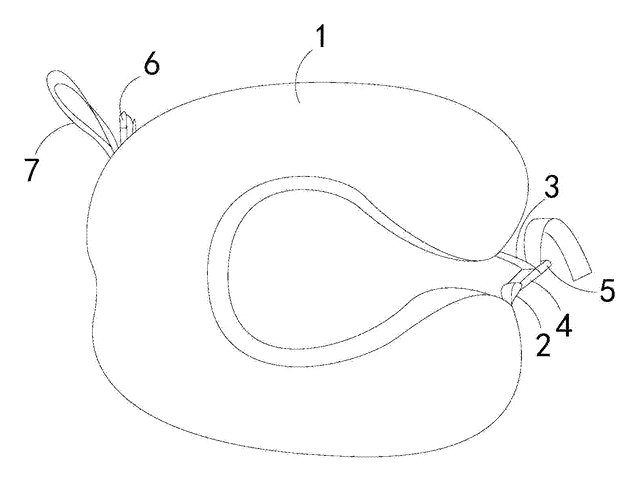
Furniture, Bedding & Storage
Roll-Up Travel Neck Pillow with Buckles
U-shaped travel pillow with a front buckle and a back buckle that holds it rolled up for carrying.
Patent CN206543091U
Furniture, Bedding & Storage
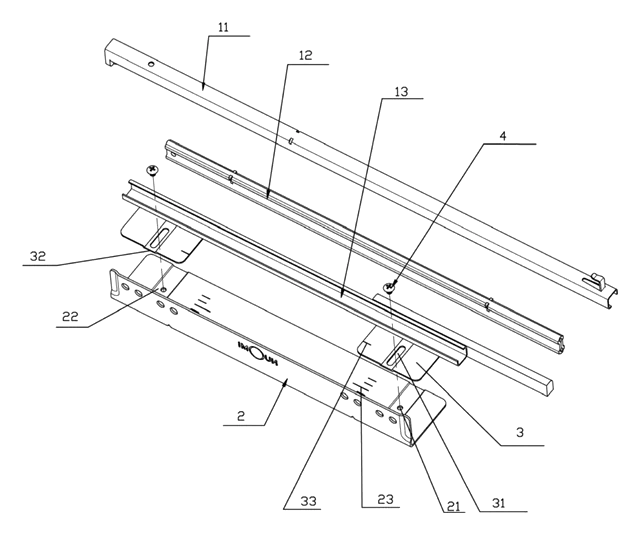
Width-Adjustable Slide Rail for Pull-Out Baskets
Basket slide rail on a slotted, scaled adjusting plate, so one pull-out basket fits several cabinet widths.
Patent CN208909382U
Furniture, Bedding & Storage
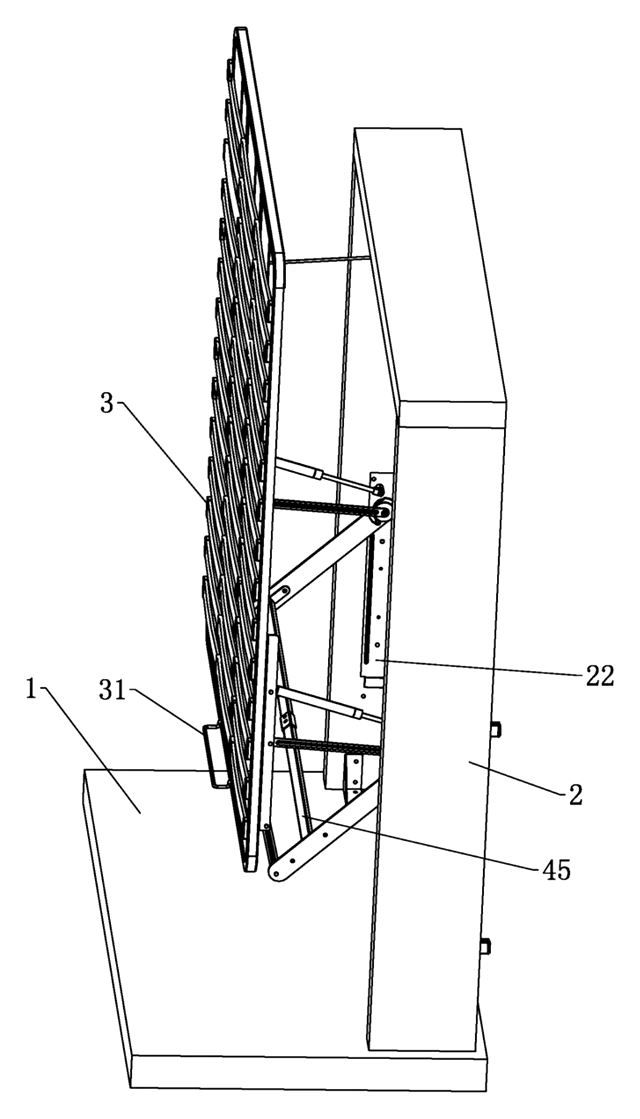
Lift-Up Storage Bed with Four-Bar Linkage That Slides the Deck Away from the Headboard
Storage bed deck that rises on four-bar linkages and gas springs, clearing the headboard as it opens.
Patent CN210870645U
Furniture, Bedding & Storage
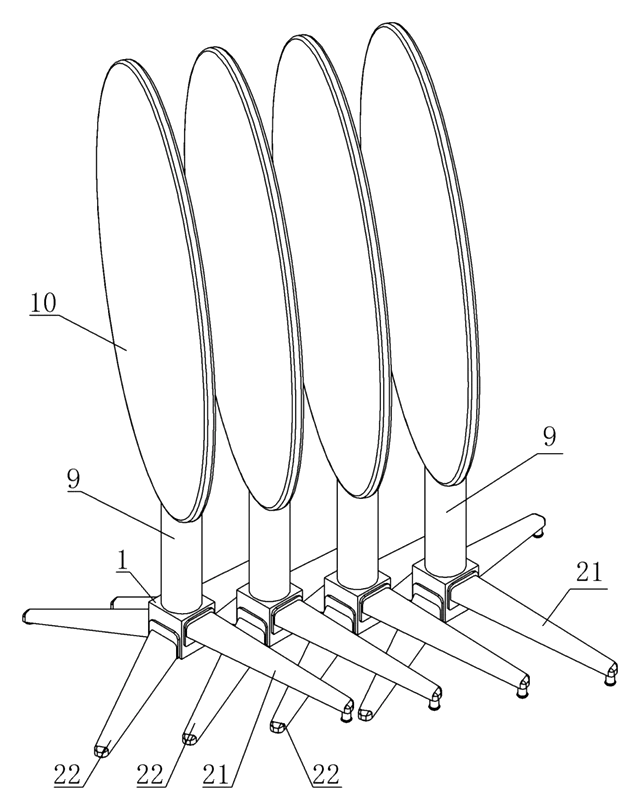
Self-Leveling, Nesting Table Base with a Torsion-Ring Leg Hub
Four-leg base that self-levels through a torsion-ring hub and nests sideways with flip-top tables.
Patent CN211483640U
Furniture, Bedding & Storage
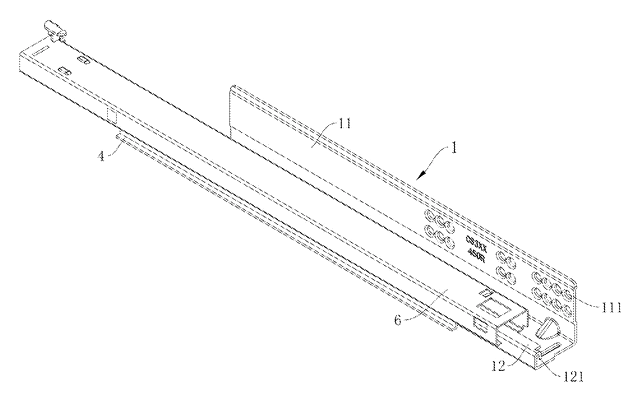
Rack-and-Pinion Synchronized Drawer Slide with a Folded-In Fixed Rail
Full-extension drawer slide: a pinion between two racks keeps the rails moving in step.
Patent CN206314843U
Furniture, Bedding & Storage
Telescopic Folding Table with Extension Panel and Built-In Trolley
Blow-molded folding table: slides open for an insert panel, folds into a wheeled trolley.
Patent CN216293323U
Browse by category
- Apparel & Accessories (22)
- Baby & Kids (16)
- Bags & Luggage (9)
- Bath & Personal Care (16)
- Car Accessories (10)
- Furniture, Bedding & Storage (12)
- Garden & Outdoor (18)
- Health & Wellness (8)
- Home, Kitchen & Cleaning (24)
- Lighting (12)
- Packaging & Containers (6)
- Pet Products (6)
- Phone & Camera Accessories (4)
- Retail Display (13)
- School, Office & Art (19)
- Sports & Recreation (25)
- Tools & Workshop (27)
- Toys & Games (12)
This page is based on the public patent document CN208355064U, assigned to Yunshitong (Huai'an) Furniture Technology Co.,Ltd.. IP2M is an independent manufacturing service and is not affiliated with, endorsed by or licensed by the patent owner. Images marked as concept renderings are illustrations, not photos of an existing product. Patent status information is provided for reference only and is not legal advice; confirm freedom to operate for your market before production. Full disclaimer.