
Patent CN208403879U
Updated October 28, 2026Nesting Children's Table and Chair Set with Tool-Free Snap Connection
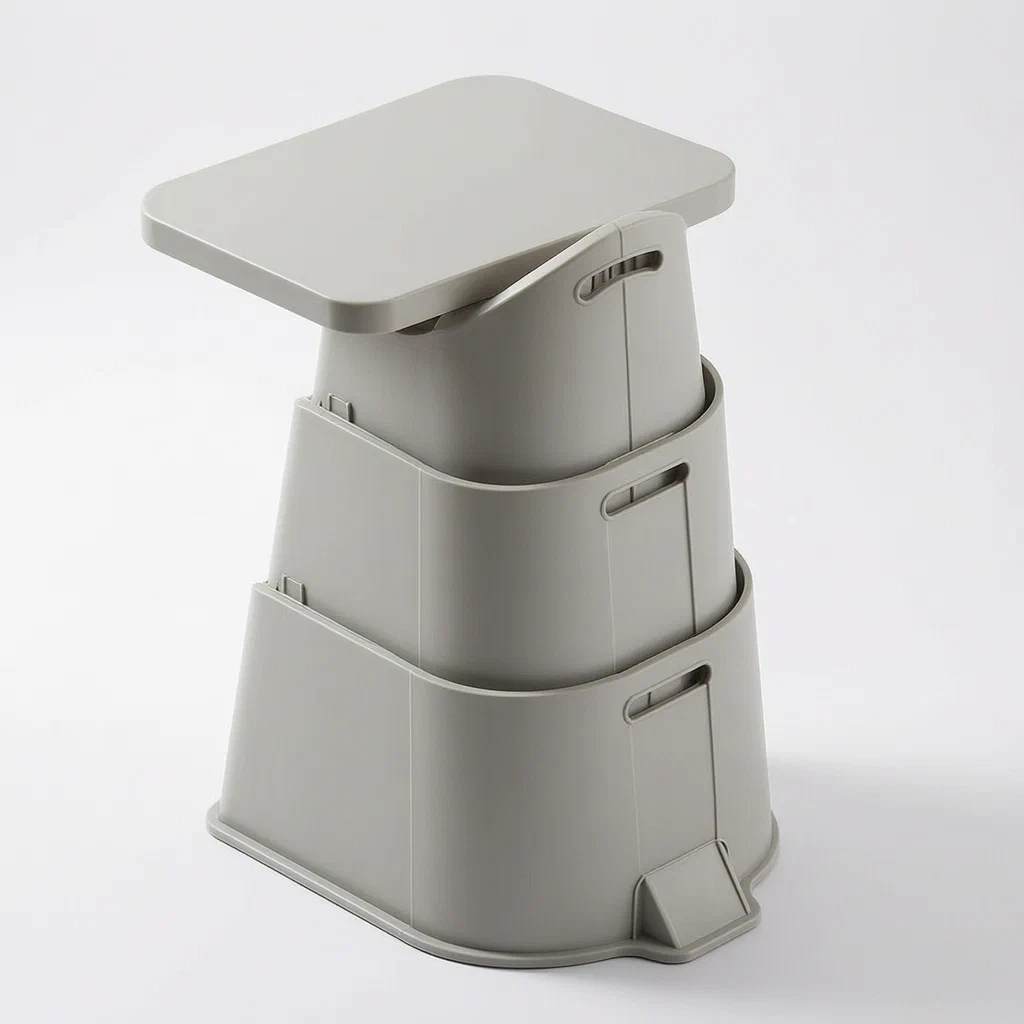
Children's furniture often takes up too much room when stored or shipped, and assembling small tables and chairs usually requires loose screws and tools that get lost. This design solves both issues by letting the seat snap directly into the support base without any extra hardware. An elastic fastener molded into the seat clicks into a card slot on the base's C-shaped upper edge, locking the parts together securely. When you need to pack the set away, the seat fits entirely inside an accommodating chamber formed within the base. The support base itself can be built from two sub-bases that also nest together, reducing the overall footprint further. Because the parts connect through shaped edges and snap-fit fasteners rather than bolts, parents or teachers can assemble and disassemble the furniture in seconds using only their fingers.
- China utility model - lapsed
- No filings outside China
- Baby & kids furniture
- Snap-fit assembly, nesting storage
Splat! What let you down?
🧩
Tool-free snap connection
An elastic fastener on the seat clicks into a card slot on the base, eliminating screws and tools.
📦
Fully nesting design
The seat stores completely inside the support base's accommodating chamber to save space.
🪑
Modular sub-bases
Two sub-support bases nest together along the longitudinal direction for flexible configurations.
🛡️
Secure guiding slot
A positive stop strip and flanges form a limiting slot that guides the seat and prevents sliding.
Bring this product to market
- ✓ Patent vetted China-only family and legal status checked
- 2 Product brief · now How it works, uses and options written up
- 3 Prototype First samples for buyers to review
- 4 Pilot run Small first batch for launch customers
- 5 Volume production Repeat orders at scale
Buyer interest
– of 100 buyers needed to start prototyping
One click, no sign-up. Each vote is one real visitor, and products with the most interest go to prototyping first.
Build team: no members yet. Need a partner, co-funding or skills to build this? Join and we introduce the team once it forms.
The problem
Standard children’s tables and chairs take up a large amount of floor space in homes, classrooms, and daycares. When families move or schools rearrange rooms, storing these separate pieces creates clutter. Assembly is another common issue. Most small furniture sets rely on metal screws, bolts, or separate brackets. Parents frequently struggle with missing hardware, stripped plastic threads, or the need to find the right screwdriver. Over time, repeated tightening and loosening wears out the connection points, leaving the furniture wobbly. Shipping flat-pack children’s furniture also consumes significant carton volume because the parts do not fit inside one another, raising freight costs for retailers and wholesalers.
The solution
This combination children’s table and chair addresses those issues through a nesting structure and a tool-free connection system.
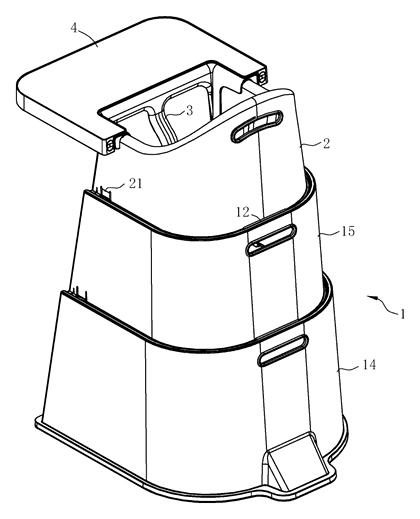
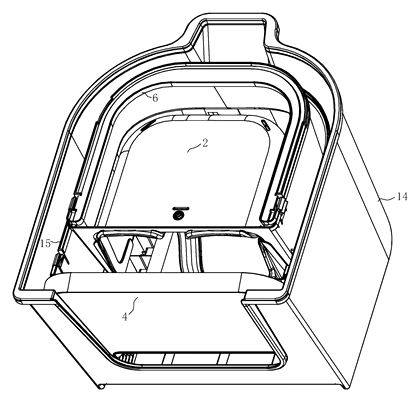
- The support base (1) is shaped to form an accommodating chamber (Y). When the furniture is not in use, the seat (2) slides completely into this chamber, reducing the storage footprint to the size of the base alone.
- The seat attaches to the base without screws. An elastic fastener (21), formed as part of the seat, presses into a card slot (111) located on the inside of a longitudinal flange (11) along the base’s C-shaped upper edge (16).
- To prevent the seat from shifting during use, a second clamping part (212) on the fastener features an inclined slope (c) that slips over a lateral flange (12) and rests against it.
- A positive stop strip (13) on the upper edge works with the longitudinal flange to create a guide and limit slot (L), ensuring the seat slides into the exact correct position every time.
- The support base can consist of two separate sections: a first sub-support base (14) and a second sub-support base (15). These sub-bases use the same snap-fit logic to connect and nest together, allowing the overall height or shape to change.
- A panel (A) supported by a support portion (B) functions as either a desk surface or a chair back, depending on how the user configures the sub-bases.
Who it is for
- Children’s furniture brands looking for a space-saving product line that ships in smaller cartons and reduces warehouse volume.
- Amazon sellers and e-commerce retailers who need flat-pack items that customers can assemble instantly without complaints about missing hardware.
- Daycare centers and preschools that frequently reconfigure rooms for different activities and need lightweight furniture that stacks or nests away quickly.
- Wholesalers of promotional or gift items seeking a compact, easy-to-package children’s seating set for retail displays or bundled offers.
How it works
The main parts
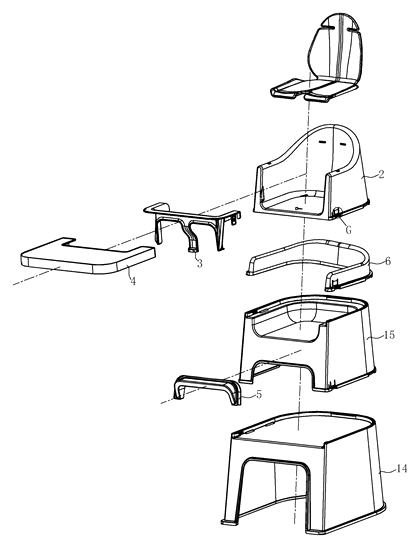
| No. | Part | What it does |
|---|---|---|
| 1 | Support base | Main structure containing the accommodating chamber (Y). |
| 14, 15 | First and second sub-support bases | Modular sections that nest together to form the full base. |
| 16 | Upper edge | C-shaped profile holding the flanges and slots. |
| 11 | Longitudinal flange | Runs along the upper edge; contains the card slot (111). |
| 12 | Lateral flange | Extends inward to work with the fastener’s slope for locking. |
| 13 | Positive stop strip | Forms the guide and limit slot (L) with the longitudinal flange. |
| 2 | Seat | Detachable component that nests inside the accommodating chamber. |
| 21 | Fastener | Integrally formed elastic piece connecting the seat to the base. |
| 211 | First clamping part | Features a protrusion (a) that catches inside the card slot. |
| 212 | Second clamping part | Features the inclined slope (c) that locks against the lateral flange. |
| 213 | Interconnecting piece | Elastic section linking the clamping parts to the seat body. |
| A, B | Panel and support portion | Acts as a desk surface or chair back. |
| 3, 4, 5 | Safety catch, service plate, foot pedal | Additional detachable accessories mentioned in the patent. |
Operating steps
- Prepare the base - If using both sub-bases, snap the second sub-support base (15) into the first sub-support base (14) using the same fastener and slot method.
- Align the seat - Press the elastic fastener (21) on the outside of the seat (2) with a finger. Align the lower end of the seat with the guide and limit slot (L) at the front of the support base (1).
- Slide and lock - Push the seat backward along the slot. The inclined slope (c) on the second clamping part (212) rides over the lateral flange (12). Release the finger; the interconnecting piece (213) springs back, forcing the protrusion (a) on the first clamping part (211) into the card slot (111). The second clamping part rests against the lateral flange, preventing forward or backward movement.
- Disassemble - Flick the fastener outward to release the protrusion from the card slot, then pull the seat forward along the guide slot until it clears the base.
- Store - Turn the seat around or orient it properly, then slide it fully into the accommodating chamber (Y) inside the support base for transport or storage.
Applications
Home playrooms and bedrooms
Parents setting up a small craft area for toddlers need furniture that can be moved aside quickly when the room is used for other purposes. The nesting feature allows the seat to disappear entirely into the base, fitting under a bed or inside a closet without taking up extra floor space.
Preschools and daycare centers
Teachers frequently transition rooms between circle time, snack time, and nap time. Staff can unclip the seats from the bases without searching for tools, stack the nested units in a corner, and redeploy them just as fast when the next activity begins.
E-commerce and retail packaging
Sellers shipping children’s furniture face high dimensional weight charges. Because the seat stores inside the base and the sub-bases nest together, the entire set fits into a single, compact carton, reducing shipping costs and minimizing damage during transit.
Temporary event seating
Organizers of community events or children’s parties often need short-term seating that transports easily. The tool-free snap connection allows volunteers to set up dozens of units in minutes and pack them tightly into a vehicle afterward.
Where it is less suitable
- Heavy-duty commercial school desks - Older students require fixed-height, heavy-load desks designed for continuous daily wear, which this nesting structure is not intended to replace.
- Outdoor playground equipment - The patent describes indoor structural connections; prolonged UV exposure and weather require specific outdoor material grades not detailed here.
- Height-adjustable ergonomic setups - While the sub-bases allow some configuration, it lacks the continuous mechanical height adjustment mechanisms found in dedicated ergonomic study desks.
Frequently asked questions
How do the seat and base connect without screws?
The seat features an elastic fastener molded directly into its side. When you slide the seat into the base’s guide slot, a protrusion on the fastener snaps into a card slot on the base’s inner flange. An angled section on the fastener locks against a lateral flange to keep the seat from sliding back and forth. You only need your fingers to press and release the fastener.
What does “nesting” mean for this product?
The support base is hollow, forming an accommodating chamber. When the furniture is not in use, the seat slides entirely inside this chamber. If the base is made of two sub-support bases, they also fit inside one another. This reduces the total volume significantly for storage or shipping.
Can the desk surface be used as a chair back?
Yes. The patent describes a panel supported by a support portion. Depending on how the sub-support bases are arranged, this panel can function as a horizontal desk surface or as a vertical backrest for the seat.
What materials are needed for the elastic fastener to work?
The fastener must flex repeatedly without breaking. Materials like polypropylene (PP) or certain grades of ABS are typically used for living hinges and snap-fits. The exact resin grade and wall thickness are set in design and confirmed on prototypes to ensure long-term durability.
What are the dimensions of the table and chair?
The patent document does not specify exact measurements. The overall length, width, and height are set in design and confirmed on prototypes based on the target age group and ergonomic requirements.
Does it meet US children’s furniture safety standards?
Any version produced for the US market must be tested against applicable regulations, including CPSC 16 CFR 1232 and ASTM F2613 for children’s chairs, as well as CPSIA limits for lead and phthalates. Compliance depends on the final material choices, dimensions, and structural testing results.
Can this design be made and sold in the US?
The patent was filed only in China and is currently lapsed due to non-payment of annual fees, so it does not restrict the design in the US or in China. However, later US and international patents citing this document exist in the children’s furniture field - see Patent & Production - so we recommend a freedom-to-operate check before volume production.
Are you affiliated with the patent owner?
No. IP2M is an independent design and manufacturing service working from the public patent document.
Request a quote
Click Request a Quote below to see our email address - copy it, or open your email app with a ready-made message. Please mention patent CN208403879U in the subject.
Helpful details to include:
- Your company and channel (children’s furniture brand, Amazon seller, daycare supplier, wholesaler)
- Target age group and desired dimensions
- Material preferences (e.g., PP, HDPE, ABS) and color requirements
- Configuration (single base or two nesting sub-bases, inclusion of service plate or foot pedal)
- Estimated quantity and packaging needs
- Timeline - when you would like samples and the first shipment
You can also reach us at (332) 203-9997.
Explore this product
Interested in building this?
Tell us your target market, quantity and timeline. We reply with options for prototyping, small-batch runs or volume production.
Send your inquiry to
Please put CN208403879U in the subject line and tell us your company, country, estimated quantity and timeline.
Prefer to talk? Call (332) 203-9997.
More product-ready patents
All Baby & Kids patents →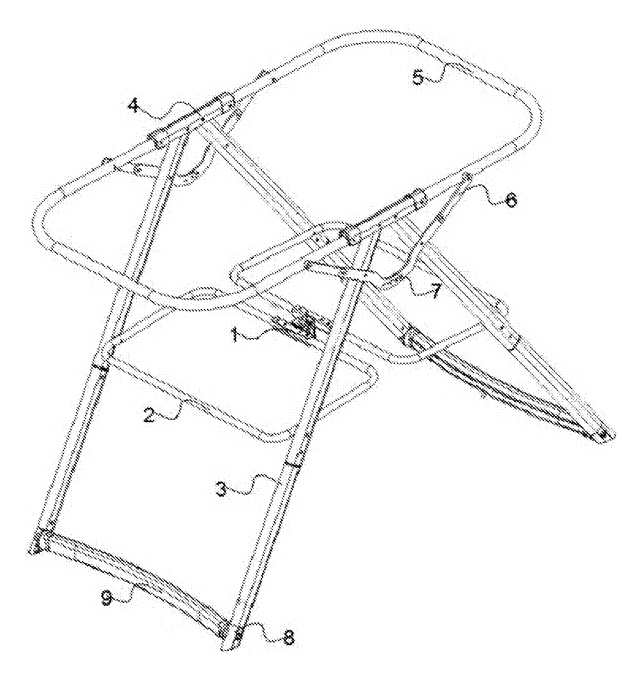
Baby & Kids
Portable Folding Rocking Bassinet Frame
Rocking bassinet frame that folds flat: telescopic hub, folding rails, two-part legs, curved rockers.
Patent CN206910143U
Baby & Kids
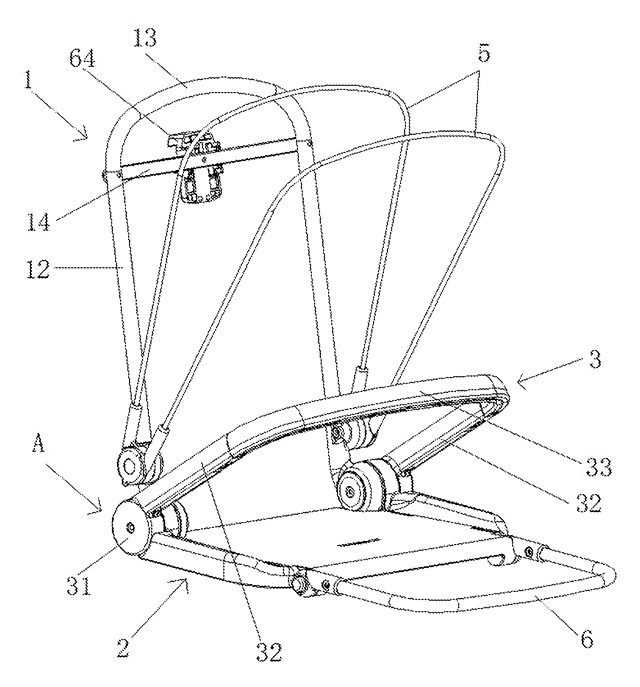
Stroller Seat with Linked Fold-Away Armrest
Stroller seat whose armrest unlocks and folds automatically when the backrest is folded forward.
Patent CN206856772U
Baby & Kids
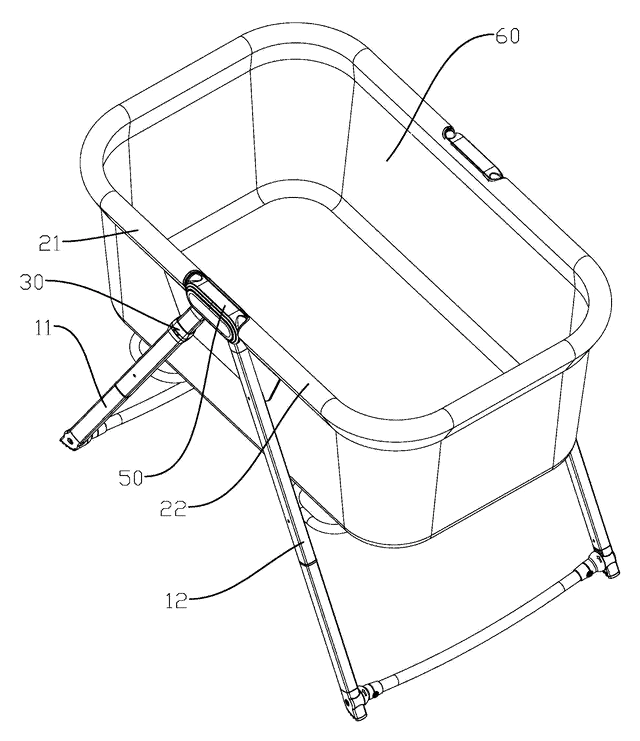
One-Motion Folding Baby Crib with Linked Frame
Portable baby crib whose top rails fold down automatically as the A-frame legs are closed.
Patent CN207202585U
Baby & Kids
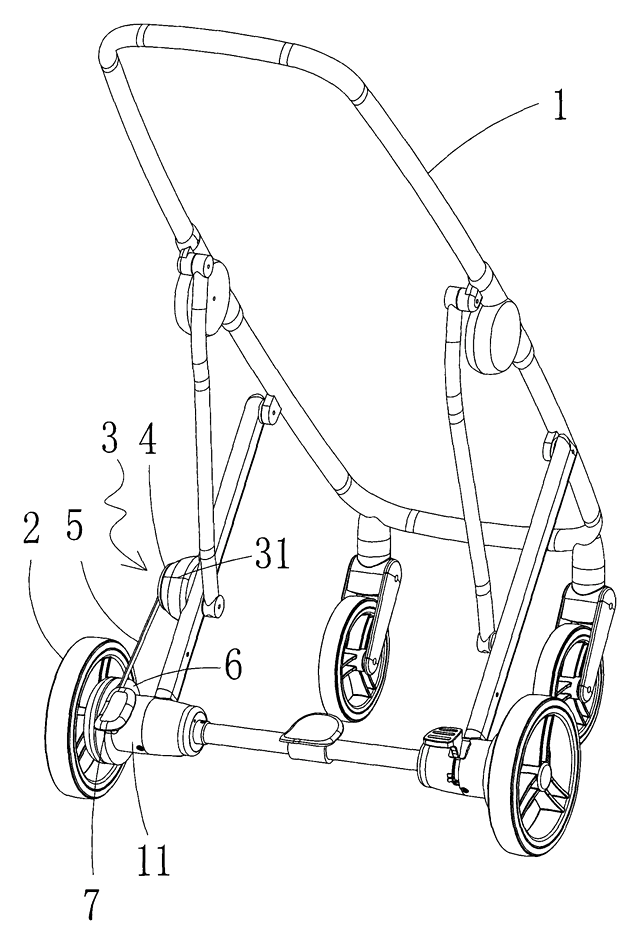
Motorized Rocking Stroller That Rocks by Turning Its Wheels
Baby rocker or stroller whose motor turns the wheels back and forth; a clutch switches to pushing.
Patent CN208119238U
Baby & Kids
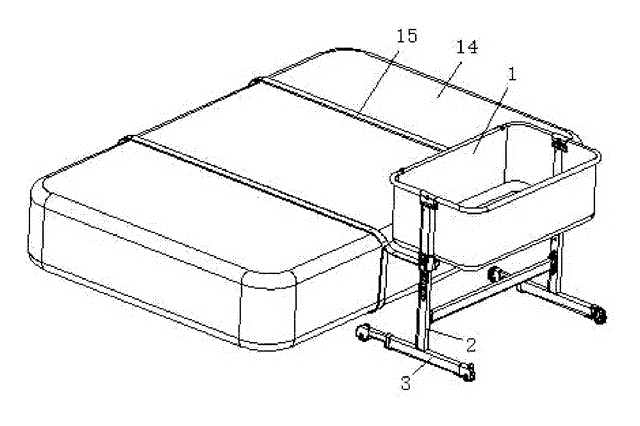
Bedside Crib Base with Spring-Loaded Telescoping Caster Legs
Bedside crib feet with spring-loaded sliding casters: wide when alone, short to sit flush at the bed.
Patent CN207168269U
Baby & Kids
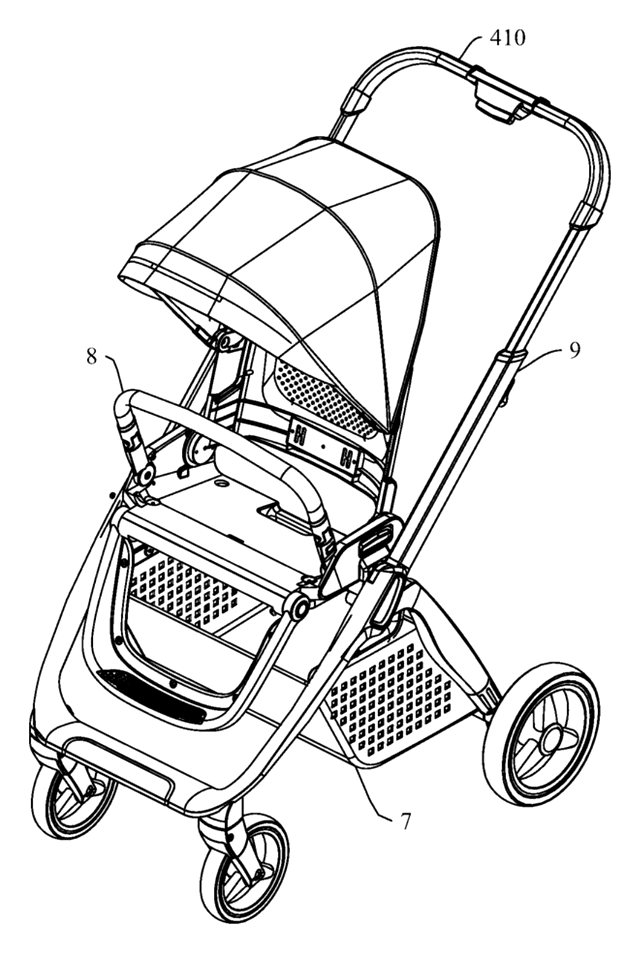
Compact-Fold Stroller with a Four-Bar Side Frame and Telescoping Handle
Stroller with four-bar side frames: handle and rear leg fold onto the front leg, handle telescopes.
Patent CN213799844U
Browse by category
- Apparel & Accessories (22)
- Baby & Kids (16)
- Bags & Luggage (9)
- Bath & Personal Care (16)
- Car Accessories (10)
- Furniture, Bedding & Storage (12)
- Garden & Outdoor (18)
- Health & Wellness (8)
- Home, Kitchen & Cleaning (24)
- Lighting (12)
- Packaging & Containers (6)
- Pet Products (6)
- Phone & Camera Accessories (4)
- Retail Display (13)
- School, Office & Art (19)
- Sports & Recreation (25)
- Tools & Workshop (27)
- Toys & Games (12)
This page is based on the public patent document CN208403879U, assigned to Individual. IP2M is an independent manufacturing service and is not affiliated with, endorsed by or licensed by the patent owner. Images marked as concept renderings are illustrations, not photos of an existing product. Patent status information is provided for reference only and is not legal advice; confirm freedom to operate for your market before production. Full disclaimer.