At a glance
| Patent number | CN208403879U (application CN201820257822) |
| Type | China utility model (实用新型) - protects product shape and structure |
| Original title | A kind of Combined type children tables and chairs (一种组合式儿童桌椅) |
| Patent owner | Individual |
| Inventors | Wang Yan |
| Filing date | 2018-02-13 |
| Grant date | 2019-01-22 |
| Status (China) | Lapsed - terminated for non-payment of annual fees (recorded 2025-02-14) |
| Patent family | Chinese filings only - no US, European, Japanese, PCT or other filings listed |
| Cited by | 8 later documents |
| Source | Google Patents (search for CN208403879U) |
What the claims cover, in plain language
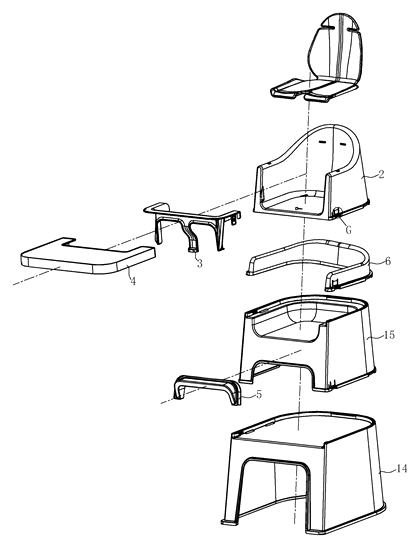
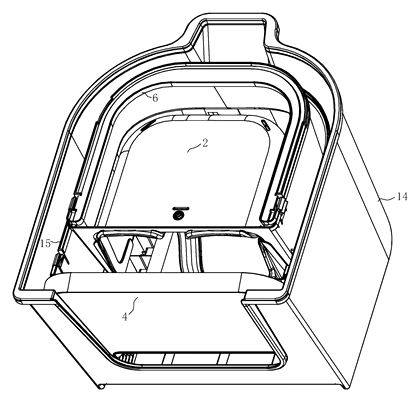
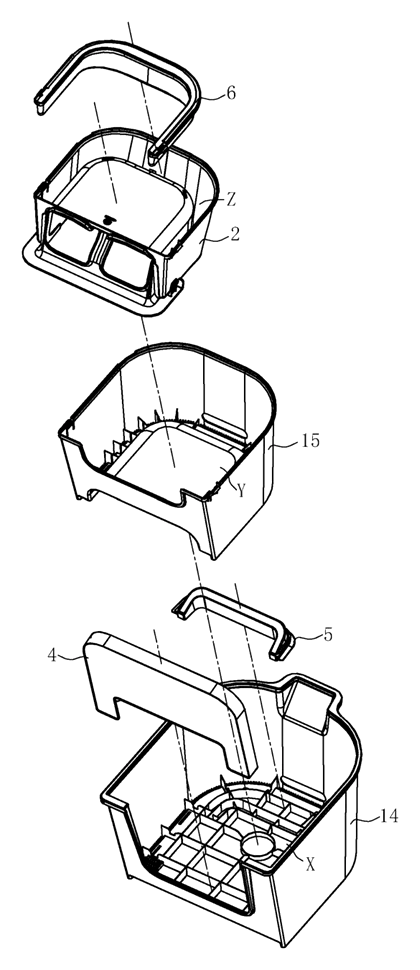
Claim 1 - A combination children’s table and chair including a seat (2) and a support base (1). The seat is detachably connected to the support base, and the support base forms an accommodating chamber (Y) capable of receiving the seat inside it.
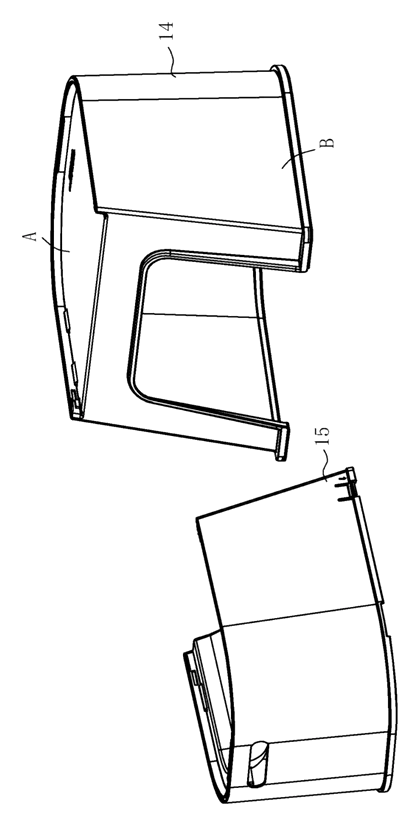
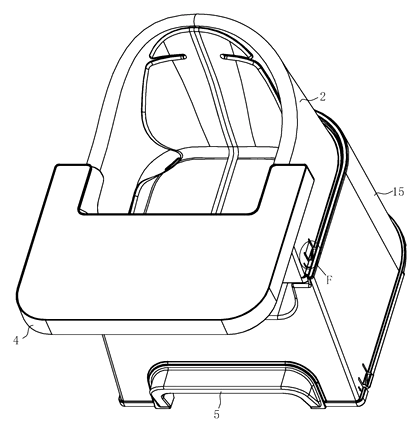
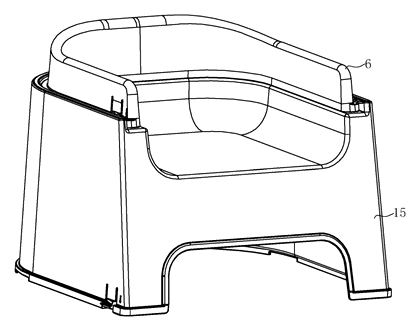
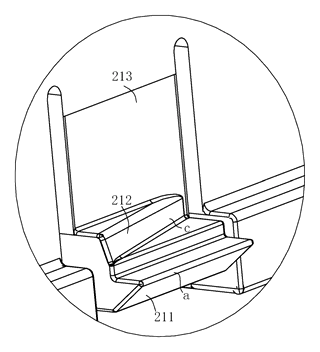
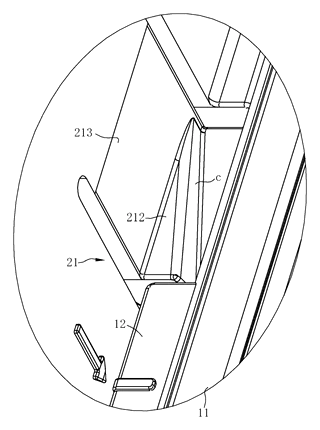
Claim 2 - The support base includes at least two sub-support bases distributed along the longitudinal direction, each detachably connected to the other. Claim 3 - Specifically, there are two sub-support bases: a first sub-support base (14) and a second sub-support base (15). The second sub-support base sits between the first sub-support base and the seat. The first sub-support base has an accommodation space (X) to hold the second sub-support base, and the second sub-support base contains the accommodating chamber (Y) for the seat. Claim 4 - The support base includes a panel (A) usable as a desk or chair, and a support portion (B) that contains the accommodating chamber. Claims 5-8 - Detail the tool-free connection. The upper edge (16) of the support base is a C-shaped structure with a longitudinal flange (11) containing a card slot (111). The seat has an integrally formed elastic fastener (21) comprising a first clamping part (211) with a protrusion, a second clamping part (212) with an inclined slope, and an interconnecting piece (213). The fastener engages the card slot and a lateral flange (12) to lock the seat and prevent longitudinal sliding. Claim 9 - A positive stop strip (13) on the upper edge forms a guide and limit slot (L) with the longitudinal flange to direct the seat during installation. Claim 10 - Mentions additional detachable components such as a service plate (4) and a foot pedal (5).
This is a simplified reading for orientation only. The legal scope is defined by the exact claim wording in the official Chinese document.
What this means for US production
This patent was filed only in China and is currently lapsed due to non-payment of annual fees, so it no longer restricts anyone in China. It has no US or other foreign counterpart.
Two points to settle early:
- Other patents may exist. The children’s furniture and modular seating field is actively patented. Companies such as Kids2, Inc. and Hannie Ab hold later US and international patents (e.g., US11426008B2, US11723477B2, WO2022093632A1, WO2024132144A1) that cite this document, indicating ongoing innovation in related structural designs. A freedom-to-operate (FTO) review focusing on the specific snap-fit geometry and nesting profiles is required before starting production.
- Elastic fastener fatigue. The integrally formed elastic piece relies on the base material’s flexibility. Material selection must ensure the fastener survives repeated assembly cycles without cracking, especially in varying temperatures.
Customization and manufacturing
What can be customized
| Area | Options |
|---|---|
| Dimensions | Overall seat width, depth, and base height to be confirmed in design |
| Materials | Polypropylene (PP), high-density polyethylene (HDPE), or ABS for molding elasticity and impact strength |
| Colors | Solid colors, two-tone combinations, or custom brand colors |
| Surface finish | Matte, gloss, or textured surfaces to reduce visible scratches |
| Accessories | Addition of the service plate, foot pedal, or safety catch described in the patent |
| Graphics | Mold-in color patterns or applied decals for character branding |
Things to plan for (US market)
- CPSC 16 CFR 1232 - Safety standard for children’s folding and non-folding chairs and stools, covering stability, entrapment, and sharp edges.
- ASTM F2613 - Standard consumer safety specification for children’s chairs and stools.
- CPSIA (Consumer Product Safety Improvement Act) - Requires testing for lead in surface coatings and substrates, as well as phthalate limits for children’s products.
- California Proposition 65 - Chemical screening for plastics and colorants used in the molding process.
How a project runs
- Inquiry - Define target age group, dimensions, materials, and order quantities.
- Design and engineering - Draft 3D models based on the patent’s nesting and snap-fit geometry, adjusting wall thicknesses for the chosen plastic resin.
- Prototyping - CNC machine or 3D print initial samples to verify that the elastic fastener engages the card slot correctly and the seat nests smoothly into the accommodating chamber.
- Testing - Conduct stability, load, and cycle tests per ASTM and CPSC standards; adjust the mold design if the fastener shows stress whitening or failure.
- Production - Cut steel for injection molds, run pilot batches, perform final quality checks, and pack the nested sets into cartons.
Quantities & timeline
Manufacturing this product requires precision injection molds for the seat, the sub-support bases, and the panel. The elastic fastener must be molded integrally with the seat, meaning the mold’s gating and cooling channels must preserve the material’s flexibility. Certification testing for children’s furniture involves multiple physical and chemical assessments. Send us your target dimensions, material preferences, estimated quantity, and required certifications, and we will reply with options.
Patent drawings
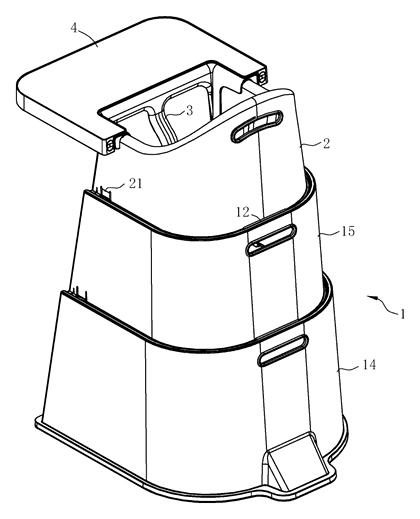
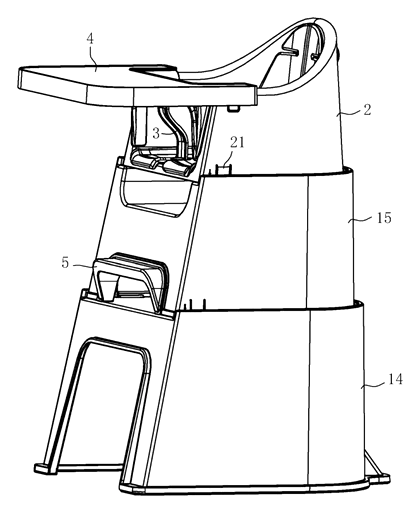
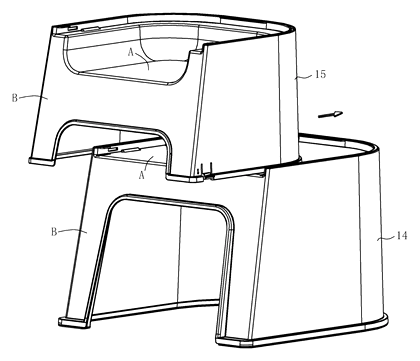
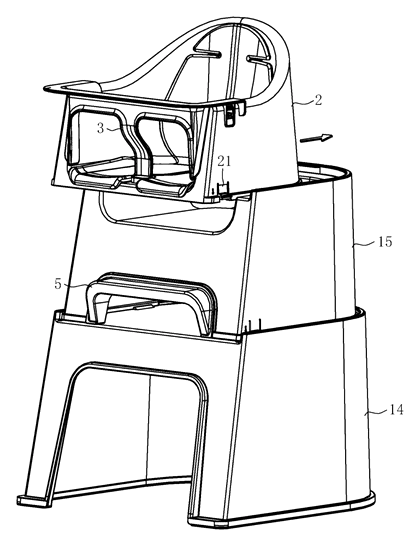
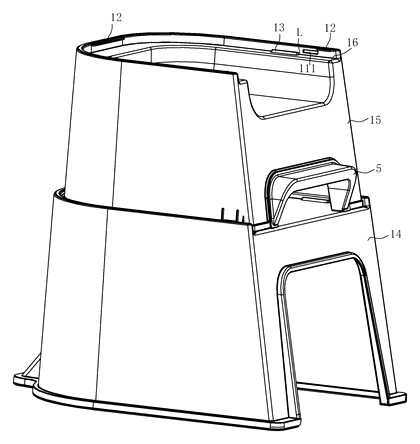
Drawings reproduced from the public patent document for reference.