At a glance
| Patent number | CN208431594U (application CN201820815258) |
| Type | China utility model (实用新型) - protects product shape and structure |
| Original title | Long-life high-efficiency energy-saving fishing gathering lamp (一种长寿命高效节能集渔灯) |
| Patent owner | Individual |
| Inventors | Guo Jiayi |
| Filing date | 2018-05-29 |
| Grant date | 2019-01-25 |
| Status (China) | Lapsed - terminated for non-payment of annual fees (recorded 2024-06-07) |
| Patent family | Chinese filings only - no US, European, Japanese, PCT or other filings listed |
| Cited by | 1 later document |
| Source | Google Patents (search for CN208431594U) |
What the claims cover, in plain language
Claim 1 defines a fishing lamp comprising a lamppost, transparent shade, pedestal, top cover, and LED source. The key feature is that the lamppost and shade form a sleeve-like structure enclosing an annular sealing cavity where the LED is mounted on the post’s outer surface. The pedestal and top cover have through-holes aligned with the post’s inner hole to allow wire passage.
Claim 2 specifies the lamppost has a polygonal rib column structure with multiple lateral surfaces, enhancing heat dissipation. The LED crystal and electric elements are fixed to these surfaces.
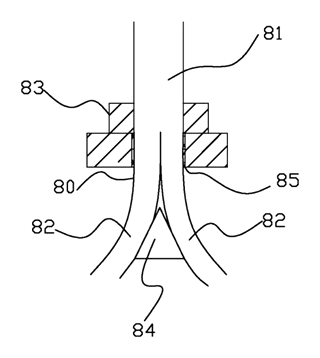
Claim 3 details the top cover’s threading hole, which includes a sealing structure with an elastic ring and a plugging block that tightens around the conductor wire to prevent water ingress.
Claim 4 describes a locking structure for the wire using vertical plates, activity templates, and washers to secure the cable position.
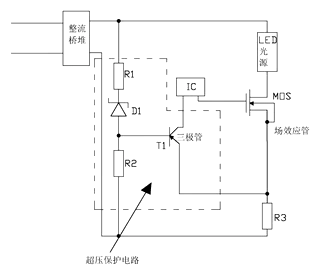
Claims 5-10 cover additional features like a sealing detection hole, an overpressure protection circuit, a weighted item in the pedestal for stability, specific peripheral wall designs for side sealing, and a knob with a recess for drawstring attachment.
This is a simplified reading for orientation only. The legal scope is defined by the exact claim wording in the official Chinese document.
What this means for US production
This patent was filed only in China and has lapsed, so it no longer restricts anyone in China either. It has no US or other foreign counterpart.
Two points to settle early:
- Other patents may exist. Marine and industrial LED lighting is a competitive field with many existing US patents covering heat sink geometries, waterproof connectors, and self-balancing bases. A freedom-to-operate (FTO) review is recommended to ensure your specific implementation of the polygonal heat sink and cable sealing does not infringe on active US intellectual property.
- Material Compliance. The use of acrylic or polycarbonate shades and aluminum posts must align with US material safety standards, particularly regarding flammability ratings (UL 94) and chemical restrictions (RoHS/REACH equivalents).
Customization and manufacturing
What can be customized
| Area | Options |
|---|---|
| Post Geometry | Number of sides (hexagonal, octagonal) to balance cost and heat dissipation. |
| Shade Material | Acrylic, Polycarbonate, or Tempered Glass depending on impact resistance needs. |
| Weight System | Adjustable mass in the base for different mounting scenarios (fixed vs. free-standing). |
| IP Rating | Enhanced sealing methods for IP65, IP66, or IP67 compliance. |
| Electronics | Driver type, color temperature (2700K-6500K), and dimming capabilities. |
Things to plan for (US market)
- UL 1598 / UL 8750 - Standard for luminaires and LED equipment. Critical for commercial sales in the US.
- FCC Part 15 - Electromagnetic compatibility testing for digital devices, including LED drivers.
- OSHA / NEC Compliance - Electrical safety standards for wiring and grounding in industrial/marine settings.
- California Title 20/24 - Energy efficiency regulations if sold in California.
How a project runs
- Inquiry - Define target IP rating, wattage, and mounting requirements.
- Design - CAD modeling of the polygonal post and sealing interfaces.
- Prototype - 3D printed housing tests and off-the-shelf driver integration.
- Testing - Thermal analysis and water immersion tests for seal integrity.
- Production - Die-casting or extrusion of posts, injection molding of covers, PCB assembly.
Quantities & timeline
Tooling for die-cast aluminum posts and injection-molded plastic components is required. Lead times depend on mold creation and component sourcing. Send us your target wattage, IP rating, quantity and timeline and we will reply with options.
Production notes
Tooling and process
Likely requires die-cast aluminum molds for the polygonal lamppost to ensure structural integrity and thermal conductivity. Injection molding tools are needed for the transparent shade and top cover. PCB assembly processes will handle the LED substrates.
Cost drivers
Costs typically rise with the size of the heat sink (aluminum volume) and the quality of the IP sealing components (elastic rings, custom plugs). LED binning consistency also affects pricing.
Prototyping path
3D-printed housings are typically the first step to verify fit and form. Use off-the-shelf drivers for initial electrical testing. Conduct thermal tests to validate the polygonal post’s efficiency before committing to tooling.
What we would change before tooling
We would likely refine the wall thickness and joint design of the plastic covers to improve snap-fit reliability. Adjustments to the thread engagement torque for the base screws may be necessary to prevent stripping during assembly.
Common failure points
Water ingress at the seal is a primary risk, requiring precise gasket compression. Heat buildup can occur if the LED count exceeds the post’s dissipation capacity. Wire strain relief failures at the top cover entry point are also common issues to mitigate.
Patent drawings
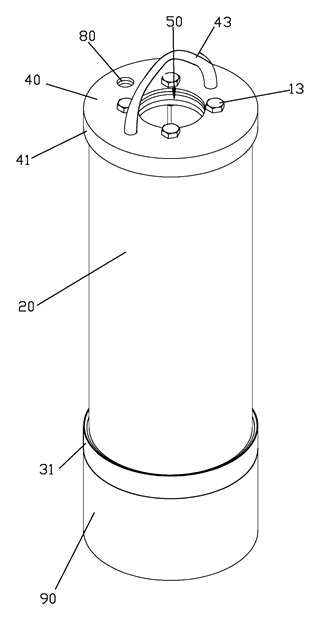
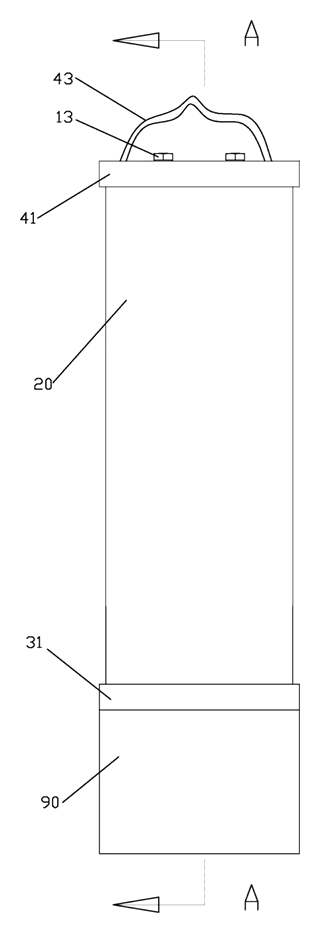
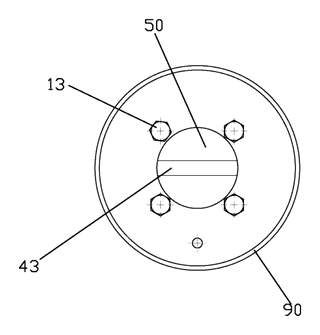
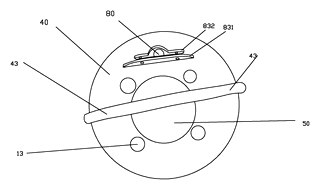
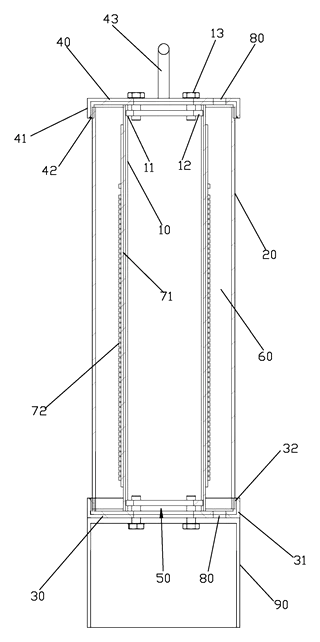
Drawings reproduced from the public patent document for reference.