
Patent CN208616111U
Updated November 7, 2026Bicycle Cup Holder with Worm-Drive Automatic Clamping Mechanism
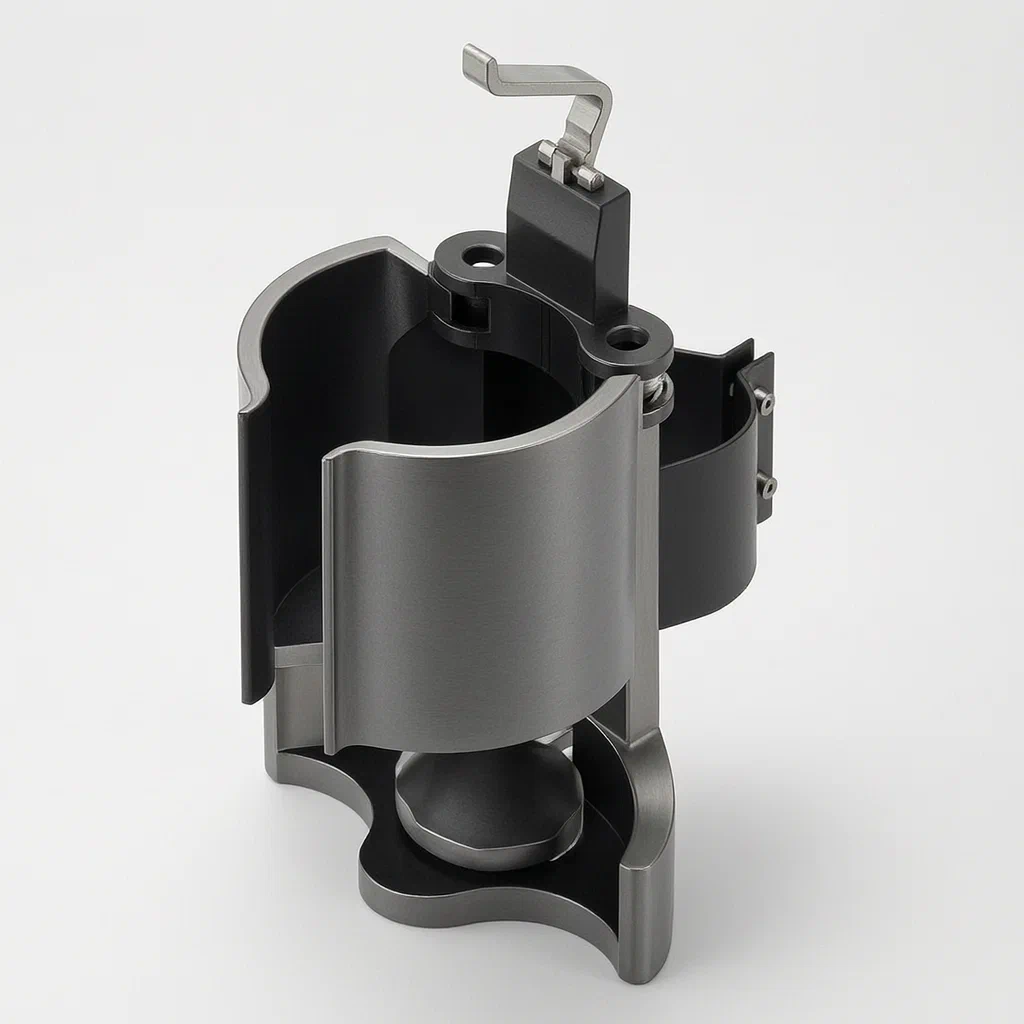
Standard bike cages require manual adjustment or tight fits that scratch bottles. This design uses a mechanical linkage: pressing the cup down drives a rack gear, which turns a worm screw and turbine, causing side clamps to close automatically around the container. A compression spring resets the mechanism when the cup is lifted, allowing quick one-handed retrieval during rides.
- China utility model - lapsed
- No filings outside China
- Cycling accessories
- Worm drive, rack gear, spring return
Splat! What let you down?
🚲
Mounts to Frame
Fixed clamp-seat attaches directly to the bicycle frame using bolts.
⚙️
Worm-Drive Locking
Downward pressure on the cup engages a rack gear and worm screw to close clamps.
🔄
Spring Return
Compression spring lifts the base plate, reopening the clamps when the cup is removed.
🛡️
Secure Retention
Curved cup folders grip the container tightly to prevent rattling or falling out.
Bring this product to market
- ✓ Patent review Patent family and legal status reviewed in the relevant jurisdictions.
- 2 Product brief · now How it works, uses and options written up
- 3 Prototype First samples for buyers to review
- 4 Pilot run Small first batch for launch customers
- 5 Volume production Repeat orders at scale
Buyer interest
– of 100 buyers needed to start prototyping
One click, no sign-up. Each vote is one real visitor, and products with the most interest go to prototyping first.
Build team: no members yet. Need a partner, co-funding or skills to build this? Join and we introduce the team once it forms.
Patent Rights & Team Participation
Before joining a development team, participants should ensure they have the necessary rights or authorization to participate in the project.
Participation is generally appropriate where:
- You own the relevant patent rights or have obtained permission or a license from the rights holder.
- The relevant patent rights have expired or have been legally invalidated in the jurisdictions where the planned activities will take place.
- The planned development, manufacturing, and commercialization activities have been independently assessed and do not infringe applicable patent rights in the relevant jurisdictions.
Important: Being located outside a country where a patent is protected does not automatically exempt you from patent infringement risks. Patent rights may apply based on where development, manufacturing, use, sale, or import activities take place.
IP2M does not grant any patent license or authorization through team participation. Joining a project does not provide permission to use, manufacture, or commercialize patented technology.
The problem
Traditional bicycle bottle cages rely on friction or fixed geometry to hold bottles. If the fit is too loose, the bottle rattles and can fall out on rough terrain. If it is too tight, inserting and removing the bottle requires two hands and significant force, which is inconvenient while riding. Some adjustable cages use screws or levers that are difficult to operate quickly. There is a need for a holder that secures the bottle firmly without scratching it, yet allows for fast, one-handed insertion and removal.
The solution
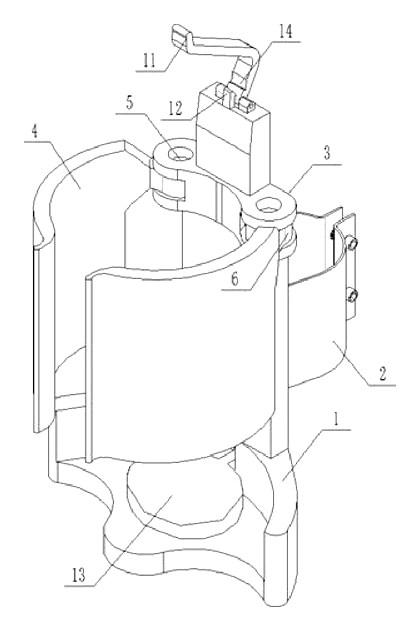
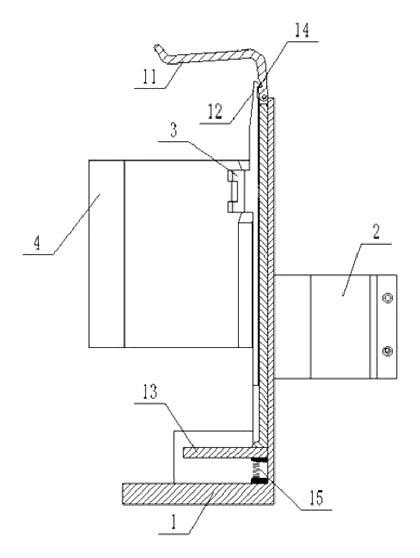
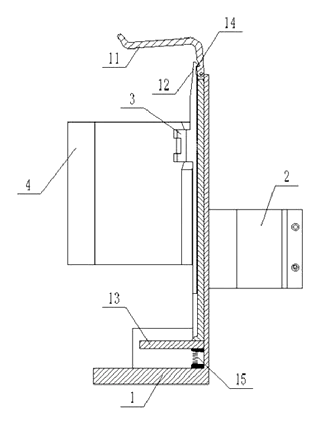
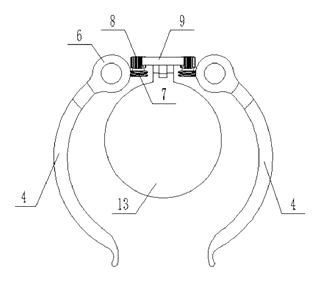
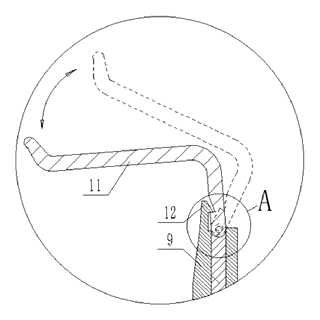
The device consists of a water cup fixing seat (1) attached to the bike via a fixing clamp-seat (2). Inside the seat, a bottom supporting plate (13) holds the base of the cup. This plate is connected to a rack gear (9). When the user pushes the cup down, the rack gear moves downward. This movement drives a gear (8) mounted on a worm screw (7). The worm screw engages a turbine (6), which rotates cup folders (4) inward to clamp the cup. Simultaneously, the rack gear moves a cup baffle (11) upward to cover the top of the cup, where it is held in place by an elastic hook (12). To remove the cup, the user manually rotates the baffle off the hook. A compressed spring (15) then pushes the bottom plate up, reversing the gear motion and opening the clamps.
Who it is for
- Cycling Accessories Brands: Looking for a premium, mechanically distinct bottle holder that offers superior retention compared to standard plastic cages.
- E-Bike Manufacturers: E-bikes often have heavier frames and higher speeds; this secure locking mechanism prevents bottles from ejecting during sudden stops or rough trails.
- Outdoor Gear Retailers: Selling high-end cycling components where ease of use and security are key selling points for commuters and mountain bikers.
- Industrial Design Firms: Incorporating this specific linkage into custom vehicle interiors or mobile workstations where containers must be secured but accessible.
How it works
The main parts
| No. | Part | What it does |
|---|---|---|
| 1 | Water Cup Fixing Seat | The main housing that contains the mechanism. |
| 2 | Fixing Clamp-Seat | Attaches the unit to the bicycle frame. |
| 4 | Cup Folder | Curved arms that close around the cup body. |
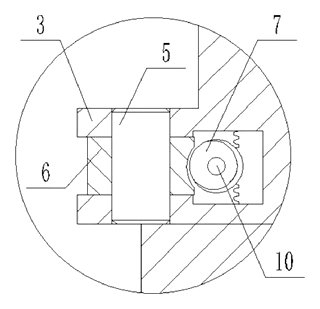
| 6 | Turbine | Rotates to drive the cup folders via the worm screw. |
| 7 | Worm Screw | Converts linear rack motion into rotational turbine motion. |
| 9 | Rack Gear | Moves vertically with the cup base; drives the gear/worm system. |
| 11 | Cup Baffle | Top cover that locks over the cup rim. |
| 12 | Elastic Hook | Secures the cup baffle in the closed position. |
| 13 | Bottom Supporting Plate | Holds the cup base; compressed by the user’s push. |
| 15 | Compressed Spring | Returns the bottom plate to the open position. |
Operating Steps
- Insertion: The user places the cup onto the bottom supporting plate (13) and presses down.
- Clamping Action: The downward force moves the rack gear (9). The rack engages the gear (8) on the worm screw (7). The worm screw rotates the turbine (6), causing the cup folders (4) to swing inward and grip the cup.
- Locking: As the rack moves down, it also pushes the cup baffle (11) up. The baffle snaps under the elastic hook (12), securing the top of the cup.
- Removal: The user manually rotates the cup baffle (11) to disengage it from the elastic hook (12).
- Release: The compressed spring (15) expands, pushing the bottom supporting plate (13) up. This reverses the gear motion, opening the cup folders (4) and lowering the cup baffle (11), allowing the cup to be lifted out freely.
Applications
Mountain Biking Trails
On rugged terrain, bottles can easily bounce out of standard cages. The worm-drive mechanism ensures the cup is gripped tightly at both the body and the rim, preventing ejection even during sharp drops or jumps.
Urban Commuting
Commuters need quick access to hydration at traffic lights. The one-push-to-lock and manual-twist-to-release design allows riders to keep one hand on the handlebars while managing their drink, improving safety in traffic.
E-Bike Integration
E-bikes generate more vibration due to motor assistance and heavier loads. This holder’s rigid metal or reinforced plastic structure absorbs shock better than flexible nylon cages, keeping the bottle stable during high-torque acceleration.
Family Cycling
For parents carrying children on bikes, securing drinks is critical to avoid spills on seats. The automatic clamping ensures that once the cup is placed, it stays put until intentionally removed, reducing mess and distraction.
Where it is less suitable
- Extreme Lightweight Racing: The added weight of the gear mechanism and spring may be disadvantageous for competitive cyclists prioritizing minimum grams.
- Very Large Containers: The fixed stroke length of the rack limits the diameter range of cups that can be effectively clamped.
Patent & Production
At a glance
| Patent number | CN208616111U (application CN201821394330) |
| Type | China utility model (实用新型) - protects product shape and structure |
| Original title | A kind of water bicycle cup holder (一种自行车水杯架) |
| Patent owner | Individual |
| Inventors | Chai Yukun |
| Filing date | 2018-08-28 |
| Grant date | 2019-03-19 |
| Status (China) | Lapsed - terminated for non-payment of annual fees (recorded 2020-08-14) |
| Patent family | Public record shows Chinese filings only - no US, European, Japanese, PCT or other filings listed |
| Cited by | 3 later documents |
| Source | Google Patents (search for CN208616111U) |
What the claims cover, in plain language
Claim 1 describes a bicycle cup holder comprising a water cup fixing seat (1) with an external fixing clamp-seat (2). The seat includes a turbine fixing seat (3) holding a turbine (6) on an axle (5), which carries cup folders (4). A worm screw (7) engages the turbine. The worm screw has a gear (8) that meshes with a rack gear (9). The rack gear supports a bottom plate (13) above a compressed spring (15). The top of the rack gear hinges a cup baffle (11) with a groove (14) that catches an elastic hook (12) on the seat. Pressing the cup down moves the rack, rotating the turbine to close the folders, while lifting the baffle to lock it under the hook.
Claim 2 specifies that the fixing clamp-seat (2) is bolted to the bicycle frame. Claim 3 states that the cup folder (4) has an arcuate (curved) structure.
This is a simplified reading for orientation only. The legal scope is defined by the exact claim wording in the official Chinese document.
What this means for US production
This patent was filed in China and has lapsed, so it no longer restricts anyone in China either. The public record shows no US or other foreign counterpart.
Two points to settle early:
- Other patents may exist. Bicycle accessories are a crowded field with many existing patents for bottle cages, especially those involving locking mechanisms or quick-release features. A freedom-to-operate (FTO) review is recommended to ensure the specific worm-drive linkage does not infringe on active US patents held by major cycling component manufacturers.
- Mechanical Reliability. The complexity of the gear train (worm, turbine, rack) introduces multiple failure points compared to simple friction cages. Prototyping must focus on wear resistance and alignment tolerances.
Customization and manufacturing
What can be customized
| Area | Options |
|---|---|
| Material | Aluminum alloy (extruded/machined) or glass-filled nylon (injected) |
| Finish | Anodized colors, powder coating, or raw matte texture |
| Compatibility | Mounting bracket size to fit different frame tube diameters |
| Spring Rate | Adjusted for lighter or heavier bottles |
| Folder Shape | Arc radius modified for specific bottle diameters |
Things to plan for (US market)
- CPSC General Requirements: While bicycles themselves are regulated, accessories like bottle holders generally fall under general consumer product safety rules regarding sharp edges and durability.
- Proposition 65: If using plastics or metals with lead/cadmium traces, California warnings may be required depending on material sourcing.
How a project runs
- Inquiry - Define target bottle sizes, material preference, and mounting constraints.
- Design - Finalize gear ratios, spring selection, and folder curvature.
- Prototype - Create functional samples to test the worm-drive smoothness and locking action.
- Pilot Run - Assemble small batches to check for alignment issues and noise.
- Production - Mold or machine parts, assemble gears, install springs, and package.
Quantities & timeline
Tooling costs depend heavily on whether aluminum extrusion or injection molding is chosen. Injection molds for the gear train require high precision to prevent binding. Assembly time is higher than standard cages due to the multi-part linkage. Send us your material choice, target quantity, and specific bottle dimensions and we will reply with options.
Production notes
Tooling and process
The core mechanism relies on precise gear meshing. Typically, the worm screw and turbine would be produced via glass-filled nylon injection molding to reduce weight and cost, though metal gears offer higher durability. The fixing clamp-seat is likely made through aluminum extrusion or stamping. Screws and bolts are used for final assembly.
Cost drivers
Number of molds is typically a primary driver because the gear train consists of several interlocking parts (rack, gear, turbine, folders). Weight impacts shipping costs if metal is used. Fastener count increases assembly labor time compared to snap-fit designs.
Prototyping path
We would typically start with 3D-printed parts to verify the kinematic movement of the rack and worm screw. Once the geometry is confirmed, produce a functional sample with machined gears to test torque and smoothness. An impact test sample should follow to ensure the holder withstands road vibrations.
What we would change before tooling
We would likely simplify the hinge boss design of the cup baffle to improve mold flow and reduce stress concentration. We might also adjust the thread engagement of the mounting bolts to allow for easier installation on varied frame angles.
Common failure points
Shaft and bearing alignment is critical; misalignment causes the worm drive to bind. Spring fatigue could lead to weak return force over time. Cracking under impact is a risk for plastic gears if the wall thickness is insufficient. Bolts loosening due to vibration is another potential issue.
Patent drawings
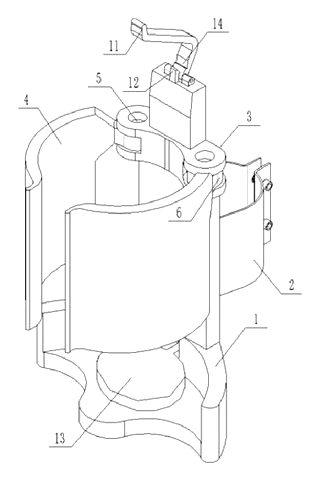
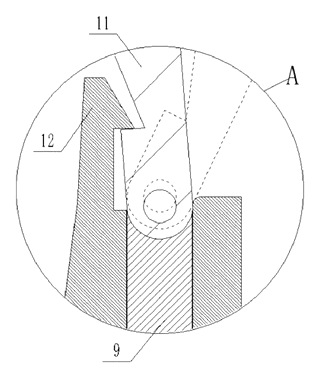
Drawings reproduced from the public patent document for reference.
Frequently asked questions
How does the automatic clamping work?
When you push the cup down, it moves a rack gear inside the holder. This rack turns a worm screw, which rotates a turbine connected to the side clamps. The clamps swing inward to grip the cup. At the same time, a top baffle rises and locks under a hook to secure the lid area.
Is it difficult to take the cup out?
No. You simply rotate the top baffle manually to unhook it. Once released, an internal spring pushes the cup back up, which reverses the gears and opens the side clamps. You can then lift the cup straight out.
What materials are used?
The patent does not specify materials. In production, we typically use glass-filled nylon for the gears and turbine to balance strength and weight. The outer shell and mount can be aluminum or durable plastic, depending on the desired finish and cost.
Will it fit my bike?
The holder attaches via a fixing clamp-seat bolted to the frame. It requires a standard round or oval tube section for mounting. Compatibility depends on the available space on your specific bike frame and the diameter of the tubes.
Can it hold large water bottles?
The stroke of the rack gear determines the maximum height and diameter of the cup it can accommodate. Standard cycling bottles (600-750ml) are the typical target. Larger mugs or wide-mouth jars may not fit within the travel range of the mechanism.
Does the mechanism rattle or get noisy?
Properly aligned gears should run smoothly. However, because there are moving parts like the worm screw and rack, some slight mechanical noise is possible. Using lubricated plastic gears helps minimize sound and wear.
Can this design be made and sold in the US?
The patent was filed in China and has lapsed, and the public record shows no US counterpart, so it does not restrict the design in the US or in China. Bicycle accessories may be covered by other US patents - see Patent & Production - so we recommend a freedom-to-operate check before volume production.
Are you affiliated with the patent owner?
No. IP2M is an independent design and manufacturing service working from the public patent document.
Request a quote
Click Request a Quote below to see our email address - copy it, or open your email app with a ready-made message. Please mention patent CN208616111U in the subject.
Helpful details to include:
- Your company and channel (cycling brand, e-bike maker, accessory retailer)
- Target bottle dimensions (diameter and height)
- Preferred materials (plastic vs. metal)
- Mounting constraints on your bike frames
- Estimated quantity and target price
- Timeline - when you would like samples and the first shipment
You can also reach us at (332) 203-9997.
Page editor: Emily Zhang, Product Editor · IP2M
Last updated November 7, 2026. If something on this page looks wrong, email [email protected] and we will check it against the patent.
Interested in building this?
Tell us your target market, quantity and timeline. We reply with options for prototyping, small-batch runs or volume production.
Send your inquiry to
Please put CN208616111U in the subject line and tell us your company, country, estimated quantity and timeline.
Prefer to talk? Call (332) 203-9997.
More product-ready patents
All Sports & Recreation patents →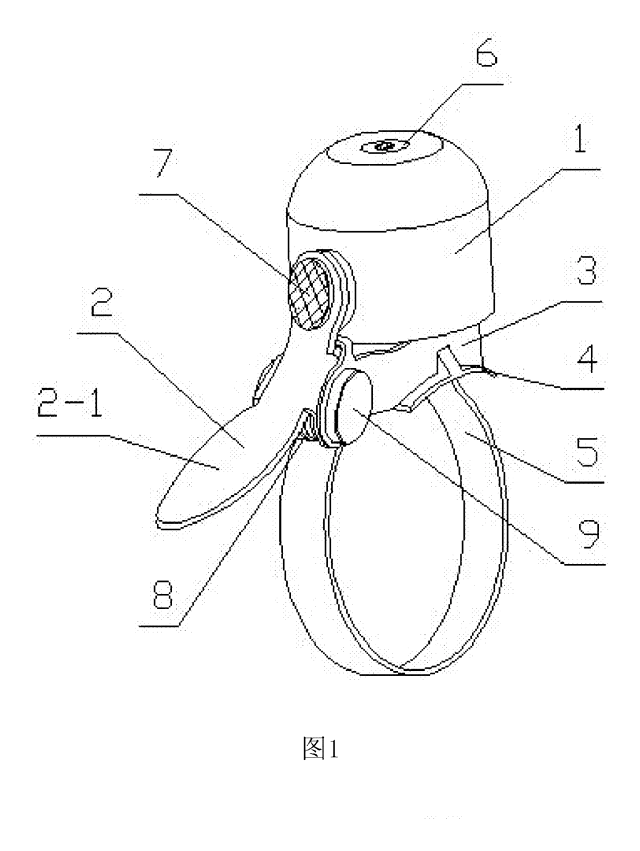
Sports & Recreation
Compact Torsion-Spring Bike Bell
Mini bike bell with a standard torsion spring and a rubber-floated dome - small size, clear tone, quick strap mount.
Patent CN205819384U
Sports & Recreation
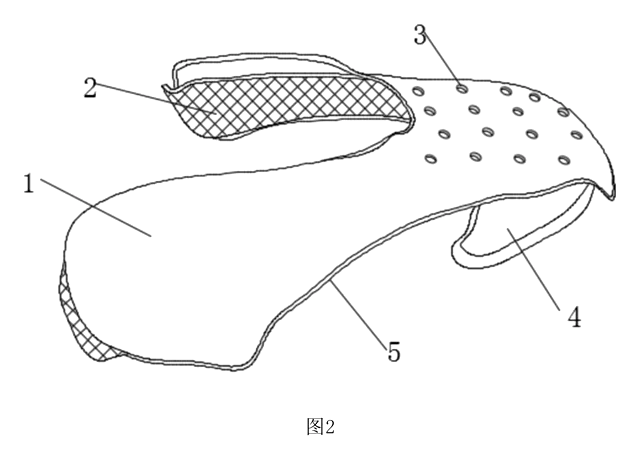
Padded Toe-Box Shield for Sneakers
Ventilated, silicone-lined toe-box insert that supports the front of a sneaker and cushions the toes.
Patent CN209473731U
Sports & Recreation
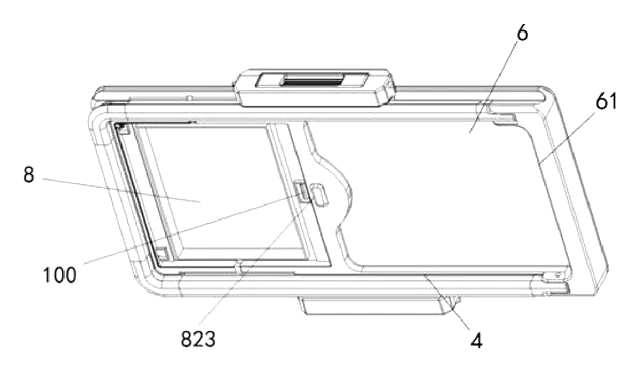
Reversible Fishing Seat-Box Lid with Backrest
Fishing seat-box lid that flips on removable hinge pins: cushion, backrest and storage on one face.
Patent CN208624426U
Sports & Recreation
Swivel-Pin Skateboard Truck with Rubber Sleeve
Skateboard truck with a turning center pin, a tilting axle clamp and a rubber sleeve that centers it.
Patent CN216777880U
Sports & Recreation
Full-Face Bike Helmet with Magnetic Detachable Chin Bar
Full-face cycling helmet whose chin bar clips on and off with magnetic, latching side connectors.
Patent CN206630067U
Sports & Recreation
Bike Phone Holder with Built-In Flashlight Clamp
Handlebar mount with a phone cradle on top and a flashlight clamp below, on one arm.
Patent CN206077485U
Browse by category
- Apparel & Accessories (48)
- Baby & Kids (29)
- Bags & Luggage (17)
- Bath & Personal Care (32)
- Car Accessories (25)
- Furniture, Bedding & Storage (24)
- Garden & Outdoor (32)
- Health & Wellness (14)
- Home, Kitchen & Cleaning (50)
- Lighting (23)
- Packaging & Containers (12)
- Pet Products (11)
- Phone & Camera Accessories (9)
- Retail Display (25)
- School, Office & Art (36)
- Sports & Recreation (46)
- Tools & Workshop (54)
- Toys & Games (22)
This page is based on the public patent document CN208616111U, assigned to Individual. IP2M is an independent manufacturing service and is not affiliated with, endorsed by or licensed by the patent owner. Images marked as concept renderings are illustrations, not photos of an existing product. Patent status information is provided for reference only and is not legal advice; confirm freedom to operate for your market before production. Full disclaimer.