
Patent CN208958444U
Updated October 25, 2026Inflatable Cervical Traction Collar Shaped for a Child's Neck
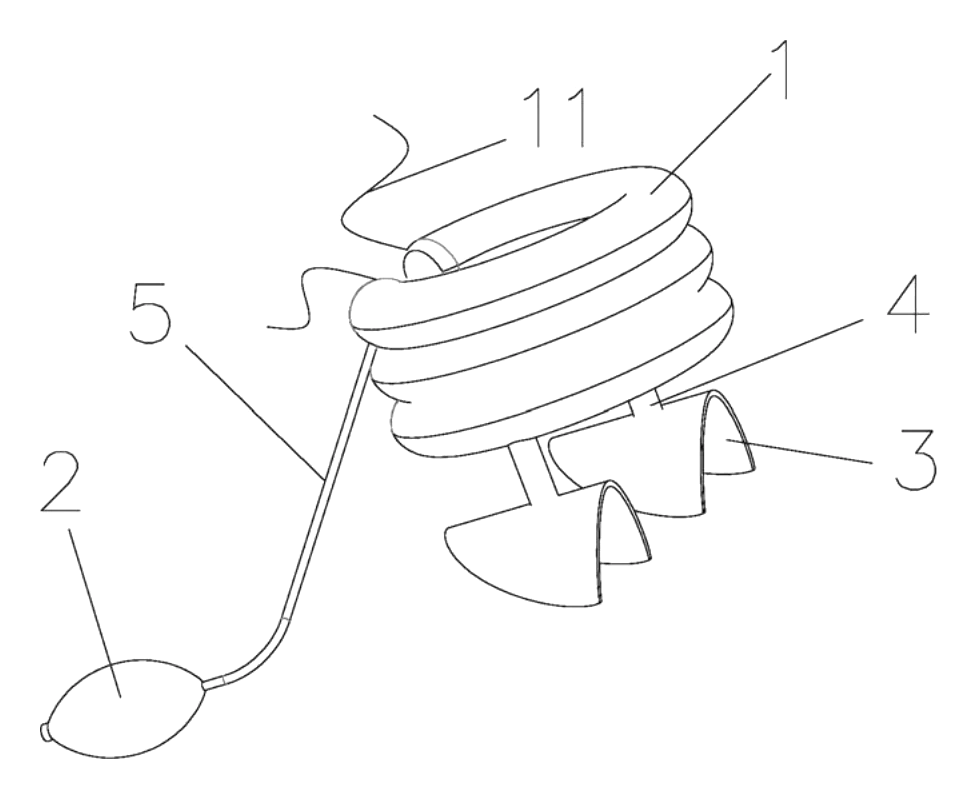
Most inflatable neck traction collars are made for adults: a single tall ring that sits on the collarbones. This design was filed by a children's hospital and is built around a child's proportions. The collar is three connected air rings in a C shape, open at the back and closed with a strap, and its top surface slopes so the front is taller than the back. Instead of resting directly on the shoulders, the collar stands on two telescoping struts whose feet are U-shaped caps that sit over each shoulder and pivot to follow its slope. A latex hand bulb, like the one on a blood-pressure cuff, sets the inflation.
- China utility model - lapsed
- No filings outside China
- Pediatric orthopedic & rehab supplies
- Rubber air rings, flannel cover, telescoping struts
Splat! What let you down?
🧒
Child neck curve
The collar's top slopes from a taller front to a lower back to match a child's neck.
🎈
Three linked air rings
Three rubber rings are joined and connected, so they inflate together and hold their shape.
↕️
Telescoping shoulder struts
Two struts lift or lower the collar to suit different neck lengths.
🔄
Pivoting shoulder caps
U-shaped caps sit over each shoulder and pivot on the struts to follow the shoulder line.
Bring this product to market
- ✓ Patent vetted China-only family and legal status checked
- 2 Product brief · now How it works, uses and options written up
- 3 Prototype First samples for buyers to review
- 4 Pilot run Small first batch for launch customers
- 5 Volume production Repeat orders at scale
Buyer interest
– of 100 buyers needed to start prototyping
One click, no sign-up. Each vote is one real visitor, and products with the most interest go to prototyping first.
Build team: no members yet. Need a partner, co-funding or skills to build this? Join and we introduce the team once it forms.
The problem
Inflatable cervical traction collars are sold widely for adults, but children’s necks are shorter and curve differently, and a collar that rests on the collarbones can slip, press unevenly or fail to fit a small frame. According to the patent, the inventors at a children’s hospital set out to make a traction device that follows the physiological curve of a child’s neck, fits children of different sizes and stays stable on the shoulders.
The solution
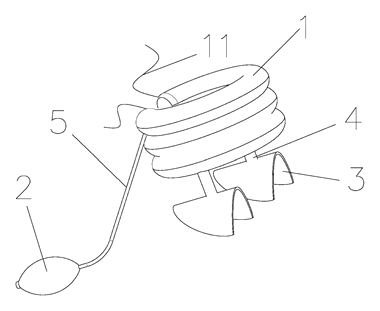
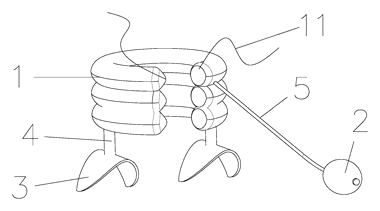
- The air collar (1) is a C-shaped ring, open at the back, made of three rubber air rings joined top to bottom and connected inside so they inflate together. The surface is covered with flannel.
- The collar is taller at the front than at the back, so its top surface forms a slope that matches the child’s neck curve.
- An adjusting strap (11) at the open end closes the collar around the neck and sets how snugly it fits.
- An inflation tube (5) connects the collar to an inflation bulb valve (2) - an air hose, valve and latex bulb, similar to a blood-pressure cuff bulb. A vent sealed by a plug lets the air out.
- Two shoulder struts (4) are fixed under the collar. They are telescoping, so the collar can be raised or lowered.
- At the bottom of each strut is a U-shaped shoulder cap (3) that sits over the shoulder. A rotating joint between strut and cap lets the cap follow the shoulder slope.
Who it is for
- Pediatric orthopedic and rehab suppliers looking for a child-size traction collar to add to a line that today offers mostly adult sizes.
- Medical device brands with FDA registration who want a simple, non-powered pediatric product to develop and register.
- Durable medical equipment distributors serving children’s hospitals, physical therapy clinics and home-care programs.
- Physical therapy product companies building pediatric kits around posture and neck support.
How it works
The main parts
| No. | Part | What it does |
|---|---|---|
| 1 | Air collar | Three connected rubber rings in a C shape, flannel-covered. |
| 11 | Adjusting strap | Closes the open back around the neck. |
| 2 | Inflation bulb valve | Hose, valve and latex bulb for pumping air. |
| 5 | Inflation tube | Connects the bulb to the collar. |
| 4 | Shoulder struts | Telescoping legs that set the collar height. |
| 3 | Shoulder caps | U-shaped caps over each shoulder, on pivoting joints. |
Using it (as described in the patent)
- Adjust the struts to the child’s neck length with the collar deflated.
- Place the caps over the shoulders and close the strap around the neck.
- Pump the bulb - the patent describes adjusting the inflation through the bulb valve to reach the most suitable height.
- Release the air through the vent after use; the collar folds flat for storage and travel.
All use of a traction device on a child is directed by the treating clinician; the steps above only describe the mechanism.
Applications
Pediatric orthopedic clinics
Clinics that prescribe neck support or traction for children need a device sized for them rather than the smallest adult collar.
Children’s hospital rehab departments
Therapists working with posture and neck conditions can use an adjustable collar across a range of ages.
Home-care programs
The patent describes the device as easy to carry and deflatable when idle, which suits families following a home program set by a clinician.
Medical supply catalogs
Distributors can offer a pediatric size alongside existing adult inflatable collars.
Where it is less suitable
- Self-treatment without clinical direction - traction on a child’s neck is a medical decision; the product is supplied through clinical channels.
- Children with latex allergy - the standard bulb uses a latex ball, so a latex-free bulb must be specified.
- Adults - the slope and size are designed for children; adult versions are a different product.
Frequently asked questions
How is this different from an adult inflatable neck collar?
The collar is shaped for a child: it is taller at the front than at the back to follow a child’s neck curve, and it stands on telescoping struts with shoulder caps instead of resting directly on the collarbones.
What is it intended for?
The patent describes it as a cervical traction device that conforms to the physiological curve of a child’s neck. Any therapeutic use is decided by the treating clinician; we manufacture the device and do not give medical advice.
How many sizes are needed?
The telescoping struts cover a range of neck lengths, but collar diameter and shoulder width still vary with age. Most programs plan two or three sizes, confirmed in fit trials.
How is the pressure controlled?
The patent uses a hand bulb with a valve, like a blood-pressure cuff, and a sealed vent to let air out. A pressure-relief valve or gauge can be added in design.
Can it be made latex-free?
Yes. The patent’s bulb uses a latex ball; a latex-free bulb and TPU or synthetic rubber rings can be specified.
Can the cover be washed?
The patent wraps the rings in flannel. A removable, washable cover is a common design choice for pediatric use.
Can this design be made and sold in the US?
The patent was filed only in China and has lapsed, so it does not restrict the design in the US or in China. Inflatable traction devices may be covered by other US patents - see Patent & Production - so we recommend a freedom-to-operate check before volume production.
Are you affiliated with the patent owner?
No. IP2M is an independent design and manufacturing service working from the public patent document.
Request a quote
Click Request a Quote below to see our email address - copy it, or open your email app with a ready-made message. Please mention patent CN208958444U in the subject.
Helpful details to include:
- Your company and channel (medical device brand, DME distributor, rehab supplier)
- Target ages and size range
- Materials (latex-free, cover type)
- Regulatory plan (who holds the FDA registration and listing)
- Estimated quantity and target price
- Timeline - when you would like samples and the first shipment
You can also reach us at (332) 203-9997.
Explore this product
Interested in building this?
Tell us your target market, quantity and timeline. We reply with options for prototyping, small-batch runs or volume production.
Send your inquiry to
Please put CN208958444U in the subject line and tell us your company, country, estimated quantity and timeline.
Prefer to talk? Call (332) 203-9997.
More product-ready patents
All Health & Wellness patents →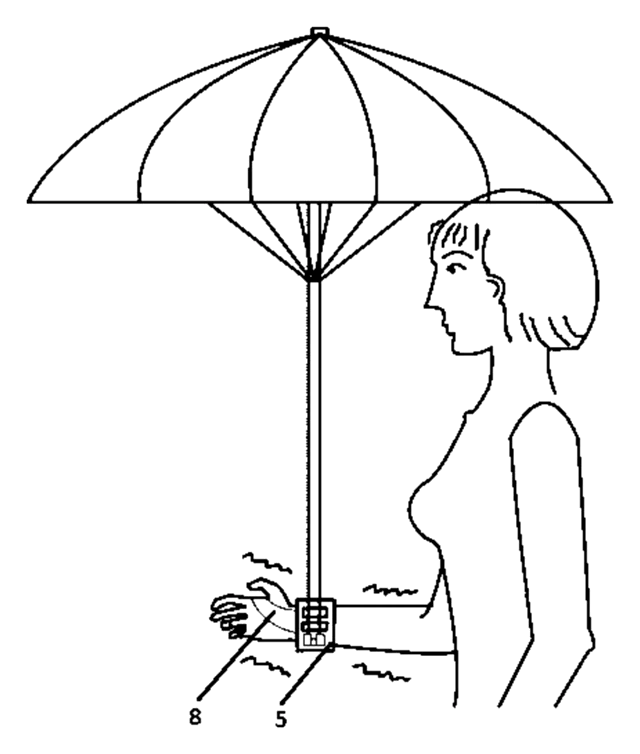
Health & Wellness
Wrist-Mounted Umbrella Stabilizer
Wrist-worn umbrella holder with an anti-shake link; the patent designs it for people with tremor.
Patent CN212545964U
Health & Wellness
Spring-Valve Breath Trainer for Singers
Pocket breath trainer: blow against a spring-loaded valve to practice breath support for singing.
Patent CN207833725U
Health & Wellness
Closed-Loop Nasal Rinse Kit with Collection Bottle
Nasal rinse set: syringe-fed nose plug inside a sealed hood, with used solution drawn into a bottle.
Patent CN208017763U
Massage & Wellness
Pneumatic Multi-Directional Neck Traction Collar
Three-airbag cervical collar that inflates in sequence to guide the head in multiple directions.
Patent CN207202980U
Health & Wellness
Shoulder-Detecting Massage Chair Mechanism with Forked Swing Arms
Massage chair core uses forked swing arms and sensors to detect shoulders and adjust the routine.
Patent CN106618998B
Health & Wellness
Switchable Rotation Device for Handheld Massagers
Massage attachment mechanism that switches between locked and free-rotating positions.
Patent CN214968684U
Browse by category
- Apparel & Accessories (22)
- Baby & Kids (16)
- Bags & Luggage (9)
- Bath & Personal Care (16)
- Car Accessories (10)
- Furniture, Bedding & Storage (12)
- Garden & Outdoor (18)
- Health & Wellness (8)
- Home, Kitchen & Cleaning (24)
- Lighting (12)
- Packaging & Containers (6)
- Pet Products (6)
- Phone & Camera Accessories (4)
- Retail Display (13)
- School, Office & Art (19)
- Sports & Recreation (25)
- Tools & Workshop (27)
- Toys & Games (12)
This page is based on the public patent document CN208958444U, assigned to Children's Hospital of Fudan University. IP2M is an independent manufacturing service and is not affiliated with, endorsed by or licensed by the patent owner. Images marked as concept renderings are illustrations, not photos of an existing product. Patent status information is provided for reference only and is not legal advice; confirm freedom to operate for your market before production. Full disclaimer.