
Patent CN209058988U
Updated October 26, 2026Retractable Shower Curtain with Magnetic Closure and Auto-Rewind Spool
Standard shower curtains hang from overhead rods and slide along rings or cords that collect water spots and require regular cleaning. This design removes the top rail entirely. The curtain cloth winds vertically around a spool housed inside a strip-shaped shell mounted on one side of the shower doorframe. When you need privacy, you pull the free end across the opening horizontally until it meets a connection component on the opposite side. Two magnetic strips—one embedded in a connection strap on the curtain edge, the other on the connection component—snap together to close the gap. When you release the curtain, a reduction torsion spring drives the spool to rewind the cloth back into the shell. A freewheel clutch controls the rotation so the cloth pulls out smoothly but rewinds under spring tension. Because there are no overhead guide rails or guide cords, installation relies on mounting blocks with flat bonding planes that adhere directly to the shower wall.
- China utility model - in force
- No filings outside China
- Bathroom & shower hardware
- Magnetic closure, torsion spring rewind
Splat! What let you down?
🧲
Magnetic closure
First and second magnetic strips attract each other to seal the curtain edge against the connection component.
🔄
Auto-rewind spool
A reduction torsion spring and freewheel clutch inside the shell rewind the cloth when released.
🚫
No guide rails
The curtain moves horizontally without overhead tracks, guide rails, or guide cords.
🧽
Scraping article
Paired scraping items contact the outer surface of the curtain cloth to wipe away water during retraction.
Bring this product to market
- ✓ Patent vetted China-only family and legal status checked
- 2 Product brief · now How it works, uses and options written up
- 3 Prototype First samples for buyers to review
- 4 Pilot run Small first batch for launch customers
- 5 Volume production Repeat orders at scale
Buyer interest
– of 100 buyers needed to start prototyping
One click, no sign-up. Each vote is one real visitor, and products with the most interest go to prototyping first.
Build team: no members yet. Need a partner, co-funding or skills to build this? Join and we introduce the team once it forms.
The problem
Traditional shower curtains rely on overhead rods, rings, or guide cords to span the shower opening. These horizontal tracks collect moisture, soap residue, and mineral deposits over time, requiring frequent cleaning. In compact bathrooms or prefabricated shower enclosures, installing a ceiling-mounted rod or track can be difficult due to low clearance or glass walls that cannot support heavy drilling. Furthermore, loose-hanging curtains often billow inward during a shower or fail to seal completely at the edges, allowing water to escape onto the bathroom floor.
The solution
This utility model replaces the overhead track with a vertical winding mechanism.
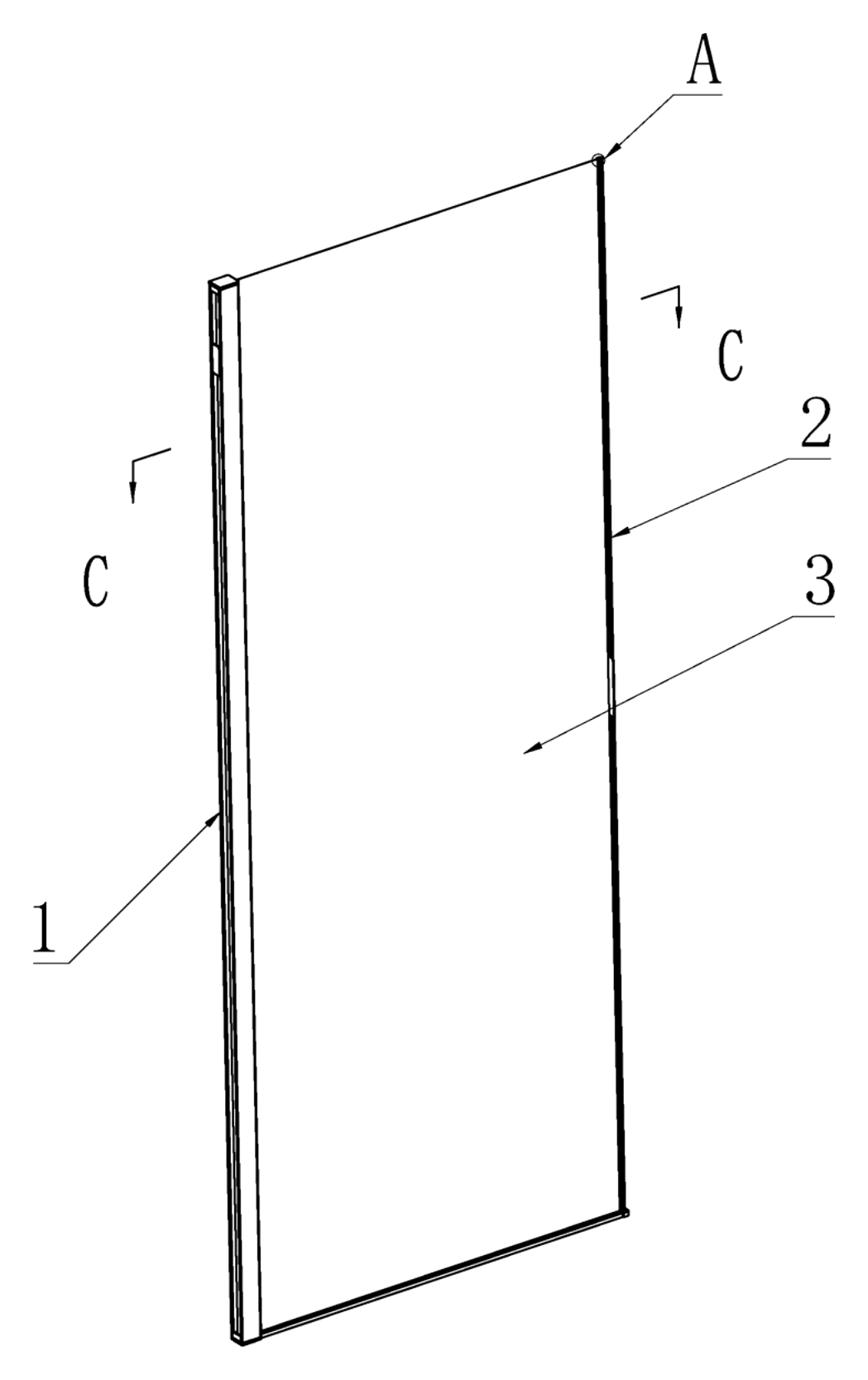
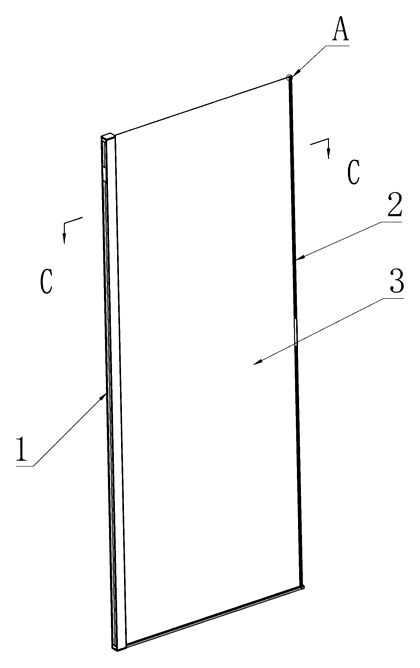
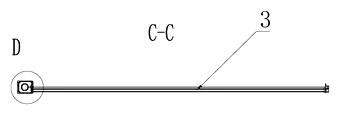
- A bearing assembly (1) mounts on one side of the shower doorframe. It consists of a strip-shaped shell (1.1) oriented vertically.
- Inside the shell, a spool (1.2) rotates on bearings matched to both ends of the shell. The shower curtain cloth (3) winds around this spool.
- The user pulls the free end of the cloth horizontally across the opening toward a connection component (2) mounted on the opposite side of the doorframe.
- A first magnetic stripe (2.1) on the connection component attracts a second magnetic stripe (5) fixed to the free end of the cloth, holding the passage closed.
- When released, a reduction torsion spring inside the shell rotates the spool backward, rewinding the cloth. A freewheel clutch ensures the spool turns freely when pulled out but engages the spring for retraction.
Who it is for
- Sanitary ware brands looking to add a retractable, rail-free shower screen to their bathroom fixture catalogs.
- Prefabricated shower enclosure manufacturers who need a compact closure system that fits between glass panels or walls without drilling overhead tracks.
- Hotel and hospitality procurement teams seeking easy-to-clean shower barriers that eliminate mold-prone curtain rings and cords.
- Home improvement wholesalers supplying contractors with modern bathroom upgrades that simplify installation.
How it works
The main parts
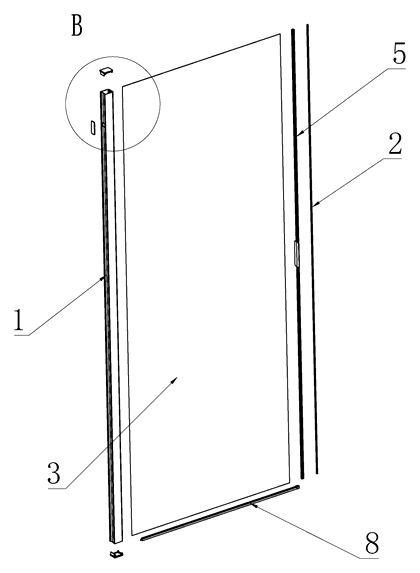
| No. | Part | What it does |
|---|---|---|
| 1 | Bearing assembly | Houses the spool and spring mechanism; mounts vertically on the wall. |
| 1.1 | Shell | Strip-shaped housing containing the spool and clutch. |
| 1.2 | Spool | Vertical cylinder around which the shower curtain cloth winds. |
| 1.3 | Card slot | Receives the buckle of the mounting block. |
| 2 | Connection component | Mounted on the opposite side of the doorframe to receive the curtain edge. |
| 2.1 | First magnetic stripe | Embedded in the connection component for magnetic closure. |
| 3 | Shower curtain cloth | The flexible barrier that unrolls and rewinds. |
| 4 | Mounting blocks | Attach the shell to the wall via a bonding plane. |
| 4.1 | Bonding plane | Flat back surface coated with adhesive for wall mounting. |
| 4.2 | Buckle | L-shaped clip that snaps into the card slot on the shell. |
| 5 | Second magnetic stripe | Fixed to the free end of the curtain cloth to mate with the first stripe. |
| 6 | Connection strap | Holds the second magnetic stripe and features an arc surface for pivoting. |
| 7 | Scraping article | Contacts the cloth surface to wipe off water as it retracts. |
| 8 | Water bar | Optional sill at the bottom of the doorframe; the lower edge of the curtain cloth extends over it. |
Operating steps
- Pull the free end of the shower curtain cloth horizontally from the bearing assembly toward the connection component. The spool rotates forward, disengaging the freewheel clutch so the cloth extends smoothly.
- Close the opening by aligning the connection strap on the curtain edge with the connection component. The first and second magnetic stripes attract, sealing the gap.
- Adjust the seal if needed. The connection strap has an arc surface that mates with a concave arc surface on the connection component, allowing slight rotation to vary the magnetic attraction force.
- Release the curtain when finished. Disengage the magnetic strips. The reduction torsion spring drives the spool in reverse, rewinding the cloth into the shell.
- Wipe the cloth automatically during retraction. Paired scraping articles press against the outer surface of the cloth, removing water droplets before the fabric rolls onto the spool.
Applications
Prefabricated shower enclosures
Manufacturers of enclosed shower pods use this system to provide a door-like seal without the weight or cost of glass doors. The vertical shell fits neatly into the corner profile of the pod.
Hotel bathroom renovations
Hospitality buyers replace traditional curtains and rings to reduce maintenance time. The absence of overhead tracks eliminates areas where mold typically accumulates, speeding up room turnover cleaning.
Compact residential bathrooms
Homeowners with limited space benefit from a curtain that disappears into a slim wall-mounted shell. Without a protruding overhead rod, the shower area feels more open when not in use.
Accessible and assisted-living showers
Caregivers and users find a horizontally pulling cloth easier to manage than heavy sliding glass doors. The magnetic closure requires minimal force to engage and release.
Where it is less suitable
- Freestanding tubs without adjacent walls - the system requires vertical wall surfaces on two sides of an opening to mount the bearing assembly and connection component.
- Steam rooms - environments requiring a complete vapor seal may need rigid, gasketed doors rather than a flexible cloth barrier.
Frequently asked questions
How does the curtain retract without a pull cord?
The patent describes a reduction torsion spring inside the vertical shell that drives the spool to rewind the cloth. A freewheel clutch allows the spool to turn freely when you pull the curtain out, but engages the spring to retract it automatically when you release the magnetic edge.
Does it need a ceiling track or overhead rod?
No. The patent specifies that the system operates without default guide rails or guide cords. The cloth moves horizontally between the bearing assembly on one side of the doorframe and the connection component on the other.
How does the curtain stay closed?
A first magnetic stripe is located on the connection component, and a second magnetic stripe is fixed to the free end of the shower curtain cloth. When the curtain is pulled across, the two magnetic stripes attract each other to seal the opening.
Can the magnetic seal be adjusted?
The patent describes a connection strap on the curtain edge with an arc surface that mates with a concave arc surface on the connection component. Rotating the strap varies the relative position between the two magnetic stripes, changing the magnetic attraction force.
What keeps the cloth clean when it rolls up?
The bearing assembly includes scraping articles that bond with the outer surface of the shower curtain cloth. According to the patent, these scraping articles are arranged in pairs with a gap between them, wiping water off the fabric as it retracts into the shell.
How is the shell attached to the wall?
The shell uses removable mounting blocks. Each block has an L-shaped buckle that snaps into a card slot on the shell, and a flat bonding plane on the back coated with adhesive to stick directly to the shower wall. The patent mentions using two mounting blocks spaced apart vertically.
Can this design be made and sold in the US?
The patent was filed only in China and is in force in China until at most 2028-08-16 (if annual fees are paid). It does not restrict the design in the US. Retractable screens and magnetic closures may be covered by other US patents - see Patent & Production - so we recommend a freedom-to-operate check before volume production.
Are you affiliated with the patent owner?
No. IP2M is an independent design and manufacturing service working from the public patent document.
Request a quote
Click Request a Quote below to see our email address - copy it, or open your email app with a ready-made message. Please mention patent CN209058988U in the subject.
Helpful details to include:
- Your company and channel (sanitary ware brand, hotel supplier, home improvement wholesaler, enclosure manufacturer)
- Target shower height and opening width
- Preferred cloth material (PEVA, polyester, etc.)
- Mounting preference (adhesive blocks, screws, or both)
- Estimated quantity and target price
- Timeline - when you would like samples and the first shipment
You can also reach us at (332) 203-9997.
Explore this product
Interested in building this?
Tell us your target market, quantity and timeline. We reply with options for prototyping, small-batch runs or volume production.
Send your inquiry to
Please put CN209058988U in the subject line and tell us your company, country, estimated quantity and timeline.
Prefer to talk? Call (332) 203-9997.
More product-ready patents
All Bath & Personal Care patents →
Bath & Personal Care
Foot-Pedal Soap & Sanitizer Dispenser Stand
Hands-free, battery-free dispenser stand - step on a pedal to press the pump of any soap or sanitizer bottle.
Patent CN207461995U
Bath & Personal Care
Ear-Shaped Mask Strap Guard with Tension Adjuster
Ear-shaped silicone guard and strap-length adjuster that make ear-loop masks comfortable to wear for long hours.
Patent CN205456233U
Bath & Personal Care
Adjustable-Length Back Scrubber Strap with Push-Button Handles
Back-scrubber strap with push-button handles that set its length and a spring that keeps it taut.
Patent CN207041452U
Bath & Personal Care
Angled-Plate Hair Straightener
Flat iron with plates twisted 45-75° to the handle, a curling groove and rubber-capped tips.
Patent CN206137462U
Bath & Personal Care
Refillable Lipstick Case with Sealed Snap-In Refill Pods
Reusable twist-up lipstick case; sealed refill pods unlock at the top of the stroke for shade swaps.
Patent CN206909979U
Bath & Personal Care
Quick-Release Toilet Seat Hinge with a Push-Button Two-Strip Latch
Toilet seat hinge: drop the shaft onto a grooved post to lock; one push parks the latch open to lift it off.
Patent CN210370292U
Browse by category
- Apparel & Accessories (22)
- Baby & Kids (16)
- Bags & Luggage (9)
- Bath & Personal Care (16)
- Car Accessories (10)
- Furniture, Bedding & Storage (12)
- Garden & Outdoor (18)
- Health & Wellness (8)
- Home, Kitchen & Cleaning (24)
- Lighting (12)
- Packaging & Containers (6)
- Pet Products (6)
- Phone & Camera Accessories (4)
- Retail Display (13)
- School, Office & Art (19)
- Sports & Recreation (25)
- Tools & Workshop (27)
- Toys & Games (12)
This page is based on the public patent document CN209058988U, assigned to Ningbo Guanghe Sanitary Ware Co Ltd. IP2M is an independent manufacturing service and is not affiliated with, endorsed by or licensed by the patent owner. Images marked as concept renderings are illustrations, not photos of an existing product. Patent status information is provided for reference only and is not legal advice; confirm freedom to operate for your market before production. Full disclaimer.