
Patent CN209436389U
Updated October 25, 2026Sew-Through Button with Chamfered Thread Holes and Recessed Thread Groove
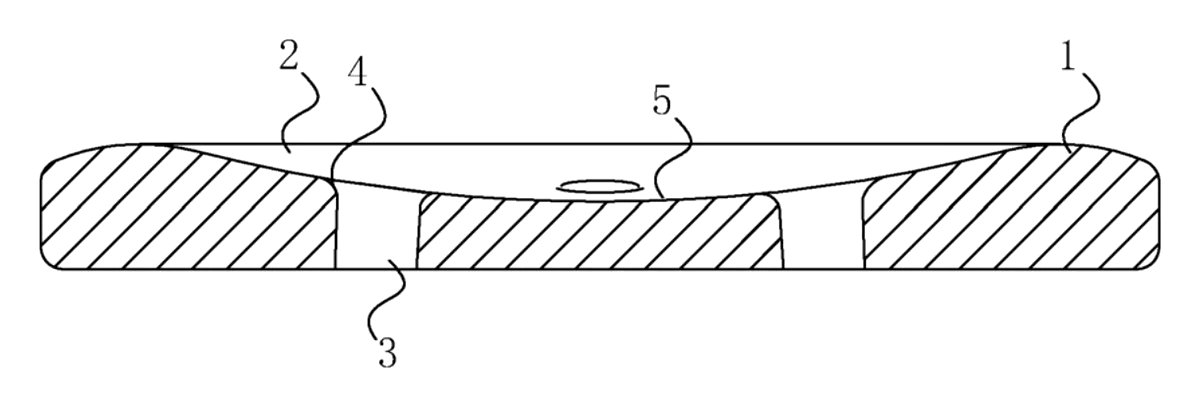
Standard flat buttons leave sharp edges where the thread bends into the hole. This button adds an outwardly protruding arc chamfer around each thread hole on the side facing the thread storage groove. The chamfer is located on the edge of the threading hole facing the recessed storage groove. Between the four holes, the button body dips downward into a central groove. According to the patent, the design can reduce the possibility of thread breakage during sewing.
- China utility model - lapsed
- No filings outside China
- Apparel fasteners & accessories
- Resin, metal or shell button blanks
Splat! What let you down?
🧵
Arc-chamfered holes
Outwardly protruding arc chamfers are provided on the edges of the thread holes facing the storage groove.
🕳️
Recessed thread groove
An inwardly depressed storage groove is formed on one side of the button body.
⬇️
Central depression
The area between the four holes dips downward to form a groove.
🔘
Optional inner features
Annular grooves inside the holes, arc-edge transitions, and raised circular supports between holes are described in dependent claims.
Bring this product to market
- ✓ Patent vetted China-only family and legal status checked
- 2 Product brief · now How it works, uses and options written up
- 3 Prototype First samples for buyers to review
- 4 Pilot run Small first batch for launch customers
- 5 Volume production Repeat orders at scale
Buyer interest
– of 100 buyers needed to start prototyping
One click, no sign-up. Each vote is one real visitor, and products with the most interest go to prototyping first.
Build team: no members yet. Need a partner, co-funding or skills to build this? Join and we introduce the team once it forms.
The problem
When a standard flat button is sewn onto a garment, the thread must bend as it enters the hole from the fabric side. During industrial sewing, this edge creates friction against the thread. Over time, or even during the initial attachment, the thread can fray and snap. According to the patent, the design aims to reduce the possibility of broken threads during sewing.
The solution
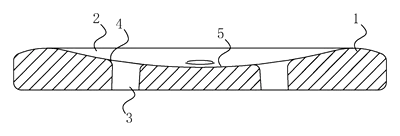
- The button body (1) has one side provided with an inwardly recessed thread storage groove (2).
- Multiple threading holes (3) pass completely through the button body. In the described embodiment, there are four holes.
- On the side of each threading hole that faces the thread storage groove, the edge is shaped into an outwardly protruding arc chamfer (4).
- The portion of the button body located between the four threading holes is depressed downward to form a groove (5).
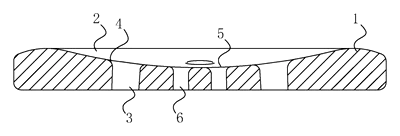
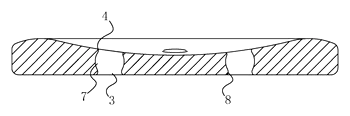
- Additional features described in the patent include an arc surface transition connecting the edge of the groove to the edge of the threading hole, via holes (6) passing through the upper and lower end faces within the groove, annular grooves (7) concavely formed on the inner walls of the threading holes, circular arc corners (8) on the edges facing away from the storage groove, gaps (9) recessed between adjacent holes, and circle supports (10) projecting upward between adjacent holes.
Who it is for
- Dress shirt manufacturers who run high-speed bartacking machines and need to minimize thread breaks on plackets and cuffs.
- Uniform and workwear brands whose garments undergo frequent washing and heavy abrasion, requiring secure button attachment.
- Garment accessory wholesalers supplying button blanks to factories looking for an upgraded four-hole option.
- Private-label fashion brands sourcing custom buttons and wanting a functional detail that improves garment longevity.
How it works
The main parts
| No. | Part | What it does |
|---|---|---|
| 1 | Button body | The button body carrying the described features. |
| 2 | Thread storage groove | An inwardly recessed area on one side of the button body. |
| 3 | Threading holes | Four holes passing through the body for the sewing needle and thread. |
| 4 | Arc chamfer | An outwardly protruding rounded edge on the hole, facing the storage groove. |
| 5 | Groove (central) | A downward depression between the four holes. |
| 6 | Via holes | Optional holes through the upper and lower faces within the central groove. |
| 7 | Annular groove | An optional concave ring formed on the inner wall of the threading hole. |
| 8 | Circular arc corner | An optional rounded edge on the hole facing away from the storage groove. |
| 9 | Gap | An optional recessed section between adjacent threading holes. |
| 10 | Circle support | An optional upward projection between adjacent threading holes. |
Sewing sequence
- Position the button on the garment fabric. The thread storage groove (2) is on one side of the button body.
- Pass the needle up through the fabric and into one of the threading holes (3). The patent describes the arc chamfer (4) at the edge of the threading hole.
- Cross the thread over the central groove (5) to the opposite hole. The depression forms a groove between the four holes.
- Repeat until the required number of stitches is complete. The patent describes the storage groove as a recess for thread.
- Tie off the thread. According to the patent, the chamfers and central groove can reduce the possibility of broken threads.
Applications
Dress shirts and blouses
Placket and cuff buttons on dress shirts are attached by high-speed automated sewing machines. The arc chamfer helps maintain consistent stitch quality across thousands of units per shift.
Workwear and uniforms
Industrial uniforms endure repeated commercial laundering and physical strain. The recessed storage groove and chamfered entry help distribute the load along the thread length.
Outerwear and jackets
Lightweight jackets use four-hole buttons for decorative and functional closures. When sewn through thick layers of lining and shell fabric, the rounded corners on both sides of the hole help the needle pull the thread through dense material cleanly.
Children’s clothing
Buttons on children’s garments face constant pulling and twisting. By smoothing the contact points inside the hole, the design helps keep the thread intact longer under rough handling.
Home textiles
Duvet covers, cushion panels, and decorative pillows sometimes use sew-through buttons as tufting anchors. The thread passes through thick batting. The chamfered hole geometry eases the thread path through these bulky assemblies.
Where it is less suitable
- Jeans and heavy denim - shank buttons or metal rivets are standard for waistbands because they handle shear forces better than any sew-through design.
- Blind-stitched hems - applications that require hidden stitching do not use four-hole face buttons.
- Extremely small buttons - buttons under about 8 mm in diameter may lack the surface area needed to mold the central groove and four chamfered holes effectively.
Frequently asked questions
How does the arc chamfer prevent thread breakage?
On a standard button, the thread bends over a sharp edge where it enters the hole. Under the rapid tension of a sewing machine, that edge acts like a blade against the fibers. According to the patent, the arc chamfer can reduce the possibility of broken threads during sewing.
What is the thread storage groove for?
The patent describes it as an inwardly recessed area on one side of the button body that stores thread. According to the patent, the design can reduce the possibility of broken threads during sewing.
Can this button be made in two-hole versions?
Yes. Although the patent illustrates a four-hole layout, the core feature—the arc chamfer on the edge facing the storage groove—can be applied to a two-hole configuration. The central depression would simply be shaped as a channel between the two holes rather than a square groove.
Which materials work best for this geometry?
Polyester resin and urea formaldehyde are common for molded shirt buttons and hold fine details like chamfers well. Natural materials such as corozo nut or shell can also be machined or pressed with this profile, though the minimum chamfer radius may need adjustment to prevent chipping during tumble polishing. Metal buttons are possible but require stamping or casting dies tailored to the groove depth.
Does the central groove weaken the button?
The patent describes the groove as a downward depression between the holes, not a through-cut. The remaining rim thickness is set during mold design to ensure the button retains adequate structural strength. For very small diameters, the groove depth would be reduced to maintain integrity.
Will this fit standard automatic button-sewing machines?
The patent does not specify dimensions; diameter, thickness and hole spacing are to be confirmed in design. The patent describes features on one side of the button body and in the threading holes; machine compatibility should be confirmed during sampling.
What sizes are available?
The patent does not specify dimensions. Typical dress shirt buttons range from about 10 mm for cuffs to 15 mm for front plackets. Exact diameters, thicknesses, and hole spacing are set in design and confirmed on prototypes based on the buyer’s garment specifications.
Can this design be made and sold in the US?
The patent was filed only in China and is lapsed (terminated for non-payment of annual fees, recorded 2024-07-02), so it does not restrict the design in the US or in China. Button geometries may be covered by other US patents - see Patent & Production - so we recommend a freedom-to-operate check before volume production.
Are you affiliated with the patent owner?
No. IP2M is an independent design and manufacturing service working from the public patent document.
Request a quote
Click Request a Quote below to see our email address - copy it, or open your email app with a ready-made message. Please mention patent CN209436389U in the subject.
Helpful details to include:
- Your company and channel (apparel manufacturer, uniform brand, garment accessory wholesaler, private label)
- Button diameter and thickness requirements
- Material preference (resin, shell, metal, corozo)
- Hole count (two or four) and color or finish details
- Estimated quantity and target price
- Timeline - when you would like samples and the first shipment
You can also reach us at (332) 203-9997.
Explore this product
Interested in building this?
Tell us your target market, quantity and timeline. We reply with options for prototyping, small-batch runs or volume production.
Send your inquiry to
Please put CN209436389U in the subject line and tell us your company, country, estimated quantity and timeline.
Prefer to talk? Call (332) 203-9997.
More product-ready patents
All Apparel & Accessories patents →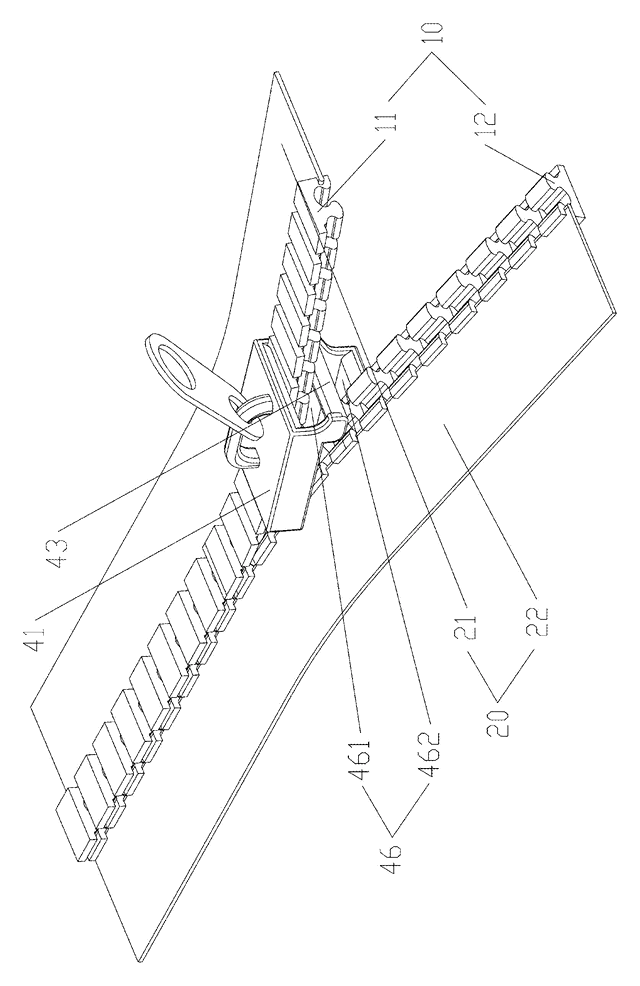
Apparel & Accessories
Stacked Zipper with Teeth That Mesh Top-to-Bottom
Zipper whose two identical tooth rows mesh on top of each other, closed by a simplified slider.
Patent CN205795062U
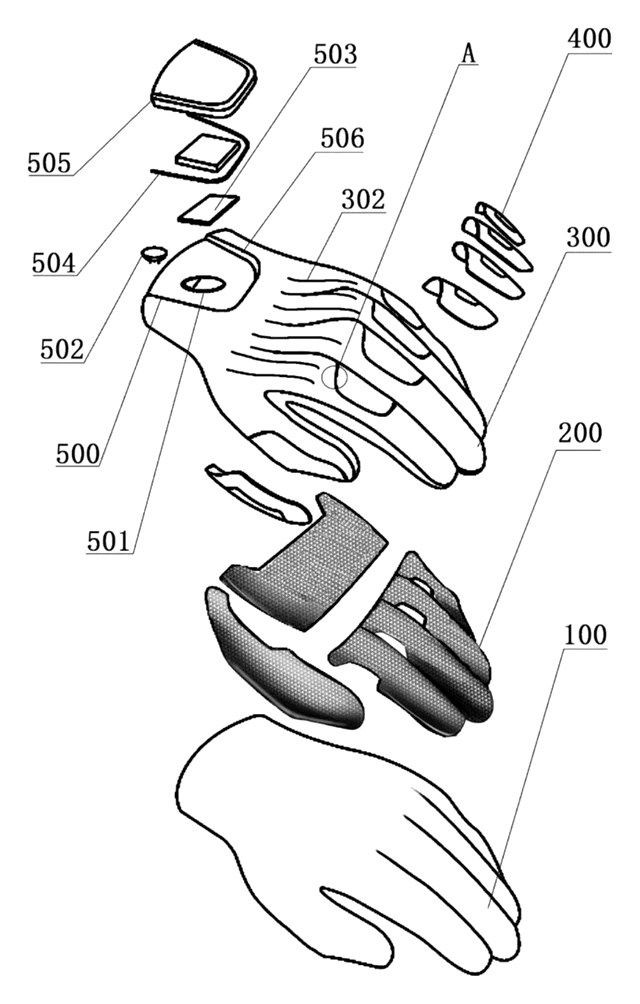
Apparel & Accessories
Impact-Resistant Glove with a 3D-Printed Lattice Layer
Work glove with a 3D-printed lattice impact layer, TPU knuckle guards and a light mounting area.
Patent CN213785583U
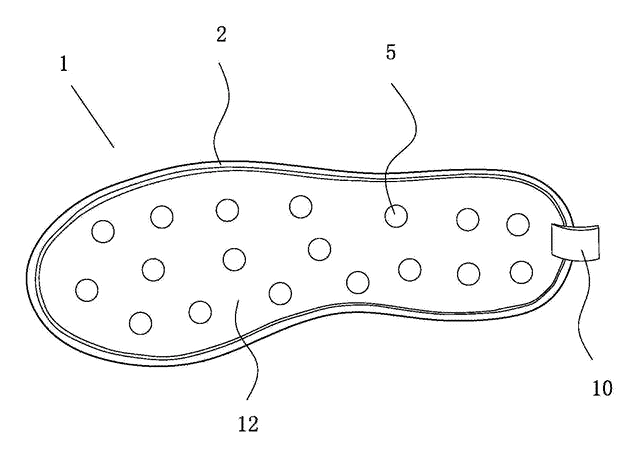
Apparel & Accessories
Massage Insole with Spring-Back Silicone Nubs and a Removable Top Layer
Layered insole: silicone nubs rise through a removable perforated top sheet and sink under each step.
Patent CN208286505U
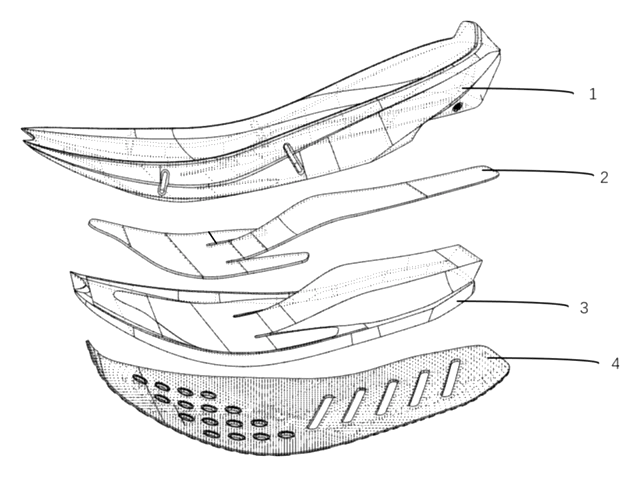
Apparel & Accessories
Heel-Less Carbon Plate Running Shoe Sole for Forefoot Strikers
Running sole for forefoot strikers: no ground-touching heel, winged carbon plate between two midsoles.
Patent CN216723354U
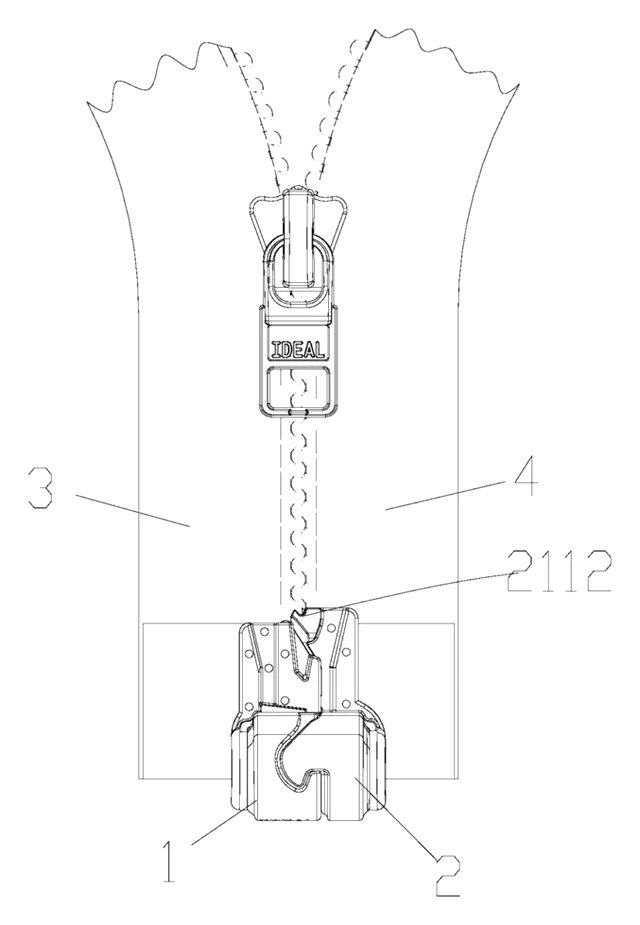
Apparel & Accessories
Waterproof Magnetic Zipper Stop That Snaps the Two Halves Together
Separating-zipper stop with sealed magnets: pin and box snap together one-handed, safe in rain and wash.
Patent CN215075936U
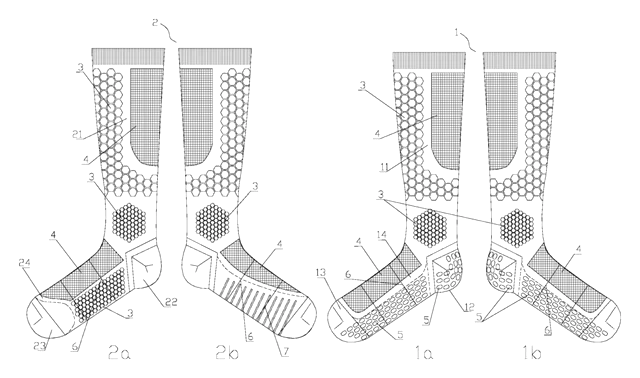
Apparel & Accessories
Left-Right Specific Soccer Socks: Grip for the Plant Foot, Touch Pads for the Kicking Foot
Soccer socks knitted as a left-right pair: grip zones for the plant foot, pads for the kicking foot.
Patent CN212728807U
Browse by category
- Apparel & Accessories (22)
- Baby & Kids (16)
- Bags & Luggage (9)
- Bath & Personal Care (16)
- Car Accessories (10)
- Furniture, Bedding & Storage (12)
- Garden & Outdoor (18)
- Health & Wellness (8)
- Home, Kitchen & Cleaning (24)
- Lighting (12)
- Packaging & Containers (6)
- Pet Products (6)
- Phone & Camera Accessories (4)
- Retail Display (13)
- School, Office & Art (19)
- Sports & Recreation (25)
- Tools & Workshop (27)
- Toys & Games (12)
This page is based on the public patent document CN209436389U, assigned to Jiashan Fuda Garment Accessories Factory (general Partnership). IP2M is an independent manufacturing service and is not affiliated with, endorsed by or licensed by the patent owner. Images marked as concept renderings are illustrations, not photos of an existing product. Patent status information is provided for reference only and is not legal advice; confirm freedom to operate for your market before production. Full disclaimer.