
Patent CN209756863U
Updated October 27, 2026Child Car Seat with Backrest Adjusting Mechanism
Standard child car seats often require multiple steps or tools to change the recline angle, making adjustments difficult while managing a child. This design simplifies the process into a single pull action. A backrest adjusting mechanism uses a sliding shaft that rides inside an arcuate track formed on the backrest bearing seat. To change the angle, the user pulls a lock block drawing piece. Its protrusion shifts within a movable hole from a locking section to an unlocking section, which drives a lock block to withdraw its extending part from one of several locking notches along the track. Once released, the sliding shaft moves along the arcuate path, allowing the backrest to tilt to the desired position. Releasing the drawing piece lets a resetting component return the lock block into a new notch, securing the backrest. Both the bearing seat and backrest are molded from plastic but contain embedded metal reinforcing frames in their side portions for structural support. A separate headrest adjustment structure provides vertical positioning using a lifting body, lock holes, and a tapered pull cord system.
- China utility model - in force
- No filings outside China
- Baby & Kids / Car Seats
- Plastic shell with embedded metal reinforcing frames
Splat! What let you down?
🔄
Arcuate track adjustment
A sliding shaft on the backrest moves along a curved track on the bearing seat to change the recline angle.
🔒
Notch-based locking
At least two locking notches on the track receive a lock block to hold the backrest firmly in place.
🛠️
Metal reinforcement
First and second metal frames are embedded in the plastic side portions of the bearing seat and backrest.
↕️
Adjustable headrest
A lifting body with a spring-loaded lock engages vertical lock holes, released by a tapered pull cord.
Bring this product to market
- ✓ Patent vetted China-only family and legal status checked
- 2 Product brief · now How it works, uses and options written up
- 3 Prototype First samples for buyers to review
- 4 Pilot run Small first batch for launch customers
- 5 Volume production Repeat orders at scale
Buyer interest
– of 100 buyers needed to start prototyping
One click, no sign-up. Each vote is one real visitor, and products with the most interest go to prototyping first.
Build team: no members yet. Need a partner, co-funding or skills to build this? Join and we introduce the team once it forms.
The problem
When traveling with young children, caregivers frequently need to change the recline angle of a car seat so the child can sleep comfortably or sit upright to look around. Many existing seats use complex levers, multiple straps, or require the caregiver to reach awkwardly behind the seat to release a latch. This makes adjustments slow and distracting, especially when the vehicle is parked briefly or when the child is restless. Furthermore, plastic seat shells can flex under dynamic loads if they lack internal reinforcement, and headrests that do not match the child’s height leave the head unsupported during transit.
The solution
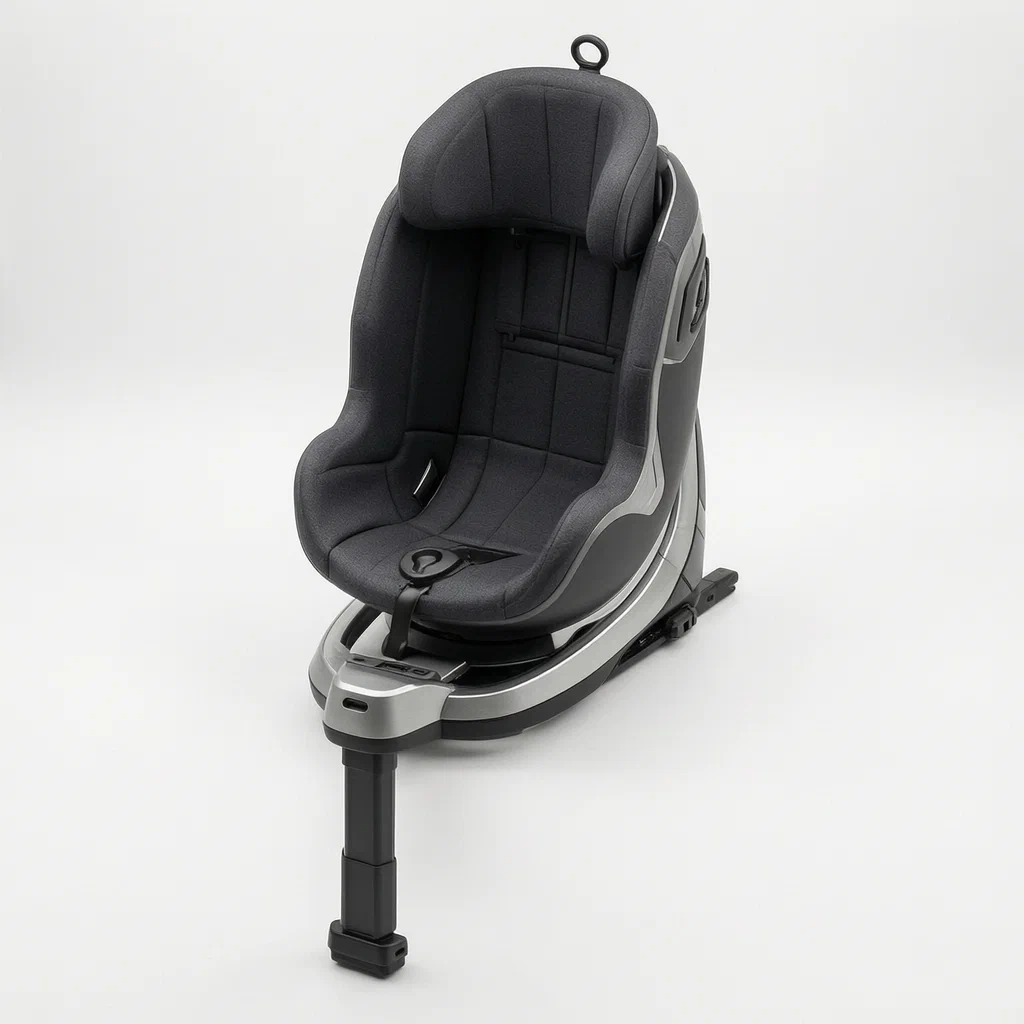
This automobile child safety seat addresses those issues through a dedicated backrest adjusting mechanism and supporting structures.
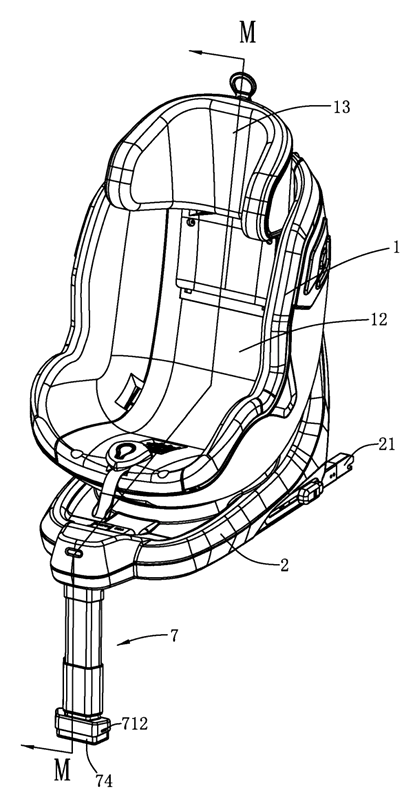
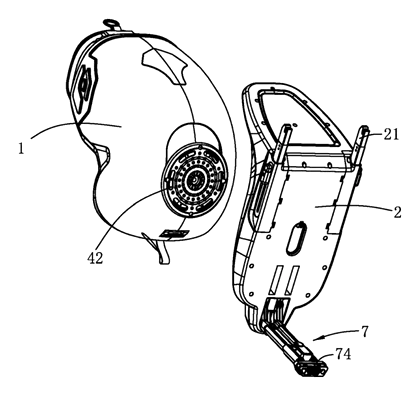
- The seat body (1) rests above a base (2) and is divided into a backrest bearing seat (11) and a backrest (12).
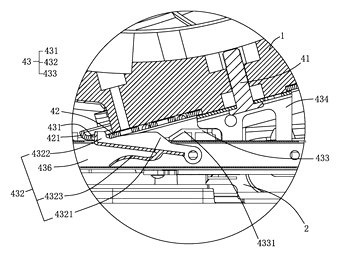
- A sliding shaft (31) mounted on the backrest fits into an arcuate track (32) on the bearing seat, guiding the backrest along a curved path.
- A back stop device (33) locks the sliding shaft in place using locking notches (331) located along the track.
- Pulling a lock block drawing piece (333) moves a protrusion (3331) from a locking part (332a) to an unlocking part (332b) inside a movable hole (3321), forcing the extending part (332c) of a lock block (332) out of the notch.
- Embedded metal frames (34, 35) reinforce the plastic side portions of both the bearing seat and the backrest.
- A headrest adjustment structure (6) uses a lifting body (62) and pull cord (631) to move a lock head (621) out of vertical lock holes (61) for height changes.
Who it is for
- Child safety seat brands looking to add a single-pull recline feature to their product lines without redesigning the entire shell.
- Wholesalers and distributors of juvenile products who need car seats with straightforward adjustment mechanisms for retail customers.
- Amazon sellers specializing in baby gear seeking a seat design that highlights easy operation in product listings and videos.
- OEM manufacturers producing private-label car seats for retailers, requiring clear mechanical designs that integrate with standard vehicle bases.
How it works
The main parts
| No. | Part | What it does |
|---|---|---|
| 1 | Seat body | Main seating assembly, arranged above the base. |
| 2 | Base | Supports the seat body in the vehicle. |
| 11 | Backrest bearing seat | Stationary rear portion holding the track and metal frame. |
| 12 | Backrest | Moving portion carrying the sliding shaft. |
| 31 | Sliding shaft | Pin on the backrest that travels inside the track. |
| 32 | Track | Arcuate aperture guiding the sliding shaft. |
| 331 | Locking notches | Positions along the track where the backrest locks. |
| 332 | Lock block | Slides axially on the shaft; its extending part enters the notches. |
| 333 | Lock block drawing piece | Traction part pulled by the user to unlock the mechanism. |
| 3331 | Protrusion | Moves between locking and unlocking parts of the movable hole. |
| 34, 35 | Metal reinforcing frames | Embedded in the plastic sides of the bearing seat and backrest. |
| 62 | Lifting body | Connects to the headrest and carries the lock head. |
Operating steps
- Pull the drawing piece - the user pulls the lock block drawing piece (333) in a straight line.
- Shift the protrusion - the protrusion (3331) slides from the lock block locking part (332a) to the lock block unlocking part (332b) inside the movable hole (3321). Because the drawing piece and lock block move in perpendicular directions, this lateral shift pushes the lock block axially.
- Withdraw the extending part - the extending part (332c) of the lock block (332) retracts from the locking notch (331), freeing the sliding shaft (31).
- Tilt the backrest - the sliding shaft moves along the arcuate track (32), changing the backrest angle.
- Release to lock - releasing the drawing piece allows the resetting component to push the lock block back, engaging the extending part into a new locking notch.
Applications
Long-distance family road trips
Caregivers driving for hours need to transition a sleeping child from an upright position to a reclined one. The single-pull drawing piece allows the recline angle to be changed quickly without disturbing the child or requiring the driver to reach awkwardly behind the seat.
Daily commuting and school runs
During short drives, children frequently shift between resting and sitting up to look out the window. The notch-based locking system secures the backrest firmly at each angle, providing consistent support as the seat is adjusted multiple times a day.
Ride-share and taxi services
Drivers transporting different families benefit from a seat that adapts rapidly to various children’s comfort needs. The simple traction mechanism means drivers do not need to read complex manuals to adjust the recline between passengers.
Multi-child households
Families moving a single car seat between vehicles or adjusting it for different-aged children rely on fast setup. The embedded metal frames maintain structural integrity even when the seat is handled frequently, while the vertical headrest adjustment accommodates varying heights.
Where it is less suitable
- Infant-only carriers - this design describes a seat body on a base with a tilting backrest, which suits convertible or toddler seats rather than rear-facing infant buckets detached from a base.
- Booster seats without backs - the mechanism specifically relies on a backrest bearing seat and a sliding shaft, so it does not apply to backless boosters.
Frequently asked questions
How does the backrest adjustment work?
A sliding shaft on the backrest sits inside an arcuate track on the backrest bearing seat. When you pull the lock block drawing piece, its protrusion shifts inside a movable hole from a locking part to an unlocking part. This perpendicular motion forces the lock block’s extending part out of a locking notch, allowing the shaft to slide along the curved track and change the recline angle.
How many recline positions are there?
The patent specifies “at least two locking notches” on the track. The exact number of positions is set in design based on the track length and the desired angle increments.
Is the seat entirely plastic?
The backrest bearing seat and the backrest are molded from plastic, but the design embeds a first metal reinforcing frame in the side of the bearing seat and a second metal reinforcing frame in the side of the backrest to provide structural support.
Does the headrest also adjust?
Yes. The seat body includes a headrest adjustment structure with vertical lock holes. A lifting body connected to the headrest has a spring-loaded lock head that sits in these holes. Pulling a cord with a tapered end withdraws the lock head, allowing the headrest to move up or down.
How does the lock reset after adjusting?
A locking block resetting piece is arranged between the lock block drawing piece and the backrest bearing seat. When the user releases the drawing piece, this resetting component pushes the lock block back so its extending part engages the nearest locking notch on the track.
What size children is this seat for?
The patent document does not specify weight limits or age ranges. Dimensions and capacity ratings are to be confirmed in design and validated through crash testing.
Can this design be made and sold in the US?
The patent was filed only in China and has no US counterpart, so it does not restrict manufacturing or sales in the United States. However, it remains in force in China until at most 2028-12-05 (if annual fees are paid), meaning production in China requires the owner’s permission. Additionally, other companies hold later patents in this field, so a freedom-to-operate review is recommended before starting production.
Are you affiliated with the patent owner?
No. IP2M is an independent design and manufacturing service working from the public patent document.
Request a quote
Click Request a Quote below to see our email address - copy it, or open your email app with a ready-made message. Please mention patent CN209756863U in the subject.
Helpful details to include:
- Your company and channel (child seat brand, baby gear wholesaler, Amazon seller, retailer)
- Target age/weight group and recline angle range
- Base type (ISOFIX/LATCH or seatbelt installation)
- Fabric and padding preferences
- Estimated quantity and target price
- Timeline - when you would like prototypes and the first shipment
You can also reach us at (332) 203-9997.
Explore this product
Interested in building this?
Tell us your target market, quantity and timeline. We reply with options for prototyping, small-batch runs or volume production.
Send your inquiry to
Please put CN209756863U in the subject line and tell us your company, country, estimated quantity and timeline.
Prefer to talk? Call (332) 203-9997.
More product-ready patents
All Baby & Kids patents →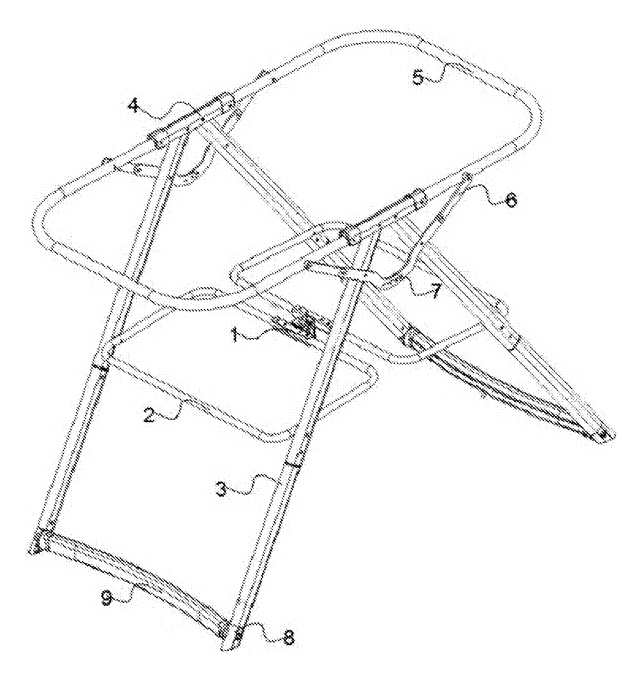
Baby & Kids
Portable Folding Rocking Bassinet Frame
Rocking bassinet frame that folds flat: telescopic hub, folding rails, two-part legs, curved rockers.
Patent CN206910143U
Baby & Kids
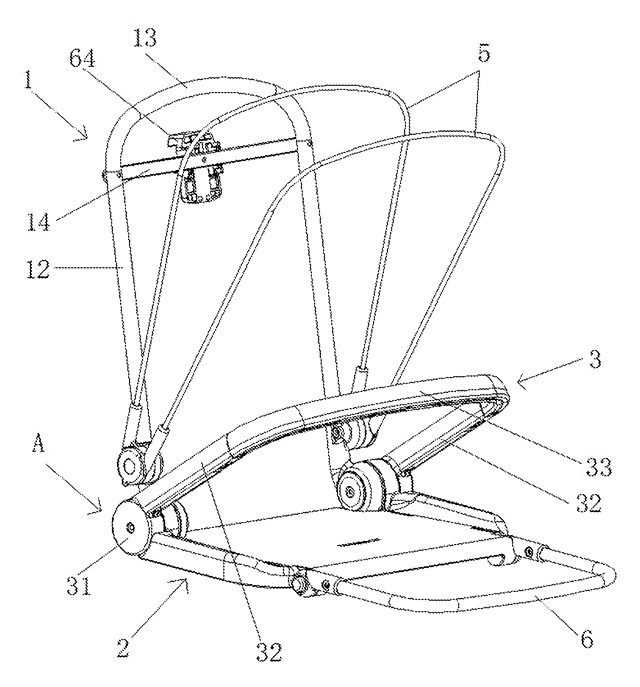
Stroller Seat with Linked Fold-Away Armrest
Stroller seat whose armrest unlocks and folds automatically when the backrest is folded forward.
Patent CN206856772U
Baby & Kids
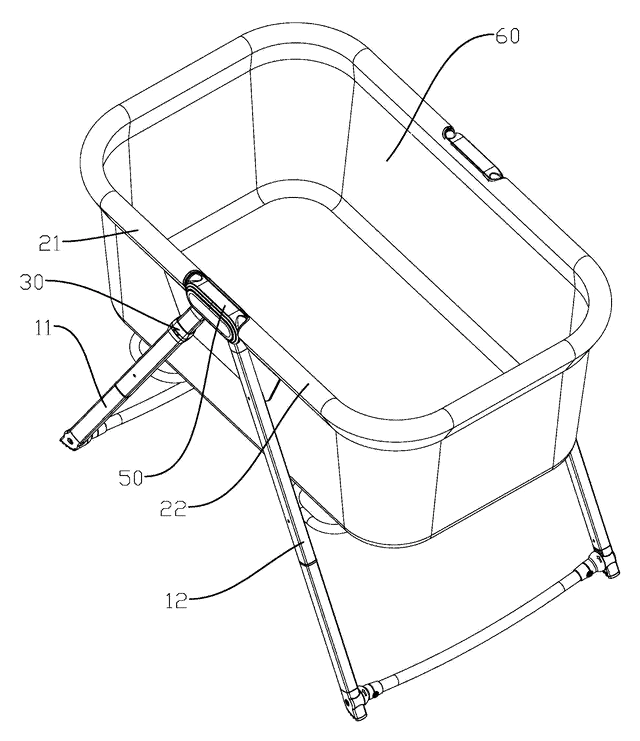
One-Motion Folding Baby Crib with Linked Frame
Portable baby crib whose top rails fold down automatically as the A-frame legs are closed.
Patent CN207202585U
Baby & Kids
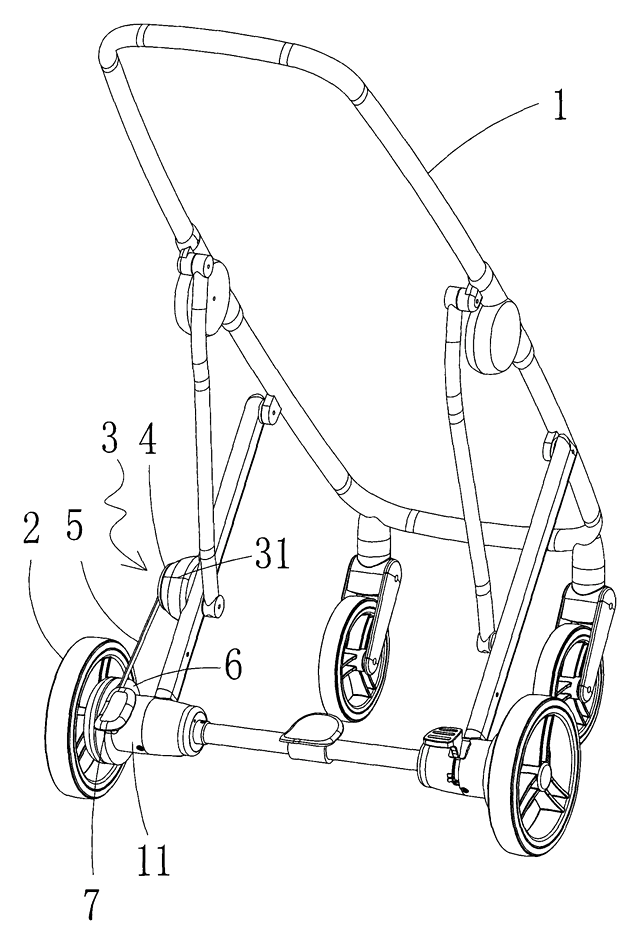
Motorized Rocking Stroller That Rocks by Turning Its Wheels
Baby rocker or stroller whose motor turns the wheels back and forth; a clutch switches to pushing.
Patent CN208119238U
Baby & Kids
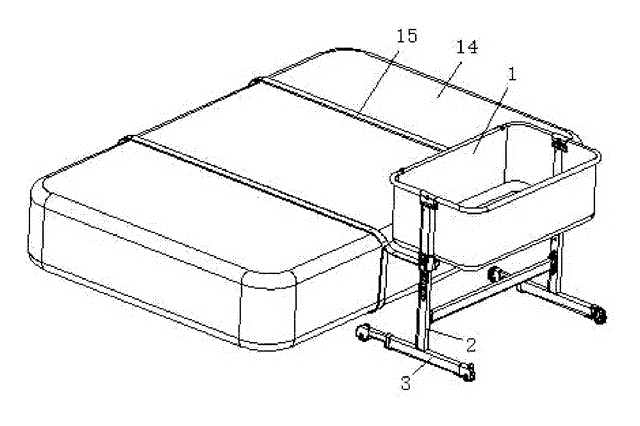
Bedside Crib Base with Spring-Loaded Telescoping Caster Legs
Bedside crib feet with spring-loaded sliding casters: wide when alone, short to sit flush at the bed.
Patent CN207168269U
Baby & Kids
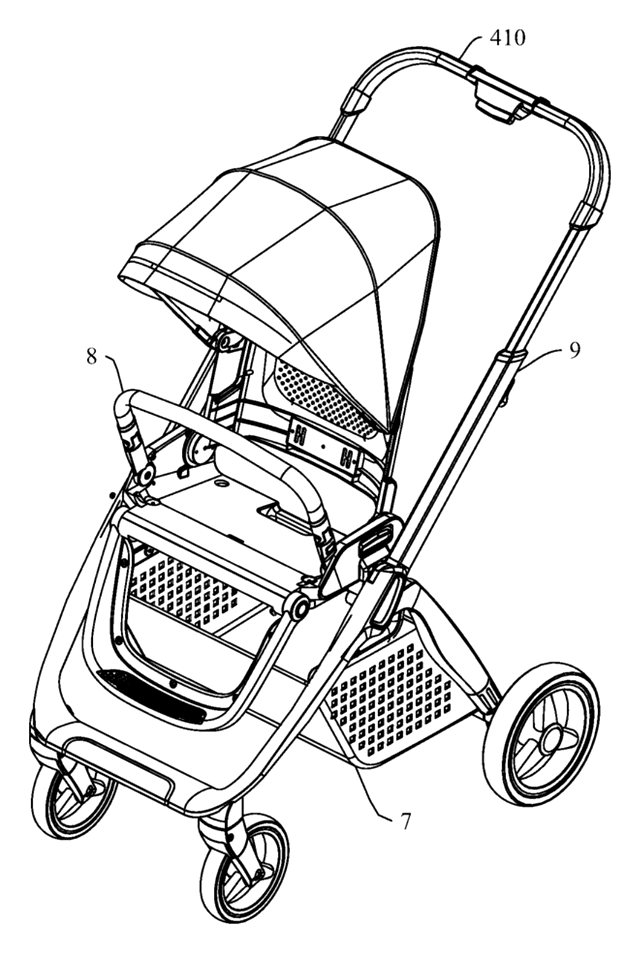
Compact-Fold Stroller with a Four-Bar Side Frame and Telescoping Handle
Stroller with four-bar side frames: handle and rear leg fold onto the front leg, handle telescopes.
Patent CN213799844U
Browse by category
- Apparel & Accessories (22)
- Baby & Kids (16)
- Bags & Luggage (9)
- Bath & Personal Care (16)
- Car Accessories (10)
- Furniture, Bedding & Storage (12)
- Garden & Outdoor (18)
- Health & Wellness (8)
- Home, Kitchen & Cleaning (24)
- Lighting (12)
- Packaging & Containers (6)
- Pet Products (6)
- Phone & Camera Accessories (4)
- Retail Display (13)
- School, Office & Art (19)
- Sports & Recreation (25)
- Tools & Workshop (27)
- Toys & Games (12)
This page is based on the public patent document CN209756863U, assigned to Guangdong Roadmate Group Co Ltd. IP2M is an independent manufacturing service and is not affiliated with, endorsed by or licensed by the patent owner. Images marked as concept renderings are illustrations, not photos of an existing product. Patent status information is provided for reference only and is not legal advice; confirm freedom to operate for your market before production. Full disclaimer.