At a glance
| Patent number | CN209756863U (application CN201822035482) |
| Type | China utility model (实用新型) - protects product shape and structure |
| Original title | Automobile child safety seat with backrest adjusting mechanism (带有背靠调节机构的汽车儿童安全座椅) |
| Patent owner | Guangdong Roadmate Group Co Ltd |
| Inventors | Tian Weijiu, Huang Haixing |
| Filing date | 2018-12-05 |
| Grant date | 2019-12-10 |
| Status (China) | In force in China until at most 2028-12-05 (if annual fees are paid) |
| Patent family | Chinese filings only - no US, European, Japanese, PCT or other filings listed |
| Cited by | 3 later documents |
| Source | Google Patents (search for CN209756863U) |
What the claims cover, in plain language
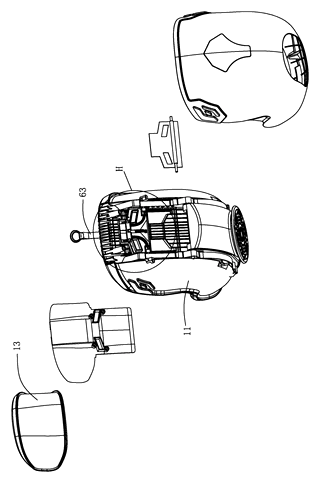
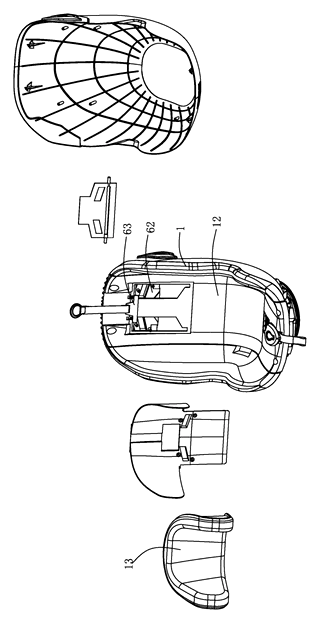
Claim 1 - an automobile child safety seat comprising a seat body (1) above a base (2). The seat body has a backrest bearing seat (11) and a backrest (12) with a backrest adjusting mechanism (3) between them. The mechanism includes a sliding shaft (31) on the backrest and a track (32) on the bearing seat. The sliding shaft sits in the track to move the backrest, and a back stop device (33) locks the shaft’s position on the track.
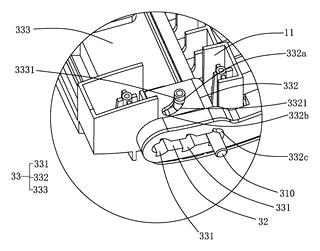
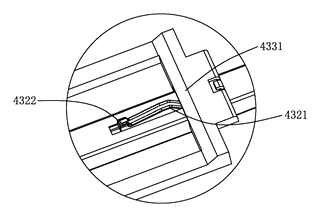
Claim 2 - the track is an arcuate aperture. Claim 3 - the back stop device includes at least two locking notches (331) on the track, a lock block (332) with a movable hole (3321) having a locking part and an unlocking part, and an extending part (332c) that enters the notch. A lock block drawing piece (333) has a protrusion (3331) inside the movable hole. Pulling the drawing piece moves the protrusion to the unlocking part, withdrawing the extending part from the notch. A resetting piece returns the block when released. Claims 4-5 - the drawing piece moves in a straight line on the bearing seat, while the lock block moves axially on the sliding shaft; their movement directions are perpendicular to each other. Claim 6 - locking notches are provided symmetrically on both sides of the track, with corresponding upper and lower extending portions connected by a surrounding portion. Claim 7 - the bearing seat and backrest are made of plastic, and the mechanism includes a first metal reinforcing frame (34) embedded in the bearing seat’s side and a second metal reinforcing frame (35) embedded in the backrest’s side. Claim 8 - the track comprises an upper rail (321) and a lower rail (322).
This is a simplified reading for orientation only. The legal scope is defined by the exact claim wording in the official Chinese document.
What this means for US production
This patent was filed only in China and is currently in force in China until at most 2028-12-05 (if annual fees are paid). It has no US or other foreign counterpart. However, because it remains active in China, making or selling this specific seat design in China needs the owner’s permission.
Two points to settle early:
- Other patents may exist. The child car seat field is heavily patented globally. For example, Wonderland Switzerland Ag holds a later international patent (WO2022268804A1) that cites this Chinese utility model, indicating ongoing innovation in this space by other companies. A freedom-to-operate (FTO) review covering recline mechanisms, track geometries, and locking systems is required before tooling for the US market.
- Crash testing and certification. The mechanical design must pass dynamic sled testing to meet federal standards before any sales begin; the patent covers the adjustment mechanism, not crash performance.
Customization and manufacturing
What can be customized
| Area | Options |
|---|---|
| Shell dimensions | Sized for specific age/weight groups (to be confirmed in design) |
| Track curvature | Arc radius and length set the available recline angles |
| Number of notches | Determines how many distinct recline positions are offered |
| Padding and fabrics | Foam density, textile types, and colors chosen per brand spec |
| Harness system | 5-point harness routing integrated into the seat body |
| Drawing piece handle | Shape, location, and grip texture of the pull tab |
| Base interface | ISOFIX/LATCH connectors or belt-path geometry |
Things to plan for (US market)
- FMVSS 213 (49 CFR 571.213) - Federal Motor Vehicle Safety Standard for child restraint systems; governs dynamic sled testing, buckle release forces, labeling, and flammability.
- FMVSS 302 - flammability of the seat cover fabric and foam padding (referenced by FMVSS 213).
- 49 CFR Part 588 - child restraint owner registration card supplied with every seat.
How a project runs
- Inquiry - target age group, recline range, base type, and volume.
- Design - CAD modeling of the plastic shells, metal reinforcing frames, track geometry, and locking mechanism.
- Prototype - 3D printed or CNC machined parts to verify the pulling action, perpendicular movement, and notch engagement.
- Testing - static load checks followed by mandatory dynamic sled testing per FMVSS 213.
- Production - injection molding of plastic shells with insert-molded metal frames, stamping of metal components, fabric sewing, and final assembly.
Quantities & timeline
The plastic shells require large injection molds, and the first and second metal reinforcing frames must be precisely positioned during the molding cycle or assembled afterward. The sliding shaft, lock block, and drawing piece need dedicated tooling to ensure the perpendicular movement tolerances are met. Certification tests, including dynamic sled testing, take significant time and must be passed before shipping. Send us your target age group, recline range, base type, quantity and target price and we will reply with options.
Patent drawings
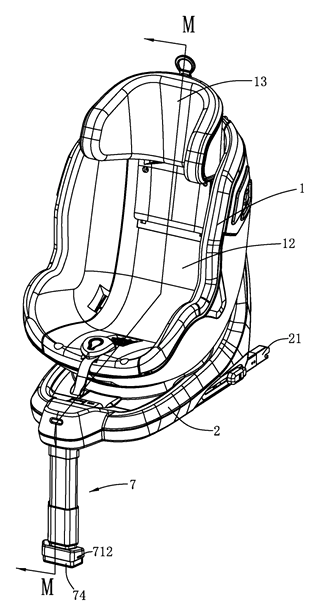
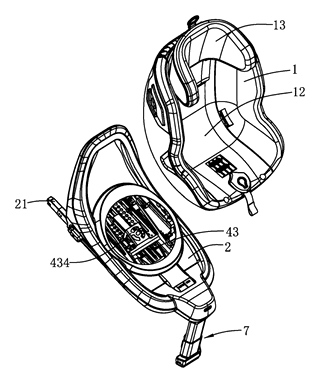
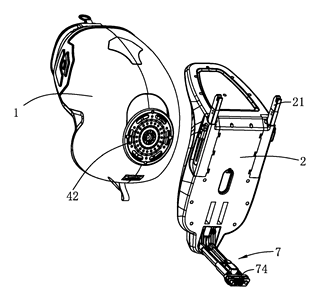
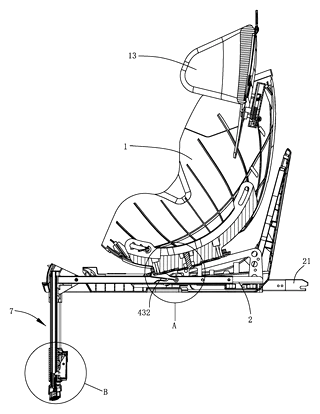
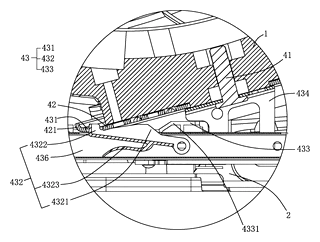
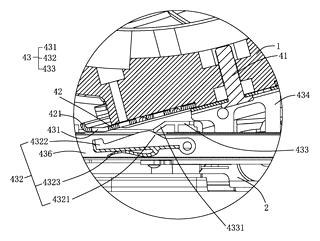
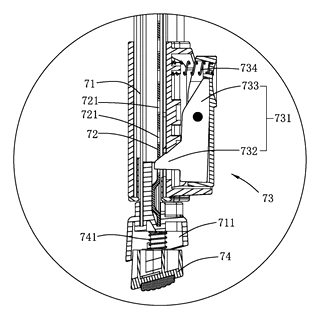
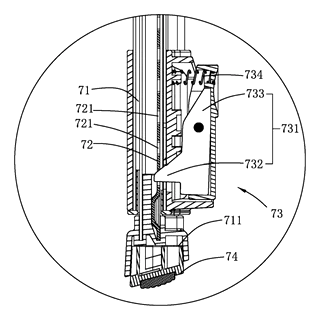
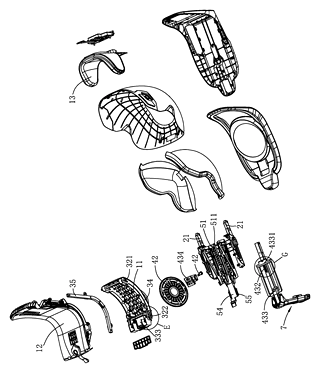
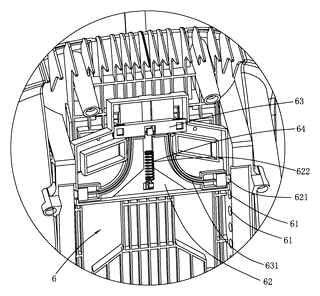
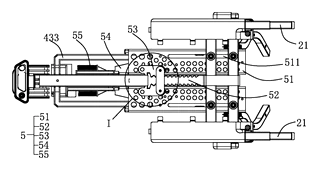
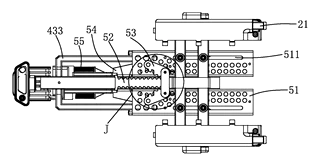
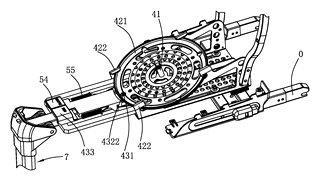
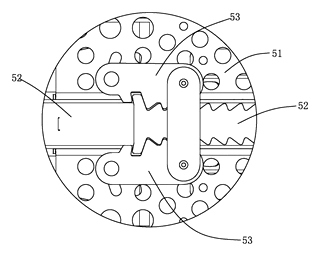
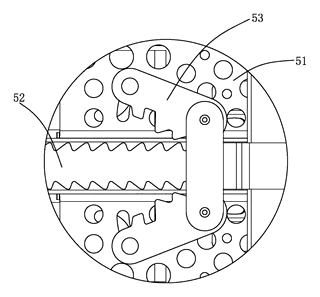
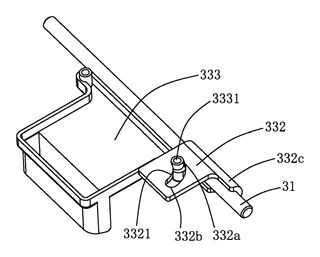
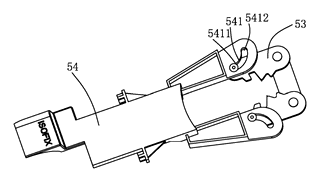
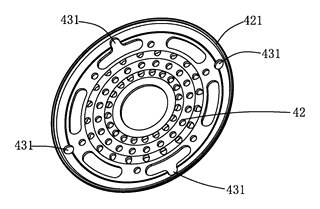
Drawings reproduced from the public patent document for reference.