At a glance
| Patent number | CN209915891U (application CN201920618577) |
| Type | China utility model (实用新型) - protects product shape and structure |
| Original title | Cleaning sponge head of cleaning tool (清洁工具的清洁海绵头) |
| Patent owner | Hebei Shi Jie Bao Daily Plastic Products Co Ltd |
| Inventors | Ren Yonghai |
| Filing date | 2019-04-30 |
| Grant date | 2020-01-10 |
| Status (China) | Lapsed - terminated for non-payment of annual fees (recorded 2022-04-08) |
| Patent family | Chinese filings only - no US, European, Japanese, PCT or other filings listed |
| Cited by | 1 later document |
| Source | Google Patents (search for CN209915891U) |
What the claims cover, in plain language
Claim 1 - a cleaning sponge head comprising three layers: a PVA sponge layer (bottom, contacting the surface), a support layer (middle), and a PU sponge layer (top). The support layer is positioned between the PVA and PU layers.
Claim 2 - the PU sponge layer is connected to the cleaning tool (e.g., mop) through a connecting layer. Claim 3 - the connecting layer is specified as either a plastic plate or a felt cloth. Claim 4 - if a plastic plate is used, it is made of ABS or PVC. Claim 5 - the PU sponge layer and the connecting layer are bonded via an adhesive layer. Claim 6 - the three sponge layers (PVA, support, PU) are processed into an integrally formed part. Claim 7 - specific thickness ranges: the support layer is 0.5-1 cm thick, and the PVA sponge layer is 0.3-5 cm thick. Claim 8 - material properties: the hardness of the support layer is greater than that of the PU sponge layer and greater than that of the PVA sponge layer. Claim 9 - the support layer material is defined as EVA sponge or a plastic sheet. Claim 10 - the application context: the cleaning tool is specifically identified as a mop.
This is a simplified reading for orientation only. The legal scope is defined by the exact claim wording in the official Chinese document.
What this means for US production
This patent was filed only in China and has lapsed due to non-payment of fees. Therefore, it does not restrict anyone in China or elsewhere. It has no US or other foreign counterpart.
Two points to settle early:
- Other patents may exist. Floor care products are a competitive field with many active patents covering specific wringing mechanisms, attachment interfaces, and material compositions. A freedom-to-operate (FTO) review is recommended before mass production to ensure the specific combination of PVA/EVA/PU layers and the attachment method does not infringe on current US utility patents held by major brands like Bissell, O-Cedar, or Rubbermaid.
- Material Sourcing. The patent relies on specific material properties (hardness differences between layers). Sourcing consistent EVA and PVA grades that meet these hardness specifications is critical for performance.
Customization and manufacturing
What can be customized
| Area | Options |
|---|---|
| Dimensions | Length, width, and total thickness based on target mop frame size |
| Layer Thickness | Adjust PVA vs. Support ratio within patent limits (PVA 0.3-5cm, Support 0.5-1cm) |
| Support Material | Choose between EVA foam (lighter, softer feel) or Plastic Sheet (stiffer, cheaper) |
| Connection Type | Select Plastic Plate (ABS/PVC) for snap-fit frames or Felt Cloth for velcro/strap attachments |
| Adhesive | Water-resistant industrial adhesives for laminating the three layers |
| Color | Standard white/yellow PVA; custom colors for branding on PU or support layers |
Things to plan for (US market)
- California Prop 65: Ensure adhesives and plastic components (ABS/PVC) do not contain restricted levels of chemicals like phthalates or lead.
- ASTM D4236: If the product includes any chemical treatments for anti-microbial purposes, safety labeling standards apply.
- Consumer Product Safety Commission (CPSC): General safety requirements for household goods; ensure no sharp edges on plastic plates or broken plastic fragments.
- Recycling Codes: If using ABS or PVC, proper resin identification codes must be marked per local regulations.
How a project runs
- Inquiry - Define mop frame compatibility, desired dimensions, and connection type.
- Design - Select material grades (PVA density, EVA hardness), determine adhesive system, and design the interface plate/cloth.
- Prototype - Produce small batches to test lamination strength, water retention, and wringing efficiency.
- Testing - Verify dimensional stability after multiple wet/dry cycles and check for delamination.
- Production - Source raw sponge blocks, cut/laminate layers, bond interface, and trim to final shape.
Quantities & timeline
Manufacturing involves cutting sponge sheets, applying industrial adhesives, and potentially molding plastic interface plates. Lead times depend on the complexity of the bonding process and whether custom molds are needed for the plastic connectors. Send us your dimensions, material preferences, connection type, quantity and target price and we will reply with options.
Patent drawings
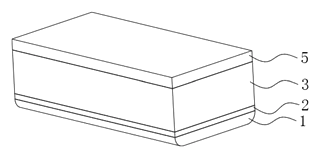
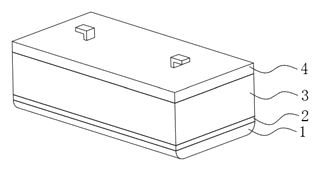
Drawings reproduced from the public patent document for reference.