
Patent CN210054901U
Updated November 4, 2026Solar-Powered Umbrella Frame with Integrated Wiring Channels
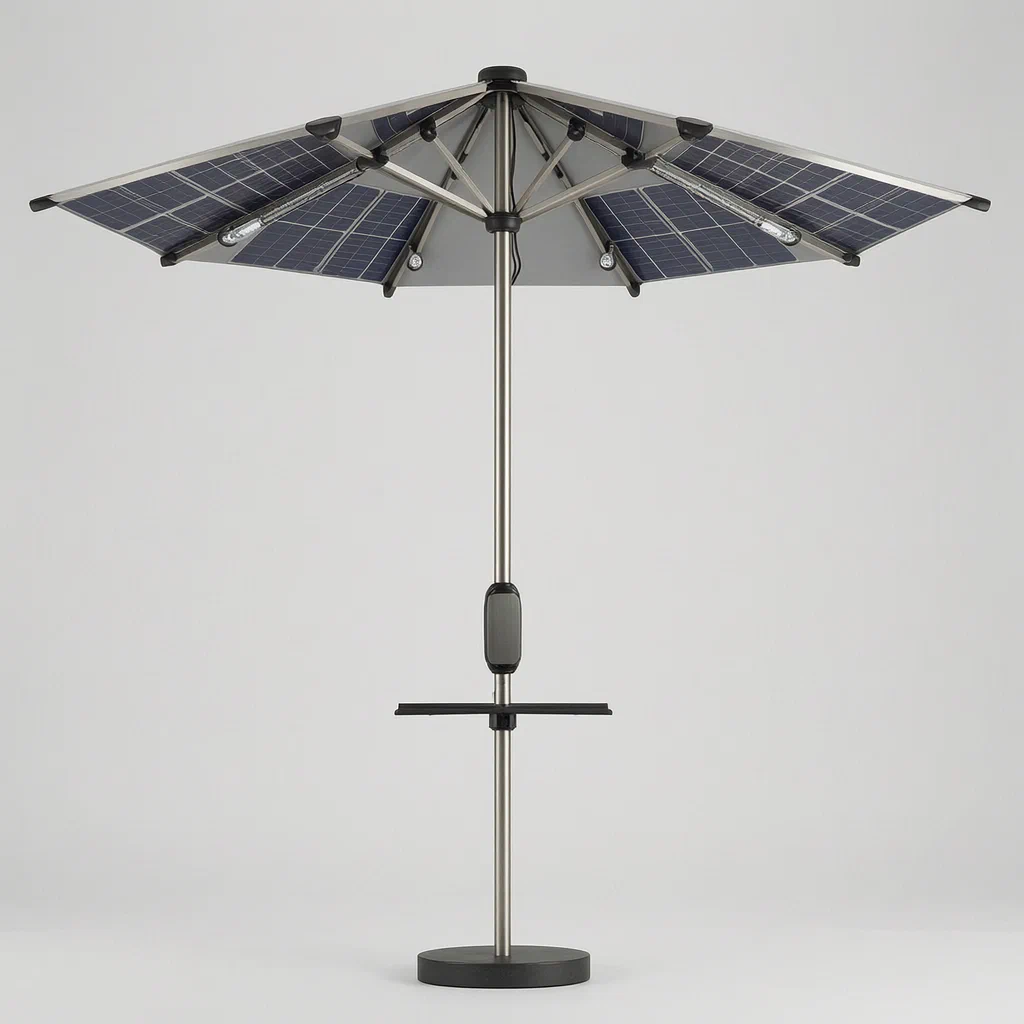
Traditional solar umbrellas often have loose wires hanging from the canopy or running along the outside of the ribs, which can snag, wear out, or look messy. This patent describes an umbrella frame where the electrical connections are hidden inside the structure itself. The main pole and the individual ribs contain hollow channels or grooves specifically designed to house the connecting wires. Solar chips and lights are integrated into the frame, drawing power from a battery stored within the assembly. By keeping the wiring internal, the design maintains a sleek appearance while protecting the delicate electronic connections from the repeated folding motion of the umbrella.
- China utility model - lapsed
- No filings outside China
- Outdoor leisure products
- Internal wiring channels, solar integration
Splat! What let you down?
🔋
Integrated Power
Houses solar chips, battery, and lights within the frame structure.
🕸️
Hidden Wiring
Connecting wires run inside the rod and rib cavities, not on the surface.
☂️
Structural Design
Standard umbrella mechanics with added electrical pathways in the metal/plastic parts.
🌞
Solar Ready
Designed to support solar panels on the canopy or ribs for self-sufficiency.
Bring this product to market
- ✓ Patent vetted China-only family and legal status checked
- 2 Product brief · now How it works, uses and options written up
- 3 Prototype First samples for buyers to review
- 4 Pilot run Small first batch for launch customers
- 5 Volume production Repeat orders at scale
Buyer interest
– of 100 buyers needed to start prototyping
One click, no sign-up. Each vote is one real visitor, and products with the most interest go to prototyping first.
Build team: no members yet. Need a partner, co-funding or skills to build this? Join and we introduce the team once it forms.
The problem
Outdoor umbrellas equipped with solar panels and LED lights typically suffer from poor cable management. In many existing designs, the wires connecting the solar cells to the battery and lights are exposed along the outer surface of the ribs or hang loosely under the canopy. These external wires are vulnerable to tangling, abrasion from wind movement, and UV degradation. Furthermore, when the umbrella is opened or closed, exposed cables can get caught in the moving joints, leading to breakage or failure of the electrical system. Aesthetically, visible wiring disrupts the clean lines of modern outdoor furniture. Manufacturers need a structural solution that integrates electrical pathways directly into the mechanical frame, ensuring durability and a tidy appearance without compromising the standard folding mechanism.
The solution
The patent describes an umbrella frame structure that incorporates specific channels for wire routing.
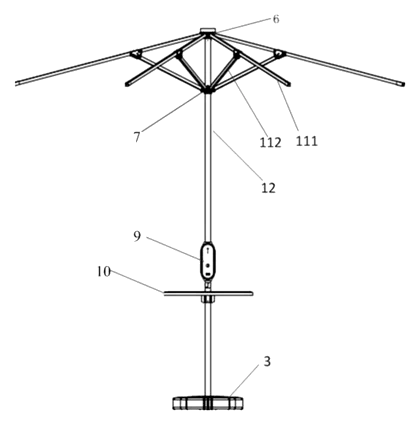
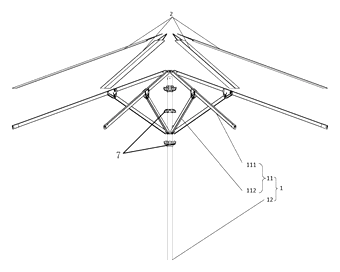
- The umbrella stand body consists of a central umbrella rod and several umbrella frameworks (ribs) that pivot on the rod.
- Mounted on this body are solar chips, an energy storage power supply (battery), and light sources.
- These components are electrically connected by connecting wires.
- Crucially, the umbrella stand body features a wire cavity arranged along its extension direction. At least part of the connecting wires are placed inside this cavity.
- The wire cavity can be formed by making the outer wall of the umbrella body surround a circle to create a hollow structure, or by providing a containing groove along the extension direction.
- Specifically, the first wire cavity extends along the length of the umbrella frameworks (ribs), and the second wire cavity extends along the length of the umbrella rod.
Who it is for
- Outdoor Furniture Brands: Companies looking to offer premium solar-powered patio umbrellas with a cleaner aesthetic than competitors using external wiring.
- Garden Equipment Wholesalers: Distributors seeking durable solar umbrellas where the electrical components are protected from weather and mechanical stress.
- Café and Hospitality Suppliers: Businesses needing reliable lighting solutions for outdoor seating areas that require low maintenance and high visual appeal.
- OEM Manufacturers: Factories producing custom solar tents or umbrellas who need a standardized structural approach to integrating electronics.
How it works
The main parts
The structure relies on modifying standard umbrella components to include space for electronics.
| No. | Part | What it does |
|---|---|---|
| Rod | Central shaft | Houses the battery and controller; contains the second wire cavity. |
| Frameworks | Ribs | Support the canopy; contain the first wire cavity for routing wires to lights/solar chips. |
| Solar Chips | Photovoltaic cells | Convert sunlight to electricity; mounted on ribs or canopy. |
| Light Source | LEDs | Provide illumination; mounted on ribs or framework ends. |
| Energy Storage | Battery | Stores power for night use; located within the rod or base. |
| Wire Cavity | Internal channel | Hollow section or groove in rod/rib to protect connecting wires. |
Operating steps
- Assembly: The solar chips and light units are attached to the umbrella frameworks.
- Wiring: Connecting wires are routed through the first wire cavity inside the ribs.
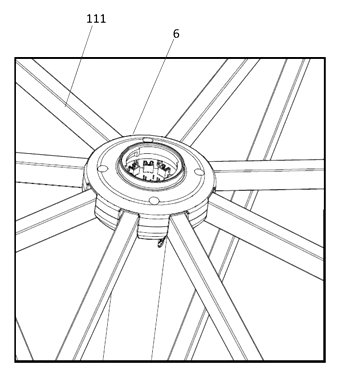
- Central Connection: The wires converge at the upper or lower nest structures and pass into the second wire cavity inside the umbrella rod.
- Power Management: Inside the rod, the wires connect to the energy storage power supply and potentially a controller.
- Operation: When deployed, the internal wires remain protected. Sunlight charges the battery via the solar chips; at night, the battery powers the light sources.
Applications
Patio Dining Sets
Used in residential backyards, these umbrellas provide evening ambiance. The hidden wires prevent children or pets from tripping over or chewing on exposed cables, enhancing safety and longevity.
Commercial Café Terraces
Restaurants and cafes use these for outdoor seating. The clean look appeals to customers, and the robust internal wiring withstands the frequent opening and closing cycles required by commercial staff.
Beach and Poolside Lounging
Ideal for poolside areas where humidity and splashing are common. The sealed wire cavities offer better protection against water ingress compared to externally taped wires, reducing corrosion risks.
Camping and Glamping Tents
Adapted for solar tents, this structure allows for built-in lighting and device charging ports. The integrated nature saves weight and space compared to carrying separate power banks and tangled cords.
Where it is less suitable
- Ultra-Lightweight Travel Umbrellas: The addition of metal/plastic cavities and batteries adds weight and bulk, making it unsuitable for backpackers prioritizing minimal gear weight.
- High-Wind Industrial Zones: While the wiring is protected, the overall structural integrity depends on standard umbrella materials; extreme wind loads may still damage the frame if not reinforced separately.
- Low-Cost Disposable Items: The manufacturing complexity of creating hollow ribs and precise internal channels increases cost, making it impractical for cheap, single-use promotional umbrellas.
Frequently asked questions
How are the wires protected?
The patent describes a “wire cavity” built directly into the umbrella rod and ribs. Instead of taping wires to the outside, the frame components are designed with hollow centers or grooves where the connecting wires are routed internally. This shields them from weather, UV rays, and physical snagging.
Does the solar panel charge the battery automatically?
Yes. The structure includes solar chips connected to an energy storage power supply. When exposed to sunlight, the chips generate electricity which is stored in the battery via the internal wiring and circuit boards described in the claims.
Can I choose different colors for the canopy and frame?
Yes. The canopy fabric can be customized in various colors and materials (polyester, acrylic). The frame finish (powder coating, anodizing) can also be selected to match brand aesthetics, provided the material supports the internal wire channels.
Is the battery replaceable?
The patent focuses on the structural integration of the battery within the rod. In practical production, battery replacement usually requires accessing the rod’s end caps. We can design serviceable end caps to allow for battery swaps without disassembling the entire frame.
How long does the light last on a full charge?
The patent does not specify battery capacity or LED efficiency. Runtime depends on the battery size (Wh) and the wattage of the lights chosen. Typical consumer solar umbrellas offer 4-8 hours of illumination, but this must be confirmed on prototypes based on your selected components.
Can this be used for a tent instead of an umbrella?
Yes. Claim 17 explicitly covers “outdoor equipment” including solar tents. The same principle of routing wires through the pole and rib structures applies to tent frames, allowing for integrated lighting and solar charging in camping setups.
Can this design be made and sold in the US?
The patent was filed only in China and has lapsed due to non-payment of fees, so it does not restrict manufacturing in the US or China. However, other patents may exist in the field of solar-integrated outdoor furniture. We recommend a freedom-to-operate check before volume production to ensure no other valid IP conflicts arise.
Are you affiliated with the patent owner?
No. IP2M is an independent design and manufacturing service working from the public patent document.
Request a quote
Click Request a Quote below to see our email address - copy it, or open your email app with a ready-made message. Please mention patent CN210054901U in the subject.
Helpful details to include:
- Your company and channel (furniture brand, wholesaler, hospitality supplier)
- Frame Size (diameter and height)
- Battery Specs (capacity in mAh/Wh, voltage)
- Lighting Needs (number of LEDs, brightness level, color temperature)
- Solar Panel Type (flexible, rigid, output watts)
- Estimated Quantity and target price
- Timeline - when you would like samples and the first shipment
You can also reach us at (332) 203-9997.
Explore this product
Interested in building this?
Tell us your target market, quantity and timeline. We reply with options for prototyping, small-batch runs or volume production.
Send your inquiry to
Please put CN210054901U in the subject line and tell us your company, country, estimated quantity and timeline.
Prefer to talk? Call (332) 203-9997.
More product-ready patents
All Apparel & Accessories patents →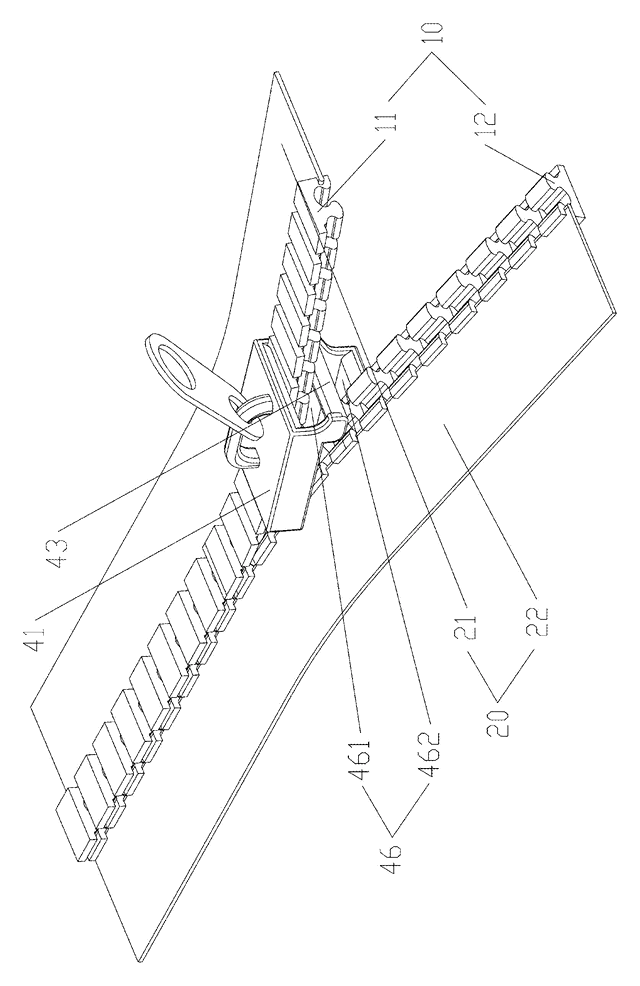
Apparel & Accessories
Stacked Zipper with Teeth That Mesh Top-to-Bottom
Zipper whose two identical tooth rows mesh on top of each other, closed by a simplified slider.
Patent CN205795062U
Apparel & Accessories
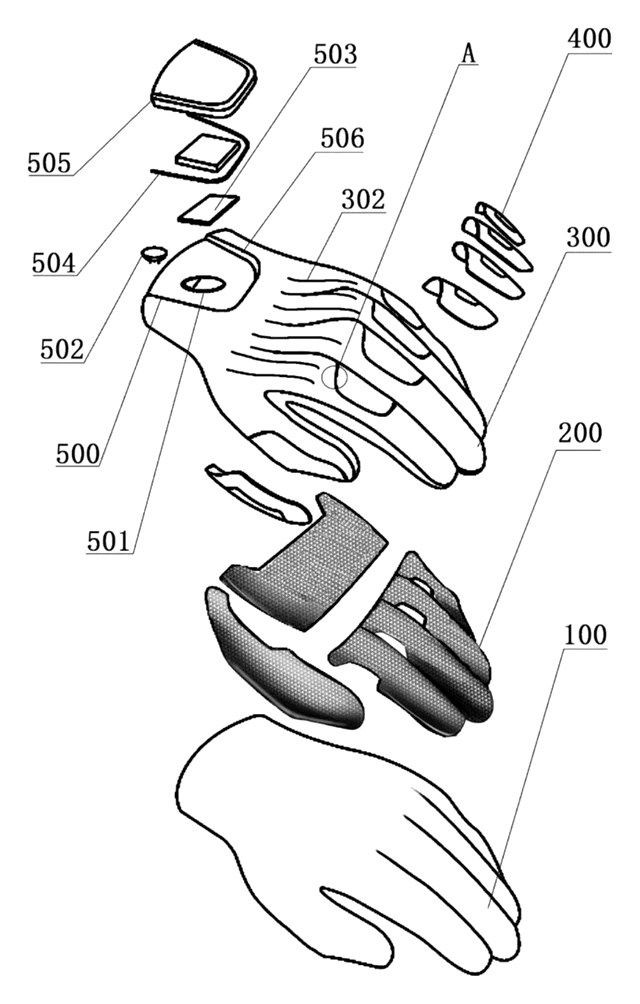
Impact-Resistant Glove with a 3D-Printed Lattice Layer
Work glove with a 3D-printed lattice impact layer, TPU knuckle guards and a light mounting area.
Patent CN213785583U
Apparel & Accessories
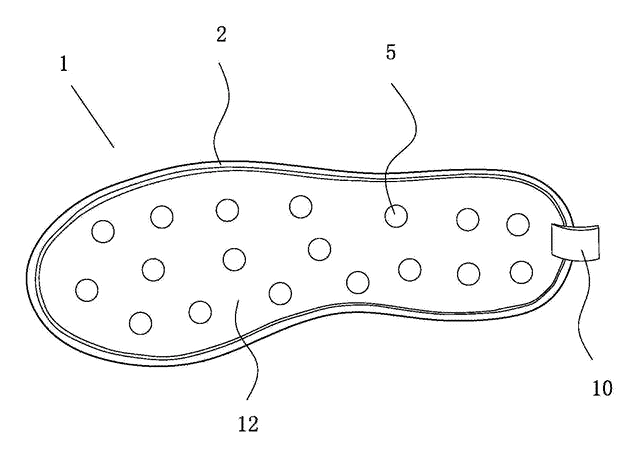
Massage Insole with Spring-Back Silicone Nubs and a Removable Top Layer
Layered insole: silicone nubs rise through a removable perforated top sheet and sink under each step.
Patent CN208286505U
Apparel & Accessories
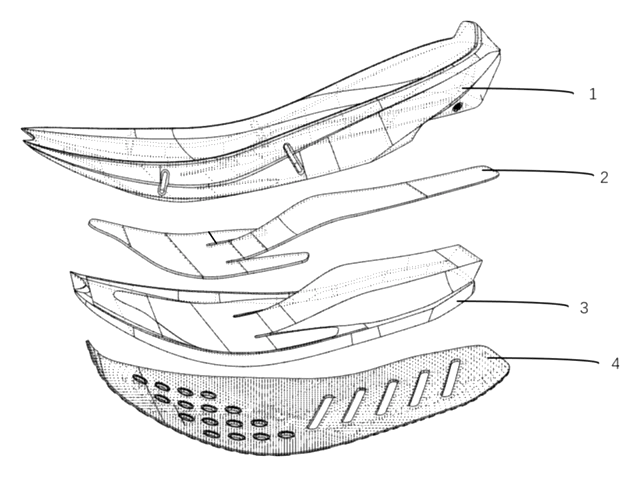
Heel-Less Carbon Plate Running Shoe Sole for Forefoot Strikers
Running sole for forefoot strikers: no ground-touching heel, winged carbon plate between two midsoles.
Patent CN216723354U
Apparel & Accessories
Waterproof Magnetic Zipper Stop That Snaps the Two Halves Together
Separating-zipper stop with sealed magnets: pin and box snap together one-handed, safe in rain and wash.
Patent CN215075936U
Apparel & Accessories
Left-Right Specific Soccer Socks: Grip for the Plant Foot, Touch Pads for the Kicking Foot
Soccer socks knitted as a left-right pair: grip zones for the plant foot, pads for the kicking foot.
Patent CN212728807U
Browse by category
- Apparel & Accessories (36)
- Baby & Kids (25)
- Bags & Luggage (15)
- Bath & Personal Care (25)
- Car Accessories (21)
- Furniture, Bedding & Storage (19)
- Garden & Outdoor (27)
- Health & Wellness (12)
- Home, Kitchen & Cleaning (40)
- Lighting (20)
- Packaging & Containers (10)
- Pet Products (9)
- Phone & Camera Accessories (7)
- Retail Display (21)
- School, Office & Art (30)
- Sports & Recreation (37)
- Tools & Workshop (46)
- Toys & Games (19)
This page is based on the public patent document CN210054901U, assigned to Dongjun New Energy Co ltd. IP2M is an independent manufacturing service and is not affiliated with, endorsed by or licensed by the patent owner. Images marked as concept renderings are illustrations, not photos of an existing product. Patent status information is provided for reference only and is not legal advice; confirm freedom to operate for your market before production. Full disclaimer.