At a glance
| Patent number | CN210076790U (application CN201821522493) |
| Type | China utility model (实用新型) - protects product shape and structure |
| Original title | Draw-bar box convenient for carrying baby to go out (一种方便携带婴儿出行的拉杆箱) |
| Patent owner | Fujian University of Technology |
| Inventors | Cai Wenzhen, Hua Haiyan, Chen Xu, Liu Zhengfan |
| Filing date | 2018-09-18 |
| Grant date | 2020-02-18 |
| Status (China) | Lapsed - terminated for non-payment of annual fees (recorded 2022-08-26) |
| Patent family | Chinese filings only - no US, European, Japanese, PCT or other filings listed |
| Cited by | 3 later documents |
| Source | Google Patents (search for CN210076790U) |
What the claims cover, in plain language
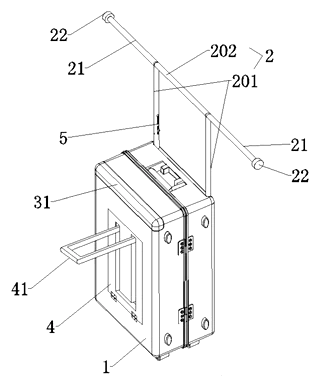
Claim 1 defines a trolley case comprising a box body (1) and a pull rod (2). The key feature is a child seat (3) formed by unfolding the top of the box body. The seat’s bottom is higher than the top of the box, and its front faces the pull rod. Seat plates (4) open from both sides of the box. The pull rod has hanging rods (21) on its horizontal crossbar (202).
Claim 2 specifies that the box body has storage grooves (11) on the sides for the seat plates, which connect via closed door hinges and include support frames (41).
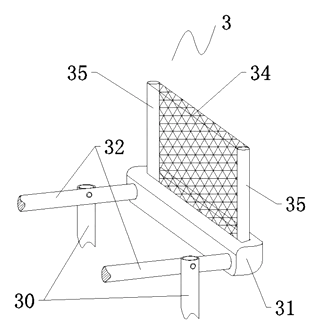
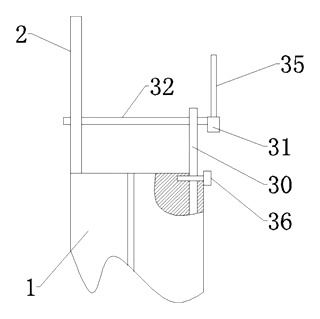
Claim 3 details the child seat components: vertical rods (30) inserted into the box and locked by pins (36); a fence frame (32) rotatably installed between the rods; a cushion pocket (33) attached by Velcro; a backrest cross bar (31); and blocking rods (35) with a blocking net (34). One side of the fence frame connects to the pull rod via a locking support mechanism (5).
Claim 4 states the blocking rods (35) are longer than 10 cm and connected to the backrest via torsion springs.
Claim 5 identifies the materials: the trolley, seat rods, backrest, fence, and blocking rods are aluminum alloy tubes.
Claim 6 describes the cushion pocket (33) as canvas, positioned 15-30 cm above the box top.
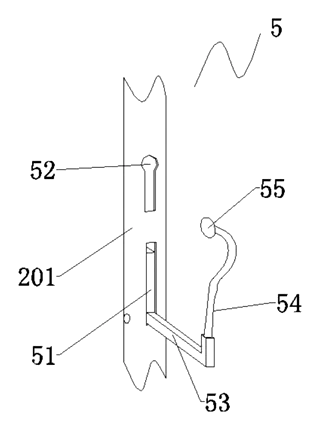
Claim 7 details the locking support mechanism (5), involving a rotating cross-bar receiving groove (51), card slot (52), rotating rod (53), rope strap (54), and clamping block (55) on the pull rod’s vertical section.
Claim 8 adds locking covers (22) to the outer ends of the hanging rods (21), connected via threads.
This is a simplified reading for orientation only. The legal scope is defined by the exact claim wording in the official Chinese document.
What this means for US production
This patent was filed only in China and has lapsed due to non-payment of fees. It currently imposes no restrictions on manufacturing or selling this specific design in China or elsewhere. However, because it is a utility model that expired early, the technical disclosure is public.
Two points to settle early:
- Other patents may exist. The field of convertible luggage and child-carrying accessories is competitive. Specifically, a foreign application EP4437903A1 by Feng, Tan cites this patent. While this citation does not imply infringement, it indicates active interest in similar technology in Europe. A freedom-to-operate (FTO) review is strongly recommended to check for existing US patents covering “suitcase seats,” “rider luggage,” or “integrated child carriers” before tooling.
- Safety Standards. Unlike standard luggage, this product interacts with a child’s body. Compliance with consumer product safety rules for children’s furniture or travel accessories is critical, distinct from general luggage regulations.
Customization and manufacturing
What can be customized
| Area | Options |
|---|---|
| Dimensions | Box size (carry-on vs. checked), seat height adjustment range |
| Materials | Shell material (PC, ABS, Polypropylene), tube thickness for aluminum frame |
| Upholstery | Cushion fabric type, color, padding density |
| Mechanism | Hinge strength, locking pin types, quick-release vs. screw-lock systems |
| Features | Integrated cup holders on side plates, adjustable footrest angles, storage pockets in seat back |
Things to plan for (US market)
- CPSC Regulations: Although primarily luggage, the seating aspect may trigger scrutiny under general product safety rules. Ensure no sharp edges or pinch points are present in the folding mechanisms.
- ASTM F963: If marketed specifically for children, toy safety standards might apply depending on classification, though this is likely classified as furniture/accessory.
- Load Testing: Structural integrity must be verified for dynamic loads (bumping into curbs) with a child seated.
- Flammability: Upholstery materials (cushions) should meet relevant flammability standards for home furnishings or children’s products if applicable.
How a project runs
- Inquiry - Define target age group, weight limit, and luggage size.
- Design - Finalize hinge geometry, locking mechanism robustness, and ergonomic seat placement.
- Prototype - Build functional units for drop tests, cycle tests on hinges, and user trials.
- Pilot Run - Verify assembly tolerances and packaging efficiency.
- Production - Injection molding for shell, extrusion/bending for aluminum tubes, sewing for cushions, final assembly.
Quantities & timeline
Tooling for the complex hinge systems and custom-molded plastic connectors will drive initial costs. Lead times depend on the sourcing of aluminum tubing and fabric. Send us your target age range, weight capacity, preferred materials, and estimated quantity and we will reply with options.
Patent drawings
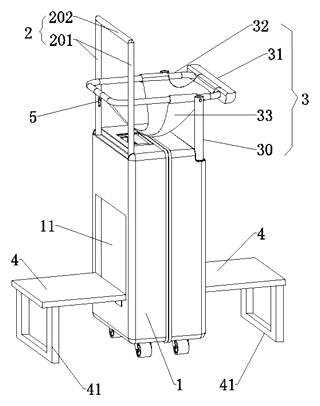
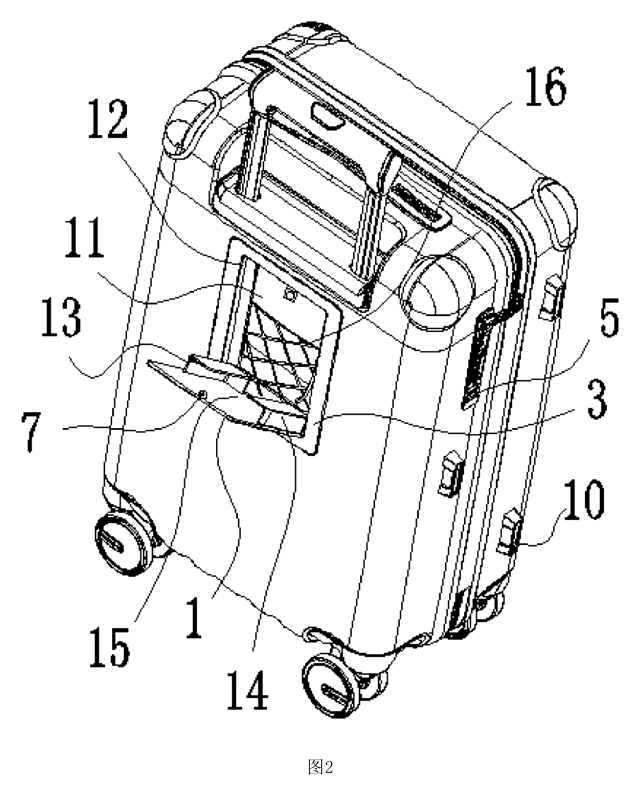
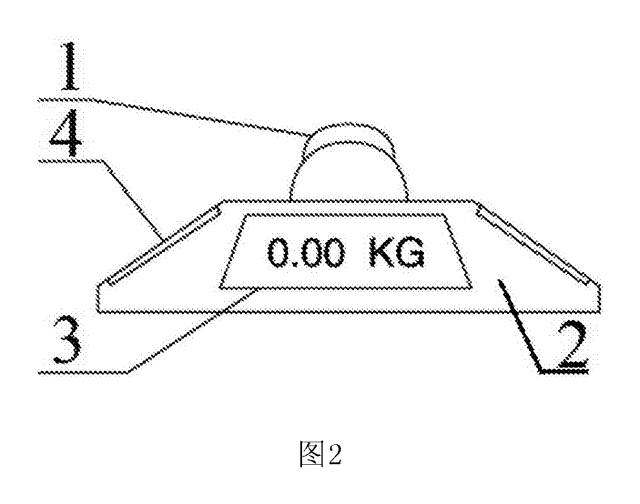
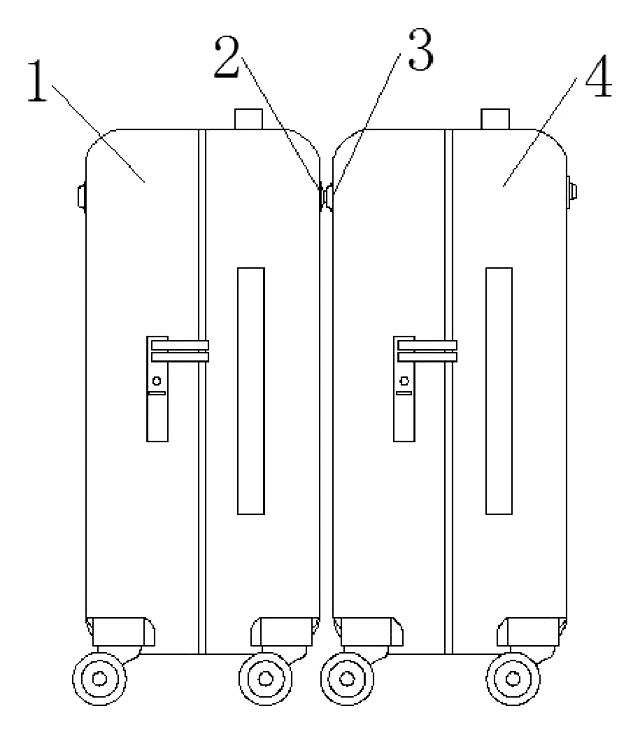
Drawings reproduced from the public patent document for reference.