
Patent CN210076909U
Updated October 23, 2026Self-Rinsing Roller Scrub Brush with Dirty-Water Tank
A scrub brush usually spreads dirty water around: you wet the surface, scrub, rinse the brush, and wipe up the mess. This handheld brush keeps the water inside. A motor turns a roller brush that sits half out of the body. Inside, on every turn, two jets rinse the bristles, a ribbed bar scrapes off the dirt and the springing bristles throw the water onto a curved wall that drains into a tank. A second pump moves the dirty water into its own chamber, so the bristles return to the surface clean.
- China utility model - lapsed
- No filings outside China
- Cleaning tools
- Molded housing, motor, two small pumps
Splat! What let you down?
🌀
Powered roller brush
A motor turns a cylindrical brush set into a groove along the side of the body.
🚿
Rinses itself on every turn
Two water jets inside the groove wash the bristles before they come back out.
🪮
Ribbed scraper bar
A triangular bar with ribs scrapes the bristles; as they spring back they throw off dirt and water.
🪣
Separate clean and dirty water
Clean water and dirty water have their own chambers inside the body, with a pump for each.
Bring this product to market
- ✓ Patent vetted China-only family and legal status checked
- 2 Product brief · now How it works, uses and options written up
- 3 Prototype First samples for buyers to review
- 4 Pilot run Small first batch for launch customers
- 5 Volume production Repeat orders at scale
Buyer interest
– of 100 buyers needed to start prototyping
One click, no sign-up. Each vote is one real visitor, and products with the most interest go to prototyping first.
Build team: no members yet. Need a partner, co-funding or skills to build this? Join and we introduce the team once it forms.
The problem
Scrubbing with a brush means juggling water. You wet the surface, scrub, rinse the dirty brush, scrub again, then wipe up what splashed and ran. Spray-brushes on a hose keep the bristles wet but waste water and leave puddles. The dirt you lift off the surface simply moves to the bristles and back again.
The solution
The patent puts a small rinse station inside the brush itself, so the water cleans the bristles, not the surface:
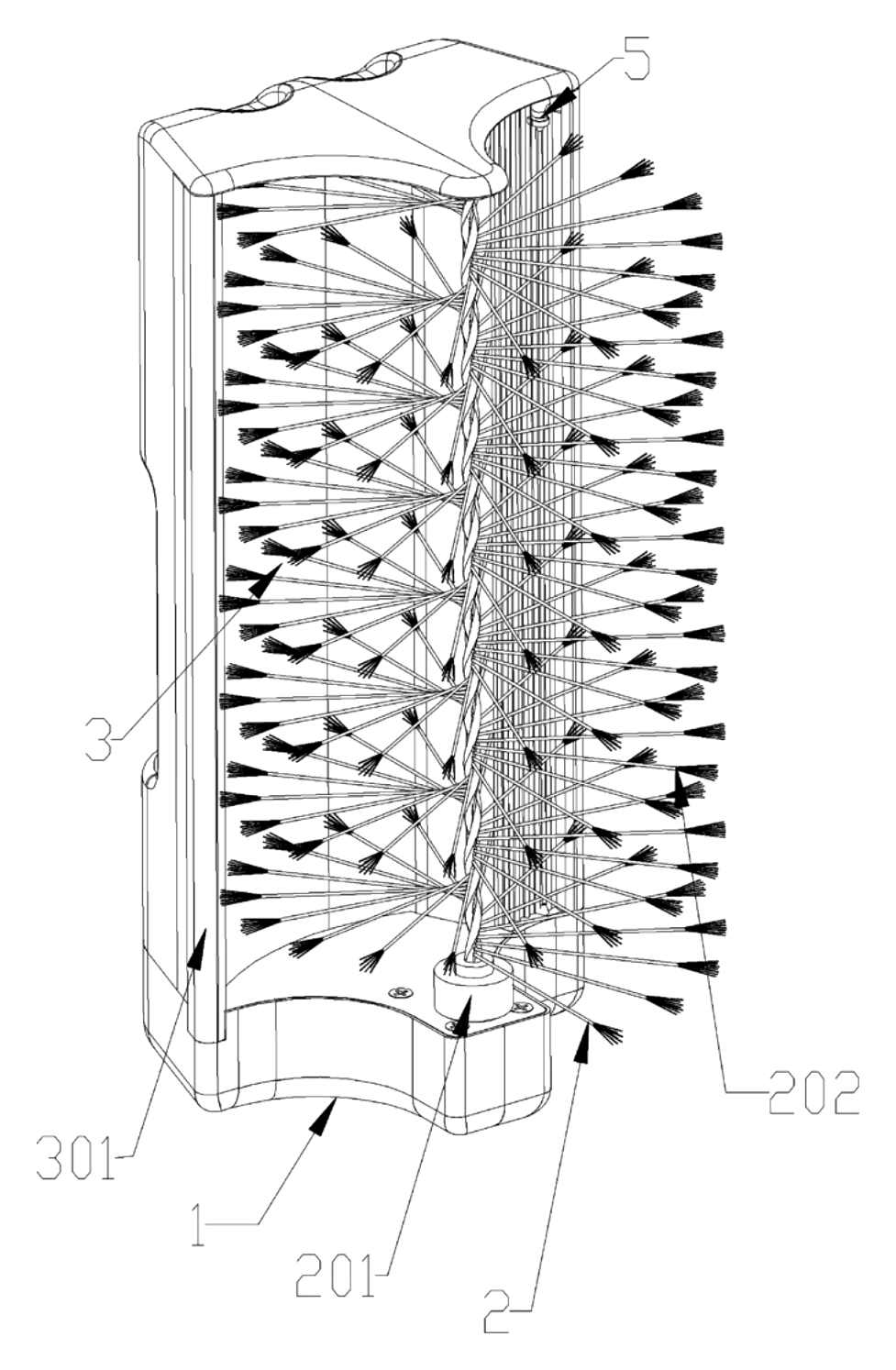
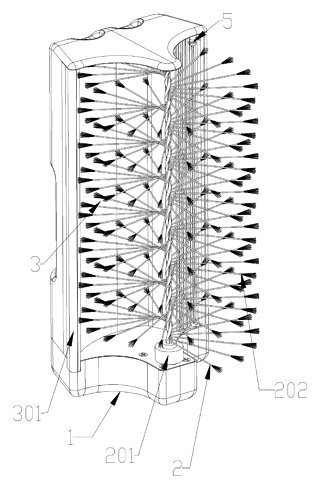
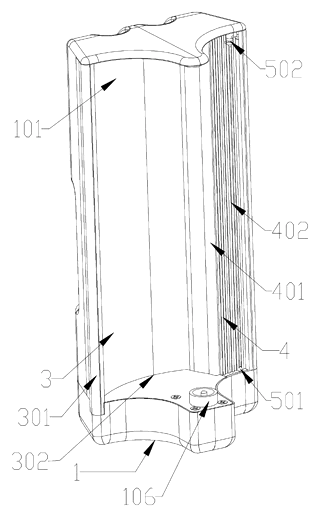
- A roller brush (2) turns in a long groove (101) in the side of the housing (1); only part of it sticks out to touch the surface.
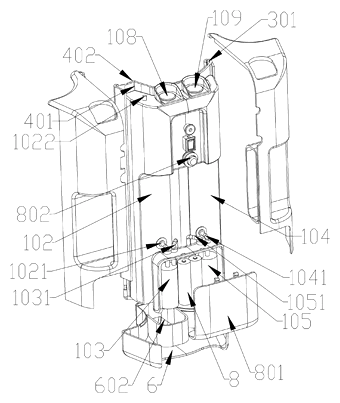
- Inside the groove, two water jets (501, 502) fed by a clean-water pump (103) from a clean-water chamber (102) wet the bristles as they pass.
- A triangular scraper bar (401) with ribs (402) bends the bristles and rubs the wet dirt into clumps.
- As each bristle slips past the bar it springs back and flicks dirt and water onto a curved guide wall (3).
- The water runs down into a sump (6) at the bottom, and a second pump (105) moves it into a dirty-water chamber (104).
The patent describes one turn of the roller as clean - rinse - flick dry - collect, so the surface is wiped once with clean bristles and very little water.
Who it is for
- Cleaning-tool and small-appliance brands looking for a cordless scrubber with a clear “no drips” story.
- Car-care and detailing brands - a handheld brush that does not leave dirty water on paint and trim.
- Housewares retailers and private label programs in the growing powered-scrubber segment.
How it works
The main parts
| No. | Part | What it does |
|---|---|---|
| 1 | Housing | Upright body with the groove on one side and a handle (803) on the other. |
| 2 | Roller brush | Shaft (201) with bristles (202), turned by the motor (7). |
| 3 | Guide wall | Curved wall that catches the water thrown off the bristles; U-shaped channel (301) and drain groove (302). |
| 401, 402 | Scraper bar and ribs | Bend and scrub the bristles so they spring back and throw off dirt. |
| 501, 502 | Water jets | At the bottom and top of the groove, in front of the scraper bar. |
| 102, 103 | Clean-water chamber and pump | Feed the jets. |
| 6, 601 | Sump and drain hole | Collect the water running off the guide wall. |
| 104, 105 | Dirty-water chamber and pump | Store the waste water. |
| 7, 8 | Motor and power supply | Turn the roller and run both pumps from one switch. |
Using it
- Fill the clean-water chamber.
- Press the roller against the surface and switch on - the motor and both pumps start.
- Wipe across the surface once. The bristles pick up the dust, are rinsed inside the body and come back clean.
- Empty the dirty-water chamber when finished.
Inside one turn of the roller
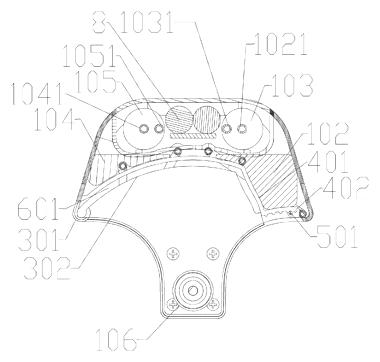
- Bristles touching the surface pick up dust.
- Inside the groove the jets wet them.
- The ribbed bar scrubs and bends them.
- Released, they flick the dirty water onto the curved wall.
- The water drains to the sump and is pumped to the dirty-water chamber.
Applications
Tiles, sinks and bathroom surfaces
Scrubbing grout and fixtures without dirty water running down the wall.
Car interiors and wheels
Dash panels, mats and rims where splashing should be avoided.
Furniture and outdoor items
Plastic garden furniture, coolers and sports gear.
Windows and frames
Frames and sills, where a sponge leaves streaks and drips.
Where it is less suitable
- Large floors - a floor scrubber with a bigger roller and tank covers more area.
- Delicate surfaces - fine wood finishes or soft fabrics may need softer bristles or no water at all.
Frequently asked questions
Does the brush spray water on the surface?
No. According to the patent, the water jets are inside the groove and wet only the bristles; the surface is wiped with bristles that have just been rinsed and flicked nearly dry.
Where does the dirty water go?
It is thrown onto a curved wall inside the body, drains into a sump at the bottom and is pumped into a separate dirty-water chamber that you empty after use.
How much water does it use?
The patent says only a small amount is needed because the water cleans the bristles rather than the whole surface, but it gives no figures. Tank sizes and flow are set during design and tested on prototypes.
Is it cordless?
The patent does not specify the power source. A rechargeable battery with USB-C charging is the usual choice; a corded version is also possible.
Can the roller be changed?
The patent shows the roller coming out of the housing with its motor. We can design quick-change rollers with different bristle types.
What certification does it need in the US?
Electrical safety listing (UL/ETL), battery testing (UN 38.3, UL), FCC Part 15 for the motor electronics, and charger efficiency rules if a charger is included.
Can this design be made and sold in the US?
The patent was filed only in China and has lapsed, so it does not restrict the design in the US or in China. Powered scrubbers and self-cleaning roller heads are active patent areas - see Patent & Production - so we recommend a freedom-to-operate check before volume production.
Are you affiliated with the patent owner?
No. IP2M is an independent design and manufacturing service working from the public patent document.
Request a quote
Click Request a Quote below to see our email address - copy it, or open your email app with a ready-made message. Please mention patent CN210076909U in the subject.
Helpful details to include:
- Your company and sales channel (housewares, car care, Amazon, private label…)
- Size and main surfaces to clean
- Power source (battery or corded) and run time
- Tank sizes, rollers and accessories
- Estimated quantity and target price
- Timeline - when you would like samples and the first shipment
You can also reach us at (332) 203-9997.
Explore this product
Interested in building this?
Tell us your target market, quantity and timeline. We reply with options for prototyping, small-batch runs or volume production.
Send your inquiry to
Please put CN210076909U in the subject line and tell us your company, country, estimated quantity and timeline.
Prefer to talk? Call (332) 203-9997.
More product-ready patents
All Home, Kitchen & Cleaning patents →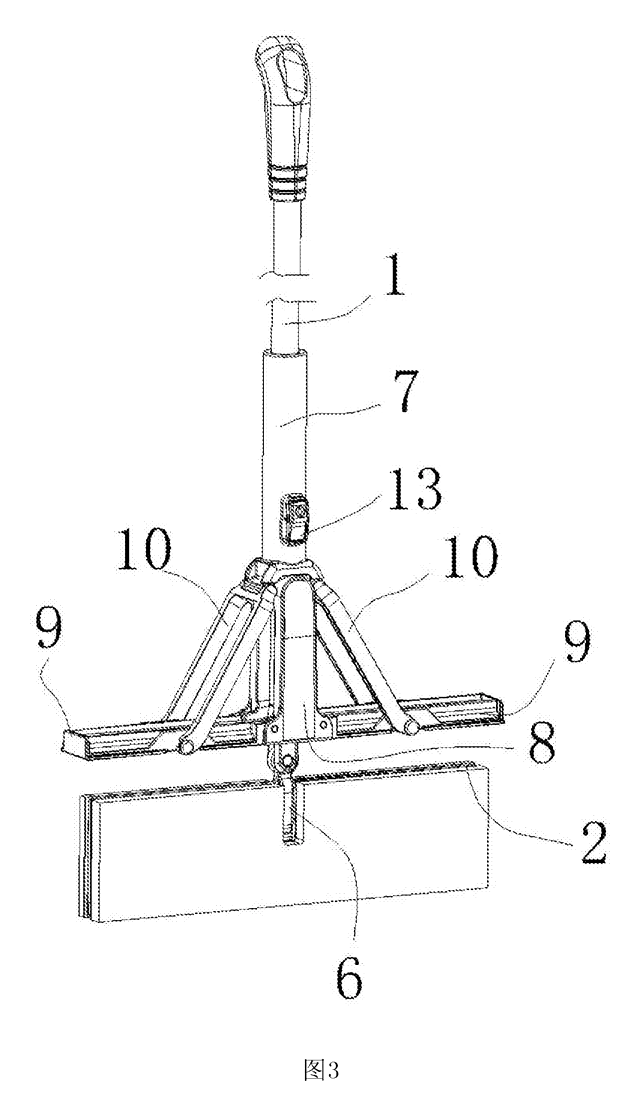
Home, Kitchen & Cleaning
Self-Wringing Flat Mop with Fold-Away Wringer
Flat mop with a built-in wringer that opens only when you wring and folds flat against the pole when you mop.
Patent CN207734114U
Home, Kitchen & Cleaning
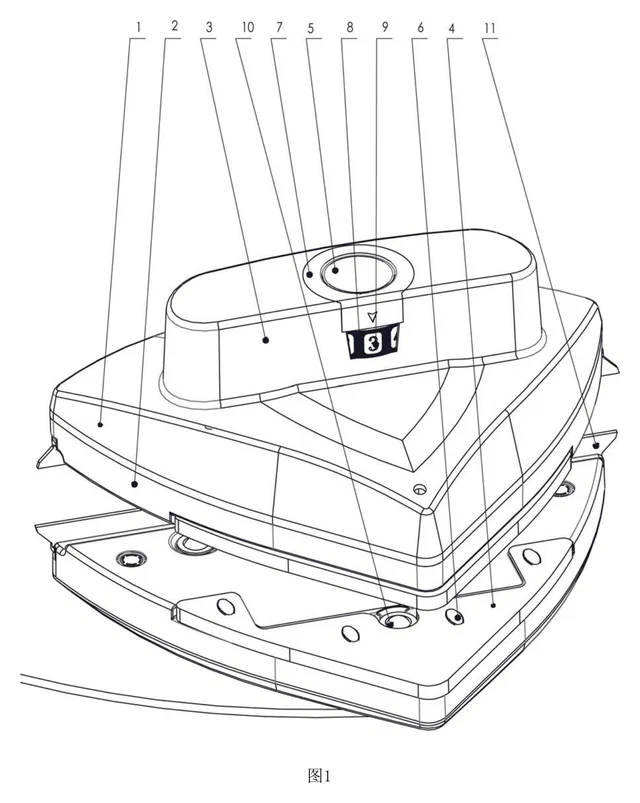
Magnetic Double-Sided Window Cleaner with Dial-Set Magnet Strength
Magnetic window cleaner with a sealed, sliding magnet, dial-set strength for different glass thicknesses and a spring-held idle position.
Patent CN209360543U
Home, Kitchen & Cleaning
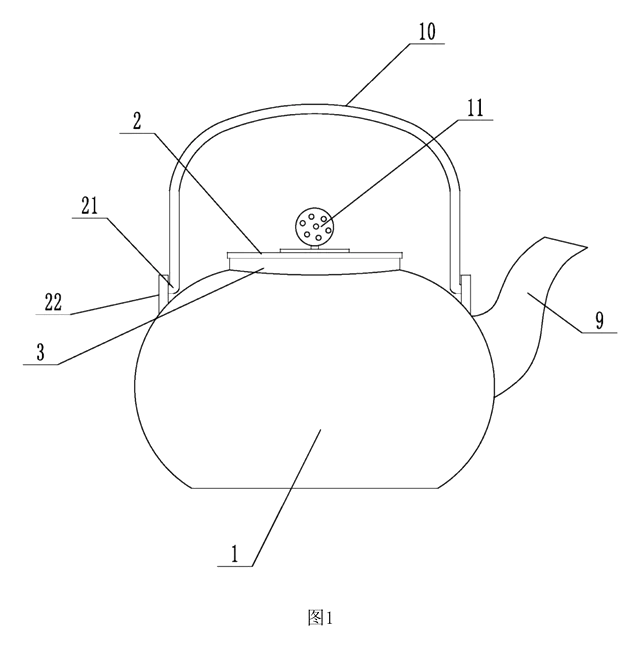
Metal Kettle with Magnetic Lid That Stays On When Pouring
Metal teapot/kettle with a magnet-held lid that does not fall off when pouring, and an insulated, vented lid knob.
Patent CN210540477U
Home, Kitchen & Cleaning
Reinforced Disposable Soup Spoon
Disposable soup spoon with a handle-to-bowl rib, stiffened edges and a ring foot to resist breaking.
Patent CN206964482U
Home, Kitchen & Cleaning
Self-Switching Double-Squeegee Window Cleaner
Cleaning head with two squeegee blades that switch automatically with the direction of movement.
Patent CN212630655U
Home, Kitchen & Cleaning
Folding Two-Panel Grater with Coarse and Fine Sides
Two hinged grater panels - coarse and fine, optional slicer - that fold flat for storage.
Patent CN206285003U
Browse by category
- Apparel & Accessories (22)
- Baby & Kids (16)
- Bags & Luggage (9)
- Bath & Personal Care (16)
- Car Accessories (10)
- Furniture, Bedding & Storage (12)
- Garden & Outdoor (18)
- Health & Wellness (8)
- Home, Kitchen & Cleaning (24)
- Lighting (12)
- Packaging & Containers (6)
- Pet Products (6)
- Phone & Camera Accessories (4)
- Retail Display (13)
- School, Office & Art (19)
- Sports & Recreation (25)
- Tools & Workshop (27)
- Toys & Games (12)
This page is based on the public patent document CN210076909U, assigned to Xu Cijun (individual). IP2M is an independent manufacturing service and is not affiliated with, endorsed by or licensed by the patent owner. Images marked as concept renderings are illustrations, not photos of an existing product. Patent status information is provided for reference only and is not legal advice; confirm freedom to operate for your market before production. Full disclaimer.