At a glance
| Patent number | CN210076909U (application CN201920930929) |
| Type | China utility model (实用新型) - protects product shape and structure |
| Original title | Self-drying cleaning brush (一种自甩干清洗刷) |
| Patent owner | Xu Cijun (individual) |
| Inventor | Xu Cijun |
| Filing date | 2019-06-20 |
| Grant date | 2020-02-18 |
| Status (China) | Lapsed - terminated for non-payment of annual fees (recorded 2024-06-21) |
| Patent family | Chinese filings only - no US, European, Japanese, PCT or other filings listed |
| Cited by | 1 later document |
| Source | Google Patents (search for CN210076909U) |
What the claims cover, in plain language
Claim 1 - a cleaning brush with a housing that has a groove in its side, a roller brush turning in the groove, a guide wall on one side of the groove, a dust-removing structure on the guide wall, a cleaning structure in the groove, a clean-water chamber connected to the cleaning structure by a first pump, a sump at the bottom with a drain hole from the groove, and a dirty-water chamber connected to the sump by a second pump.
Claim 2 - the guide wall is curved, with a U-shaped channel and a drain groove leading to the drain hole. Claim 3 - the dust-removing structure is a triangular bar with ribs that scrub the bristles. Claim 4 - the cleaning structure is two water jets, at the lower and upper end of the groove, in front of the ribs. Claims 5-8 - the roller shaft and its mounting boss, the piping from the chambers through the pumps to the jets and sump, and a power supply for the pumps behind a cover.
This is a simplified reading for orientation only. The legal scope is defined by the exact claim wording in the official Chinese document.
What this means for US production
This patent was filed only in China and has lapsed, so it no longer restricts anyone in China either. It has no US or other foreign counterpart.
Before production, keep in mind:
- Other patents may exist. Powered scrub brushes and self-cleaning roller heads (as in wet floor cleaners) are active patent areas in the US. Have a freedom-to-operate (FTO) search done by a US patent attorney before volume production.
- Development work. The patent describes the water path but not the motor, pump or battery specifications; these are engineered in the prototype stage.
Customization and manufacturing
What can be customized
| Area | Options |
|---|---|
| Size | Palm-size detail brush or larger hand scrubber - to be confirmed in design |
| Power | Rechargeable battery (USB-C) or corded; motor speed |
| Roller | Nylon, soft or stiff bristles; quick-change rollers for different surfaces |
| Water | Clean and dirty tank sizes; removable tanks for easy filling and emptying |
| Accessories | Extension pole, wall dock, spare rollers |
| Branding | Colors, logo, retail packaging |
Things to plan for (US market)
- Electrical safety - a product with water and a battery should be tested and listed to UL standards by an NRTL (e.g. UL or ETL), and needs a suitable water-resistance (IP) rating.
- Batteries - lithium cells need UN 38.3 transport testing and UL safety testing; chargers must meet DOE efficiency rules.
- FCC - motor electronics fall under FCC Part 15 for unintentional emissions.
- Claims - describe water saving and cleaning in measurable, tested terms only.
How a project runs
- Inquiry - size, power source, surfaces and quantity.
- Design - water path, sealing, motor and pump selection, battery.
- Prototype - working samples for rinse, splash and leak tests.
- Pilot run - small batch with electrical and battery certification.
- Production - volume production, packaging and shipping.
Quantities & timeline
The housing, tanks and roller need injection molds, and the electronics need certification; timing depends mainly on the test plan. Send us your size, power source, quantity and target price and we will reply with options.
Patent drawings
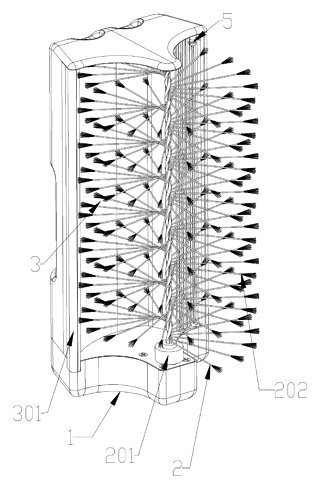
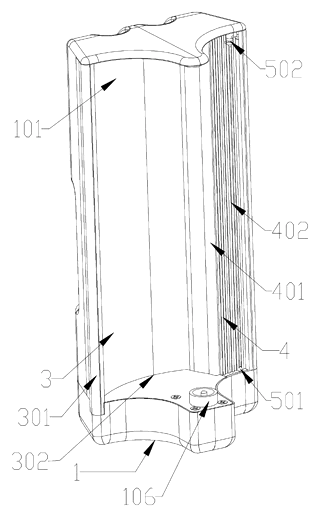
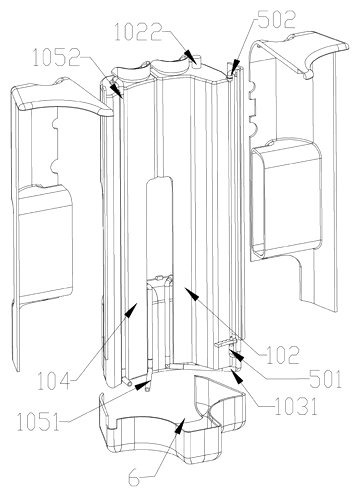
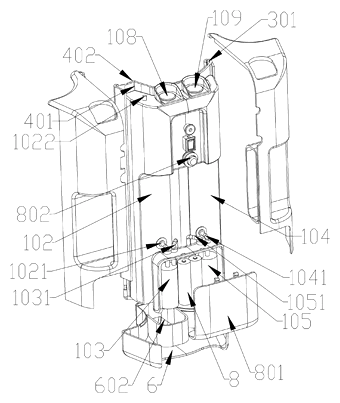
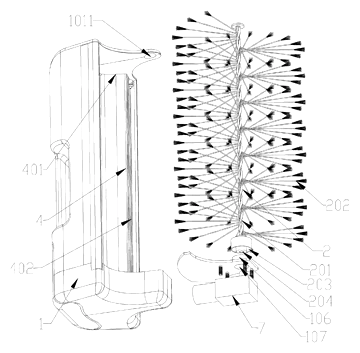
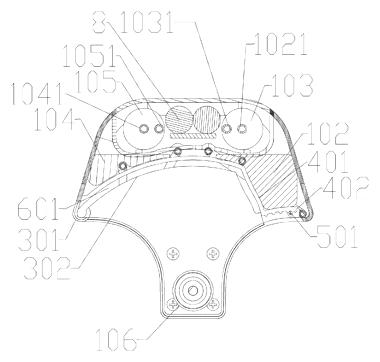
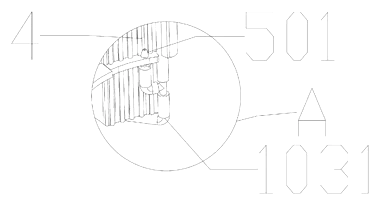
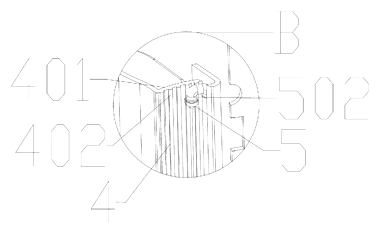
Drawings reproduced from the public patent document for reference.